Thursday, 1 March 2018

How to Set and Forget AdWords Campaigns with these 5 Ad Optimization Rules

Managing your ad campaigns can be incredibly tedious.

You probably don’t need me to tell you that though, because you’re looking at them every day.

You’re also making the same changes on a monthly, weekly, and even a daily basis.

And it’s not like you can just quit AdWords either.

Google has reported that businesses make an average of $2 in revenue for every $1 they spend on AdWords.

That makes it a vital part of your digital toolkit, and an even bigger part of your ROI.

The problem is that the work is never done. And it never will be either.

Luckily, you have options just below the surface of default settings in AdWords that can help lessen the amount of time you spend tinkering with your campaigns.

Adwords gives you the option to automate some of the more tedious elements of your campaign.

Because your only option shouldn’t be to hire the work out.

Many small businesses simply can’t afford to do that.

They also can’t afford to go take a marketing class to learn “secrets” they’ll never use.

The good news is that you can save time in the future by automating the processes you’re already doing manually.

I’m going to show you how to optimize your automated AdWords campaigns.

Automation is critical

Let’s start with the basics.

I already mentioned that the average AdWords spend doubles your revenue, but what else should you be looking for?

The trouble with traditional PPC campaigns is that the effective ones often require constant babysitting to see results.

And the repetitive process of adjusting, activating, or deactivating ads can take up too much of your time.

That’s why automation is so important.

It kicks in when the time is right, which means you don’t have to constantly monitor the ad to get the result you want.

So your biggest objective, quantitatively, is to create an ad with an amazing landing page that maximizes your click-through rate, or CTR.

Depending on your niche, a “good” CTR can be anywhere from 2 percent – 25 percent, or even higher.

More to the point, failing to optimize your ads means your competitors are edging you out.

In fact, Smart Insights found that being at the top of SERPs increases your CTR by 31.52%.
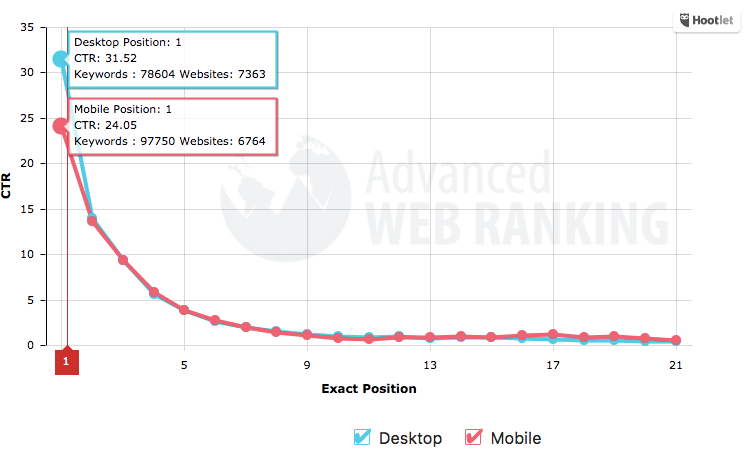
Which means if you can get a search results page that looks like this:
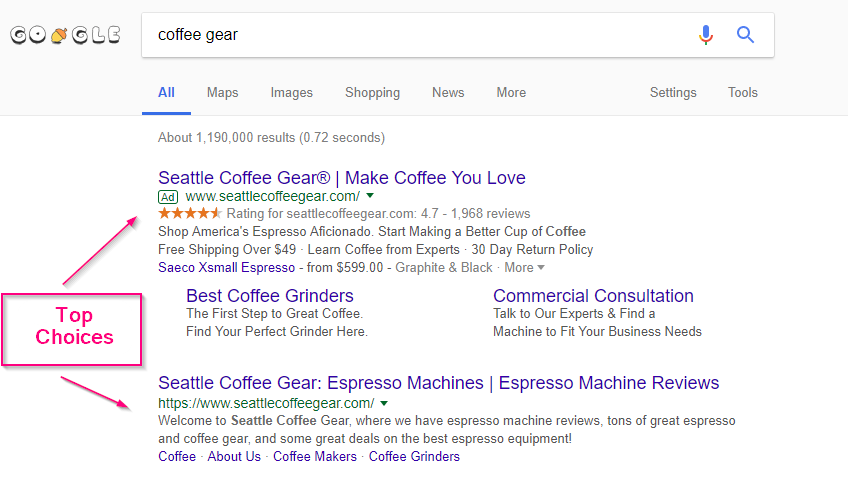
You’re not only cashing in on SEO; you’re doubling down with your ad campaign.

You stand a better chance of getting a higher CTR, which means more leads and more sales.

And this is where automated rules can save the day.

Automated rules are actions you can have AdWords perform automatically across your campaigns.

Running these rules requires you to set which conditions have to be met for the rule to trigger.

Keep in mind that automation is just a process that allows you to take the campaigns you’re already running and spend less time on them.

If you don’t have the right practices already in place, you’ll just be automating bad habits.

Lack of routine, not knowing what to look for, when to look for it, and why to look for it means you’re unable to fix problems when they arise.

You’re throwing your (or your client’s) money away.

And since you’re reading a blog article about PPC, it’s pretty obvious you want different results.

With these automations, you’ll have the ability to skip the routine tasks to focus on strategy and growth instead.

So let’s get started with the backend and move down to individual ads.

1. Optimize your campaign first

One of the fundamental concepts of PPC is setting the right overarching parameters for your ads.

Missing the mark on a technical detail can sink your campaign before it even starts, leaving you with the assumption that tasks are automated when nothing is happening.

For example, the effectiveness of segmentation and targeting of your ad are directly tied to basic elements like copy and coloring.

That doesn’t even touch on the landing page you use.

All this means your automation starts well before you ever log into your AdWords accounts.

You have to begin by knowing your targets and the results you want, and then constructing compelling copy, images, and link your ad to a useful landing page.

So let’s walk through what this looks.

Let’s say we want to run a display campaign via AdWords.

You’ll fire up your dashboard, go to your campaign, and be met with a page that looks like this:

As you can see, I’ve highlighted the options to select.

This will run a display campaign with the goal of acquiring leads.

You also want to make sure you select a standard display campaign so that you can choose your settings and targeting.

You’ll also need to input your website URL.

Then input your campaign name and targeting information.

For this example, I’ll call it Business Owners and target Seattle, WA.
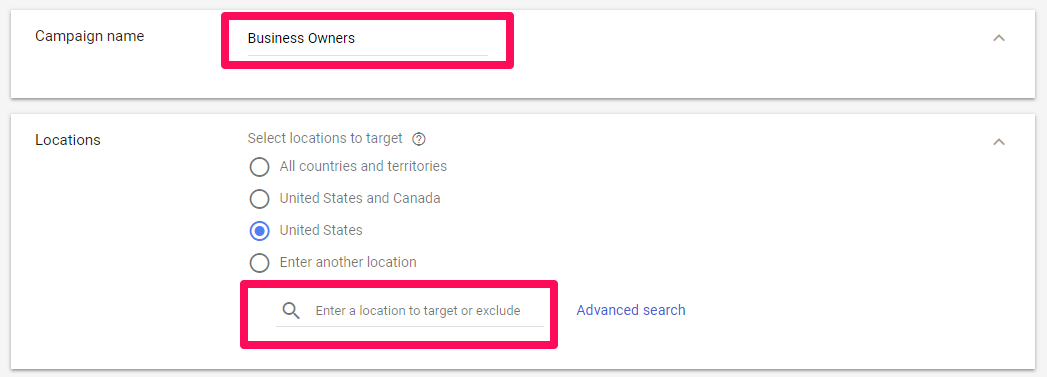
Next, you’ll need to decide on bidding.

What you choose for this depends on your objective, but since we’re talking about automation, I’m going to opt for the “Automatically maximize clicks” option.

This will automatically set your ad to bid for the lowest possible cost-per-click (CPC).
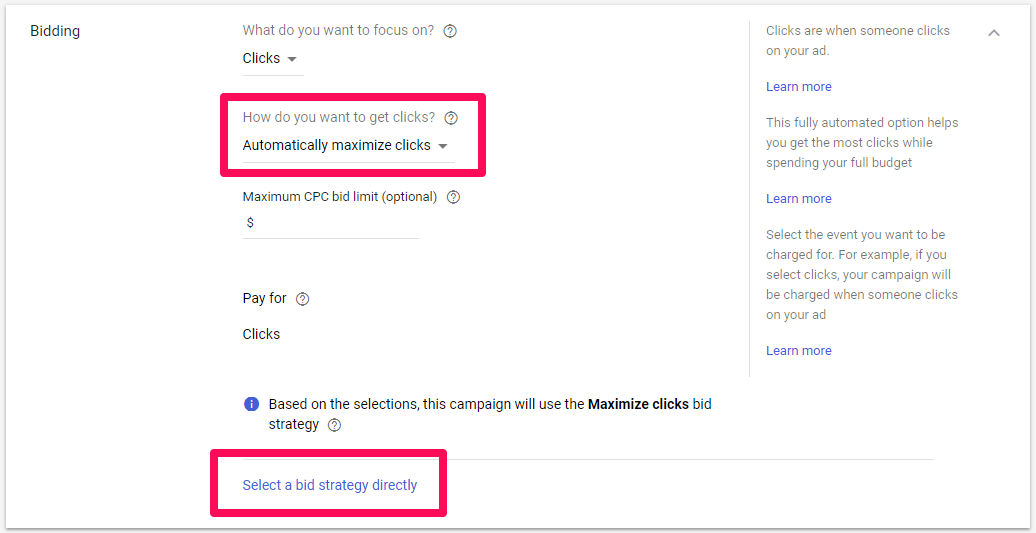
If you choose to select a different bid strategy, here are your options:
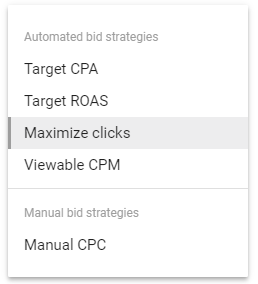
As you can see, there are four automated options or a manual bid setting. Leave that be for now.

You’ve successfully set up automation for your campaign now. Next on the list is your ad groups.

2. Now get the ad groups right

At this point, you’re ready to set the targeting parameters for your ad.

Koozai recommends breaking down and targeting your ads to these general categories before you start to make changes in AdWords:

  • Location
  • Device
  • Income
  • Interest Categories
  • Gender
  • Age

Once you’ve determined where to target your ads, it’s time to set them up.

Start with audiences, which provides a breakdown of online actions and interests. You can see here I’m keeping with the business owner theme.

Next, move on to demographics.

For this particular ad group, let’s say I want to target male and female business owners who are between the ages of 20 and 35.

They’ll be in the top 30% of household income with no children.

Now select your keywords, topical targeting, and the last big piece: automated targeting.
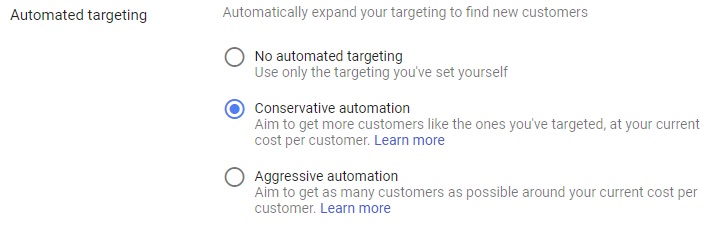
Automated targeting a great tool for letting Google AdWords display your ad to customers similar to the ones you’ve targeted.

You can either opt out of automated targeting, which limits your audience to only the parameters you’ve selected.

Or, you can choose between conservative and aggressive automation strategies.

Conservative automation will keep your audience very narrow, but will still put your add in front of similar demographics.

This a great option for businesses that want more conversions and are okay with getting clicks that are a bit outside their optimal audience.

Aggressive automation widens your audience even more and places your ad in front of a wider but still similar group of people.

Use this setting when you want way more conversions and are okay picking through some potentially low-quality leads.

But if you’d rather keep the ad group tight, then select no automated targeting.

Whichever one you pick is determined by your goals and how prepared your sales team is to handle less-than-ideal leads.

3. Set individual ad performance parameters

Now that you’ve set up your campaign and ad group, it’s time to dive into some individual automation elements.

Keep exposure equal

Google’s default setting is to prefer your best performing ads.

While this might sound like a good thing, it can skew your A/B testing results and will favor one ad over others.

To combat this, you want to ensure that your ads are set to “rotate indefinitely” so that each has an equal chance to perform.

This makes sure that one ad doesn’t get shown more often than others, which could skew your conversion rates.

Normally, you’d be forced to go into your AdWords dashboard and manually stop an over-shown ad, and that will affect the results of your A/B testing.

You’ll find this option under your settings tab in the individual ad group. It will look like this:
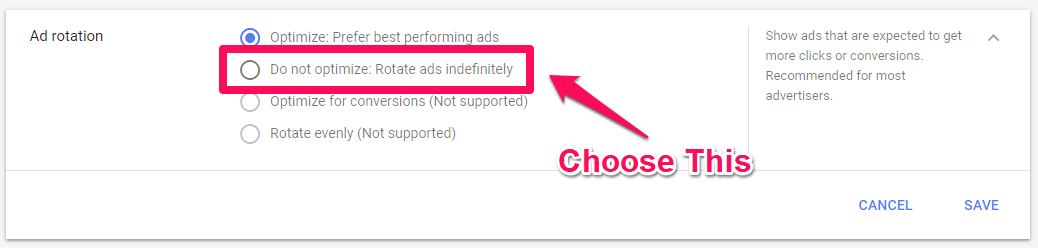
Once you’ve selected and saved the settings to rotate indefinitely, you won’t be saddled with the repetitive task of deactivating overperformers to get the results you want.

Pick the right device

There are so many devices to choose from these days it can make your head spin. Contrary to what you might think, advertising universally across all devices isn’t always a good idea.

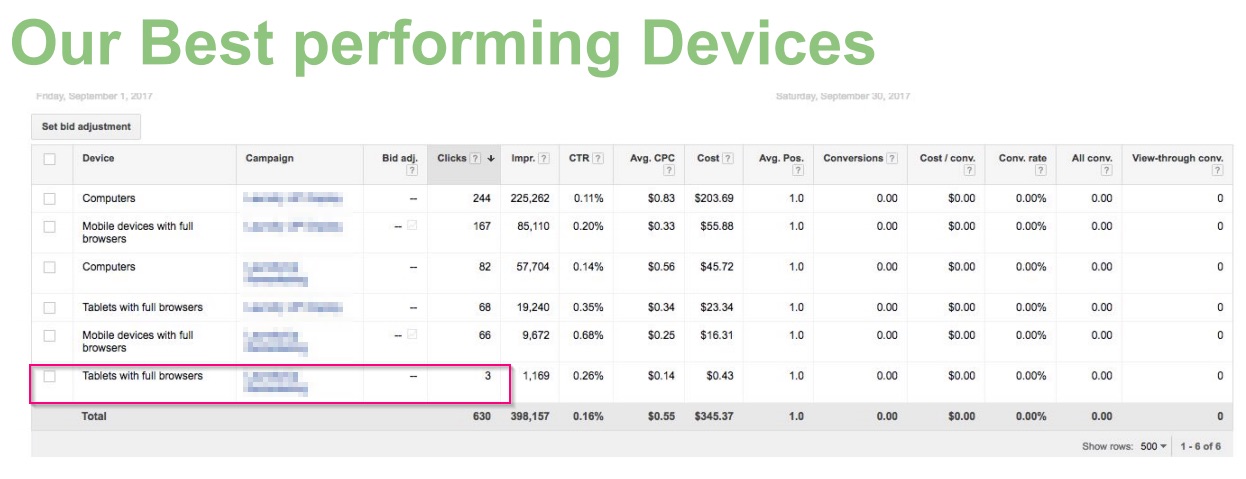
I worked with a client once who was advertising on mobile, desktop, and tablets at first.

After a month, we sat down and parsed through the data. Tablets only had three clicks.

Compared to the 244 clicks from desktop, it was clear that tablets were a waste of time.
But don’t just take that advice and run with it.

It’s also worth considering that 33% of all Google search clicks are generated through mobile.

So just because one company isn’t met with success on a mobile platform doesn’t mean you’ll have the same results.

The same is true for the opposite sentiment as well.

Which means if you’re opting out of advertising on mobile, you should probably reconsider.

One former Google employee who’s now working as an SEO specialist recommends deciding whether you want to be viewed in apps or not.

You may be spending money advertising to kids who use mobile apps but wouldn’t ever touch your product.
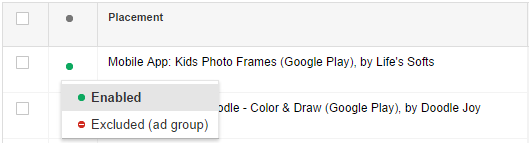
The only way you’ll know for certain is if you try, but if your age demographic isn’t on the lower end of the spectrum, then an in-app ad might not suit you.

Pause or play?

Another automation miracle at the ad group level revolves around timing.

Wordstream recommends doing some hardcore data analysis before you get to the business of setting up times though.

For example, they found that they weren’t getting many clicks on the weekend, but the CTR was higher, and the cost per click was lower:
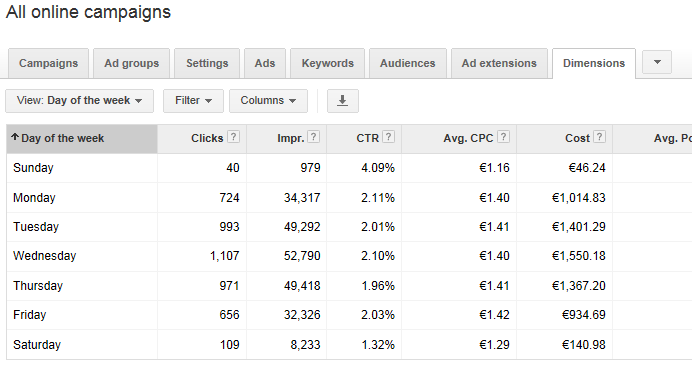
They used this information to take action accordingly.

Namely, optimizing ad budget and the timing allotment so that these ads could perform even better.

Don’t just rely on the default settings.

They’ll have your ads running 24/7, and you’ll burn through your budget.

The more specific you are, the better your results will be.

You can see here that I’ve set an example ad for certain times on Monday and Tuesday only:
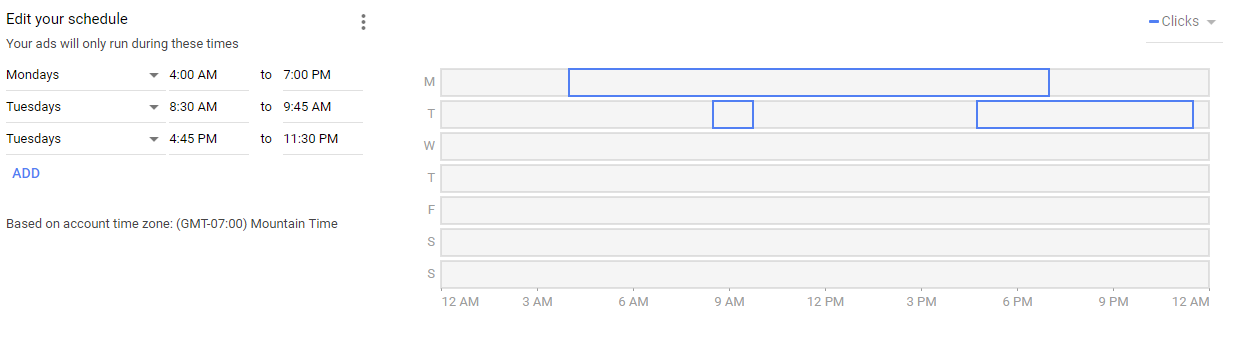
And consider the types of ads you’re running.

You don’t need a Thanksgiving-themed advertisement to be running in the middle of summer.

Or a late-night all-nighter themed ad in the middle of the afternoon.

That’s just a waste of money and will spread confusion around your brand.

Time your ads appropriately.

Make sure you’re set to track

Analytics is everything in PPC.

Every action you take is based on data. Whether it’s increasing a bid or narrowing your audience, you want to know the analytics that back up your decision making.

Which means you need to make sure you’re actually connected to your tracking system before you miss out on valuable insight.

Make sure AdWords is connected to your Analytics.

Failing to do so would result in being unable to gather any reliable and usable feedback on your ads.

Make sure all of your ads are approved

Finally, you want to make sure your ads are approved.

To keep front page content appropriate for everyone, Google reviews every ad to ensure it complies with the AdWords advertising policies.

It usually takes less than a business day.

The review starts automatically when you create your ad.

Once it passes, you’ll be able to see the status change from “Under Review” to “Eligible.”

Sometimes an ad will come back “Disapproved” which means it won’t be shown to anyone.

Google will typically flag these and notify you.

Usually, this isn’t too much of a problem, but you may run across the status “With Issues.”

That typically means you’ve put content in the ad that can run, but only under certain instances.

You’ll probably find that ad performing less effectively if you’re not catering to an adult-only audience.

4. Fine-tune all the time

Even though you’ve automated your ads, that doesn’t mean your work is done.

So let’s focus on optimizing all these moving parts you’ve automated.

Refinement is an ongoing process that usually falls into two key categories: Keywords and A/B testing.

I want to start with keywords.

While keywords are usually the first step that most people think of, having this as a final check will help you make sure you’ve truly found the right keywords.

Then you can further optimize AdWords.

Your goal here is to find and remove (or replace) your low-quality keywords and even dial in your negative keywords (words you don’t want your ad to appear under).

This ensures that only people who will truly benefit from your ad see it and click on it.

As you can see here, I’ve decided that I don’t want any search terms related to retail service, food service, or multi-level marketing to display my ad.

This is just an example, but you can see the implications for not having your ad display for something you wouldn’t want to be associated with.
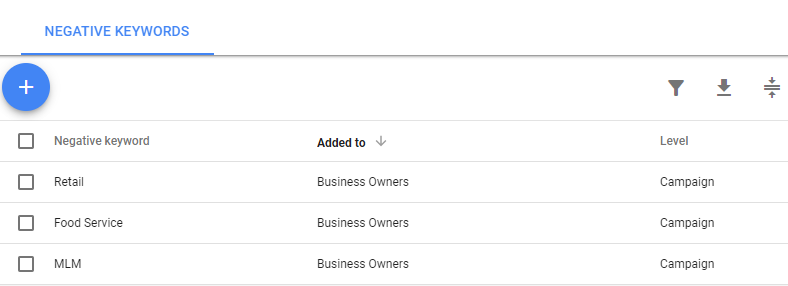
You’ll also want to take time to prune keywords by quality score.

Quality score is, as it implies, more of a qualitative analysis than the typical quantitative analytics you see in PPC.

It attempts to analyze the behavior of your ads and the people who click on them.

You can find your keyword quality score under the Keywords section of your Google AdWords dashboard.

You’ll have to select the Modify Columns tab that looks like this:

Scroll down until you see the Quality Score tab.
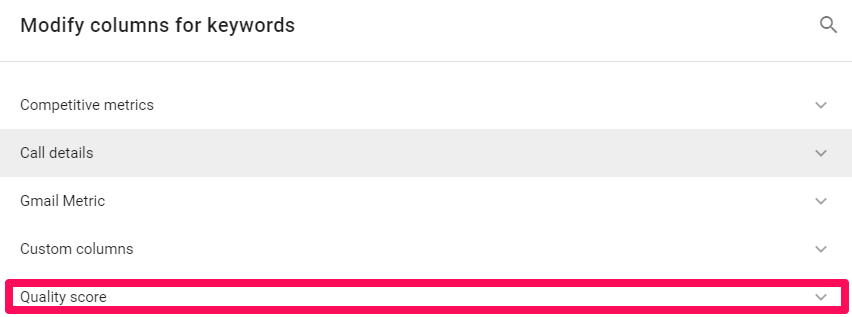
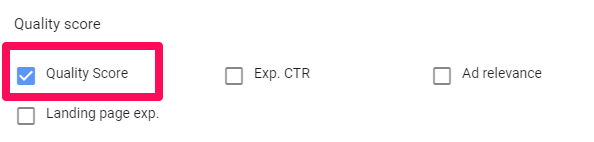
Click on it, and then select for your Quality Score to appear.
You’ll now be able to go back to your Keywords dashboard and scroll over until you see your Quality Score for each ad.
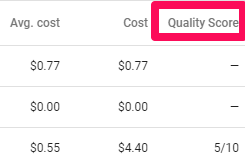
A low-quality score could mean that your ad isn’t effective. And that means Google will show it less and you’ll get fewer conversions.

High scores get better conversions at a lower cost-per-click.

You should always aim to improve this metric, and I recommend finding out what a good quality score for your industry is.

Anything less is likely a waste of time and money.

Once you fine-tune your keywords, you also want to conduct some serious A/B testing to help refine your ad’s performance.

A/B testing helps you narrow down the elements of your ads that perform better than others, which lets you find more ways to optimize your conversions.

You can test the copy, the image, the headline, and even the keywords.

As you can see in the example below, there can be two versions of the same ad that look vastly different:

This video from QuickSprout gives a quick rundown on how you can effectively split test in Google AdWords.

For example, if you want to test a headline, you’ll need to start by creating multiple variations to test their performance.

CrazyEgg shared 11 different ways this was accomplished by different brands.

Here’s one from a company called Logo Design:

They used numbers, ASCII characters, had a great offer and used a powerful CTA all in one little ad.

And their keyword, “logo design,” is strategically inserted to help generate more clicks.

It’s even bolded within the headline.

The possibilities for optimization and testing are endless.

5. Put yourself on a regimented schedule

Klientboost recommends building regular routines to help with checking and optimizing automation.

Your goal here is to make sure that you’re spending your time and your client’s money wisely, which will always require close attention to detail.

Falling behind or mismanaging your automation can still get you into trouble.

So how does it work? Follow this schedule:

1. Daily

Is anything broken? Are your ads running, and are the analytics looking in good health?

How are your budget trends?

Are any of your ads overspending, or only spending at certain times of day? That could point to an error.

Are your bids correct?

Are you paying too much for one ad? This could be removing budget from other areas that need it.

2. Weekly

Check if your overall trends are on-target. Are you getting good click-through rates and ROI for your ads?

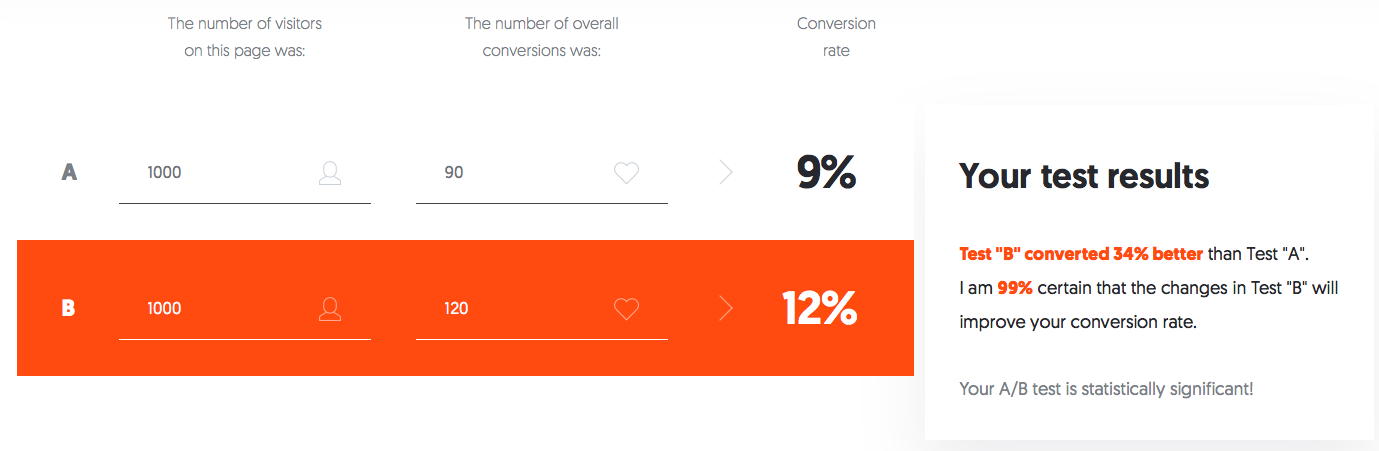
Review A/B testing. Make sure you’re not spending money blindly and are A/B testing like I mentioned.

Using a tool like my A/B test significance calculator will help you know if you have statistically-significant data.
3. Monthly

Review the data you’ve collected to see if there are any necessary changes.

Make changes as needed.

In general, are you getting results?

If not, look for ways to improve your ads or get results with other mediums.

Make these checks a part of your routine.

It’s not nearly as time-consuming as manually setting ads is, so this shouldn’t be too difficult a transition for you.

Schedule it in your phone, planner, email, or whatever you use to stay on track.

Conclusion

If you’re spending all of your time setting budgets and fiddling with bidding in your AdWords campaigns, you’re doing it wrong.

You have the power to automate the most tedious parts of your tasks and focus on the elements that yield results instead.

And it doesn’t have to be difficult. You already have all the tools you need.

Optimize your ads methodically.

Start with the campaign itself by setting the right approach from the start. Maximize for clicks, conversions, or whatever suits your goals.

Then work through your ad groups.

Set the target audience with laser accuracy by choosing the proper demographics, optimizing for specific devices, and pinpointing the right location.

Round out your approach by setting the right rules for individual ads. Make sure each is getting the right amount of exposure for accurate A/B testing.

Set appropriate time limits and ensure your ads haven’t been disqualified.

Then take time at the end of setting up your automation to fine-tune your keywords and conduct A/B tests to optimize ad performance.

Neglecting this step is like buying a supercar and putting standard fuel in it.

Finally, implement good habits to help you check your results.

You may not succeed on the first attempt, but with patience and diligence you’ll start to see your PPC campaigns begin to flourish.

And at the very least, you’ll have more time on your hands.

What strategies do you use to optimize your automated AdWord campaigns?

About the Author: Neil Patel is the cofounder of Neil Patel Digital.


from The Kissmetrics Marketing Blog http://ift.tt/2CQTQJV
via IFTTT

Transcript of Tips for Starting a Successful Business

Transcript of Tips for Starting a Successful Business written by John Jantsch read more at Duct Tape Marketing

Back to Podcast

Transcript

John Jantsch: Hello, and welcome to another episode of the Duct Tape Marketing Podcast. This is John Jantsch, and my guest today is Colleen DeBaise. She is a business journalist and author and a contributing editor at Inc and formerly was the small business editor at The Wall Street Journal. We’re going to talk about a book that’s new for her, Start a Successful Business: Expert Advice to Take Your Startup from Idea to Empire. So Colleen, welcome.

Colleen DeBaise: Hey, it’s nice to be here.

John Jantsch: I think that it was when you were at The Wall Street Journal is actually where you and I first came to contact because I think you were one of the first lovely people to write about-

Colleen DeBaise: I met you a while ago now.

John Jantsch: Well, you wrote about Duct Tape Marketing in The Wall Street Journal, I think, and Inc so I was happy about that, so we-

Colleen DeBaise: I’ve used you as a source numerous times, John-

John Jantsch: I know.

Colleen DeBaise: … and yeah, and I think we have been guests on the same television show together, so yeah. We’ve been in each other’s orbits for a while.

John Jantsch: That’s right. So Start a Successful Business. A lot of people want to do that these days, and I must admit I’m going to give you a little bit of trouble here, so get ready. The first chapter says, “Come up with a brilliant idea,” and I just wish I would have thought of that. That’s all it takes, huh? All right, so-

Colleen DeBaise: Yeah, that really is it. Yeah, yeah, but you know I-

John Jantsch: All right, so how does one do that?

Colleen DeBaise: I actually do note in that chapter that it does take more than that, and if it was as simple as coming up with a brilliant idea, the book would have been far, far shorter, but yes, no. What I say is, look, just backstep for a second. What I tried to do when I sat down to write this book is over the years I think we’ve interviewed countless successful entrepreneurs and some of the real, real super successful ones as well, and I tried to look at all of their stories, and I tried to see if there were any patterns or themes that emerged that an aspiring entrepreneur could maybe learn something from.

One of the things I did notice is that a lot of the successful entrepreneurs did start a company because there was a personal pain point or frustration that they wanted to solve, and if you’re looking for a brilliant business idea, I would say that would be the very first place to look is to look for that thing that’s driving you crazy for which you feel there is no solution on the market for.

John Jantsch: Yeah, it’s amazing. I have interviewed for this show hundreds of folks, and it’s amazing how often I hear that line. “Well, I really started a company to do X, but then I couldn’t get this and that, and so I just pivoted, and that’s what we became.” It’s amazing how often that happens.

Colleen DeBaise: Yeah, yeah, yeah, and that’s also … It’s funny you say that because that would be the next thing I would say is that once you do have this great idea that maybe is prompted from a personal pain point or frustration that you have, once you start the business, don’t be afraid to pivot if need be or to evolve your business or to at least, and what we see the successful entrepreneurs doing is really keeping that finger on the pulse of what customers are asking for and changing their business as need be.

Some fun examples are, of the big names out there, look at Amazon, for instance, which started out as a book seller way back when. Now it’s in the world domination category. It owns Whole Foods, and it’s probably delivering something via drone to your door right now. That has really evolved quite a bit from what it started out as, so yeah.

John Jantsch: One of the challenges I see, and I’m strategizing with a startup right now that I think has a decent idea but no business model. So in other words, “We think there’s a need for this,” but they haven’t figured out how they’re going to make money off of it, so how do you-

Colleen DeBaise: Yep, yep. I hear you.

John Jantsch: How do you discover the right kind of formula for … Is it a subscription? Do I sell a product? Do I have services around the product? I mean how do you come to that?

Colleen DeBaise: I know. That is an excellent question, and one of the things that we have noticed on Inc in recent years is a lot of people are trying the lean startup method, which of course was popularized by Eric Ries, and that was a book that came out maybe five or six years ago, but the concept is you have an idea, but you’re not sure if it’s going to work and you’re not sure what it actually will look like, so the idea is that you come up with a minimum viable product. You come up with a very bare bones version of this idea, and you put it out in the marketplace.

So you’re essentially going live with it, and then you see what happens, and by doing it in this lean way hopefully you’re not spending exorbitant amounts of money or time or energy because what you want to do is you just want to put it out there and see what happens and test it out and see maybe what the business model can be. You want to see if customers actually really do want this. You want to see if anyone will pay for it, and if none of those things happen, then you want to be able to be nimble enough that you can make some adjustments and tweaks until you finally arrive at what it is that works that you can build a business model around. Hopefully that makes sense.

John Jantsch: You bet.

Colleen DeBaise: Yeah, and it differs a lot from even when I wrote my first book 10 years ago the thinking still was to start everything with the traditional business plan, which is where you sat down and you spent a lot of time researching and maybe coming with a prototype and doing a lot long before you even launched your business, and in today’s world it’s just seeming that the better way to do it is to do it in this lean way, and once you’ve got something, once you’ve got your product, your service, once you’ve got your business model, then sit down to write the traditional business plan, which there’s very much still a use for that, but so that’s where we fall on that.

John Jantsch: So we started talking about an idea, and I will say there are millions and millions of great ideas. The companies that you write about in the pages of Inc and in this book are actually the ones that execute on that idea, and I think there are a lot of companies that fail because they may have had a great idea, but they fail to execute. They fail to find the right operations people, the right IT people. So how do you go from idea to execution?

Colleen DeBaise: Yeah, that’s a great question. Well, it’s tough. One of the things I would recommend is some people don’t execute their idea because they’re really afraid to … Well, they might be afraid of a lot of things, but one thing they might be afraid of is they might be afraid of … They don’t want anyone to steal their idea, so they don’t-

John Jantsch: Nice. Yeah, that’s the [crosstalk 00:08:02]

Colleen DeBaise: Yeah. They don’t talk to anyone. They don’t get lots of feedback. They don’t seek advice because they’re so scared that someone’s going to rip off their idea. I think that fear is largely unfounded because, as you say, it really is all about the execution. If you’ve thought of an idea, chances are someone else has already thought of it too. It’s all in how you execute it. A great example is Facebook, which it was far from an original idea. Mark Zuckerberg did not invent social media, which I think nowadays people think he did, but social media in some form, social networks, had existed for 10 years before he invented Facebook, but the way he executed it made all the difference, and he also, I think, was able to take advantage of the fact that people were becoming more and more familiar and aware of how social networks work, and he was able to take advantage of the fact that other people had tested out social media, things like Friendster and MySpace. He was able to take advantage of what they knew in order to launch Facebook.

So for the people out there who aren’t getting to that execution stage, I would say … which, that sounds awful, but they haven’t executed their idea yet, I would say, “Make sure you get out there and seek feedback and advice and tips, and that will make you feel more confident to go about getting into the marketplace with your idea.” The other thing too I would say is that some people are afraid to take initiative or take the steps that they need to because they’re worried about failure. I think that failure gets a bad rap. I think in a lot of entrepreneurial circles, failure is something that has become respected almost. There’s a running joke in Silicon Valley, “What do you called a failed entrepreneur?” The answer is, “Experienced.” Failure can teach us so much, so there may be missteps that you make along the way. There probably will be, but those are things that you can learn from. You can hopefully be better ready, once you learn from those mistakes, you can be armed and ready to approach again with maybe a better way to do something.

In my book, I include some very famous examples of failures. One entrepreneur, who has probably failed the most is Richard Branson, who, of course, is also super successful. He has had any number of great companies, Virgin Records and Virgin Airlines, and he’s failed spectacularly, almost flamboyantly you might say, and it hasn’t affected him. He’s still Richard Branson, so I would say to people, if that fear of failure is what’s causing them not to execute the idea, they should reframe how they view failure.

John Jantsch: Well, it’s easier to fail when you’re a knight, so he’s got [crosstalk 00:11:34]

Colleen DeBaise: Yeah. That’s true.

John Jantsch: So one of the things that, again, I’m going to give you a little trouble, buried in chapter six and seven is this idea of customer research, and I wonder if, in the lean startup world customer discovery maybe comes first, like go find somebody who has a problem that needs to be solved.

Colleen DeBaise: Yeah, I was a little worried you would give me a hard time with that, John, because I was thinking about the things you would ask me, and I know that the customer realm and marketing is definitely more your expertise and probably what you think of first, and yeah, I know I have a little bit buried there, but hopefully I have some good stuff in there, but yeah, no, I think … I do dedicate two chapters to it, and the idea is that, yes, you do need to know your customer. You need to know your customer hopefully even better than they know themselves, and if you don’t know your customer, you’ve got to figure out ways to go about doing that, and also, once you get up and running, you need to continue to understand your customer, and you need to continue to anticipate the things that they are going to be asking for.

There’s a couple tips from the book that I like in particular that I have gathered from various experts, and one is this idea of standing in your customers’ shoes, sort of pretend to be your customer. Look around, see what your competitors are. Why is your customer choosing you? Try to figure out what it is that is making you unique and uniquely qualified to provide that product or service that is the reason your customers are choosing you over someone else, because that’s something that you can really keep. You want to emphasize that, whatever it is that people like about you.

Another tip is to staple yourself to your customer’s order. In other words, when someone goes about patronizing your business in some way, buying your product or service, go from start to finish to see what that experience is like for the customer so that you understand it and that you can see whether or not there are things that you need to do differently. That idea comes from actually the medical world. In hospitals, some interns are asked to check in as fake patients so they understand what it’s like for a patient to come into the hospital, and they get a sense of how treatment can be better and what needs to happen. So I think that is a good tip. Hopefully you agree with me to understand-

John Jantsch: Well, no, absolutely. You can find that exact tip in Duct Tape Marketing, as a matter of fact because I’ve long believed-

Colleen DeBaise: Oh, great. Good.

John Jantsch: I’ve long believed that, and as business owners, we forget. I mean we don’t go to our website and fill out a form anymore. I mean we set that up 10 years ago-

Colleen DeBaise: Yep, yep. Exactly.

John Jantsch: … and so we forget what the experience actually is.

Colleen DeBaise: Totally.

John Jantsch: Let’s talk a little bit about funding. That’s a topic that I guess people, especially startup world, really excited, go out and get a bunch of money, get the thing going, and I think it’s a valid question to say, “Should you actually take that approach or not?”

Colleen DeBaise: In terms of going out there and getting money?

John Jantsch: Yeah. I mean are you better off bootstrapping a company and building it to something and then maybe deciding, or are you better off going out and saying, “Here’s my great idea. Give me $5 million, and I’ll try to make it work.”

Colleen DeBaise: Well, I think you’re probably always better off bootstrapping anyhow, but I would also add that most people really actually realistically don’t have any other choice. We love to watch these shows like Shark Tank, and we love to think that maybe it’s somewhat easy to go out there and raise money, but in reality, it really isn’t. Most people don’t have businesses that are appropriate really for raising huge amounts of funding and certainly not huge amounts of investment, like venture capital or anything like that. Really only a handful of very high-growth startups are going to be the ones that should be seeking investors.

I would say most businesses or the majority of businesses need to … if you’re thinking about starting a business probably the first place you need to look is your own pocket, your own savings, your own bank account. If that is not as flush as you would like it to be, friends and family are a next great option. They sometimes call the money that a friend or family will invest in your business love money because only people who love you are going to invest in the early stages.

John Jantsch: My family all knows what a screw-up I am. I mean I don’t stand a chance of getting a dime out of them.

Colleen DeBaise: So yeah, so for someone like you, well, that might be a different story. We’d have to explore some other area that you want to be able to come up with money, but these days, there are a number of crowd fun, found … Excuse me. I can’t speak. Crowdfunding platforms that could be appropriate if you have a product or usually it’s a product that you can go to these platforms and raise money from a crowd of people essentially. It’s small amounts of money from a whole crowd who want to see your product on store shelves or available for order or online, so they might be able to fund you. People tap into a number of other things. They tap into their home equity. They sometimes tap into 401(k)s. We don’t advise that, but that is more realistically where a lot of people end up coming up with cash to start a business.

I will say it does give one pause to go out and start a business because the failure rate, it’s fairly high for small businesses. A lot of them don’t make it past the first few years. The biggest reason really is because the business is undercapitalized, which is just a fancy way of saying that there isn’t enough money there, and I would say most entrepreneurs underestimate how much it costs to get their business up and running and they overestimate how much revenue will come in, and they also overestimate how quickly it will come in. So it can be very tough, so you really need to do your homework and figure out how much money you need, not only to get your business up and running but how much you need personally if you need income coming in to support your own expenses, your mortgage payment, your rent, your groceries, your kids’ school. You’ve got to be able to have a real handle on your own personal expenses as well.

John Jantsch: Yeah, lots of tequila too, so you [crosstalk 00:19:19]

Colleen DeBaise: Yeah. That always helps. Yep. Exactly. I definitely recommend that.

John Jantsch: So Colleen, where can people find out more about Start a Successful Business and really anything you’re up to at Inc and other places?

Colleen DeBaise: Oh, sure. Yeah, well the book is available on Amazon.com, and it also is, if you go to Inc Magazine’s website, you can find links to it there, which is, of course, Inc.com, and then there’s also links to the book from my own personal website, which is ColleenDeBaise.com.

John Jantsch: Well, thanks so much for joining us, Colleen, and hopefully I’ll bump into you next time I’m up in New York. I’m going to be up there for a wedding in a few months, so maybe-

Colleen DeBaise: Oh, great. Oh, wonderful. I would love to see you.

John Jantsch: All right. Take care.

Colleen DeBaise: All right. Thanks so much, John.

John Jantsch: This episode of the Duct Tape Marketing Podcast is sponsored by Podcast Bookers, PodcastBookers.com. Podcast’s are really hot, right, but you know what’s also really hot? Appearing as a guest on one of the many, many podcasts out there. Think about it. Much easier than writing a guest blog post. You get some high-quality content. You get great backlinks. People want to share that content. Maybe you can even transcribe that content. Being a guest on podcasts, getting yourself booked on podcasts, is a really, really great SEO tactic, great brand-building tactic. Podcast Bookers can get you booked on two to three to four podcasts every single month on auto-pilot. Go check it out, PodcastBookers.com.


from Duct Tape Marketing http://ift.tt/2FFzbvm
via IFTTT

Tips for Starting a Successful Business

Tips for Starting a Successful Business written by John Jantsch read more at Duct Tape Marketing

Marketing Podcast with Colleen DeBaise
Podcast Transcript

Colleen DeBaise

My guest for this week’s episode of the Duct Tape Marketing Podcast is Colleen DeBaise. She is a business journalist, author, podcast host at The Story Exchange, and contributing editor at Inc. She and I discuss her new book Start a Successful Business: Expert Advice to Take Your Startup from Idea to Empire.

DeBaise has spent the bulk of her career covering entrepreneurship, primarily as the small business editor of The Wall Street Journal, and later as a contributor to The New York Times. An entrepreneur herself, she is the founder of the Hampton Bee, a media site that provides news and tips for consumers who support small businesses on Long Island’s East End.

In addition to those roles, DeBaise has also served as an editor at EntrepreneurBusinessWeekand SmartMoney. She has been interviewed as a small business expert on television and radio, including MSNBC, Fox Business News, CNBC, CBS and NPR.

Questions I ask Colleen DeBaise:

  • Where does customer discovery fit into the lean startup world?
  • Should startups seek out funding?
  • Why should people embrace failure?

What you’ll learn if you give a listen:

  • How to come up with a brilliant idea
  • How to discover the right formula for a business model
  • How to execute a great idea

Key takeaways from the episode and more about Colleen DeBaise:

Like this show? Click on over and give us a review on iTunes, please!


from Duct Tape Marketing http://ift.tt/2t7WWJV
via IFTTT