Wednesday, 3 October 2018

The Real Bottom Line: Open Rate and Customer Engagement

As a marketing channel, email shows no signs of slowing down. Nearly 233 million of the world’s 3.7 billion email users are located in the US, and that number is expected to grow to nearly 255 million by the year 2020. It should come as no surprise then that over half of marketers plan to expand their budget for email in the same period to leverage this growing audience.

But as email adoption increases and brands invest more in the space, traditional KPIs like opens and clicks are falling behind money generated per email as the key decision and strategy driver for larger marketers. This begs the question, what happens to deliverability when attention is solely on the bottom line?

Performance Impact

There is a perpetual concern in the email community that open rates are falling. Customers are receiving more and more mail—ignoring even messaging they’ve opted into—and subscriber fatigue is a real issue. Recently, email performance expert eDataSource analyzed “Back to School” email campaign performance YOY for 2017 and 2018, and noticed the same downward trend. Almost universally, email read (or open) rates underperformed from the year previously.

This made me curious – was it increased fatigue generated by a specific type of campaign that individuals could easily ignore, or was there something larger at work here? Leveraging eDataSource I decided to pull performance across a few additional industries for the entire month of July in both 2017 and 2018 to compare.
 

Category

MM/YY

Inbox Rate

Read/Open Rate

Apparel & Accessories

J-17

77.096

18.887

Apparel & Accessories

J-18

84.987

17.654

Restaurants, Bars, & Food Service

J-17

83.753

18.797

Restaurants, Bars, & Food Service

J-18

89.963

18.021

Sporting Goods

J-17

77.896

18.174

Sporting Goods

J-18

84.440

17.652

It’s Time to Refocus

The results were certainly interesting and confirm what others in the space are seeing. While Inbox rates did go up, open rates dipped across the board. Combined with numerous industry studies, a larger picture is starting to emerge here. Customers are receiving more mail, marketers are focusing more on monetary returns per campaign, and a deliverability impact is coming.

The importance of open rates cannot be understated. This is a key indicator to ISPs that an individual actually *wants*to receive and engage with a brand’s messaging. It sends a direct signal to the ISP to deliver this mail to the inbox. Essentially, the higher the open rate, the lower the spam rate, the better deliverability is likely to be overall. Not to mention the fact that a customer can’t spend money on an offer they never receive or look at in the first place.

It is critical that marketers don’t lose sight of traditional engagement metrics in their efforts to capitalize on returns. Standard best practices should always apply. Leverage a double opt-in, always apply engagement-based segmentation and cease mailing to customers who opt out or do not re-engage. These are the building blocks to ensure campaigns continue to deliver functionally to the inbox.

Email marketers, also make sure to read 'Tis the Season for Holiday Planning (Now!) from Kenna Hilburn, Director of Account Development at Liveclicker. She has four tips, to highly engaging email campaigns your customers will love. 


from Oracle Blogs | Oracle Marketing Cloud https://ift.tt/2NhYHcl
via IFTTT

How Customer-Centric FAQ Pages Can Improve Content Marketing Results

How FAQ Pages Drive Content Marketing Results

How FAQ Pages Drive Content Marketing Results Your prospects and customers have questions. And it’s your job as a content marketer to answer them. That’s why you’re continuously turning out content to inform, engage, and inspire action throughout the buyer journey. But wouldn’t it be great if you could answer many of those burning questions in one convenient, easy-to-use resource? It would. And it exists. It’s an early-internet favorite that's not super top-of-mind these days: The FAQ page. FAQ pages have been around since before search engines, but the question is: Are you making the most of this often forgotten resource? Rather than an afterthought, FAQ pages can become a robust piece of content that directly serves the interests of your prospects and customers, helping accelerate the success of your overall content marketing program. Here's how you can make sure that your FAQ has “best answer” content that helps inform customers and prospects and move them along the buyer journey.

The Potential of FAQ Pages

#1 - Untapped SEO Value

Audiences are more self-directed than ever before in their research for solutions and answers to their questions. And of course, they often turn to search engines. But most searchers aren’t typing in broad queries these days. They’re being increasingly specific. In fact, half of all search queries today contain at least four terms and 280 million queries are phrased as questions each day. FAQ pages were born to be answer hubs. As a result, the opportunity is there for you to provide best-answer content that helps support rankings and match search intent. It’s also a fantastic cross-linking opportunity, seeding other more typical content assets. For example, precisely and concisely answering a question on an FAQ page allows you to crosslink to a more robust content resource. This not only gives your audience a better experience by providing them with a solid answer upfront, but also gives them the option to explore the topic more in-depth. Ultimately, this helps you tailor the experience and support the SEO value of other related pieces of content. [bctt tweet="FAQ pages were born to be answer hubs. The opportunity is there for you to provide best-answer content that helps support rankings and match search intent. - @annieleuman #ContentMarketing" username="toprank"]

#2 - Reduces Friction in the Customer Journey

Attract. Engage. Convert. Retain. Advocate. As a content marketer, it’s your job to provide your customers and prospects with content that can help them navigate each stage of the customer journey — and the last thing you or your audience wants are friction points that slow the whole process down. As customer service and experience expert Shep Hyken recently told us, convenience is what sets rockstar businesses apart from all the rest — and one pillar of convenience is reducing friction. And what’s more convenient than having the solid answers to important questions in one easy-to-use, easy-to-find location? “Reducing friction is perhaps the No. 1 opportunity for marketers," Shep states. "It’s simple. If you don’t know your friction points, you can’t improve the customer experience and build customer loyalty.”

#3 - Reinforces Trust by Reducing Anxiety

Concerns crop up when prospects are considering new technology, services, or products. They have doubts from neutral or less-than-stellar reviews. They have questions. Hesitation. Uncertainty. But if you can’t qualm those fears and establish trust, prospects aren’t likely to convert. FAQs afford you the chance to put some of those concerns to rest by giving information away, building trust and making it easier for prospects to convert.   There are your existing customers to consider, too. If customers encounter a problem with your product or service, they’re going to feel unsettled until the issue is resolved. Sure they can call you, but they might rather have a readily available resource to help them solve the issue on their own. If you put some effort behind your FAQ page, you have the opportunity provide customers with fast troubleshooting, how-to tutorials, and step-by-step guides that reduce their anxiety and reignite their confidence in your company.

3 Steps to Leveling-Up Your FAQ Game

Step 1: Improve the Navigation With Organization

According to Shep, the key to improving the customer experience is in creating convenience for your audience. You need to take the same approach to your FAQ page. This means making a page that is easy to scan, easy to navigate, and easy to learn from. FAQs can get long, answering every relevant question that may come to a prospect's mind, and without organization, it can quickly get cluttered. To increase readability and avoid a page with an overwhelming amount of information, place the questions near the top of the page that are hyperlinked to the answers further down. Each question and answer should also have its own link (the FAQ URL + div tag) so you can easily link to it from other content.  If you have the capability, consider adding a search bar at the top of the page and batch similar questions together so users can quickly find what they’re looking for. Here's a great example from YouTube:

Step 2: Be Clear and Specific in Your Answers

Sometimes answers lead to more questions — one thing you don’t want your audience to feel. And in trying to thoroughly answer questions and provide every possible solution, that problem becomes exacerbated, creating a rats nest of information that’s hard to understand. To avoid this worst case scenario, your answers need to be clear, precise, and to the point. They need to be written in a way that informs prospects about your product or service instead of making it more convoluted and complicated. Avoid vague language. Provide step-by-step guides. And only answer relevant questions to prevent cluttering up your FAQ with answers your prospects don’t care about.   Here's an example from Amazon S3, Amazon's cloud object storage offering: Amazon S3 FAQ Page

Step 3: Encourage Action

One of the biggest benefits of an FAQ page is that it’s one of the few places your prospects go to intentionally learn more about your solution. As marketers, that’s a pretty powerful tool to wield. And when marketers use this tool to guide prospects through the buyer journey is when it’s most effective. But how can you encourage prospects to move from stage to stage? Guide prospects like you would on any other piece of content — with a CTA. Supplement your answers with links and calls to action that lead them to other pieces of the funnel. Provide your answers clearly, and link to a more in-depth resource like a video tutorial or user guide for more information. This increases the number of touchpoints on their customer journey, removing additional knowledge barriers and bringing them close to conversion.

You Have All of the Answers. Share Them.

From realizing they have a business problem to evaluating solutions to troubleshooting an issue, your clients and prospects have questions. And you have the answers. An FAQ page represents an unmissable opportunity for marketers to accelerate the buyer journey, build trust, and add SEO value. So don’t let the opportunity pass you by and take the above tips to heart. When it comes to being the best answer for your audience, you may wonder: Is short-form or long-form content better? Our own CEO, Lee Odden, walks you through the quandary.

The post How Customer-Centric FAQ Pages Can Improve Content Marketing Results appeared first on Online Marketing Blog - TopRank®.


from Online Marketing Blog – TopRank® https://ift.tt/2OuIyVQ
via IFTTT

Tuesday, 2 October 2018

A Blog Isn’t a Blog, It’s a Business

I wrote my very first blog post on July 24, 2005. That blog post is no longer live because it was terrible.

The post was called, “Winning the Search Engine Marketing War.”

It was 412 words long, contained no images, no external links, and it didn’t provide much value because it didn’t teach you anything.

But you know what, back in 2005, the blog post was pretty darn good.

See, I wasn’t competing with a lot of blogs back then. Currently, there are well over 440 million blogs and back in 2011, that number was 173 million. And in 2005, the web was still so small that there were only 64 million websites (with only a small portion of them being blogs).

In other words, my first blog post was pretty darn good because something is better than nothing. People were just happy to get some information, even though it wasn’t great.

But over the years, blogging has changed. What it used to be in 2005, isn’t what it is today.

What blogging used to be

A blog used to just be a blog.

It was a place where you would share your personal experiences with the world. From photos of the places you traveled to and blogging about the food you ate to even sharing personal information about your family life…

In 2005, social networks weren’t popular. Facebook launched in 2004, but it wasn’t what it is now. And sites like MySpace focused heavily on music.

As social networks evolved, people realized it was easier to share personal stories on Facebook and Instagram than it was to write a whole blog post.

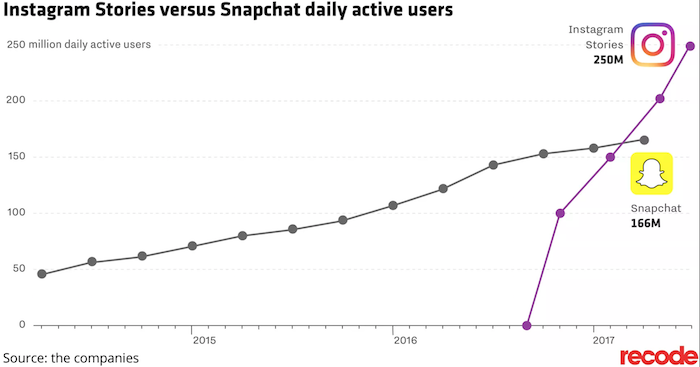
instagram stories

Over 250 million people share what they are doing in their personal life each day just on Instagram. All you have to do is talk (or look) into your phone for just a few seconds. It’s really that simple.

And that’s why more of you use social networks on a daily basis than a blog.

Just think of it this way… if you wanted to update your friends on your life, is it easier for you to just upload some pictures to Facebook or is it easier for you to write a blog post?

Of course, it’s easier to just upload some photos to Facebook. It’s why Facebook is so popular.

For that reason, people started to focus their attention on Instagram, Facebook, Twitter, LinkedIn, and Snapchat over blogging.

So why do people continually create more blogs?

There are many reasons why blogs have grown in popularity. As I mentioned above, there are well over 400 million blogs today.

The biggest reason why blogs have grown in popularity is that you are an end user and continue consuming the content that blogs put out.

Just in the United States alone, 42.23% of people from the ages of 18 to 49 read blogs.

united states reads

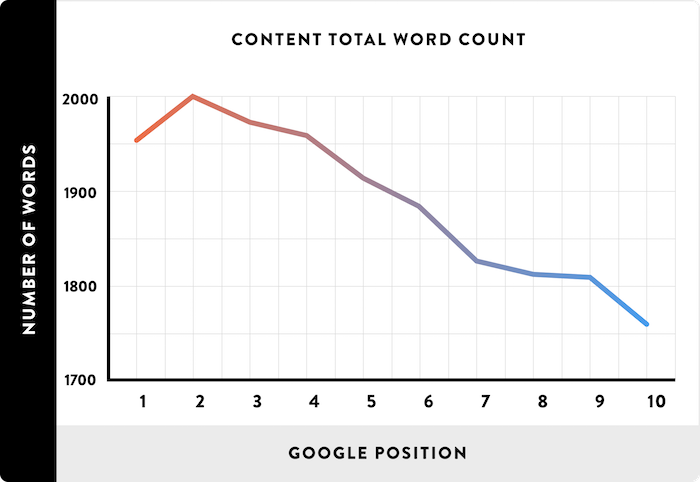
And because people want to read blogs, Google has no choice but to rank them. The average page that is listed on page one of Google has 1,890 words:

word count

There are many reasons you may want to create a blog, but from someone who blogs on a weekly basis and has been for 13 years, here are the main reasons to have a blog:

  1. You control your own destiny – social networks have restricted how many of your friends actually see your content. With a blog, you have more control over your destiny. You can collect emails to get people back to your site, you can build a push notification subscriber list, you can rank your content on Google… overall, it’s just easier to get a consistent stream of traffic from a blog than it is from a social profile because you aren’t relying on 1 traffic source. This is more important than ever because the top referring sites on the web are starting to send less traffic out to other sites.
  2. Paid ads are expensive – Google generate 6 billion dollars in ad revenue in 2005 and that number shot up to 95 billion in 2017. With ad costs continually rising, you have no choice as a business but to find other traffic channels. A blog is an obvious question as Google loves ranking text-based content. Just look at Wikipedia, they rank for everything and generate 5.4 billion visits a month.
  3. Marketing has moved to an omnichannel approach – there are currently 1,766,926,408 websites on the web. In 2005 that number was only 64,780,617. That’s a 2,627% increase. That means you as a business have more competition online, which gives consumers more choices. Why should someone choose you over the competition? Well, branding plays a huge part, if you can get a consumer to see or hear about your brand 7 times they are much more likely to be a customer. A blog creates another additional touchpoint.

A blog isn’t a blog, it’s a business

As more sites have come online, SEO has become more competitive. Yes, more people are using Google, but they are searching for the same popular terms.

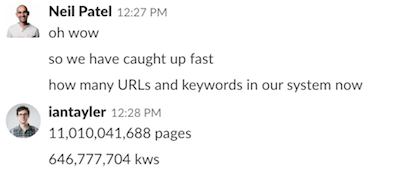
With Ubersuggest, we have a database of 646,777,704 keywords.

word database

And out of those keywords, only 15,301,405 keywords generate a search volume of an excess of 10,000 searches per month.

As more people come online, it doesn’t mean that they search for brand new keywords. It just means that the popular terms get even more popular.

That’s why it is harder to get people to come to your site over the competition because you are competing with more companies to get those eyeballs.

See, as SEO has become more competitive, you have no choice but to treat it as a business. It takes time and money to produce content. It takes time and money to promote your content. And then once you have those visitors, it takes more time and money to convert those visitors into paying customers.

In other words, because it is so competitive, you won’t do that well unless you put in tons of time or money (or ideally both).

Just look at Quick Sprout, the marketing blog I don’t put much money into it. Even though it’s older than NeilPatel.com, it generates a lot less traffic.

quicksprouttraffic

NeilPatel.com blog generates 693% more traffic because I put over 6 figures into the blog each month (mainly in developing free tools and creating audio and video content), and I treat it like a business.

neil patel traffic

Conclusion

Look, I am not trying to persuade you into not building a blog. But I believe most companies should have a blog. And if you don’t have one, just follow this guide to get up and running.

A blog is the only way you are going to rank well on Google and generate traffic without directly paying for it by using Google AdWords or Facebook Ads.

But if you want to do well, you can’t treat your blog like a “blog”… you have to treat it like a business. If you don’t, then you won’t do well.

Here are the 3 important steps you need to take if you want to do well:

  1. Focus on writing amazing content consistently – it’s not about writing one or two amazing posts… you have to be consistently awesome. The market is so competitive, you can’t write 400-word blog posts as I did in 2005. Sure, if you are in a new niche with no competition, by all means, write 400-word posts, but the chances are you are going to eventually have some competition. And if you don’t have the time, you should just hire a writer to help you out.
  2. Promote your content – after you have content, you’ll have to promote it. Promotion isn’t easy but I’ve broken it down into 4 steps for you. Just follow them and you’ll do well.
  3. Focus on monetization last – most bloggers who get this far face one big problem… as their traffic increases their revenue typically stays flat. Just because you have more visitors, it doesn’t guarantee an increase in revenue. Towards the end of this blog post, I teach you how to convert those visitors into leads and customers. Follow them.
  4. Don’t forget about voice – I know I said you only have to follow 3 steps, but if you’ve followed all of them successfully, you’ll need to start thinking about voice. 40% of adults use voice search daily, so don’t take it for granted. Follow this guide to ensure that you capture the voice search market share before your competition.

What do you think about blogging? Are you going to start taking it seriously?

The post A Blog Isn’t a Blog, It’s a Business appeared first on Neil Patel.


from Blog – Neil Patel https://ift.tt/2zLXTcb
via IFTTT

The Introvert’s Guide to Successful Networking

The Introvert’s Guide to Successful Networking written by John Jantsch read more at Duct Tape Marketing

Networking is a critical skill for any business owner to develop. It allows you to find the best talent for your company, establish new strategic partnerships, and expand your client base. There is definitely an art to networking, and there are some steps that everyone should take before they head out to their next conference or industry cocktail mixer.

For introverts, though, networking can prove to be a real challenge. If large groups and chatting with strangers is something that makes you cringe, then networking is not going to come easily. But that doesn’t mean you should throw in the towel. There are some tips and tricks that can help even the shiest of the shy make meaningful business connections that can help them to grow their business and further their career.

Network From the Comfort of Your Home

The advent of social media has been a dream come true for introverts. A site like LinkedIn allows introverts a bit more control over the situation—they can reach out on their own terms, have time to consider how they want to open the conversation, and then are able to talk over a written chat. This removes the fear of having to maintain a conversational volley like you would in a real-life setting, and it gives you the opportunity to craft thoughtful responses to those you’re speaking with.

Joining LinkedIn groups is a good way to meet new people online. Target groups that are related to your field or a niche in your industry. You might also consider tapping into alumni networks or trade organizations. Once you’ve joined a group, join in on the conversation. Share some content that is useful and relevant, and once you get into a conversation on a thread, that opens the door for you to then reach out to that person one-on-one in a direct message.

Once you’ve chatted with someone on LinkedIn, it’s easier to make the leap to meeting in real life. If you’ve found common ground or have talked already about a business issue you share, it can be easier to then make the ask and invite them out to coffee or lunch to continue the conversation in person.

Build In Quiet Time

Once you work up the courage to attend a networking event or meet with a colleague, client, or prospect one-on-one, it’s okay to take time to assess what you need to make your interactions successful, and to give yourself some breathing room before and after the meeting.

For a lot of introverts, crowded networking events or even one-on-one conversations are draining and stressful. Build a half hour buffer into your schedule before the meeting or event to allow time to decompress, gather your thoughts, run through the questions you plan to ask or topics you’d like to cover, and to really get your head in the game.

And you should go into these meetings with a game plan. Don’t leave it to chance. If you’re going to an event, do some research about who else is attending and learn a bit about them. Write down a few questions that you’d like to ask. Sometimes it’s helpful to even rehearse asking these questions at home with a friend or loved one who can act out the role of another networking event attendee.

It’s alright to take some time after the meeting, too. Grab some fresh air and walk back to the office rather than hopping right in the car or on the subway. Take the time to do a mental debrief, focusing on what went well rather than dwelling on the one or two awkward silences or flubbed lines.

Be a Good Listener

For a lot of introverts, their biggest fear is having to hop into an already established group at a networking event, dazzling them with insight and wit. It’s perfectly fine for you to not be the life of the party at a networking event. In fact, there are a lot of extroverts jockeying for that role, so you can benefit from doing something that, as an introvert, already comes easily to you: listening.

When people are in a networking situation and are either the extrovert vying for everyone’s attention or are the introvert terrified of having to make small talk, they sometimes forget that conversation is a two-way street. Rather than trying to be in the driver’s seat in a conversation, let the more extroverted person lead the way. You can contribute a lot just by listening intently and asking thoughtful questions of the other person. In fact, if you’re listening carefully, you’re probably making a great first impression—you come across as someone who’s attentive, smart, and engaged. This is actually an important part of building meaningful business relationships, rather than purely transactional interactions, that can serve anyone well in the long run—introverts and extroverts alike.

Phone a Friend

Big networking events and large conferences often strike fear in the heart of a true introvert. If you don’t think you can go it alone, find a friend to bring along with you! Having an event buddy, someone you like and trust, will help to put you at ease. When you’re more at ease, you’ll be better equipped to handle conversations with strangers and a large group dynamic.

It will also take some of the burden of carrying every conversation off of your plate. Your event buddy may even help to push you out of your comfort zone and get you to tag along for the conference cocktail hour or post-event impromptu karaoke night.

Don’t Forget to Follow Through

Sometimes just surviving the networking event is stressful enough. You might be tempted to pat yourself on the back just for making it through, and then move on mentally to your next task. But attending the event is only half of your work!

The next day, you want to send a personalized follow-up to anyone you spoke with. This is the easy, low-stress part, since you can send an email or LinkedIn message from the comfort of your desk. Because it seems easier, it can be an easy step to gloss over or forget, but in reality it is the most important part of networking.

If you go to an event and then let all of the business cards you collected just gather dust in a drawer, what have you accomplished? Or if you wait a month to reach out to the people you met, they’re not going to be able to place you, or if they do, they will be unimpressed by how slow you were in reaching out.

Setting aside an hour the next day to write thoughtful notes that reference a specific thing you discussed with that person will really help you to stand out. They might not have an immediate need, but when they are looking for someone who does what you do (or a friend asks them for a recommendation), if you’ve created a positive impression, you just might be the person they think of first.

For most introverts, attending a networking event sounds about as fun as getting a root canal. But when you approach networking with a plan in mind, it can be a lot easier to get over the discomfort of interacting with strangers in a group setting, and to really make meaningful connections.


from Duct Tape Marketing https://ift.tt/2Nha4Bx
via IFTTT

How Brands Can Avoid the Dreaded Fauxthenticity Pitfall

Avoiding the Pitfalls of Fauxthenticity

Avoiding the Pitfalls of Fauxthenticity Let’s be real for a second here. Today’s marketers and brands are collectively recognizing the need to strike a note of authenticity with their audiences. That’s excellent. But in the quest to get real, it’s all too easy to wind up making the exact opposite impression by trying too hard, especially on social media channels. When I think about this subject I’m always reminded of Steve Buscemi’s attempt to conform with school kids on the TV show 30 Rock: via GIPHY So, we should ask ourselves: How can we, as businesses, avoid this “fauxthenticity” pitfall? How can we overcome the inherent barriers that inhibit genuine connections between brand and customer? How can we speak the language of our audience without looking like we’re trying really hard to speak their language? It might be helpful to start out by looking at a few examples of authenticity gone awry, and dissect where things misfired with an eye on getting it right.

Can a Brand Be Your Friend?

Ian Bogost wrote a piece for the newest issue of The Atlantic entitled Brands Are Not Our Friends. Referencing an experience where the telecommunications giant sent Bogost delivery pies in response to a Twitter quip, the subhead reads: “Comcast sent me 10 pizzas. This isn’t nice; it’s manipulative.” There’s a fine line to walk here, isn’t there? Comcast was executing a “surprise and delight” strategy, which isn’t a bad idea. But when the action rings hollow and transparent, the desired impact won’t be there. In his story, Bogost cites another example where the social media team for Steak-umms, a seller of frozen beef, reached out to him via DM to sign a petition as part of the company’s tongue-in-cheek campaign to become verified on Twitter. When he learned that he’d been selected for inclusion by sophisticated software that analyzed his location, interests, and social media usage habits, it made him a bit uncomfortable. The bottom line here? If you’re seeking to surprise and delight, you certainly don’t want to surprise in the wrong way. The ultimate point of Bogost’s article is, I think, a good one. No, brands cannot be your friends. They can be friendly, but even with a real human being behind the account, they’re still intangible entities driven by commercial motivations. But you know what? That’s OK, because there’s still a space to play. What brands CAN strive to be is trustworthy, likable advocates with empathetic connections to their customers and prospects. And that is what our aim should be. When it comes to achieving this distinction, I believe there are four fundamentals that must be front-and-center, which I get into below.

Fleeing Fauxthenticity: 4 Ways for Brands to Keep it Real

#1 - Know Your Audience

More or less the prime directive for content marketing in general, but in this conversation it becomes further magnified. It’s not simply about understanding general demographics, or keeping up with segmented trends, or regurgitating the terminologies and buzzwords they like to use (our Josh Nite had a great post earlier this year that opened with an ill-fated brand attempts to ride the wave of popular user hashtags). It’s about understanding what really matters to them, and knowing them well enough to anticipate what’s going to resonate or fall flat. Dig deeper in your research. Study past campaigns by other brands or agencies with similar audiences, to see what’s worked and what’s totally missed. Have actual conversations with the people you serve or wish to serve. At TopRank Marketing, our content team focuses extensively on gathering and analyzing audience insights before we start trying to connect or engage. Authenticity efforts guided by incomplete information or algorithm-based assumptions (like the aforementioned Steak-umms case) can instill negative feelings rather than positive ones, which is certainly not what we want. Internet users are getting smarter these days. They see through half-baked stunts.

#2 - Don’t Be Overly Rosy

From my view, this is the absolute most pivotal element, and also the toughest to nail. No company wants to go around trashing itself, or sending off negative vibes all the time. But, then again, the world can be a difficult and upsetting place. Things don’t always go right. The most transparently fauxthentic brands to me are those bubbly, peppy, happy-go-lucky ones that speak solely in optimism and exclamation points. People by and large cannot relate to that. As an example, check out this recent Listerine-sponsored Instagram post from internet celeb Scarlett London, which drew massive backlash: Scarlett London Instagram Post On his blog, Scott Guthrie wrote of this cloying attempt at influencer marketing:
“Yes, it was staged, yes it was trite. Yes it appears to feature tortillas propped on her bed masquerading as pancakes. Yes the influencer was sitting on a bedspread that sported a huge photo of herself on it.”
Suffice to say this post left a bad taste in people’s mouths. “Instagram is a ridiculous lie factory made to make us all feel inadequate,” ranted one tweet that’s been liked 111,000 times. Yikes. I think brands should not necessarily skew more negative, but more realistic. Acknowledge the struggles so many of us share. Mix in failures with your success stories. Confront the flaws or drawbacks of your solution head-on instead of pretending they don’t exist. And also: Don’t be afraid to repel people who aren’t really in your wheelhouse. If your content can filter out users that aren’t fits for your business, and avoid wasting their time, that’s almost as valuable as pulling in the right people.

#3 - Infuse Influencers in Their Natural Element

The Listerine example above shows how influencer marketing can backfire when mishandled. During her session on dispelling influencer marketing lies at CMWorld 2018, TopRank Marketing’s Digital Strategy Director Ashley Zeckman cited a couple examples of similar Instagram flops, wherein the “influencer” accidentally pasted the brand’s instructions into their post captions: Influencer Marketing Fails on Social The ultimate of fauxthenticity fails. Integrating relevant influencers into marketing campaigns is a terrific way to add credibility, but only if those participants can become a genuine part of the narrative. Paying for promotion from online celebrities with no real tie to your brand isn’t the way to establish authenticity. Lee Odden’s CMWorld presentation on the Confluence Equation offered a framework for effective influencer-powered content, which you should check out.

#4 - Leverage User Generated Content

I wrote here recently about UGC as a method to build authentic awareness and trust. There really is nothing better for that purpose than amplifying the voices of actual everyday people discussing your product, service, company, or industry as a whole in a natural setting. Much like with influencers, this approach will sputter if you miss on the “natural” part, so it’s critical to eschew transparently disingenuous setups (e.g., contests or prompts that simply incentivize people to say nice things). You can find plenty of useful pointers in the blog post linked above.

Upping the Ante for Authenticity

In this frenzied environment, with low consumer trust and competition forever increasing, authenticity is set to become one of the biggest differentiators for brands. “Almost everyone I speak to in marketing, who is serious about their brand, thinks that trust and authenticity” have become a big deal, noted HubSpot’s Scott Brinker in a recent interview. Fostering a truly authentic reputation in this faceless digital world, while combating the instinctive consumer tendency to distrust corporate messaging, presents a very real challenge. Those brands that are ready to meet it with gusto will become champions of the new era. The path to fending off fauxthenticity lies in knowing your audience, avoiding phony zeal, getting it right with influencers, and incorporating user generated content.   Want to be real with your customers? Then the No. 1 rule, fellow kids, is this: Don’t fake it. For further guidance on finding your brand’s authenticity sweet spot, check out some other past posts from the TopRank Blog:

The post How Brands Can Avoid the Dreaded Fauxthenticity Pitfall appeared first on Online Marketing Blog - TopRank®.


from Online Marketing Blog – TopRank® https://ift.tt/2NYuLr6
via IFTTT

Monday, 1 October 2018

Oracle Named a Leader in Gartner Magic Quadrant for CRM Lead Management 2018

In a recent report, Gartner evaluated 14 different vendors on their ability to manage the processes associated with CRM Lead Management and Oracle is honored to be named a ‘Leader’ in Gartner’s Magic Quadrant for CRM Lead Management 2018. If you aren’t already aware, our focus is to provide solutions for marketing and sales teams that give them the competitive edge needed to engage buyers with the most relevant customer experiences, at the most opportune times – to close sales faster and increase customer lifetime value.

With today’s fast-evolving technologies, organizations of all sizes are transforming how they do business to engage prospects and customers. Oracle Eloqua is aggressively advancing our current offerings through recent releases including our new email editor, new landing page editor, dashboard analytics reporting, sales enablement tools, and enhanced user-friendly native integrations with CRM platforms. And we aren’t stopping there. Oracle is committed to continually innovating our products and services to meet the increasingly complex, sophisticated 1:1 adaptive customer experiences that drive interest, engagement, and increased revenue as buyer preferences and requirements shift.

From an execution standpoint, one of the things I’m really excited about is our approach to data and the way our approach helps create a truly connected and adaptive customer experience. Without the right data pulled from the most relevant real-time customer interactions, delivering a timely connected experience across the customer lifecycle is just not possible. As a result, we have worked tirelessly with some of the most innovative companies in MarTech to deliver easy to deploy, marketer-friendly integrations for our customers that help them connect their data across multiple internal and external sources and channels for more insight into the interests and preferences of their customers.   

Gartner noted in their report, “Based on its high value provided to sales organizations, the lead management market is anticipated to grow further in the upcoming years…Growing collaboration between marketing and sales teams is the significant factor boosting this demand.” And in recent years, we’ve seen sales and marketing leaders take a “better together” approach to ensure the best acquisition, nurturing and communication strategies for their prospects and customers. Siloed approaches from these teams have traditionally produced broken experiences and irrelevant conversations that decreased interest, but that doesn’t have to happen anymore. The most progressive marketing teams provide their sales counterparts with the most pertinent intelligence and insights into each buyer’s behavior and interests within the environments where they are most comfortable working, so they are knowledgeable and prepared for their 1:1 conversations. 

We are very excited about Gartner’s recognition of Oracle as a ‘Leader’ for CRM Lead Management. We feel that our continued performance in this report shows our strong commitment to innovation in the marketing industry, and a continual drive to execute on our vision in the fast-paced, ever-changing world of marketing and customer experience (CX) technologies. 

Want to learn more?

Download Gartner’s Magic Quadrant for CRM Lead Management report. You can also contact us to learn more about how Oracle Marketing Cloud can help you reach your sales and revenue goals with engaging, connected customer experiences.

Note: This graphic was published by Gartner, Inc. as part of a larger research document and should be evaluated in the context of the entire document. The Gartner document is available upon request from Oracle.

Gartner does not endorse any vendor, product or service depicted in its research publications, and does not advise technology users to select only those vendors with the highest ratings or other designation. Gartner research publications consist of the opinions of Gartner's research organization and should not be construed as statements of fact. Gartner disclaims all warranties, expressed or implied, with respect to this research, including any warranties of merchantability or fitness for a particular purpose.


from Oracle Blogs | Oracle Marketing Cloud https://ift.tt/2Qntq9J
via IFTTT

Enterprise B2B Influencer Marketing Interview: Luciana Moran, D&B

Influencer Marketing Interview with Luciana Moran

Influencer Marketing Interview with Luciana Moran The world of B2B influencer marketing continues to grow and we continue to tap the top marketing executives in charge of leading the industry for their insights and experience. In this installment of our Enterprise B2B Influencer Marketing Interview series, I talk with Luciana Moran (@lucymoran) Senior Vice President, Digital, Content & Creative at Dun & Bradstreet. Our mutual connections have only the best things to say about Lucy and in this generous interview you'll learn why. You'll learn about how influencer marketing is organized within the company, tips on handling compliance, campaign structure and favorite influencer marketing platforms. What brought you to the world of Influencer Marketing? Luciana Moran DnBI began to get more involved in Influencer Marketing as the scope of my role at Dun & Bradstreet grew to include Content Marketing. I had been exposed to the great Influencer programs that Konnie and others at Dell managed while I was working for Dell, but did not have any direct involvement. However, once I started working with our Content team, I saw Influencer Marketing as an opportunity to expand the reach of our perspectives outside of some of the more traditional tactics of organic search, social & paid media. How is influencer marketing different for B2B than B2C? In my mind, strong Influencer programs should be grounded in the same core principles, regardless of audience. That said, while I don’t have direct experience managing B2C Influencer programs, B2C seems to be a riskier endeavor in some ways. Technology has really simplified the process of finding potential B2C Influencer partnerships, and if you are a brand with limited resources trying to scale for Influencer programs, the potential of putting your brand at risk seems much greater.

On the B2B side, influencers have to be true subject matter experts in their category.

In addition, on the B2B side, influencers have to be true subject matter experts in their category. You want to ensure you align your brand with someone with the right following, but also someone who truly understands your business & can education your audience on the value of your solutions. On the B2C side, influencer marketing is largely based on who is using a product and finding a celebrity to endorse you can easily deliver success. What are 2-3 of the main benefits of collaborating with influencers for B2B companies?
  • Exposing your message to a new or different audience than you are currently reaching today, especially thru your website or other organic channels
  • Adding credibility to your message by partnering with a trusted voice in the industry
How is influencer marketing positioned within your company? Ex: independent department that serves the brand and departments / business unites or is it more decentralized? What are the advantages of that structure? Influencer relationships are managed centrally thru our Comms or Content & Social teams. We partner with our individual lines of business to help guide our influencer strategy, but the programs are managed centrally. The benefit of this model is that those with the expertise in influencer marketing are responsible for the programs, and we are able to extend learnings across multiple LOBs rather than have those learnings exist in a silo.

We do our homework to make sure that each influencer has substance behind their influence.

There has been some interesting press about influencer marketing in the past year, especially with discussions about better vetting of influencers with fake followers and failure to disclose brand relationships. How does your organization handle compliance and ensuring influencers and their communities are “real”? The influencers that we tend to work with are those that we already have an existing relationship with in some way – either directly thru our team members and/or thru our networks. Like any business relationship, having some connection with a potential influencer can help limit risk. Influencer marketing agencies can help here, as they are able to bring experience across many clients. We also do our homework to make sure that each influencer has substance behind their influence. Things we have been especially cognizant of are influencers who seems to have expertise across too broad of a range of topics and influencers with a large follower base, especially those that seem to not have deep subject matter expertise based on content they develop or share. How do you organize influencer engagement initiatives? Is it campaign focused, always on, opportunistic or a combination? Where we’ve had the opportunity to partner with influencers on a campaign, such as a launch or new initiative, we have done so and seen success. We also have had long-standing relationships with other influencers and work with them as opportunities arrive.

If you are new to Influencer programs and don’t have deep subject matter expertise in-house, consider bringing in an agency to help.

What tips can you share about being more effective about influencer identification, qualification and recruitment? If you are new to Influencer programs and don’t have deep subject matter expertise in-house, consider bringing in an agency to help. Once you have a program up & running, you can then either bring the work inside your organization or continue to partner with the agency. Another way to be more effective at influencer identification, qualification and recruitment is to ask your customers who they follow/read. They are your target audience and you want to be where they are. What characteristics make for a successful influencer / B2B brand relationship? The key here is a relationship- realize that in order to be successful, the work has to be mutually beneficial to both parties. For example, think about how your campaign or program can benefit the influencer – what can you do to help promote them, in addition to them promoting your brand.

Be very clear up front on the goals of your Influencer program and what success looks like.

Also, be very clear up front on the goals of your Influencer program and what success looks like. Do you have a favorite B2B influencer marketing campaign that you can share? What made it successful? We’ve done a series of videos with Michael Krigsman, host of CXO Talk, and some of the leaders in our marketing organization. Overall the content is super engaging – Michael is a great host – and leveraging the video format really drove a lot of strong success on our social channels. What advice can you share about measuring success with influencer marketing? Establish your goals up-front. Don’t go into a campaign or program looking to start an Influencer program because it sounds interesting or it seems like something you “should” be doing. Know what KPIs you want to impact, and what KPIs you actually can impact. What information sources do you rely on to stay on top of influencer marketing best practices and technologies? Marketing blogs, Twitter, LinkedIn. And of course my team & co-workers. I work with a lot of extremely smart people who are focused on building their own influencer profiles. Speaking of technologies, any favorite tools or platforms you can share? One of my favorite technologies that we use related to influencer marketing and increasing the exposure of our content is LinkedIn Elevate. It allows a group of content curators to share content relevant to different aspects of our business, and then employees can easily share out to their networks thru LinkedIn & Twitter.

Aligning your brand with credible & trusted thought leaders will be more and more important.

How do you think influencer marketing will have evolved in the next year or two? What will it look like in 2020? I think Influencer Marketing will grow in importance for brands as they look to explore how to continue to round out their strategies & tactics to meet their marketing goals. Especially with the continued & growing concern around fake news & content, as well as ad fraud & transparency, aligning your brand with credible & trusted thought leaders will be more and more important. I think we will see more technologies that will allow brands to better find new influencer relationships, which seems to be more prevalent for B2C than B2B. What are you most influential about?  Leadership, how to navigate relationships at work, and how to best manage career & family commitments. I would say I do a better job influencing those I have relationships with at work or thru friendships – I need to do a better job at building my influence outside of my network. What are you most looking forward to at MarketingProfs B2B Forum? Of course, I am looking forward to Ann Handley as the event Host, as she is so witty and fun. Also seeing Gopi Kallayil, as I am really passionate about brand marketing, as well as Margaret Molloy, as she is a CMO that I have been following for some time. Thank you Lucy!  B2B Forum 2018 If you would like to learn more about B2B influencer marketing from a panel of brand experts, be sure to check out our sesssion at MarketingProfs B2B Forum November 13-15th featuring Konstanze Brown from Dell, Amisha Gandhi from SAP Ariba and Lucianna Moran from Dun & Bradstreet. Here are the details: The Confluence Equation: How Content & Influencers Drive B2B Marketing Success Content and influencer marketing are hot topics for B2B marketers all over the world as two of the most promising strategies for attracting, engaging and converting ideal customers. What many marketers don’t realize is how collaborating with influencers can create even more credible, relevant, and optimized experiences for target accounts. Join moderator Lee Odden and an expert panel of B2B brand influencer marketing executives from SAP, Dell and Dun & Bradstreet to learn how working with influencers and their communities can help scale quality B2B content that gets results.  You'll learn:
  • The variety of benefits from B2B influencer collaboration
  • How major B2B brands plan, implement and measure influencer content
  • About processes and technologies that support influencer marketing success
We hope to see you there!

The post Enterprise B2B Influencer Marketing Interview: Luciana Moran, D&B appeared first on Online Marketing Blog - TopRank®.


from Online Marketing Blog – TopRank® https://ift.tt/2y2GZUO
via IFTTT