Wednesday, 2 January 2019

How to Drive Traffic to a Brand-New Site with Little to No Money

budget

I know what you are going through.

You were excited to launch your brand-new site until you realized no one is coming to it.

So, you head to all of the marketing blogs to learn how to fix this, but for the life of you, your traffic won’t go up no matter which tactic you leverage.

What you’re feeling right now is very common. Not only have I experienced it, but when I was starting out, I even took the small life savings that I made from cleaning restrooms and sweeping up trash to pay a marketing firm to help me out.

And can you guess what happened?

They took my money and provided no results.

See, what most marketers aren’t telling you is that there are two main reasons why you aren’t getting traffic to your brand-new site (other than the fact that you don’t have much money to spend on ads):

  1. Marketing is a long-term game – almost all of the tactics marketers, including me, talk about are long-term tactics. They take 6 months or even longer to see any results.
  2. Your execution needs to be flawless – if you don’t implement the tactics correctly, you won’t see results.

Now, this doesn’t mean you can’t see short-term results or sales. More so you have to change up your strategy.

So, I thought I would do something a bit different today. I am going to break down what you should be doing during the first 12 weeks after launching your site.

I’ll be sharing a tactic for you to follow each week and, if you follow it, you’ll notice that your traffic will start going up right away. From there, you’ll start to see sales coming in.

Before I dive into the 12 tactics, note that you won’t have to spend much money, if any at all. I am also not going to give you advice that is extremely time-consuming, like writing blog posts, as you’ll also be running your business at the same time.

And of course, the tactics work for both B2B and B2C sites. It doesn’t matter if you are an ecommerce site or a SaaS company. Follow the steps below exactly.

Week #1: Respond to comments on other people’s blog without spamming

Have you heard of a popular site called Mashable? It was founded by Pete Cashmore.

When he launched his competing site to TechCrunch, no one knew about him and no one cared to listen to him as he was based in Scotland instead of Silicon Valley.

But do you think that stopped him? Of course not!

So, what did he do? He went out there and commented on every competing tech blog. And not only did he comment, but he always tried to be the first commenter.

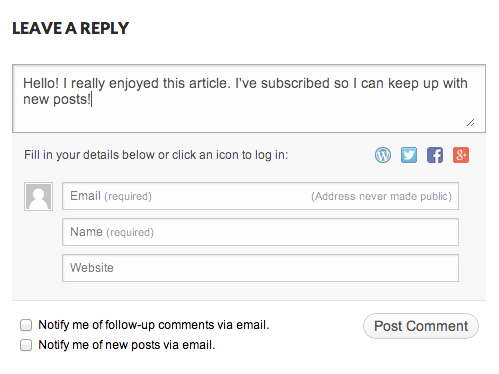
See, when you leave a comment on a blog, most ask you to put in your name, URL, and comment.
jetpack

Assuming you are leaving valuable comments and nothing spammy, you’ll notice that you’ll get referral traffic in your Google Analytics.

This will be because a very small percentage of people are clicking on your name when you leave a comment.

And considering some of the most popular blogs on the web receive millions of visitors each week, it’s not that hard to drive a fraction of a percent of their traffic back to your site.

The key with this strategy is to be one of the first commenters as that ensures your comment is at the top. The other key, of course, is that your comment must add value.

For example, if you own a marketing related product or service, marketing blogs would be a great place to comment. But what do you think will happen if you leave this kind of standard comment:

Nice post! Keep up the good work!

Nothing. On the flip side, if you put in some effort to write something that benefited the reader, you’ll have a chance at getting some traffic.

An example could be something like this…

Neil, I love the actionable tips on generating traffic for a brand-new site within the first 3 months of launching it. But I know you didn’t discuss much if any about SEO.

I know SEO is a long-term strategy, but people should get a head start right away or else it will take that much longer to get loved by Google.

One thing that I recommend every site to start off with is simple keyword research. You can use any free keyword research tool like Google Keyword Planner and type in your competitor URL. Google Keyword Planner will then suggest keywords and even show you the cost per click.

By going after keywords that aren’t competitive and have a higher cost per click, you’ll find that you can generate search traffic at a much faster pace and these keywords will drive sales. As keywords with a high cost per click tend to mean that they convert.

Do you see what I mean by writing thoughtful comments that help people?

This tactic works!

Jared, who runs Skincare by Alana, still leverages this tactic today. When he and his wife launched their ecommerce store they commented on other popular blogs and social sites when it came to all things skin related.

This helped them generate 931 visitors during their first week and 12 sales.

I know it’s not a lot, but you have to start somewhere and grow from there.

I also have leveraged this tactic for years. Instead of focusing just on blogs, I commented on relevant social sites too.
quora

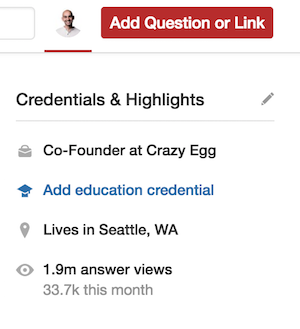
As you can see from the screenshot above, I’ve generated over 1.9 million views on my Quora responses.

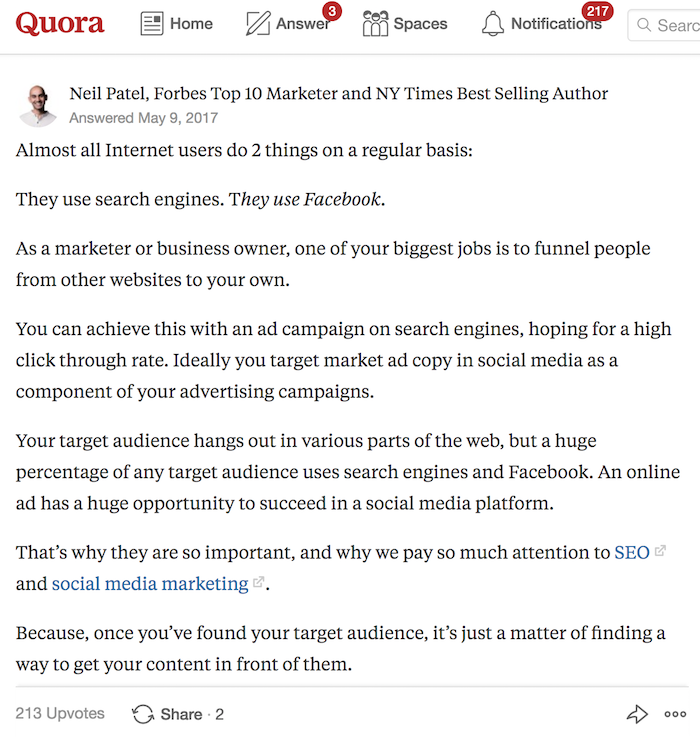
Here’s an example of one of my responses:
quora response

You’ll notice that in my response I also link out to my own site which drives traffic back to me.

Yes, the response looks very long, and you may think I put in tons of work, but I literally copied and pasted a blog post I had already written and added it to Quora.

Google doesn’t penalize for duplicate content. 😉

If you are going to use this strategy during week one, try to leave at least 10 solid comments per day. I would try to leave 20 as it shouldn’t take you more than two hours per day… assuming you haven’t done this before.

I can typically leave 15 comments in less than 50 minutes. So, throughout the first week try to speed things up and spend no more than an hour on this tactic per day.

Week #2: Be helpful on Twitter and you’ll get tweets

Before I go into week 2, keep in mind you’ll still want to maintain the tactics I share in the previous week.

By week 12, you’ll want to be following all 12 tactics each week.

Of course, you won’t be able to put in the same number of hours into each tactic and that’s fine, but you can still do them a bit. For example, you can still leave 5 comments a day instead of leaving 20.

So, let’s dive into week 2, which is all about Twitter.

This tactic I learned from my brother-in-law Hiten Shah. He used to leverage this tactic for every one of our startups… Crazy Egg, KISSmetrics, and he now leverages it for his newest company FYI.

If you look at Hiten, he built up his personal brand and influence in the tech space because of Twitter. Sure, people like me may have a bigger brand or more Twitter followers, but he has much, much, much more authority on Twitter than I do.
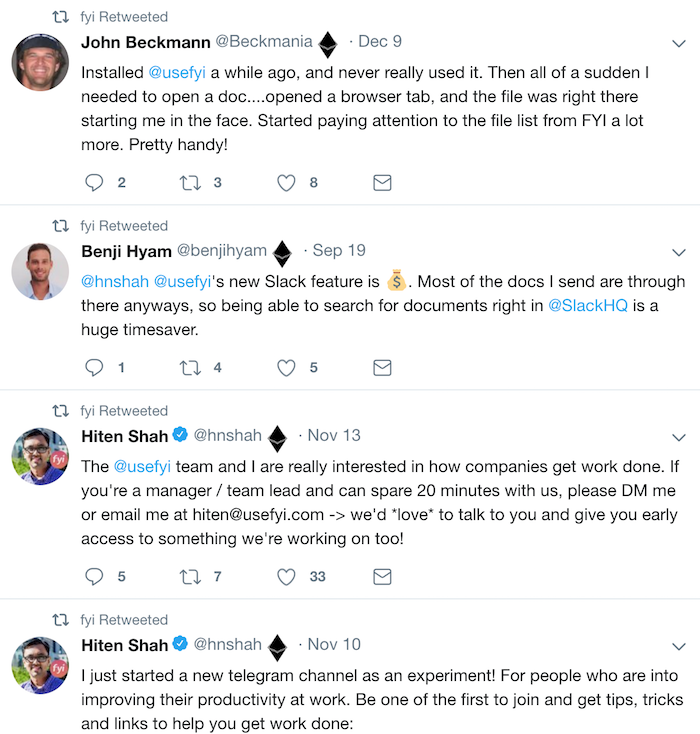
twitter responses

As you can see influential people on Twitter are tweeting about Hiten’s latest company.

He even tweets and connects with well-known entrepreneurs like the founder of HubSpot and Drift because of Twitter.

So how is Hiten getting all of these people to show him some Twitter love? Well, he has a 3-step formula…

  1. Help people
  2. Help people
  3. Help people

And no, I am not joking, that is his formula. He doesn’t care to promote his business, he just helps people.

Let’s look at his Twitter profile to dive deeper into his strategy.

hiten shah

hiten shah

If you look at the tweets above, you’ll notice that Hiten continually pushes out advice on his Twitter profile. He rarely mentions his own company, but instead just tries to help people.

And when people ask questions or need help, he constantly responds to people’s tweets.

Not everyone takes his advice, but his mentality is to just be helpful no matter what. Just look at how he responds to people’s tweets.
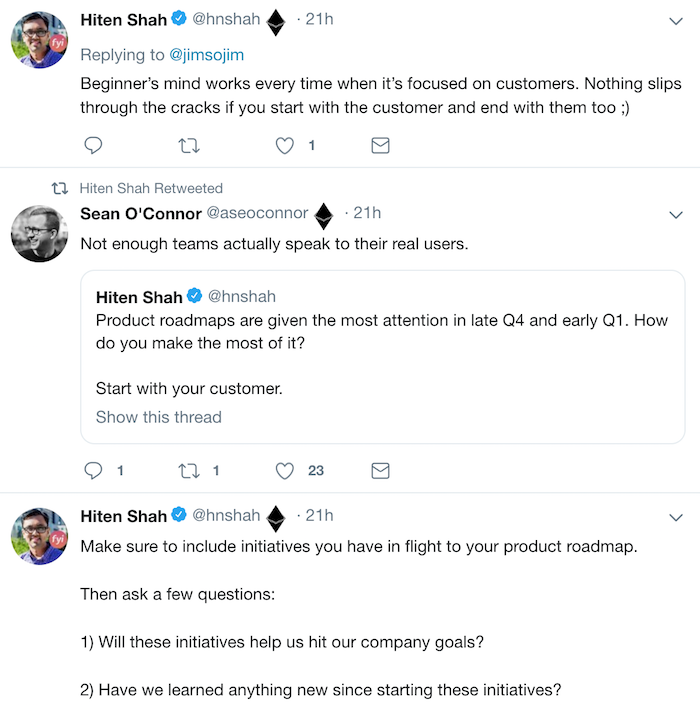
hiten shah

Lastly, he retweets stuff that he likes. Whether you are an influencer or an average joe, he doesn’t care. He just wants to share the best information out there.
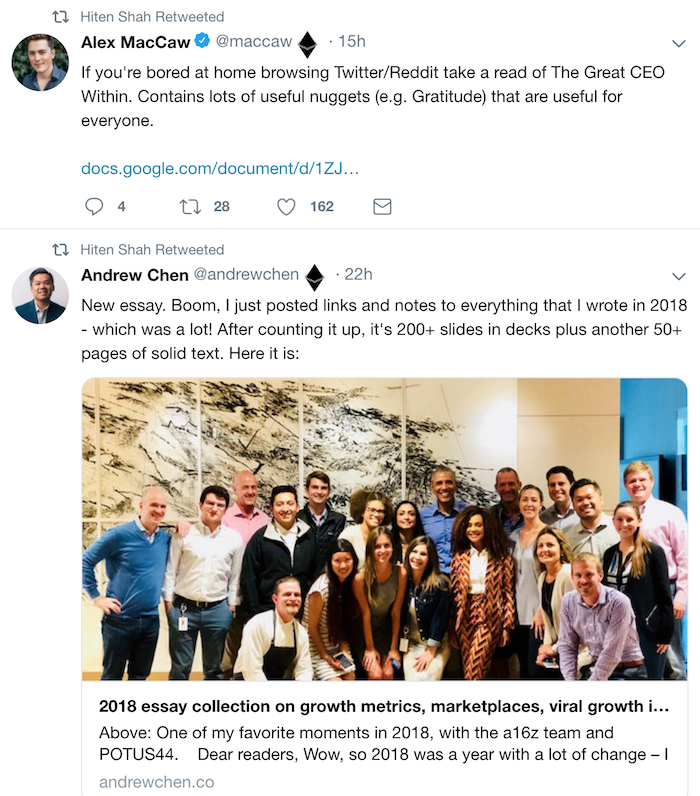
hiten shah

This is why so many people tweet about his product FYI. It’s because he is super helpful, so people naturally want to help him out without him even asking them to.

Now I know this strategy that Hiten uses seems like it is going to take forever to get results, and it does. But there is a hack that he uses to get immediate results.

Every day you should search Twitter for people talking about your competitor. When people have questions about your competitors’ products or services (or they have complaints), try and help them.

Don’t pitch them on your company, just try and help them.

What you’ll find is people will be shocked that you are helping a competitor. And if you are this kind and helpful, then what kind of service would they get if they took their business to you…

In other words, being helpful wins you goodwill and it will cause people to switch from your competitor over to you.

And if you go above and beyond like Hiten, people who haven’t even used your product or service will help promote you. Just like how one of his followers tweeted about FYI and he hasn’t even used it yet.
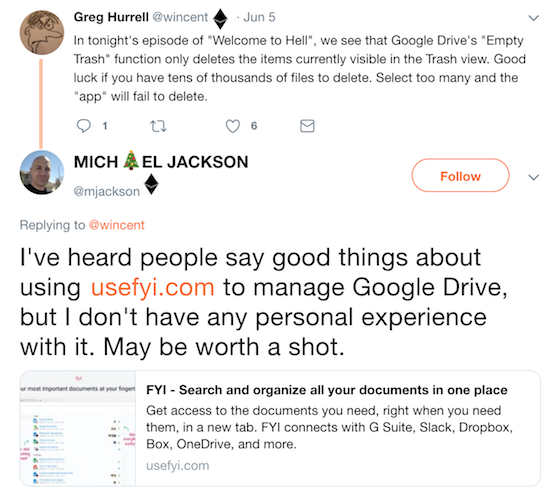
twitter fyi

His strategy to help, help, and help some more has made Twitter one of FYI’s biggest traffic source. It accounts for roughly 25% of their weekly traffic.

Week #3: Go after small affiliates

No matter what industry you are in, there are affiliates. If you aren’t familiar with affiliate marketing, check out this post.

When you are starting out you probably haven’t created an affiliate program yet in which pay other marketers every time they drive you a sale or a lead.

You can always use software like Hasoffers to set one up or go through a network. There are literally hundreds of options and with a few quick Google searches, you can find one which is the right fit for you.

Now, what most people will tell you is that no one is going to promote your affiliate offer because it is unproven and new.

Although it’s true that your offer is unproven, it doesn’t mean all hope is lost.

During your third week, I want you to copy the strategy ConvertKit used when they first launched.

The strategy I am about to break down helped them grow from a few thousand dollars a month in revenue to over a million a month.

convertkit revenue

What ConvertKit did was they went to all of their competitors’ sites and looked to see which ones had an affiliate program. One of those competitors happens to be Aweber.

Then once they had a list of competitors with affiliate programs, they performed a Google search for “competitor name vs.” An example would be “Aweber vs”…
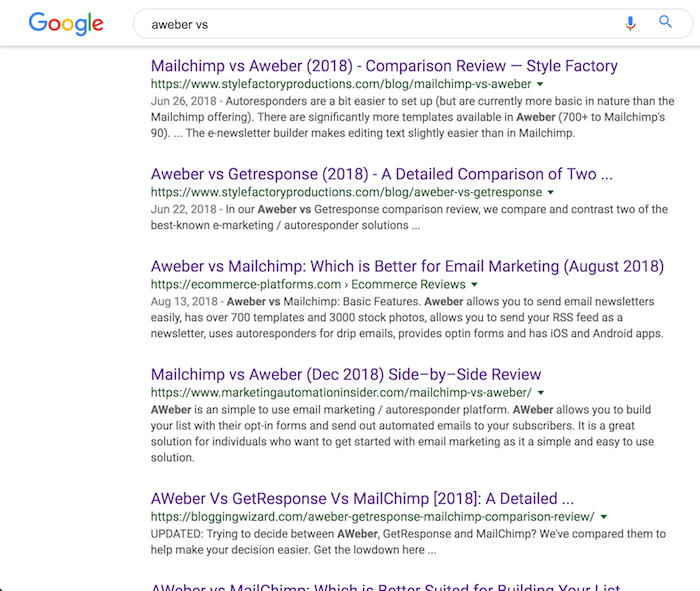
aweber

From there they would email each of those site owners asking them to include ConvertKit in the article or even write a unique article about ConvertKit. Just like this one.
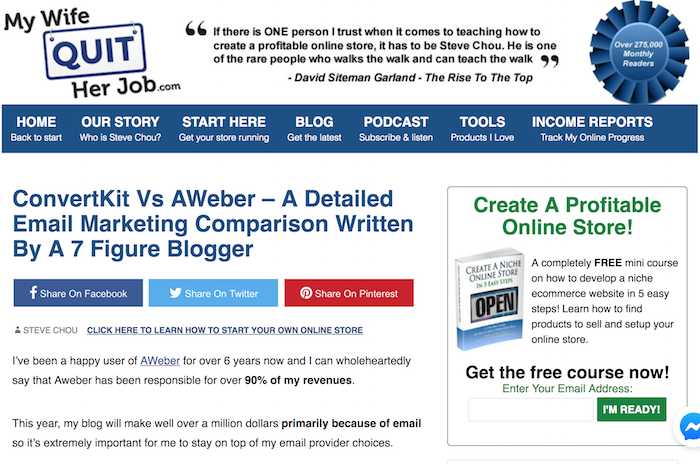
convertkit affiliate

Just think of it this way, if someone is willing to be an affiliate for one company, they won’t mind throwing in a few extra competitors. All it does is give them the potential to make more money.

When leveraging this tactic, consider sending out 10 emails a day. It shouldn’t take long and people typically don’t mind adjusting their web pages to add in another link that could potentially earn them extra money.

Now compared to most tactics, this one will drive the least amount of visitors.

But the traffic will be very qualified and more likely to convert as you are going after “versus” articles. When someone types in “Company X VS Company Y” into Google, they are researching which solution is ideal for them. These posts rank well and they tend to drive sales.

Week #4: Hire guest writers

Now the strategy I am about to break down for you in week 4 is my favorite strategy.

This is what I used in my last startup KISSmetrics to grow our blog traffic to over a million visitors a month.

If you head to the KISSmetrics site you’ll notice that it now redirects to NeilPatel.com as I bought the site.

So how much traffic did the KISSmetrics blog get from this strategy?

kissmetrics speak

As you can see from the image above, we peaked at 1,260,681 unique visitors a month.

Our strategy was simple… hire writers who had a social following.

We went to the Problogger Job Board and posted a job looking for writers.

The job description looked something like this…

Are you a marketing expert? Do you know marketing like the back of your hand?

That’s great because I have an opportunity for you.

KISSmetrics is a leader in the web analytics space and we are looking to work with expert writers who know marketing and analytics.

We’re currently looking to expand our team of writers with passionate enthusiasts for digital marketing and with expertise and passion for writing.  We are hiring individuals for each of the following categories:

  • SEO
  • Content marketing
  • Social media
  • Web analytics
  • Conversion optimization
  • Paid advertising
  • Web design
  • Branding
  • Email marketing

Please go to our blog for examples of content we’re looking to create. [insert URL of your blog]

We would like to build a long-term relationship with you that is on a project basis. Initially, we will have you submit a list of topic ideas you would love to blog on, then we will pick one, have you outline it… and of course, you’ll then be off to the races.

The articles will be anywhere from 1,000 words to 3,000. Our goal isn’t to enforce a word count, we are more interested in high-quality content.

We’re looking for someone who is:

  • Looking for a long-term working relationship
  • Has 1 year of working experience as a writer
  • Has a good level of knowledge of digital marketing
  • Is willing to research and learn more about marketing
  • Has great grammar and spelling skills as well as proficiency in English
  • Likes working with deadlines and structure
  • Has a social following and doesn’t mind promoting the content you are writing as it will be published under your name

How to apply

Send an email to [insert your email] with – Applying For Writer Position in the subject line. Your email should include:

  • A bit about you as well as links to your social profiles
  • Why you’re a good fit for this position
  • Links to 2 -3 articles you have written
  • Your rate per 500 words.

The way we scaled up to over a million visitors a month was by publishing 5 blog posts a week. And every time a writer wrote a blog post for us, they didn’t mind promoting it to their social following as their name was on the article.

Once we got over 50,000 visitors a month, we noticed that we started to get inbound inquires of people willing to write for us for free. So eventually we slowly transitioned to a model where people wrote for us for free and we didn’t need to hire or pay writers.

You’ll notice that this will happen with your blog as it gets more popular.

What’s great about this strategy is the more writers you get, the more people that will find out about your company as each writer has different people following them on the social web.

Week #5: Create a podcast and interview guests

Have you listened to my podcast Marketing School? If you haven’t listened to it yet, check it out.

My co-host Eric Siu and I give marketing advice each day in under 5 minutes.

But don’t worry, the strategy I want you to implement isn’t to copy Marketing School or even listen to it (although I would be honored if you did listen to it).

Instead, it’s to copy my co-host, Eric Siu. He has another popular podcast called Growth Everywhere where he interviews someone new each and every single week.

You don’t have to do a weekly podcast, but I want you to interview someone in your space at least once a month.

And instead of making a separate site for your podcast, just pop it onto your main site.

Now when you publish each of these interviews, ask the guest to share it with their audience. From their social profiles to posting it on their own blog to even emailing their own list.

Although Eric has built a brand in the marketing space, he wasn’t well known when he started Growth Everywhere.

Just look at his stats from leveraging this tactic:
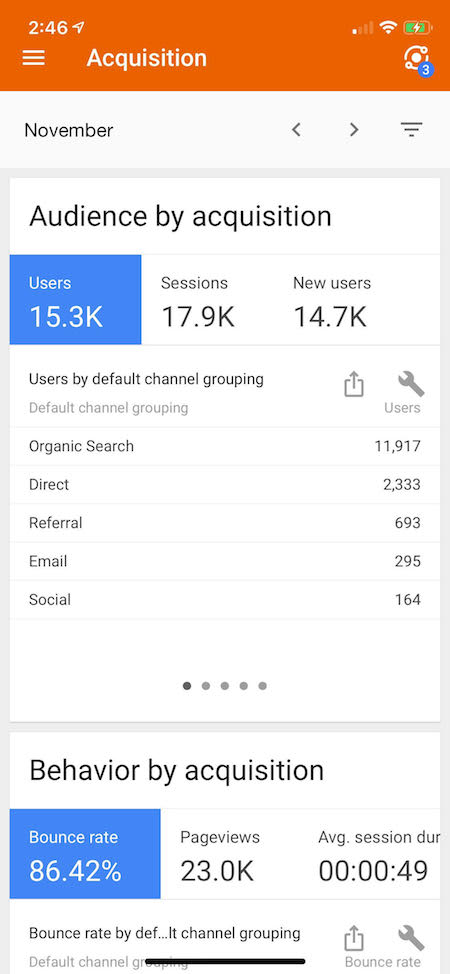
growth everywhere

Eric’s generating over 15,300 unique visitors a month. That’s a lot of traffic considering Eric hasn’t even tried to grow the traffic to Growth Everywhere.

Best of all, you can generate similar results to Eric. But the key to doing this is interviewing people within your space so that way the traffic that comes to your site is relevant and over time those visitors will convert into customers.

If you don’t know how to start a podcast, watch this:

You could buy fancy equipment, but I would just use whatever’s built into your computer until you start seeing results from this tactic.

And if you really want to make your podcast popular, check this out.

Week #6: Become a rising star

Do you want to be a rising star? Well of course you do… who doesn’t?

Now you probably wondering, what the heck is a “rising star?”

Well, let me first start off with, Facebook groups.

Whatever industry you are in, whoever your ideal customers are… you can find them in a Facebook group.

Look for niche groups on Facebook related to the product or service you are selling. You want to join these groups as long as they have over 1,000 members.

You may also find groups that have over a million members. You’ll want to avoid these groups.

Focus on groups that are between 1,000 members and 17,000 members. Those groups are big enough to where you can generate traffic and small enough where you’ll be noticed.

What you’ll want to do is join a handful of groups and post 4 to 5 times in the group during your first month.

Assuming you are creating posts that are engaging in which people are responding and interacting with you, then you’ll get a rising star badge.
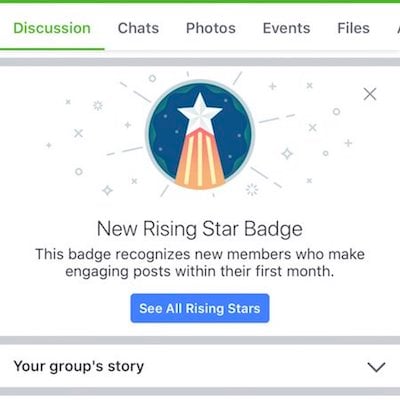
rising star

That means people are interacting with your posts. So then when you mention your product or service, you’ll find that not only will people see it, but they are going to head on over to your site.

The key with posting to Facebook groups is to create a high amount of comments and replies. If you just link out to your site you’ll get very few clicks and you will look like a spammer. Posting links and nothing more will get you banned from the group.

But if you link out within context or answer someone’s question with a link to your site or share something from your site that will help group members, you are much more likely to get clicks.

But if the content isn’t engaging and people don’t care to leave comments, you won’t see much traffic from your Facebook group.

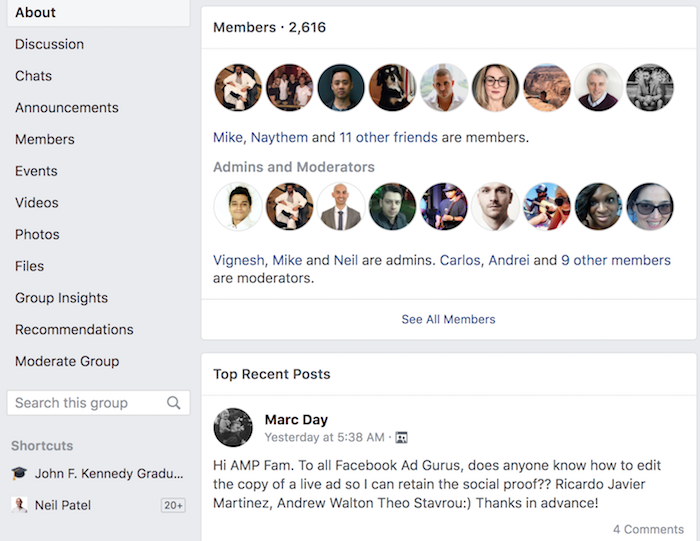
I have a private Facebook group with 2,616 members.
amp facebook

When you post something that is engaging, you’ll get featured as a “top recent post” and I’ve found with my 2,616 members I can generate 119 to 184 visitors when I post something that is super engaging that links to my site.

But instead of creating a group as I did, just join other popular groups. You’ll save a ton of time.

Week #7: Co-publish content

Have you ever thought about co-publishing content with other site owners? Even if you don’t have a huge audience, people will still love co-publishing content with you.

Why you may ask?

Well, they may have the audience, but they may be too busy to continually create new content.

Just look at me… I co-published so many guides with other writers.
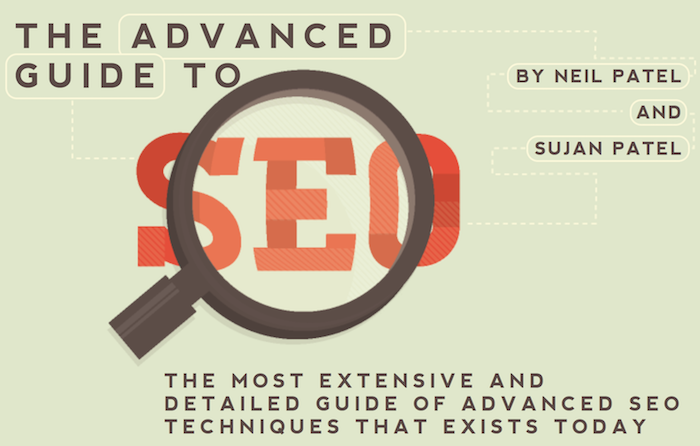
advanced seo

And…

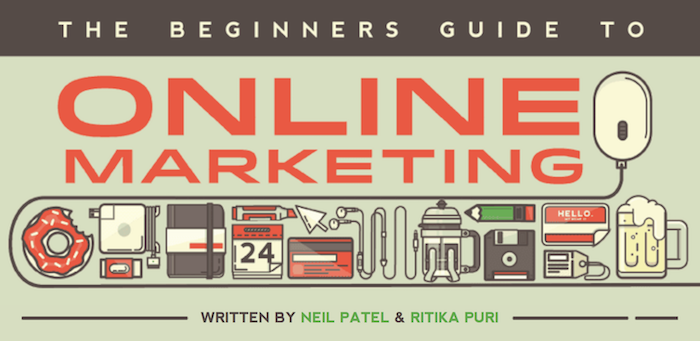
online marketing guide

And…

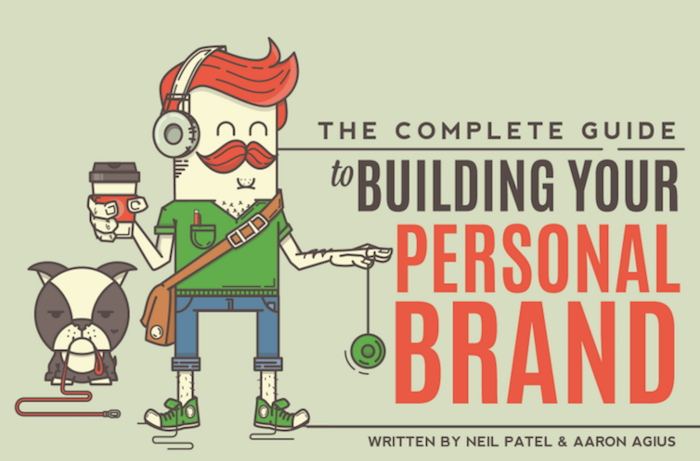
personal branding

These writers got tons of exposure and did the majority of the work.

Over time, these guides have generated well over a million visitors. But I know they are time-consuming to create, and I’m not asking you to create guides.

Instead, you can co-publish blog posts together, record a webinar together, create a white paper, or anything else that you feel could be a good fit.

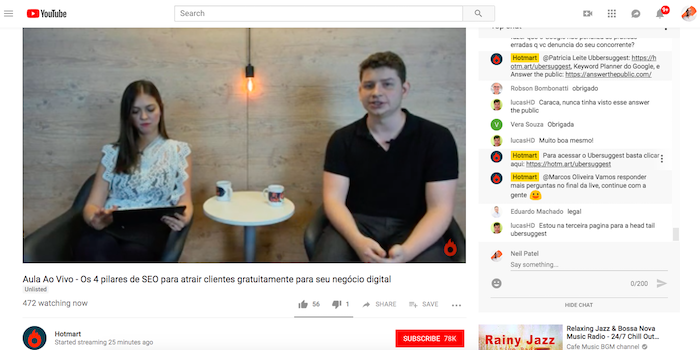
A good example of this is how my team co-published content together with a company called Hotmart in Brazil.

They wrote about Ubersuggest. They even co-published a video about SEO and, of course, my team mentioned Ubersuggest.
hotmart

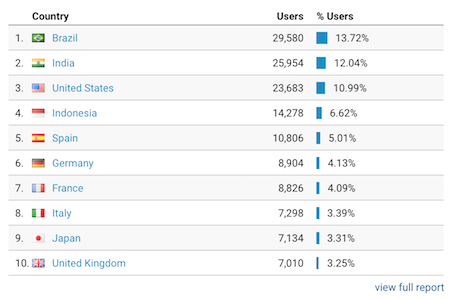
That helped make Brazil the most popular country when it comes to usage for Ubersuggest.
google analytics brazil

If you are going to try and co-publish content with others, make sure you are willing to do the majority of the work.

Hit up other sites within your space and make your offer. Let them know how they won’t have to do much work and, of course, mention what they’ll get out of it.

When you co-publish content, you can’t just talk about your company, you also have to talk about theirs.

Week #8: Product launches

Have you heard of Drift?

It’s a chatbot tool that a lot of people in sales and marketing use.

What I love about Drift is their Product Hunt strategy. Every time they release a new feature, they push it hard on Product Hunt.
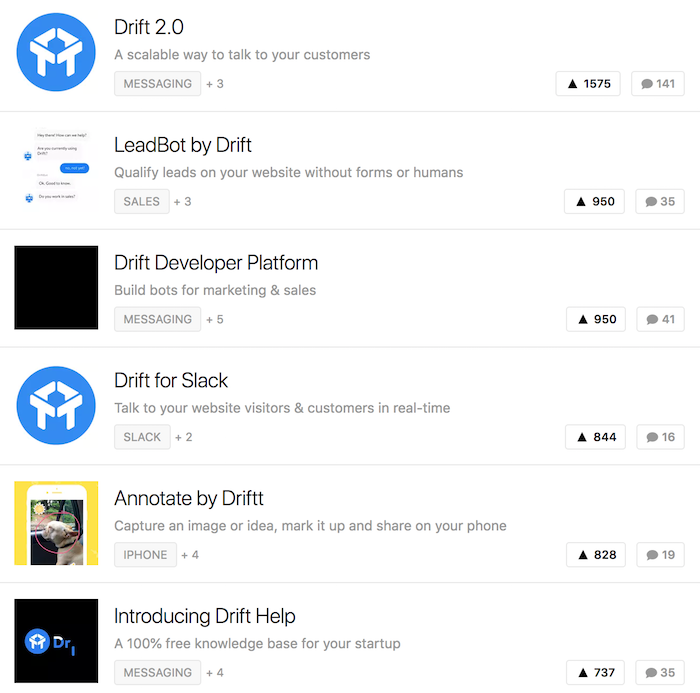
drift

You probably don’t have a ton of new feature releases as you have a brand new site but every time you have one you should consider pushing it out on Product Hunt or even a Sub-Reddit.

But for now, why can’t you launch your site on Product Hunt or on a Sub-Reddit?

Sure you site maybe live for a few weeks, but you haven’t announced it to the world yet. 🙂

Product Hunt is super effective when it comes to traffic generation. When FYI launched via Product Hunt they got over 1,000 votes. It was so successful, the HubSpot co-founder even offered them funding.
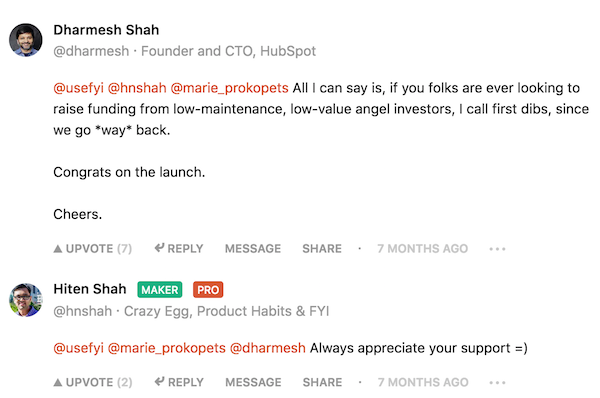
hubspot product hunt

I did something similar with Ubersuggest. Every time I release a new feature, I announce it on Product Hunt. So far it has driven me 12,319 visitors.
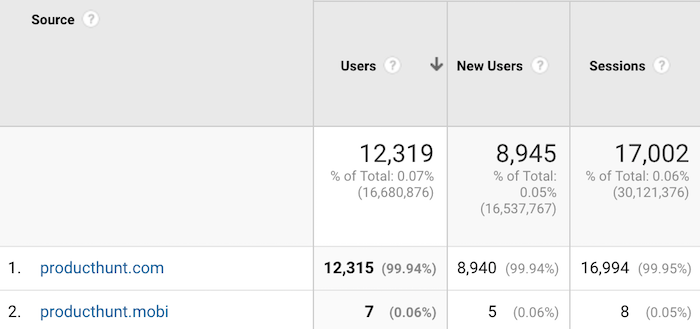
product hunt uber

The key with doing well on Product Hunt is:

  • Get as many votes right when you release it… ideally within the first hour (so ask your friends and co-workers to vote)
  • Participate in the community before you submit your own site. Ideally, you want someone else to submit, but if you don’t know any active Product Hunt users, participate for a bit before you submit your own site.
  • Make sure you respond to every single comment as this helps with engagement.
  • Submit your site very early in the morning Pacific Standard Time. Product Hunt resets every night, so consider submitting it around 4 am Pacific Standard Time.

I know self-promotion might be a bit difficult for you when you are starting off but you need to embrace it. There is nothing wrong with pushing your own company… if you don’t, no one else will.

Week #9: The gram

Honestly, what do you think of Instagram?

Well, whether you like it or hate it, it is one of the most popular social networks out there. And influencer marketing is becoming one of the most effective promotion channels.

Anytime a Kardashian talks about a product, it flies right off the shelves.

fittea

That’s how companies like FitTea came out of nowhere and grew to 7 figures in revenue overnight.

I know what you are thinking: It’s going to be too expensive to pay Kim Kardashian to talk about your business. And you are right, it will be too expensive.

Heck, anyone who has over a million followers will try and charge you too much. Anyone with over 100,000 will also probably charge you too much.

Instead, I want you to look for micro-influencers who have at least 10,000 followers. Find people within your vertical who aren’t too popular but whose followers would be your ideal customer.

Now I want you to reach out to these influencers and offer them a bit of money to promote your product or service.

When it comes to making your offer, don’t pay them money for a post because it will be too expensive, pay them to create an Instagram story.

See, the moment someone hits 10,000 followers, Instagram enables the “swipe up” feature. This means they can tell their followers to swipe up to head over to any website. And in this case, they will be telling their followers to swipe up and head over to your website.

You’ll find that influencers will create a story for pennies on the dollar as it expires within 24 hours.

Typically, if someone has 10,000 to 20,000 followers, I am able to pay them a few hundred bucks for 3 stories over a 2 week period.

I prefer this over a post because this drives traffic to your site and you can track the number of sales you are generating from each campaign.

You can also leverage sites like Influence to find influencers.

A friend of mine, Timothy Sykes, does this often. He goes crazy and pays influencers with over a million followers to do this because he has been able to make each campaign profitable.

Typically, you find that 1% to 2% of the person’s followers will swipe up and head to your site, assuming the story is good. With this strategy, you won’t get a ton of visitors, but the visitors you do get are more likely to convert into customers as they’ve already been pitched during the story.

Week #10: Wikipedia

Have you ever thought about Wikipedia as a traffic source? I know I didn’t until I attended a marketing conference years ago and heard someone from Comedy Central speak.

This marketer was breaking down how Comedy Central gets millions of visitors a month, which isn’t shocking because it’s a popular television channel.

But what was shocking is how they broke down how they generate over 100,000 visitors a month from Wikipedia.

You heard me right, they get well over 100,000 visitors a month just from Wikipedia.

How’s that possible?

Well, they go in and modify Wikipedia articles and mention Comedy Central whenever it is relevant.

But before you go off and modify hundreds of Wikipedia articles, know that you won’t get the same result as Comedy Central.

It’s more realistic for you to generate a few hundred visitors a month… and maybe even work your way up to a few thousand visitors a month over time.

The key with editing Wikipedia articles is to first adjust tons of pages that aren’t about your website. It’s not just about linking to your site, it’s more so about providing value to the community.

So, during this week, I want you to adjust 12 to 15 articles. Once you do that you can then adjust any relevant ones to your business and include your own company when it makes sense.

Again you won’t get a ton of traffic from this, but you can easily get a few hundred visitors.

Here are the steps you need to follow if you want to edit articles on Wikipedia.

Week #11: Speak at a virtual summit

By now you should have some traffic coming to your site. It may not be a lot, but if you followed all of the steps above, your visitors should be highly qualified.

And now I want you to leverage those visitors to get you a speaking spot at a virtual summit.

Search Google for a virtual summit in your industry. You should be able to easily find one.

It doesn’t matter if they are charging people to attend the virtual summit or if they are giving tickets away for free. Offer yourself to speak and promote the event.

You’ll be shocked at how many people will say yes if you are willing to promote their event.

Remember, unlike a physical conference it doesn’t cost them much to add hundreds of speakers and keep the summit going for an extra day or two.

When speaking, be sure you can promote your company during your speech and you’ll notice that you’ll be able to generate some visitors and sales. But that’s not why I want you to speak at the virtual summit.

Instead, I want you to ask the host of the summit to share the attendee list with you. Assuming they have the right terms of service and privacy policies this shouldn’t be too much of an issue.

You’ll also have to make sure they aren’t breaking any GDPR rules.

What you’ll find is this is a common practice with most virtual events in which the speakers will promote the event and the virtual summit will share the attendee list with the speakers.

This will give you a list of super qualified people that you can promote your blog posts to or even your product and services.

Week #12: Scripts and tools

You know I love SEO and it’s an amazing long-term strategy. But to do well with SEO you need backlinks.

The more relevant sites linking to you, the better off you are going to be.

And as you get more backlinks, in the short run it will provide referral traffic. In the long run, it will cause your search traffic to skyrocket.

Just to show you how powerful referral traffic is, just look at my referral traffic:
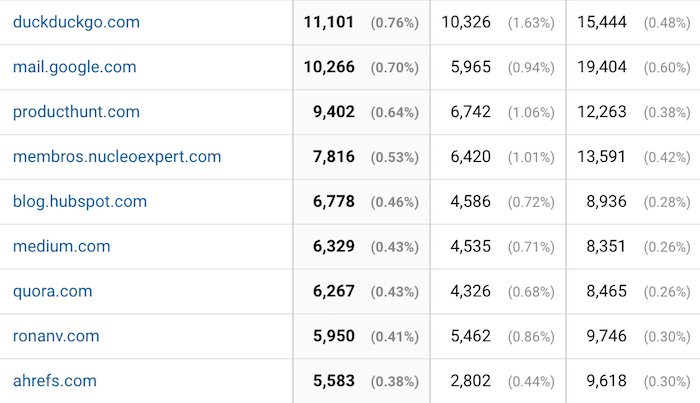
referral traffic

Over time, all of those sites linking to you will start driving thousands of visitors.

So, what’s the best way to get more backlinks?

Well, you don’t want to buy them. And manual link building takes a long time and isn’t as effective as it used to be.

Instead, what you should do is release free tools, like how I released the SEO Analyzer years ago. And over time, it’s naturally produced 2,369 backlinks from 450 referring domains.
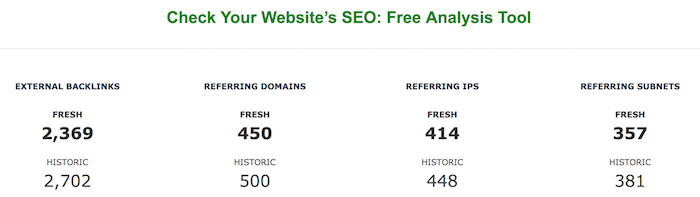
analyzer backlinks

Now, I know what you are thinking: building a free tool is expensive and time-consuming. But it doesn’t have to be. You can buy existing tools and put them on your website for pennies on the dollar. And over time, they will naturally get backlinks without you needing to do anything more.

For example, if you have a real estate website, you can always add a mortgage calculator to your website. And can you guess how much it would cost for you to add one to your site?

$13. That’s right, it only costs 13 bucks! How crazy is that!?

There’s a site called Code Canyon where you can buy tools for almost any industry.

You can use these tools as your own and put them on your site with a few clicks of a button.

Just head over to Code Canyon and perform some searches. You’ll quickly find some tools that can work for you.

Keep in mind that these tools won’t be 100% perfect compared to building your own tool. But that’s ok, you have to start somewhere. Plus, people will still link to your tool even if it isn’t perfect.

Conclusion

I know some of the tactics I mentioned above won’t drive you thousands of visitors right away but they can drive you hundreds. And hundreds of visitors is a great place to start!

And when you combine them over time, it will help you get thousands of visitors. You just have to be willing to perform all of the steps in each week… no matter how silly the tactic may appear.

More importantly, the tactics I broke down above will drive you visitors that convert into customers and leads. All you have to do is take the next 12 weeks and follow them.

It may seem like a lot of work at first, but you’ll get faster at them as time goes on.

So, what do you think about the tactics above? Are you already using them?

The post How to Drive Traffic to a Brand-New Site with Little to No Money appeared first on Neil Patel.


from Blog – Neil Patel http://bit.ly/2F5tIRp
via IFTTT

Transcript of The Secrets to Leading Creative People

Transcript of The Secrets to Leading Creative People written by John Jantsch read more at Duct Tape Marketing

Back to Podcast

Transcript

This transcript is sponsored by our transcript partner – Rev – Get $10 off your first order

John Jantsch: Leading or managing people in an organization is a tough job. It gets just that much tougher when the folks that you are choosing to lead are highly creative. In this episode of The Duct Tape Marketing Podcast, I visit with Todd Henry. He’s the author of Herding Tigers: Be The Leader That Creative People Need. If you or your organization has creative people, and let’s face it, that’s what drives a lot of business today, you need to check it out.

Hello, welcome to another episode of The Duct Tape Marketing Podcast. This is John Jantsch, and my guest today is Todd Henry. He is a speaker, consultant, advisor, and author of a number of books including the book we’re gonna talk about today, called Herding Tigers: Be The Leader That Creative People Need. So, Todd, welcome to the show.

Todd Henry: John, it’s so great to be with you. Thanks for having me.

John Jantsch: I can’t believe it’s taken me this long. I’m a big fan of your previous work, Die Empty, in fact you were awesome enough that you just happened to be passing through town and we flagged you down to come speak at one of my events and it was very, very motivating for everybody.

Todd Henry: It was so much fun, and I just have to say as encouragement to you, you’re the most humble person in the world so I know that you would never toot your own horn, but just seeing your community there and seeing how people responded to you and responded to what you have built there, it just really showed me the kind of integrity that you bring to your business, because you were able to attract people from all over the place to come to Louisville to spend some time with you, learning about the things that you wanted to teach them.

Just as encouragement to you, it was really, really amazing to see your community in action there as well. You didn’t ask me to do that, but I wanted to do it anyway.

John Jantsch: Well, I appreciate that, but longtime listeners know I’m not really that humble.

Todd Henry: Okay.

John Jantsch: So let me ask you the big question that came to my mind as I was reading Herding Tigers. How does leading creative people differ from being a creative leader?

Todd Henry: Oh, that’s a great question. No one has ever asked me that, actually. Listen, we’re all creative. We all have to solve problems every day as a function of our job. That’s just the nature of the modern workplace. So, if you have to go to work, solve problems, figure things out, if you’re an entrepreneur, if you’re a business owner, you are creative to a certain extent. What I wanted to do in this book was talk about the dynamics of leading highly creative people.

Leading highly creative people is different from being a creative leader, because you can be a creative leader and lead a team of engineers or a team … which, by the way, engineers are incredibly creative and incredibly bright in that way. But, you can be a highly creative leader and be leading a more mundane, process oriented business and still be highly creative, because you still have to solve problems, figure out systems, et. cetera.

This book really is about leading highly creative people. People who maybe think a little bit differently from the norm, maybe people who might be a little more difficult to wrangle. What I wanted to do is really address some of those common dynamics among teams that are highly creative. What is it that makes them especially difficult to lead, and how can leaders, especially leaders maybe that are stepping into a role of leading highly creative people for the first time, how can they better position themselves to set their team up for success?

That’s the goal of the leader is to help their team succeed, not necessarily for them to succeed because if their team succeeds, then they will succeed.

John Jantsch: I guess it kind of begs two questions. Maybe you’re defining creative person in a very strict sense like the graphic designer or the writer or the video editor. Is that fair?

Todd Henry: I think it is fair, but I think that this applies to really leading any group of people that has to figure it out and make it up as they go, so if you’re a sales organization, you’re having to come up with creative solutions all the time to reach potential clients, having to re-strategize all the time. Like I said, if you’re leading a group of engineers, that is a project based business, a project based function, but it’s highly creative because you are doing nothing but problem solving all day. You’re looking out, exploring what Steven Johnson calls the adjacent possible, looking for potentially useful fodder for your creative process.

All of those industries have some of the same dynamics I describe in the book. Now, that said, yes, my background, my experience is in leading the ‘traditional creative’ which is the designer, the writer, the videographer, those kinds of people. Yes, I was writing specifically from those kinds of experiences, but I think that the advice in the book applies more broadly to any group of people who have to solve problems and make it up as they go.

John Jantsch: So fundamentally then, what does this group, what do these creative people need that is fundamentally different?

Todd Henry: There really are two primary things that creative people need from their manager in order to thrive. The first one is stability, and stability is about ensuring that you have clarity of process, clarity of expectations, that they know that the rules of the game aren’t gonna change midstream. In a lot of industries that don’t require a tremendous amount of overhead in order to accomplish the work, it’s not that big of a deal if the objectives change midstream, because okay, now we’ve got a new strategy, that means my job is gonna be different tomorrow.

But, when you’re doing highly creative work that requires a tremendous amount of ramp up and forethought and then iteration, when the rules of the game change midstream it can be extremely frustrating. If somebody isn’t bought in to a strategic direction, and let’s say you get two weeks into the project and suddenly your boss’s boss swoops in and says, “You know what? This isn’t really working for me.” Well, your team has spent two weeks iterating on that idea, and now they have to go all the way back to the beginning, re strategize and start all over again, simply because someone wasn’t bought in.

That’s tremendously expensive to the organization. It’s very frustrating to a team of people, and so over time, the team of people just basically says, “Alright, I’m just gonna wait until you tell me what to do. I’m not gonna bring my best thought to the table or my best effort until I know it’s not gonna be wasted effort if the rules are constantly changing.” They need some degree of stability.

There’s a myth, John, that highly creative people just want complete freedom. Just don’t fence me in, give me no boundaries, I just wanna do what I wanna do, but that is a myth, because the reality is that healthy creative process has boundaries. It has rails in order to focus the creative energy. Without that, that energy is just gonna wither up and die. So, stability is the first thing that we need. Clear boundaries, clarity of expectations, clarity of process.

The second thing that highly creative people need is they need to be challenged. They need to be pushed. They want to know that their leader has faith in them. That their leader sees things in them maybe they don’t even see in themselves yet. They want to be pushed to be the best that they can be and to try new things, to tackle new kinds of projects, to venture out into those risky territories, and to know that if they fail, that somebody has their back.

This is also very important, people won’t take risks unless they know that the leader is there to have their back. If it’s a strategic risk, not if it’s a stupid risk, but if it’s a strategic risk then the leader needs to have their back and they need to know that they’re not just walking on thin ice. Hey, you could die and lose your job at any moment, or else people will begin to hold back just a bit.

The problem with stability and challenge is that they exist in tension with one another. As we increase the amount of challenge, we tend to destabilize the organization. This is where a lot of startups and entrepreneurial organizations live. We’re building the bicycle as we’re trying to ride it and we’re going a hundred miles an hour down the highway and we’re trying to avoid traffic and, oh isn’t this just wonderful?

Yeah, it’s wonderful for a little bit, but then over time, people begin to fry. They begin to burn out because we’re not wired for that kind of challenge without the supporting infrastructure to support that challenge. Of course, on the other end of the spectrum, you have organizations that settle in and they’re so processized that there’s no challenge any longer for the people on the team. People get bored, they get stuck, they start looking for broader horizons, and this is often where you hear people say things like, “I’m just not really challenged around here. I just don’t feel like I can really do my best work here. I feel like I’m not growing.”

Sometimes it’s because they don’t feel challenged. They don’t feel like they’re getting what they need from you as a leader in terms of challenge. As a manager, as a leader, as an entrepreneur, somebody who runs a business full of talented people, you are in the unique position to be able to identify that right mix of stability and challenge for those people on your team. If you notice somebody seems to be burning out pretty frequently, well, you need to ask, is it because there aren’t processes in place? There’s no stability there to support what I’m asking from them in terms of challenge, or if somebody’s constantly complaining they feel bored, they feel stuck, is it because I’m not giving them an opportunity to grow themselves, to challenge themselves, and to venture into those uncomfortable places?

John Jantsch: One of the places that you spend a lot of time, and I was glad to see this because I see this actually in lots of organizations with lots of small business owners even, whether they’re managing creatives or not, if they’re managing people, so often they get in this weird cycle of giving work, assigning work, creating process and structure, and then the minute something gets a little hard, they take it all back. There’s no way to grow for anybody, including the organization if you keep taking the work back. I think you called it stop doing the work.

Todd Henry: Right.

John Jantsch: You need to learn this. First off, what do you feel leads to that, and I guess, secondly, how do you solve that?

Todd Henry: I think that especially for entrepreneurs, think about somebody who started a business, I know a big chunk of the people who follow your work are small business owners, entrepreneurs. There’s a tremendous amount of identity wrapped up in starting a business, in the business itself. So, you identify yourself by the output of that business. Sometimes in healthy ways, and maybe sometimes in not so healthy ways. As you start to grow your business and you start to hand off more and more responsibility to other people, it becomes difficult sometimes to separate yourself a bit from the business from an identity standpoint, so that you’re allowing other people to take ownership of certain aspects of the business so that you’re not the one constantly there over their shoulder.

If you are the person constantly over their shoulder, then again, they’re just gonna say, “You know what? Just tell me what you want me to do.” You’ve hired great people and then you’re gonna look over their shoulder and micromanage every decision they make, that’s not the way to scale a business. It’s easy for that to happen, because so much of your identity is wrapped up in the work that gets done, in the business.

What we have to do is we have to transition from a maker mindset to a manager mindset. We have to transition from a mindset of presence to a mindset of principle, or from a mindset of control, which is what really all this is about, it’s about us wanting to control the work of the organization, to a mindset of influence.

We need to establish rails. We need to have a clear leadership philosophy. We need to help people on our team learn how we think about the work and how we think about decisions that we make, not just which decision in a specific scenario is the right decision to make according to us, and so I think it’s difficult to make that transition, to move from control to influence. I think a big part of that is just extricating yourself.

I think about the world that I come from, somebody maybe was a great designer or a great writer and they get promoted. What happens typically in organizations is somebody is really good at something and so somebody comes along and says, “You know what? You’re a really good designer. You know what you should do? You should lead other designers.” That’s a fundamentally different skill set, that’s a totally different thing, and yet that’s exactly what we do. This person, basically they’ve built their entire career upon the fact that they’re really good at a thing. That thing may be is design, or maybe that thing is financials or whatever it is. But, they’ve been really good at that thing and now, all of a sudden, they’re transitioning to not doing that thing, but leading other people who are doing that thing.

How do they identify themselves? Who are they anymore? What is the value they contribute? Before, they could point to a thing and say, “I did this.” Now that you’re leading other people, what is it exactly that you do? I think that’s where the identity crisis often resides in this. Our job is to shift our mindset from a maker mindset, from control, to influence, which means I’m going to teach my team a series of principles to help them make better decisions on their own. I’m gonna teach them how I think about what a good idea is. How I think about a good risk versus a bad risk. I’m gonna teach them how to determine the quality of a product and say, “Okay, is this good? Is this a good output, or is it not quite there yet?”

How do we define excellence as an organization? I’m gonna teach them how conflict should be handled so they can handle conflict between themselves instead of having to come to me every time there’s a conflict on the team. Once we begin to teach these principles, then we can step back and do the job that we’re actually accountable for, which is either growing the business, or leading the team to grow the business, depending on the type of business that we’re running.

John Jantsch: I think for me, at least, over the years, the lessons I’ve really learned is that this has to be very intentional, of course. But, there are times when I’m doing my thing. Like you, I’ve go out and I speak and I write and I’m doing the work really, in the business. But, I have a team of people too, and it’s almost like I have to switch on that hat and remember that now I’m leading, so I’m not supposed to have all the answers. That to me is the hardest part because people come to you as the leader, and they say, “Todd, should I do this?” And your response, or at least my response is usually, they ask me a question, I’m gonna give ’em the answer and what I’ve learned over the years is you’ve gotta establish this practice of giving it back to them, saying, “What would you do in that situation?” Or something of that nature.

Todd Henry: Yes.

John Jantsch: Then, of course, the other challenge is you’ve gotta stay so consistent, I think, with it, because how many companies have read a book like yours and the person goes back and says, “It’s gonna be different now!”

Todd Henry: Yes, that’s exactly right. The challenge in all of that is either that we, as a leader, our area of greatest insecurity is the place where we have the potential to do the most damage. As a leader, if we’re not aware of that, the fact that it’s really hard for us to let stuff go, the fact that it’s really difficult for us to let our team run with things, those areas of insecurity become the places we have to turn into watch points personally, because your area of greatest insecurity is the place where you have the potential to do the most damage to your team, and ultimately to your business if you’re not careful.

John Jantsch: How much of the job of the leader, because I think creative people seek inspiration. They tend to be maybe a little more curious about how things work and why they work and don’t work. How much of the job of the leader in this case is to keep those folks inspired?

Todd Henry: I think it’s a huge percentage of the job is keeping them inspired and keeping them focused on the right things. Setting good rails, making sure that they’re looking in the right places. “Hey look over here! Hey, have you seen this? Hey, let’s not focus on that right now, let’s look at this thing over here, because this seems to be the thing that has the most potential.” That’s not the same thing as doing the work for them, that’s basically doing traffic flow for them. It’s making sure that they’re windowing out the stuff that you can see is really not essential and focusing them then on the things that are actually most important.

The thing is, if we wanna be an inspirational leader, then we have to be inspired ourselves. This is something I find often in the lives of leaders; they want to inspire their team but they’re not building practices into their own life to keep themselves inspired. They’re not dedicating time for study, for going out, for exploring, for tilling the soil and looking for potentially useful things in the environment that they can funnel to their team. They’re not doing any kind of personal and professional development themselves and yet they expect their team to be doing that, but they’re not developing themselves.

I think the first thing we have to recognize is that if we wanna be an inspiring leader, if we wanna be the kind of leader that’s bringing ideas to the table and pushing our team in the right place and is able to think systemically in a way that’s actually valuable and useful to our team because we’re seeing the patterns that are emerging in the work and in the team dynamics, then we have to be dedicating time and energy to developing ourselves, to studying, to looking for patterns out there in the marketplace and patterns out there in the environment.

That’s really one of the things we’re uniquely positioned to do as leaders because of our perch, and yet often we don’t do that. If you are not inspired, then you cannot inspire your team.

John Jantsch: One of the things that’s gotta be part of any leader is we’ve got objectives, we have key results that we’re trying to do, we have deadlines, there are things that have to be measured and tracked. I would suggest that some people would say that that’s harder to do with creatives? Maybe a deadline works, maybe it doesn’t, but how do you define and track what might be different with a creative team?

Todd Henry: That is a really great question, because you’re right. If we’re doing accounting, it’s pretty easy to tell whether we got it right or not. You could sorta say, “Numbers aren’t adding up. Okay, let’s figure this out. This isn’t working right.” It’s a different kind of problem. With creative work, it is highly qualitative often. In the end, somebody is either gonna give you the thumbs up or thumbs down based upon, in some cases, their subjective opinion. No matter how research based your work is, no matter how tight your rationale is, they’re gonna give you the thumbs up or thumbs down, and it’s basically based on what they perceive to be right or not right with regard to the work.

So, one of the tools that I like to teach people to help them determine, in a little bit more of a not quantitative way, but a little bit more of an objective way, which idea is the right idea? It spells the word EPIC, which, I don’t like doing things like that where, hey it spells this, but it does, it spells EPIC, is, if you have a handful of ideas you’re trying to evaluate, you’re trying to decide between, I encourage you to use this framework to do it. It works really, really well.

The first thing is, you’re gonna ask, is it effective? Is this idea effective? Does it solve the problem we set out to solve, or does it not? You can even rate this on a scale of one to ten, so you can put these ideas up next to each other and say, “Okay, which of these is most effective? On a scale of one to ten, how well does it actually solve the problem that we’re trying to solve?”

The P is practical. How practical is it for us to execute this idea, given our resource constraints, given our time constraints, given the fact that we only have a couple of team members who can work on this. How practical are each of these ideas, again, on a scale of one to ten?

Then, is it interesting and cool is the final metric here. On a scale of one to ten, how excited are we about this idea? Because sometimes maybe there’s an idea that doesn’t seem as effective, but it’s really cool and so somebody is really arguing for it. Okay, well, that’s fine, give it a 10, but it’s only a four on effectiveness, or a five on effectiveness, which means maybe it’s not the best idea even though it’s got a lot of energy in the room, because it is cool, but it doesn’t necessarily solve the problem we’re trying to solve.

Once you’ve ranked all of your ideas using this framework, effectiveness, practicality, and then is it interesting and cool, then you can actually have a meaningful conversation. You can say, well, idea two isn’t quite as practical as idea one, but I think we can make it more practical if we dot dot dot. So, it’s a great jumping off point for iteration. It also, as a leader, it gives you an opportunity to do some teaching with your team about how you think about ideas, or how you think about practicality, or how you think about resource allocation, or how you think about what is cool and what actually is interesting from a creative standpoint.

This is, in a world of highly subjective measurements, I find this tool to be really helpful because it gives teams a framework to have meaningful discussion instead of just saying, “Well, I like it. Why don’t you like it?” Which isn’t always helpful.

John Jantsch: I grew up in a really big family and my parents, I don’t really ever remember seeing them argue or fight. I think it made me very conflict averse as well. One of the things you talk about is that really healthy teams can fight in a positive way.

Todd Henry: Yeah. Yeah, this actually happens pretty frequently. I’ll have a manager approach me and say, “We’re a really healthy team. We never fight.” I just wanna grab them lovingly by the shoulders and say, “You are the most dysfunctional team I’ve ever encountered in my life!” Listen, if you have healthy, talented, creative people in the room together, there is going to be conflict. Conflict is the natural result of talented driven people bumping into each other. It’s going to happen. If there’s no conflict it means, A, there’s no accountability on the team, so nobody feels the need to speak their mind or bring their opinion to the table, B, people are just phoning it in, people really don’t care about the work, or, C, you’ve created such a culture of fear and conformity that people feel like they can’t speak their mind without risking losing their job.

If there is never conflict, it means that there’s something that is not healthy in your organization. Now, that doesn’t mean that free-for-all conflict should be the norm. No, of course not. We have to have some healthy principles for conflict, and this is one of the things that I went into in Herding Tigers. There are a couple of rules, I think, that we have to follow, whenever we have some kind of argument about an idea or about a direction or something. I think number one, we have to agree on common ground from the start.

I think sometimes, especially in today’s culture and you’re seeing this play out in the political arena right now, we’ve seen it in the marketplace in a handful of ways, we are seeing scorched earth strategy playing out everywhere. It’s, I will destroy the ground between you and me, and I’m gonna fossilize around my opinion, and I’m just gonna fight just because I’m fighting, because I disagree with you. I think it’s important in any conflict when we disagree, to agree on the common ground from the start and say, “Okay, are we actually fighting about the same thing here?”

I don’t know about you, but I’ve seen in a lot of organizations I’ve worked with where two people are having an argument, and then they get about halfway through and realize, oh, we’re actually not even fighting about the same thing. I didn’t realize that. We were just fighting to fight, but we weren’t even talking about the same thing here. We actually have a lot more common ground than we thought. That’s the first thing.

The second thing I always encourage people to do is try as much as you can to articulate the other person’s point of view before you disagree with them. Make sure that you understand their argument as well, so not only that you’re arguing about the same thing, but that you understand their perspective and their argument. Try to articulate their point of view and even share with them, here’s where I agree with you, and here’s where we diverge. That way you can see what you’re actually fighting about.

The third thing is, you always fight over ideas, you never fight over personality. The moment a conflict gets personal, everybody loses. When I talk about conflict, I’m not talking about, “Oh I hate those people. I hate that person. I can’t stand that … so I’m just going to muscle up every time they introduce an idea.”

That’s not healthy conflict, that’s just stupid conflict. We can’t allow conflict to get personal. It has to always be about ideas, not personality. If we follow these principles, then we’re going to have an environment where people feel like they can bring their ideas to the table, an environment where people feel like they can disagree and we can even hash it out and it can get really animated.

Another thing I wanna say that is a little bit controversial but I think is also important to recognize, I hear often people say, “Oh, our team is a family. We’re like a family.” Well, maybe you’re like a family, but you’re not a family. I think that’s a very unfair thing that managers do or business owners do, is when they say it’s a family because I don’t know about your family, but I’m not kicking someone out of the family if they don’t do their chores this week. They’re still gonna be a member of the family. There might be consequences, but they’re not gonna get kicked out of my family because they didn’t do their job. There’s a baseline level of performance you have to maintain in order to stay employed, so saying to a group of people, oh, we’re a family, no, actually you’re not, because somebody in this room might be fired at some point if they fail to do their job.

We have to make sure that we’re treating people in our organization with trust and respect. We don’t have to like everybody we work with. You probably won’t like everybody you work with, that’s okay as well, but we have to treat them with trust and respect and we have to fight well. If we do that then our culture is gonna get sharper and sharper and sharper and more and more focused and more and more refined over time and people will trust one another, because they’ll know that people are speaking up.

John Jantsch: One of the things I love when books do this is that each chapter you kinda have some summary points. Here’s some actions, here’s ways that you can talk with the team, here’s some habits you can develop so you kinda give people a whole toolbox of ideas to end each chapter rather than saying, “Do X.”

Todd Henry: Yeah.

John Jantsch: So, Todd, where can people find more about you and about Herding Tigers?

Todd Henry: The best place to find Herding Tigers is wherever books are sold, so wherever you shop for books you can find it. The best place to find me is at accidentalcreative.com. That’s where our podcasts are and all the other work that I do. That’d be the best place to find me.

John Jantsch: Well, you have, as I know, the book is in some ways a starting point. You have, of course, training and workshops and everything that you do around that as well, don’t you?

Todd Henry: Yeah, that’s correct. We have a Herding Tigers workshop that is basically our two-day in person workshop, but it’s distilled down to basically a four hour video course with exercises and workbooks and all kinds of things. Basically it’s like me coming to your company for two days, only you can get through it in four hours. Now, four hours to experience it, but then you have to do the work beyond that, but it’s basically that distilled into a video course.

John Jantsch: You don’t do the work for us? Darn it.

Todd Henry: No, unfortunately I can’t do the work for you. Sorry. It would be so much better if I could. No, I’m sorry, I can’t do the work for you.

John Jantsch: Well Todd, thanks so much for joining us, spending time with us, hopefully next time I’m in Ohio or somewhere out there on the road we can bump into each other again.

Todd Henry: Yeah, that’d be great. John, thanks for the great work that you do.


from Duct Tape Marketing http://bit.ly/2SvPbpn
via IFTTT

The Secrets to Leading Creative People

The Secrets to Leading Creative People written by John Jantsch read more at Duct Tape Marketing

Marketing Podcast with Todd Henry
Podcast Transcript

Todd HenryThis week on the Duct Tape Marketing podcast, I speak with Todd Henry. Henry is a writer and speaker who travels extensively to talk about creativity, leadership, and productivity. He gives keynotes and leads workshops on the topics and has helped teams and audiences around the globe.

He has also written four books, which have been translated into more than a dozen languages. His latest, Herding Tigers: Be the Leader That Creative People Needis a practical handbook for managers who lead creative teams. On today’s episode, we talk about the processes and approach outlined in the book, and Henry shares practical tips for getting the most out of a creative team.

Questions I ask Todd Henry:

  • How does leading creative people differ from being a creative leader?
  • What do creative people need that is fundamentally different?
  • What percentage of a leader’s job is keeping creatives inspired?

What you’ll learn if you give a listen:

  • Why creative people need a leader that offers stability and a challenge.
  • Why our own insecurities as leaders can be the areas that cause the most damage to our teams and our businesses, if we’re not careful.
  • How conflict about ideas, not personality, can actually be healthy for your team.

Key takeaways from the episode and more about Todd Henry:

Like this show? Click on over and give us a review on iTunes, please!


from Duct Tape Marketing http://bit.ly/2SuU81K
via IFTTT

7 Mistakes to Avoid When Planning Your Mobile Campaigns

Mobile marketing continues to be a critical strategy as statistics show how much consumers rely on their mobile devices to research, interact, and shop. According to Statista, there are over 3.5 billion unique mobile internet users. And, comScore noted that users spend an average of 69 percent of their media time on smartphones. Lastly, mobile devices will drive 80 percent of global internet usage as reported by Zenith.

With so much opportunity to reach your target audience, mobile marketing tops the marketing strategy list. However, it's not an absolute you will achieve success with your mobile marketing strategy. Many brands have made mobile marketing mistakes like these seven misses:

Mistake #1: Optimizing Landing Pages But Not Mobile Ads

The first mobile marketing mistake is to not apply an optimization strategy to everything you do. While your website, social media content, and landing pages are optimized, there may be an area you forgot. And, that area is where you actually may be investing more money. That is, mobile ads. With the amount of money that goes into purchasing mobile ads, you want to make sure you optimize the content for maximum reach.

For mobile PPC ads, don't forget to optimize your ad copy, including using search ad device targeting. By providing mobile searchers with notification that your mobile site is optimized for iOS or Android, they will happily choose you to shorten their search.

Mistake #2: Mobile Campaign Links to Nowhere

While it seems obvious that you should check every link you use in your mobile campaign, brands often skip this task in the rush to launch. However, by not checking links, you defeat the purpose of your campaign. When users click on the links in your mobile campaign and they get an error message, you've just hurt your conversion rate and tarnished your reputation. Plus, if your competition has done their due diligence on mobile campaign links, then you may have just lost those conversions forever.

Always test your mobile campaigns links for dead pages and correct them before launching your mobile campaign.

Mistake #3: Not Emphasizing Your Mobile App

Often, companies don't promote their mobile app as they could be. Instead, they think that the app's appearance in major app stores is enough. However, these companies are missing out on the opportunity to have more app users by not pitching their apps on mobile web pages, reminding users of the benefits of this app.

In reality, there are already thousands of similar apps in the app stores. No user wants to sift through all of them to find an app. They want the app to come to them and make it easy to download and use.

By adding the app to your mobile landing pages and then having it link directly to where users can download it, you'll be able to get more traction from your app investment while adding more brand value for the customer.

Mistake #4: Making it Complicated to Opt-In

Everything about what you do on mobile has to be as easy as possible for the audience, but many companies still complicate things such as the opt-in process. At one point, the answer seemed to be to offer QR codes. However, that seems to be a mistake because it's still too complicated. Plus, this strategy assumes that consumers have a QR scanner on their phone or are willing to locate, download, and learn how to use one. Yet, it doesn't mean you have to forego the QR opt-in method.

Instead, keep the opt-in process simple for users. Offer an SMS opt-in as well as the QR one so that consumers have a choice for what they would like to use.

Mistake #5: Not Providing Enough Information

There is a false assumption among some companies that mobile marketing means limited content. Therefore, these companies tend to leave out critical information that customers are looking for when interacting with mobile platforms. This missing information includes specific direction on how to participate in a program or campaign event.

Don't forget to give the customer every incentive to participate. Give them social media buttons, links to landing pages, and even in-store signage with offline options to join in on what you want them to do. Additionally, make sure that the call to action clearly explains the value to the customer. That way, they understand the incentive for acting on what you are telling them to do.

Mistake #6: Not Creating an Omnichannel Experience

Many companies are still putting their mobile marketing efforts in a silo. By doing so, they are losing opportunities to deepen the interaction and connection with customers and prospects. This can also mean lost conversions for those customers that may choose to take a unique journey to reach their purchase decision. When you put mobile marketing all by itself, there may be customers that don't want to close the deal on that channel. Instead, they may want to continue the journey on another channel.

Keep the conversation going by creating an omnichannel experience rather than just a mobile experience. Learn how to move traffic between your various touch points, including knowing what to say to influence their continued journey with your brand. Personalized messaging and easy access to the touch points can enhance this omnichannel experience.

Mistake #7: Ignoring Privacy and Data Regulations

Most of the mistakes related to compliance with privacy and data are by accident rather than disregard. This is because the laws are continually changing in terms of data, privacy, and security. Companies do not regularly review current laws related to mobile marketing tactics, such as email, unsolicited texts, and data storage. You don't want to incur fines and penalties. Also, it would be challenging to face a tarnished brand. It will take a long time for a company to recover from their lack of knowledge and respect for the mobile regulatory environment.

Instead, take the time to continually review the current regulations related to the information you can collect. This will effectively shape how you can interact with customers and prospects on this channel. This builds trust with your target audience, which is so important to today's omnichannel presence.


from Oracle Blogs | Oracle Marketing Cloud http://bit.ly/2GR9xYY
via IFTTT

Our Top 10 Social Media Marketing Posts of 2018

Hot air balloon over field of yellow flowers image.

Hot air balloon over field of yellow flowers image. Throughout 2018 social media marketing has continued to be a source of both opportunity and contention in the marketing world. We've done our best to keep on top of changes as they happen, while offering helpful insight and research-based strategy. We’re very fortunate to a great group of social media marketing professionals contributing to the TopRank Marketing blog, including our CEO Lee Odden, Joshua Nite, Caitlin Burgess, Anne Leuman, and Nick Nelson, among others. To help our blog community grow its social media marketing knowledge, we’re delighted to offer this list of our 10 most popular social media posts of 2018.

Our Most Popular Social Media Marketing Posts in 2018:

1. Social Media Marketing Benchmarks: What Works & Where to Focus — Joshua Nite

Social Media Marketing Benchmarks Report 2018 The most popular social media marketing post of 2018 is by Senior Content Marketing Manager, Joshua Nite. Through the lens of the RivalIQ 2018 social media benchmarking report, Josh delivers big with actionable insights including why influencers have the highest engagement rates on Facebook, and tells marketers how to stay on task. Check out all of Josh's posts here.
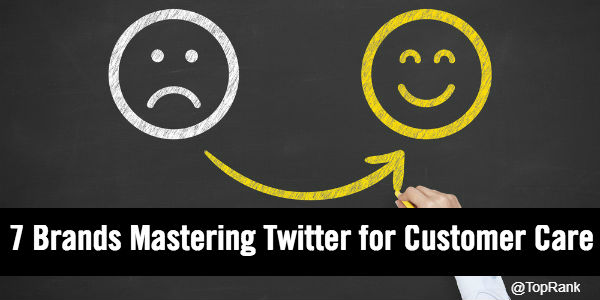
2. 7 Examples of Brands Mastering Twitter for Social Customer Care — Caitlin Burgess

Twitter Customer Care Our Senior Manager of Content Marketing, Caitlin Burgess, wrote the second most popular social media marketing post of the year, as she took a close look at how top brands have used Twitter to strengthen customer care programs. With helpful examples and relevant insights, Caitlin dives into some of the best customer care programs in social, and shows how they represent a customer service opportunity that deserves every marketer’s attention and action. Check out all of Caitlin's posts here.

3. Best Practices for Choosing Effective and Captivating Social Media Visuals — Anne Leuman

Best Practices for Selecting Social Media Visuals Content Strategist, Anne Leuman, wrote the third most popular social media marketing post of 2018 on our blog. In this piece, Anne dives into how to select the right type of visual content to share on the right platform. Anne offers up the latest social image dimensions, and looks at carousels and driving conversions with social stories. Check out all of Anne's posts here.

4. The Future of Connection on Facebook: How Stories May Change the Marketing Game — Nick Nelson

How Facebook Stories Will Change Social Media Marketing Our Senior Content Strategist, Nick Nelson, earned the No. 4 spot on our list of the most popular social media marketing posts of the year. Here, Nick takes an in-depth look at using Facebook for powerful brand visual storytelling. He includes helpful tips to overcome what can sometimes be elusive reach on the world’s largest social media channel. Check out all of Nick's posts here.

5. The Power of Social Media Polls: The Drill-Down on 3 Platforms + 5 General Best Practices — Nick Nelson

The Power of Social Media Polls for Marketing Nick also wrote our fifth most popular social post of 2018, tackling the benefits and pitfalls of social media polls, with his piece higlighting three platforms and five proven tactics. Nick also shares what kind of value polls can provide and how to get the most out of them.

6. From Messenger Bots to the Growth of ‘Gram, Social Media Examiner’s Annual Report Reveals Trends to Watch — Nick Nelson

2018 Social Media Marketing Trends from Social Media Examiner Report Nick's social media marketing wisdom earns him another entry on our top 10 list for 2018, with an in-depth look at Social Media Examiner's annual report. Nick shares the most relevant and helpful insight from the report, including how Facebook is in flux, the growing power of Instagram, and how to best use measurement moving forward.

7. The Question on Many Marketers’ Minds: Should My Brand Start a Facebook Group? — Nick Nelson

Should My Brand Start a Facebook Group With his fourth consecutive spot on our top social media marketing posts of the year list, Nick examines how brands can best utilize Facebook Groups. Nick shows why Facebook groups present a good opportunity to regain diminished reach by embracing the platform’s heightened focus on user-generated content.

8. The Latest Evolution of Facebook: The Marketing Low-Down on 5 Recent Changes — Anne Leuman

Latest Facebook Updates 2018 Anne earned a second entry on our most popular social media marketing list with her helpful piece exploring the latest round of major Facebook changes. Anne gives the low-down on five Facebook changes, tells what they mean for social media marketers, and offers up the next steps to take.

9. How to Survive the Social Media Midlife Crisis — Joshua Nite

In addition to writing our most popular social media marketing piece of 2018, Josh earned another entry on the list with this fine look at how to take our social media accounts off of autopilot and apply a mindful approach. Josh also looks at how working with influencers helps put a personal, social touch back into social media marketing.
10. Social Media Marketing Spotlight: U.S. Bank Rallies Local Allies for a Friendly, Engaging #MNNice #NiceOff — Caitlin Burgess

US Bank NiceOff Caitlin has written another of our year's most popular social media marketing posts, with an excellent spotlight look at Minneapolis-based U.S. Bank and its social efforts. Caitlin explores examples of how campaigns can achieve success through the use of thoughtful and engaging social strategy that is subtly brand-centric and influencer-activated. We can't thank Josh, Caitlin, Anne, and Nick enough for writing and sharing these top ten social media marketing posts of 2018 — congratulations to you all on making the list!

Thanks TopRank Marketing Writers & Readers

Thanks to each of you who read our blog, and to all of you who comment on and share our posts on the TopRank Marketing social media channels. We hope you find continuing benefit from these excellent social media marketing posts from 2018. We published dozens of posts this year specifically about social media marketing, and plan to bring you even more in 2019, so keep posted for a new year of the latest helpful research and insight. Please let us know which social media marketing topics and ideas you'd like to see us focus on for 2019 — we'd love to hear your suggestions. Feel free to share your suggestions in the comments section below.

The post Our Top 10 Social Media Marketing Posts of 2018 appeared first on Online Marketing Blog - TopRank®.


from Online Marketing Blog – TopRank® http://bit.ly/2s7atxX
via IFTTT

Tuesday, 1 January 2019

Where Marketing Automation Fits Into the Customer Journey

Where Marketing Automation Fits Into the Customer Journey written by John Jantsch read more at Duct Tape Marketing

When companies incorporate marketing automation into their approach, they often focus on the middle of the marketing hourglass. They use the automation tool to stay in touch with existing customers or to reach out to prospects who are very near to making their first purchase.

However, marketing automation can be used throughout the entirety of the customer journey to great effect. When you’re smart about automating marketing processes, it frees you up to do more of the prospecting and lead nurturing work that only a real human can do, while taking some of the more tedious and time consuming parts of the marketing process off your plate.

Here, we’ll take a look at the various features that make up marketing automation, and how best to use them throughout the customer journey.

What is Marketing Automation?

Before we dive in, let’s provide a quick definition of marketing automation. It’s the process of using a software platform to automate some of your repetitive marketing tasks. It can be used across channels, and includes social media, email, and certain website actions.

The software allows you to group users by certain attributes or behaviors and to target them with messaging that is most relevant to them. For example, you might group people in the same geographic location together, or group people who have made multiple purchases from your business.

Marketing Automation for the “Know” Phase

At the very top of your marketing hourglass, people are encountering your brand for the very first time. Maybe they’re someone who’s in desperate need of the good or service your provide; maybe it’s someone with a passing interest in your field. How do you sort things out this early on in the game?

One of the first things that marketing automation tools can do is help you with lead capturing efforts. Using the same form across your website allows you to gather the same contact information for everyone who fills out the form. From there, you can begin the process of analyzing their attributes and behaviors to figure out whether or not they’re serious prospects.

Behavior scoring (otherwise known as lead scoring) asks you to take data on your existing clients to build a composite profile for your ideal prospect. Where do they live? What profession are they in? What kind of actions do you expect them to take before they convert?

When you know what your ideal prospect looks like, you can then use your marketing automation tool to compare each lead against this dream prospect. If they’re ticking most of the boxes, this is a lead you know is worth your time. They’re likely to convert, if you play things right, so it’s smart to spend some marketing dollars courting them.

Leads that fall completely outside of this ideal picture are likely not worth your time. They’re just not the kind of person that realistically needs or wants what your business offers, so no amount of time or money will result in them changing their mind.

Marketing Automation for “Like” and “Trust”

Once you’ve identified those leads that are worth approaching, you can begin to use your marketing automation tool to create an effective email campaign.

Marketing automation tools allow you to segment your audience so that you can send specific messaging to different groups of people based on their attributes and interests. It’s also possible to use the tool to personalize the email, setting it to auto-populate with name, company, and job title based on the information you have in your database.

For prospects, you can establish a set of prospecting emails that slowly and methodically introduce them to your company and the problems you can help them solve. Only 23.9 percent of all sales emails are even opened, so it will take several attempts to get a prospect’s attention.

You should start by creating a handful of emails that contain different offers so that prospects can come to know and like your business—an invitation to access a white paper on your area of expertise, an opportunity to join a monthly webinar that you hold, or an offer to book an introductory call with a member of your sales team.

You can then set these messages to send on a regular schedule, with a built-in trigger to turn off the next email in the set if the current email leads to a conversion.

Your marketing automation tool can also help you to tailor the content on your website to the profiles of your visitors. The tool can show specific content that you know will be valuable to a given prospect, and you can create dynamic content that is replaced based on actions a prospect has taken or interest that they’ve expressed in a particular topic. This level of personalization makes a prospect feel seen and heard, which goes a long way to building likability and trust.

Marketing Automation for “Try” and “Buy”

Once you’ve proven to prospects that you understand their specific needs and have the perfect solution for their problems, you begin to move them into the try and buy portion of the hourglass.

Using marketing automation to target them with messaging that is triggered by a specific action can be an effective tactic here. At this point you already know a bit about the prospect, so you can get even more specific about giving them information you know they’ll be interested in.

For example, let’s say a prospect has signed up for your company newsletter, you can use this action to then trigger messaging to drive them to the try phase in the hourglass. Maybe this means a pop-up on your website that invites them to a free trial of your service. Or perhaps it’s an email invitation to an upcoming event on the topic you cover in your newsletter, with a friends and family code so they can attend for free.

Once someone’s made their first purchase, you can set your system to automatically follow up with them. Send them a welcome email that gives them additional information on how to get the most out of their purchase. Then automatically send them an email again in a few weeks’ time to make sure they’re still happy and to offer support with any issues they may have encountered.

Marketing Automation for “Repeat” and “Refer”

You’ve already used your marketing automation platform to get your prospects to convert, but you can continue to use the tool to influence the remainder of their customer journey.

Once a customer has made a specific purchase, you can offer them related products or target them with communications that are focused on their areas of interest. In a recent Marketo survey, 78 percent of respondents said they would only pay attention to promotions that were related to their previous interactions with the brand. That means that most consumers would rather have no deal offered to them at all than have a generic offer sent their way.

Marketing automation can also help you to establish and maintain a strong referral base. With the ability to set up regular communication with your existing customers, marketing automation tools help you to stay top of mind so that customers are likely to have your name on the tip of their tongue when their friend asks for a referral in your field. Additionally, if you choose to establish a referral program, you can use email segmentation to stay in touch with members of that program, offer meaningful rewards, and target new leads coming to you via referral with specialized messaging.

In addition to the benefits that marketing automation provide you throughout the customer journey, the tools offer bigger-picture benefits as well. You should be using the data you collect on the effectiveness of your marketing efforts throughout the customer journey to refine each of the steps you take along the way.

Marketing automation tools compile a lot of information on the effectiveness of your marketing approach across channels, which allows you to identify holes, find logjams, and then invest the time in fixing those issues. When you have a better understanding of your complete marketing approach along the entire customer journey, you’re empowered to create one that is even more optimized for future customers.


from Duct Tape Marketing http://bit.ly/2QfWUpB
via IFTTT

B2B Content Marketers, Here Are Your New Year’s Resolutions for 2019

Content Marketing New Year's Resolutions

Content Marketing New Year's Resolutions If you break down the word “resolution” phonically, you get “resolute” and “shun.” Kind of ironic, since we all seem more likely to shun (persistently avoid, ignore, or reject through antipathy or caution) these self-assigned goals than be resolute (admirably purposeful, determined, and unwavering) in achieving them. Too often with New Year’s resolutions, we set ourselves up to fail. We lay out ambitious mandates and drastic behavioral changes that sound great in theory, but almost invariably fall by the wayside amidst our busy lives. B2B content marketers are plenty familiar with ambitious goal-setting. We're optimistic. We're driven. But perhaps we're not always realistic. The whole point of setting goals is to achieve them. If you're always setting stretch goals, you'll never know what success looks like. In this spirit, I thought I would outline five professional resolutions for B2B content marketers in 2019 that are not only achievable, but (I’ll argue) imperative. Enough shunning. Let’s get resolute and conquer these five objectives.

#1 - Document Your Content Strategy (For Real Though)

Every year, when they conduct their annual benchmarking research, Content Marketing Institute (CMI) and MarketingProfs ask respondents whether they have a documented content marketing strategy. And every year, we’re all stunned by how few say “yes.” (The 2018 study showed that just 36% of B2B marketers reported having a documented strategy. In the 2019 study, which was just released this past October, that number was 39%.) Then, we do it all over again. It seems absolutely insane that almost two out of three marketers lack documentation for their content strategy. And most of us recognize this, but still we just continue to let it slip. Enough. Make 2019 the year where you actually get your strategies written down, in the form of a tangible doc that is visible and accessible to everyone in the organization. [bctt tweet="Enough. Make 2019 the year where you actually get your #contentmarketing strategies written down. - @NickNelsonMN #NewYearsResolutions" username="toprank"]

#2 - Stop Focusing Your SEO Strategy on Keywords

Many of us were trained around this core principle of SEO writing: make that target keyword front-and-center in your copy. Place it in your title, in the first paragraph, and in multiple headers. Sprinkle it throughout your writing as liberally as salt on a bad steak. While “old-school” SEO has been on the outs, with content that provides the perfect balance for bots and humans on an increasing rise, some marketers still regard keywords as the end-all-be-all. Forcefully stuffing keywords into your content often diminishes readability, and in some cases it can totally derail the core points you’re trying to make. To what end? Google is continually getting smarter and more complex in its page rankings. As our Associate Director of Search & Analytics Tiffani Allen wrote here recently, elements like mobile-friendliness and voice search alignment will increasingly hold sway in 2019. Just take a look how far down anything keyword-related falls on this updated hierarchy of ranking factors from SEMrush: SEMRush Ranking Factors Breakdown Quality, engagement, and relevance will rule the day. Fulfilling search intent is the prime directive in 2019 and beyond, as Annie Leuman recently broke down for us. [bctt tweet="When marketers understand #searchintent, we can create #content more tailored to our audience’s specific needs, problems, and questions—helping gain visibility, attract more qualified traffic, & build trust. @annieleuman" username="toprank"] If you are delivering on those fronts, you needn’t worry so much about SEO writing in a way that reads like this SEO writing sentence and makes you never want to type or hear the words SEO writing again.

#3 - Stop Talking to Walls

I’ve suggested that one of the biggest problems in B2B content marketing today is brands writing to members of their audience “as if they were an intangible corporate entity rather than a human being.” I continue to see this all the time: robotic blog posts aimed at no one in particular, covering dry material in the dryest manner possible. Oftentimes, these uninspired content pieces are aligned with the aforementioned SEO strategy of attacking keywords with little consideration for quality or audience engagement. Among the top content marketing predictions and trends for 2019 listed by our Caitlin Burgess is the elevated importance of building trust and infusing personalization. That means creating authentic, relatable content that speaks directly to a distinct human audience. [bctt tweet="#B2B marketers have to stop thinking about how audiences 'consume' content, and start thinking about how audiences want to experience content. @CaitlinMBurgess" username="toprank"] The time has come for editors and content managers to prioritize this directive. I might even recommend an approach as stark as this to ingrain the practice for your writers: If you read the first couple paragraphs of a draft, and it’s not immediately obvious that the voice is directed toward an actual person, send it back for revisions.   

#4 - Move Outside of Your Content Comfort Zone

Of course, marketing content isn’t limited to the written word. It’s certainly the form most content marketers are comfortable with, because we so often have backgrounds in writing. However, strategies that don’t incorporate varied mediums are quickly falling behind. Audiences want more than words. The lowest-hanging fruit is video. It’s now easier than ever to create, requiring little more than a smartphone, and there’s no questioning its impact. It’s also kinda scary, because it sometimes means putting your face on camera, and grappling with unfamiliar concepts like video scripting, and sound design, and lighting (oh my!). If it helps, start small. Try creating a talking-head video from your desk and then self-scrutinizing, or linking up with a few coworkers for a panel-style interview that’s only distributed internally. Once you start to get it down, you can level-up your ambition and start actively integrating video marketing into your outward strategy. Our Josh Nite has written that “next-gen content” (i.e. interactivity, visual appeal, multimedia elements) will be key to earning the attention of audiences and generating leads. The more competency you can gain with these content types, the better you’ll be positioned. [bctt tweet="Be hyper-relevant and hyper-valuable with your #content, and you’re far more likely to bring more leads into your nurturing track. @NiteWrites #B2BLeadGen" username="toprank"] These video tips for first-time video marketers and design tips for non-artsy writers might help get you rolling.

#5 - Get that Google Analytics Certification

I’m guilty. I admit it. Google offers free courses and assessments through Google Analytics Academy that enable anyone to become certified with a GA Individual Qualification upon successful completion. Our entire account management team, as well as our SEO, PPC, and analytics teams are GA certified and adept in leveraging the tool. But the certification may not be high-priority item for writers, or content marketing generalists who have a team of analytics professionals behind them. But it’s a nice thing to have on your professional résumé, not to mention helping highlighting your analytical chops for some of your key stakeholders or clients. And beyond the ceremonial aspects, it’s just good to have all that knowledge around content measurement and attribution in your brain. Completing these courses and getting certified has been an ongoing goal for me all year in 2018, and — although I’ve gone through a few of the courses — I still haven’t finished it. Womp womp. If you Googled “disappointment” right now you’d probably see ... Google Analytics Certification Joke I know from conversations with colleagues and peers, however, that I’m not alone on this one. The GA certification seems to be that item on many to-do lists that keeps on perpetually sliding. So, if you’re in the same boat, let’s make 2019 the year we finally get ‘er done. That means developing a firm plan and sticking to it. Schedule time in your calendar and don’t shun it. [bctt tweet="#GoogleAnalytics certification seems to be an item that keeps perpetually sliding. Let's make 2019 the year we finally get ‘er done. @NickNelsonMN #ContentMarketing" username="toprank"]

Here’s to Resolute Marketers in 2019

Ready to get more resolute with your New Year’s resolutions this year? These five eminently achievable goals offer a good place to start. Almost every content marketer could stand to be more organized with documentation, sophisticated with SEO strategy, authentically human with their writing, versatile with their creation, and expert with their measurement. With concrete, realistic objectives in place, you can turn these from vague aspirations to viable accomplishments. Want more help as you prepare yourself for a bold new year ahead? Check out Caitlin’s top content marketing predictions for 2019.

The post B2B Content Marketers, Here Are Your New Year’s Resolutions for 2019 appeared first on Online Marketing Blog - TopRank®.


from Online Marketing Blog – TopRank® http://bit.ly/2LJfoOO
via IFTTT