Tuesday, 7 May 2019

A Quick and Effective Approach to Facebook Advertising

A Quick and Effective Approach to Facebook Advertising written by John Jantsch read more at Duct Tape Marketing

Facebook remains the dominant social media platform. In a recent earnings call, CEO Mark Zuckerberg shared that there are more than 2.2 million daily users on the platform. That means that small business owners who are not advertising on Facebook are missing out on an opportunity to connect with about a third of the global population.

If you’ve been thinking about Facebook advertising but are intimidated by the process of starting an ad campaign on the platform, never fear. This simple guide will help you get your first campaign up and running.

Start by Setting Goals

What are you really hoping to accomplish with your Facebook campaign? Yes, you’re hoping for more business, but how will you measure success? Set clear goals with firm numbers. Something like, “We’re hoping to increase website traffic by X percentage” will help guide you through the process much more effectively than a goal like, “find new prospects.”

Establish Your Budget

Before you dive into the actual creation of the campaign, you’ll want to know the limits of what you can actually spend. A lot of small businesses don’t set a firm budget for Facebook and end up increasing their spend month after month, chasing greater results.

That is a recipe for spending well outside your means, and will also allow the Facebook advertising platform to run you, rather than you working intelligently within a budget to get the most out of what you can actually afford to spend.

It’s best to set a daily budget when you’re first starting out. This allows you to monitor your spend more closely, and you can adjust or pause spending as you learn more about your ad costs.

Find Your Audience

Facebook advertising can allow you to stay top of mind with your existing customers and also reach a whole new audience who might also have interest in your products and services.

You should already have some information about the customers you interact with regularly. Things like age, location, and gender are ways that you can narrow down the audience for your ads. You’re able to customize all of this information, or if you don’t feel comfortable doing that just yet, Facebook can auto-select your ad placement for you.

You can also target your advertising towards people who have interacted with your business in person but haven’t necessarily encountered it online. By creating a custom audience for offline activity, you can present your advertising to people you’ve either met at in-person events or at your brick-and-mortar store (more details on how to establish a custom audience for offline activity can be found here).

You can also use the Facebook Pixel tool to install a line of code into your company’s website. This code tracks those who visit your site and will send them targeted Facebook ads based on their behavior. For example, if you own a shoe store and someone recently browsed your site for women’s shoes, you can target them with Facebook advertising for your new wedge sandals.

Facebook also allows you to create lookalike audiences using information you have on the demographics of your existing customers. You upload the information on your current customers into the Facebook ad platform, and they will generate a list of users who have similar attributes.

Settle on Your Ad Type

Facebook offers a variety of ad types of businesses. The type of ad you choose to create will depend on the goals you’ve set for your campaign.

  • Link click ads and video ads are probably what comes to mind when you picture a Facebook ad. They’re incorporated into a viewer’s newsfeed. They contain either a static image or video, and will direct traffic to your external website, to a landing page or blog post of your choice.
  • Boosted page posts are a little different. You can always post something on your business’s Facebook page for free, but you can choose to boost the post for a cost, amplifying the reach of the original post.
  • Carousel ads and collection ads also appear in viewer’s newsfeeds, and they provide them the opportunity to scroll through a variety of images. These are popular with retailers offering a variety of similar products.
  • Dynamic product ads are those ads linked up with the Google Pixel code. These ads are displayed based on a visitor’s past actions on your company’s website.
  • Lead ads contain a form within the ad, allowing viewers to download your ebook or sign up for your newsletter all from within the Facebook platform. This allows you to eliminate the steps of asking them to travel to your external website and click a call to action button there.
  • Page like ads allow you to drive visitors to your business’s Facebook page. They contain an image and text, plus a button for them to like your page.
  • Page post photo and video ads allow you to share photos or video from your Facebook page with your chosen audience.
  • App ads allow you to present viewers with a photo and an accompanying link encouraging them to download your business’s mobile app.
  • Event ads and offer claims allow you to promote a specific upcoming event or promotional offer for your business.
  • Local awareness ads allow you to target viewers within a certain geographic location. This is a great option for small local businesses hoping to reach people in their neighborhood.
  • Messenger ads are incorporated into the viewer’s Facebook Messenger feed. These messages appear alongside chats with their friends, and when they click on the ad, they can chat with your business.

Check out the guide in this article for more on which types of ads best align with which goals.

Check Your Progress

Once you’ve selected your ad type, you’re not done just yet! You’ll want to check in on how your ad is performing against the goals you set for the campaign. Continue to refine your approach as you go, tweaking your images and messaging in the ad, adjusting your target audience, or considering another ad type if you’re not getting the desired results with your present type.


from Duct Tape Marketing http://bit.ly/2VkCLX8
via IFTTT

How to Generate 100 Content Ideas in 60 Seconds (Seriously)

content ideas

I have a question for you…

How do you figure out what you should blog about?

If I had to take a guess, you probably come up with ideas based on one of two strategies.

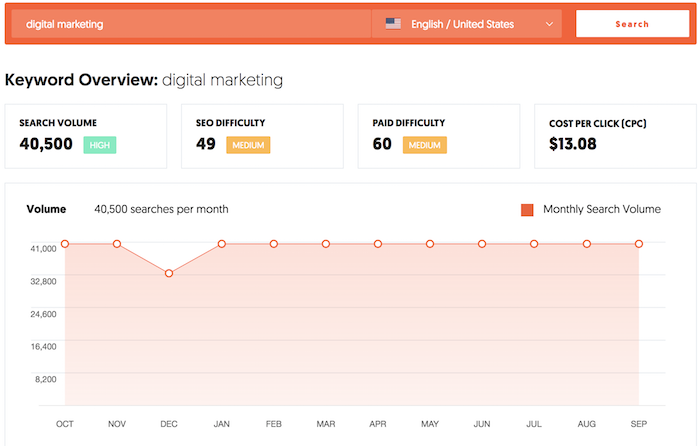
The first is to use tools like Ubersuggest to come up with a list of keywords.

keyword overview

But once you find popular keywords, you have to brainstorm topic and titles ideas.

What a drag, right?  

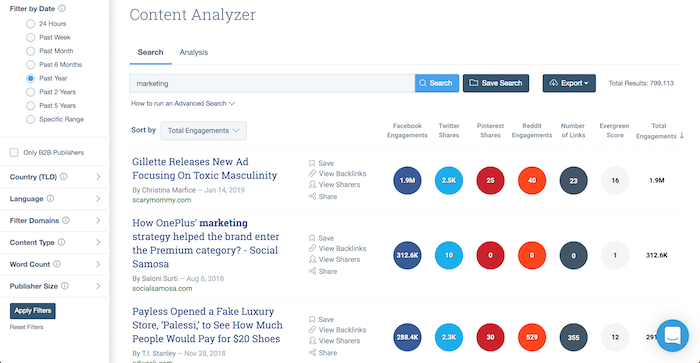
Now, the second way you probably come up with ideas is by using tools like Buzzsumo.

You type in a keyword and it shows you the most popular blog posts that have performed well in the past based on social shares.

buzzsumo

But there’s an issue… actually a few issues:

  1. Buzzsumo only shows you 10 ideas… unless you pay them $99 a month.
  2. And just because a blog post has a ton of social shares, it doesn’t mean it will get consistent traffic like you would through SEO. Social shares typically provide a boost in traffic for only a few days and that’s it.
  3. Tools like Ubersuggest show you popular keywords, but it’s not easy to come up with titles based on those keywords.

There must be a better way to find topics you should blog about, right?

There will be in 30 days with your help!

Content marketing made simple

A few weeks ago I made an upgrade to Ubersuggest: I added a free backlink checker called Backlinks.

But why stop there?

I now plan to release a new feature on Ubersuggest that will provide data similar to what you would find on Buzzsumo, but I need your help to do so.

Let’s say you are interested in creating content that gets a lot of traffic.

What’s the process you use?

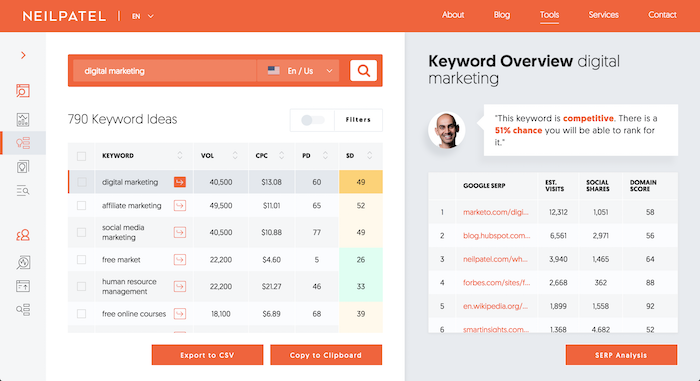
Well, you probably head over to Ubersuggest and type in a keyword. You’ll see a report that looks something like this:

keyword ideas

You then pick a few keywords and create articles about them. Now sure, at least with this approach you are writing content about keywords that have decent search volume.

But what about the title?

Here’s an interesting stat for you… 8 out of 10 people will read your headline, but only 2 out of 10 will click through and read the rest of your article.

So how do you come up with that title or headline? One that grabs attention.

What if I made that easy for you?

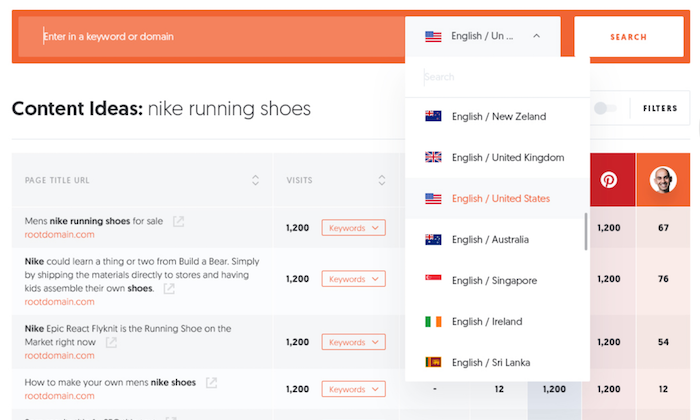
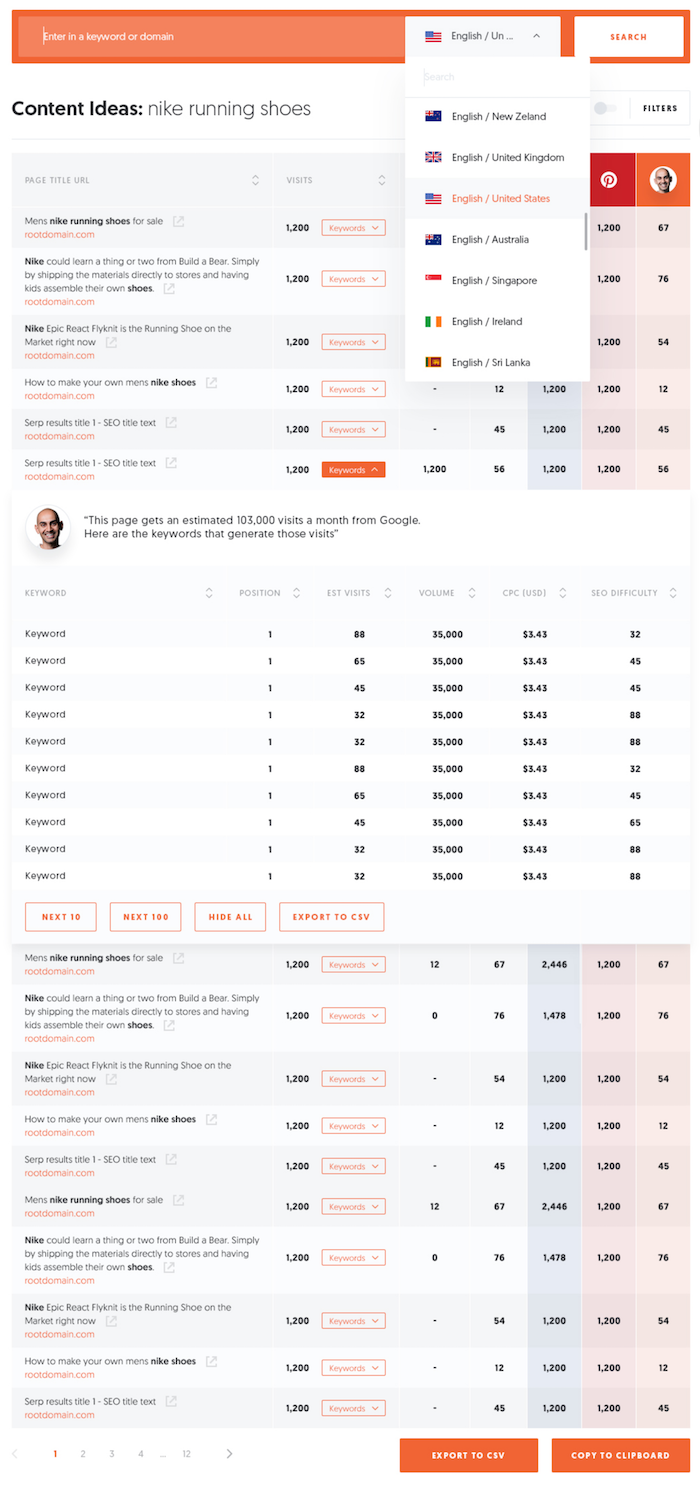
What do you think of the idea of seeing a list of blog articles that have done well anytime you type in a keyword into Ubersuggest? Something that looks like this.

content ideas

*The screenshot has fake data… the real version would show real data with real-time results.

It would list out all of the articles that people have written in the past that contain the keywords you researched in both the title and meta description.

The results would then be sorted by:

  1. Social shares – which content got the most shares on social sites like Facebook and Pinterest.
  2. Estimated visits – how many visits is each article receiving from Google? And what are the keywords that each article ranks for?
  3. Backlinks – how many people are linking to each article? What are the URLs, their domain score, and even page score?

What if I showed you all of that in this “Content Ideas” report that I’m going to add to Ubersuggest?

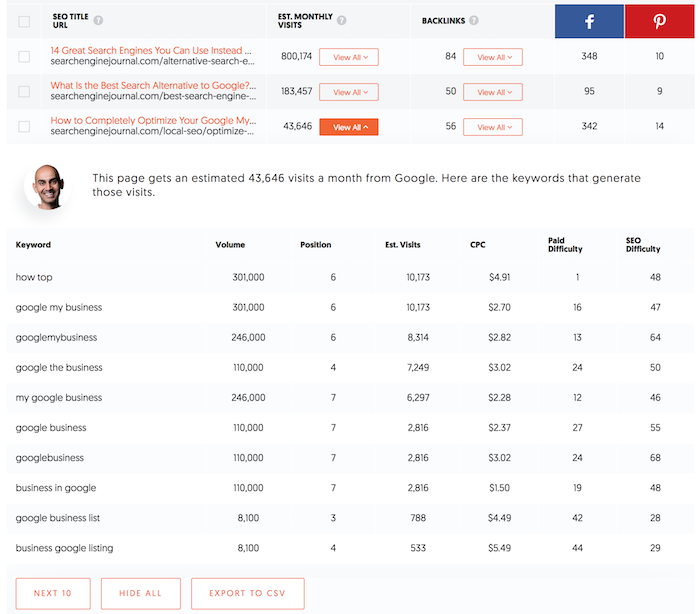
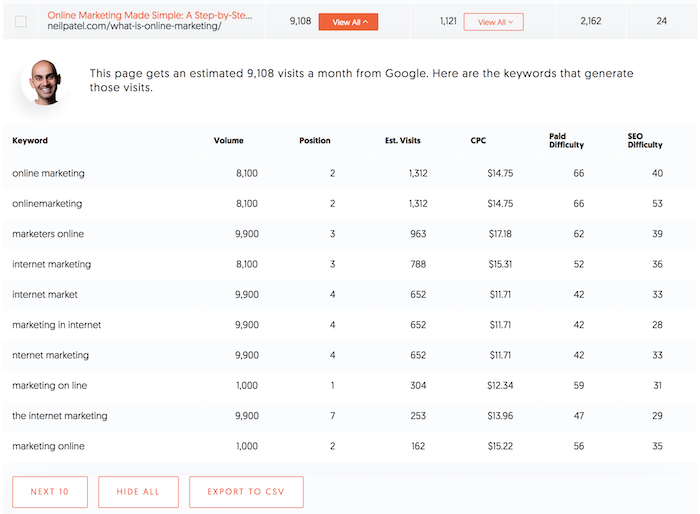
Here are some more screenshots that’ll help describe what I am trying to create for you… this one shows keywords that a blog post ranks for.

keywords

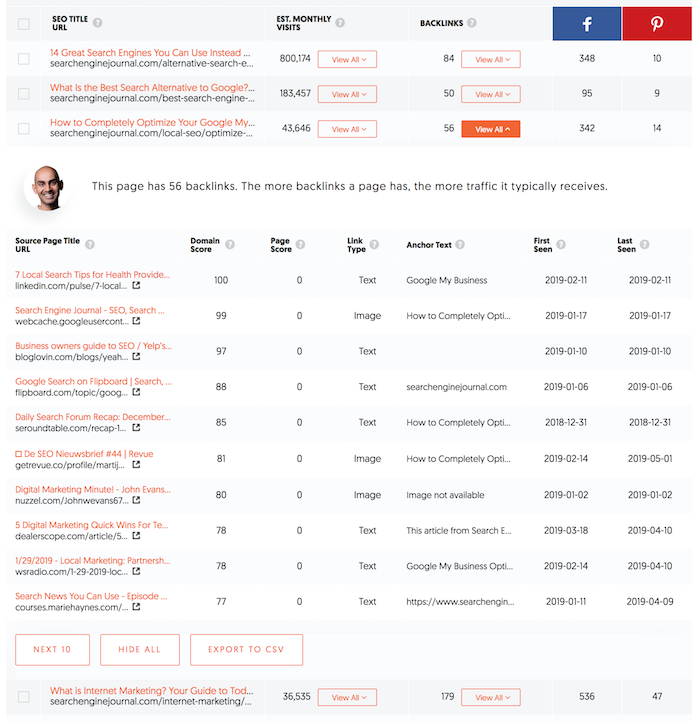
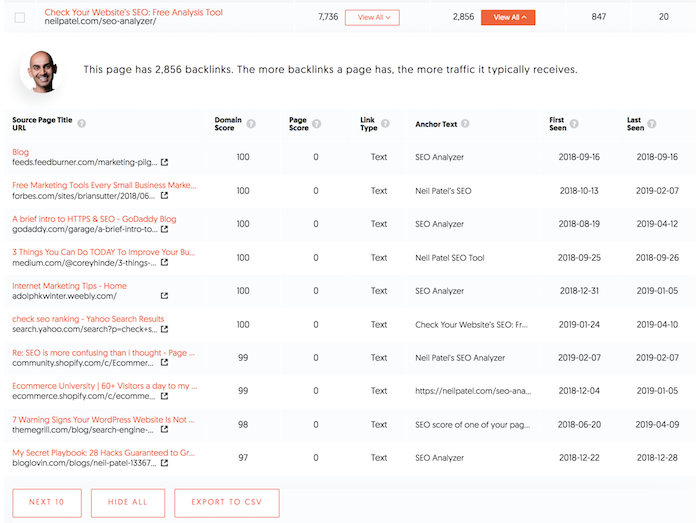
And here is one that shows the web pages linking to a blog post.

links

Would it help you come up with better content topics to write about?

Why should you want this new Ubersuggest report?

When you write any type of content, as a marketer, you want to ensure that it gets the most amount of traffic.

The current tools will either show you how many social shares a similar article received in the past or how people shared content with specific keywords.

But that’s the problem… you aren’t presented with enough data, which means you are more likely to write content that doesn’t perform well.

See, social algorithms are much harder than they were in the past, which means you probably won’t get as many social shares as some of the other articles that have done well.

And SEO is also harder than what it was in the past, which means it won’t be as easy to get rankings.

By seeing content broken down by social share count, estimated visits (organic monthly Google traffic), and backlinks you will have the data you need to pick the right topic to write about. Because if you are picking topics that have a lot of all 3, the chances are that the topic is worth writing about and will do well.

Social shares will provide you that quick influx of traffic at the beginning. Backlinks will help you with referral traffic and over time help you boost your search engine rankings. And estimated visits shows you which keywords to focus on for that article.

And best of all, you’ll see over 100 content (topic) ideas so you’ll have a lot to choose from. I don’t know how long it will take to show you 100 ideas per keywords, but I do know I can do it well under 60 seconds. 🙂

Competitor analysis

I don’t know if you knew this but I already have half of what you can get from Buzzsumo built into Ubersuggest. This part is already live.

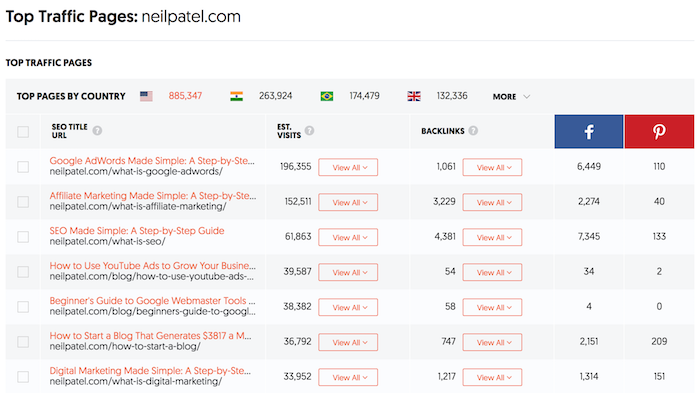
Did you know that you can enter a URL into Ubersuggest?

Then when you click on the “Top Pages” navigational button you can then see a list of all of the top articles and pages on your competitor’s site.

top pages

The results are broken down based on estimated visits a page receives from Google on a monthly basis, the backlink count, and the number of social shares each page has.

Just click “view all” underestimated visits and you will see all of the top keywords that drive traffic to that page.

top pages keywords

And under backlinks, if you click “view all” you can see all of the sites linking to that page.

top pages links

Conclusion

What do you think of this new content ideas report that I am trying to create?

In other words, something similar to Buzzsumo, but I will show you more results as well as show you who is linking to each of those articles and how many visits each article is generating from Google each month?

My goal is to make it easier to find ideas for your next blog post. And of course, increase the odds of you creating content that actually gets traffic and backlinks.

So, what do you think, should I release this free feature within the next 30 days?

And if you think I should do it, what other features would you want me to release?

The post How to Generate 100 Content Ideas in 60 Seconds (Seriously) appeared first on Neil Patel.


from Blog – Neil Patel http://bit.ly/2H6fBuw
via IFTTT

6 Ways to Bring More Boom! & Less Boring to Your B2B

Lit firecracker and yawning man image.

Lit firecracker and yawning man image. Is your B2B marketing on the boring side? Here’s how you can ignite a powder-keg of inspiration and burst forth with new content marketing energy to bring more boom and less boring to future B2B marketing efforts. We have six boom-including content marketing antidotes to replace the status quo with inspiration, joy, laughter, energy, enchantment and other powerful marketing elixirs that can help you create relevant, informative, and — above all — memorable content.

#1 — Get An Inspiration Infusion From Experts

via GIPHY
  • Oftentimes you don’t have far to go to find inspiration for your B2B content marketing.
  • Inspiration abounds if you look to your heroes, past mentors, and the industry influencers and business associates whose work you admire the most.
  • We occasionally research and publish lists of top experts in several areas of marketing, which are great starting points for finding examples of marketers who inspire. Here are a few of our most recent compendiums:
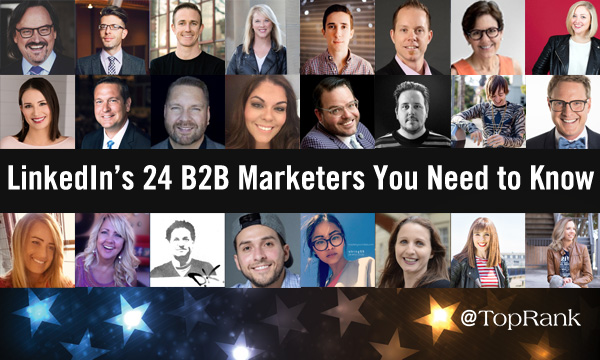
2019 TopRank Marketing Social Media Marketing Influencers This robust recent list, “Our 2019 List: The Top 50 Social Media Marketing Influencers,” includes 50 top social media marketing influencers, researched and ranked using influencer relationship marketing platform Traackr and numerous other social signal metrics. LinkedIn’s 24 B2B Marketers You Need to Know Recently LinkedIn* published its new edition of The Sophisticated Marketer’s Guide to LinkedIn, a list of 24 B2B marketing experts, who all represent great examples of how to incorporate inspiration into you marketing, and we took a look at this group in “LinkedIn’s List of 24 B2B Marketers You Need to Know.” 25 Women Digital Marketing For the past nine years we’ve also put out a helpful list of some of the most influential women in digital marketing, “25 Influential Women in Digital Marketing Who Rocked and Inspired in 2018,” also an excellent source for finding experts who are highly skilled at using inspiration in content marketing.

#2 — Find Your Joy Elixir

via GIPHY
  • Try looking at your content marketing practices in new ways, with fresh eyes, and with an open heart.
  • As you tell your marketing stories, make a conscious effort to incorporate joy’s inherent happiness and exuberance in your efforts where appropriate.
  • Joy is a powerful emotion that can have a home in many B2B marketing campaigns — as you’re creating, look for opportunities to use it.
  • Are your own content marketing efforts sparking joy for your audience, à la Marie Kondo? Our own Anne Leuman examines how joy can help deliver amazing personalized B2B experiences, in “B2B Marketers, Are Your Content Marketing Efforts Sparking Joy for Your Audience?”
  • Share joy with your target audience and you’ll both benefit, as Mark Twain once suggested when he wrote:
[bctt tweet="“To get the full value of joy you must have someone to divide it with.” — Mark Twain" username="toprank"] Research has shown that happiness is the top factor among U.S. mobile users when it comes to being receptive to advertisements, as the following chart from eMarketer demonstrates: eMarketer State of Mind Chart Image

#3 — Create a Contagious Laughter Tonic

via GIPHY
  • Recognize the difference between joy and laughter, and realize that although separate, the two play off of one another, as Buddhist monk Thich Nhat Hanh has said.
[bctt tweet="“Sometimes your joy is the source of your smile, but sometimes your smile can be the source of your joy.” — Thich Nhat Hanh @thichnhathanh" username="toprank"]
  • Look for areas in your B2B marketing where it would be appropriate to incorporate content that will — with skill and just a little bit of luck — make people laugh.
  • Don’t be afraid to tap into the lighthearted, the childlike, and the playful when looking to make people laugh — sometimes the simplest things can bring out the purest forms of laughter, or at least a wide smile.
For a number of years our own Joshua Nite has written an annual take on the latest marketing humor, with the most recent being “20 More Dumb Jokes for Smart Marketers” and “20 Jokes Only a B2B Marketer Will Get,” good sources for finding the role of wit and comedy in marketing. [bctt tweet="“I made a joke about organic reach on Facebook… nobody got it.” — Joshua Nite @NiteWrites" username="toprank"] [bctt tweet="Comedy is the most powerful way to humanize a brand because it demonstrates empathy. @timwasher #B2BContentMarketing" username="toprank"]

#4 — Blast an Energizing Content Path

via GIPHY
  • Opening doors, removing obstacles, and solving problems can all be great ways to invigorate B2B marketing campaigns, and can bring out tangible energy when done well.
  • By actively creating marketing that will guide the way and show a path to something that has seemed unattainable to your target audience, you’ll instill a new sense of energy with those you’ve inspired.
Statistics show that creating compelling content for digital experiences is among the top opportunities for companies in 2019, as the following chart from MarketingCharts shows: Most Exciting Business Opportunity MarketingCharts Image
  • Seek out examples of B2B marketing done by people who are filled to the brim with energy for the work they do and the impact they make through their campaigns. In addition, look to yourself. Not long ago, our team members shared how their personal passions fuel their work in Nick Nelson's post: "Becoming a Better Marketer by Embracing Your Passions Outside the Office."
How Our After-Hours Passions Elevate Us as Marketers

#5 — Present Enchanting Possibilities

via GIPHY
  • In the storytelling you use in your marketing, be open to incorporating your own unique touch and style to truly enchant your target audiences, as enchantment opens up a world of connection possibilities.
  • Author and marketer extraordinaire Guy Kawasaki has made a living and written books specifically about enchantment, and it’s easy to see why this emotion is such a powerful method for connecting with people, both in person and in our marketing efforts.
We look more closely at some of the ways Guy likes to bring out enchantment in marketing in “Spicy Twists and Tactics For Unique Content Promotion.” [bctt tweet="“When you enchant people, your goal is not to make money from them or to get them to do what you want, but to fill them with great delight.” @GuyKawasaki" username="toprank"]

#6 — Make It Share-Worthy & Bookmarkable with Best-Answer Content

via GIPHY
  • Sometimes being definitive is the key to crafting marketing gold — the kind of best-answer content that makes you take the extra step of bookmarking a website or social media post URL for coming back to again and again, and for sharing.
Providing the best answer for your customers is a great way to boost brand credibility, and recently we’ve explored just what best-answer content is and some of the ways you can strive to achieve it in your own B2B marketing, including our CEO Lee Odden’s insightful “How A Best Answer Content Strategy Drives B2B Marketing Results.” Best Answer Content B2B Marketing [bctt tweet="“If buyers don’t see consistent, credible and engaging best-answer content across channels from your brand, they’ll begin to trust competitors who are.” — Lee Odden @LeeOdden" username="toprank"]

Say Fare Three Well to Boring B2B Marketing

Using the six marketing ideas and tactics we’ve looked at here, the time may have finally come to say goodbye once and for all to many of the most boring elements of traditional B2B marketing. Inspiration, joy, laughter, energy, and enchantment may not be the right fit for every initiative, but I hope you’ll keep your eyes open for the places that will be ideal to utilize these powerful storytelling elements. Finally, to bring even more inspiration to your B2B marketing toolkit, check out our recent list of the top social media marketing blogs, in Lee’s “BIGLIST of Top Social Media Marketing Blogs for 2019 and Beyond,” or lend and ear and tune in to our list of “20 Podcasts To Elevate Your B2B Marketing.” *Disclosure: LinkedIn is a TopRank Marketing client.

The post 6 Ways to Bring More Boom! & Less Boring to Your B2B appeared first on Online Marketing Blog - TopRank®.


from Online Marketing Blog – TopRank® http://bit.ly/2H7KTRV
via IFTTT

The Latest Trends in B2B Email Marketing

At the same time that email marketing is becoming more complex, all of the issues surrounding it are becoming more interconnected. That is strikingly apparent when looking at the latest B2B email marketing trends identified by members of Oracle Marketing Cloud Consulting’s Expert Services team, which assist Eloqua customers with all aspects of their email programs.

Let’s follow this Interconnected chain of current trends in B2B email marketing:

Compliance Automation

Canada's Anti-Spam Legislation (CASL) was the first wave in the changing attitudes around privacy and permission. The General Data Protection Regulation (GDPR) was the second and much larger wave. And the California Consumer Privacy Act (CCPA) is the latest wave, which is likely to prompt a national US privacy act akin to GDPR in order to avoid having a patchwork of state privacy laws.

What’s clear is that privacy and permission standards are rising quickly and so are the penalties for non-compliance. That means that assuring that all of your subscriber acquisition sources are following the law and functioning properly is more important than ever.

“CASL, GDPR, and CCPA have created a new level of importance for normalized and accurate data,” says Fabricio J. Lopez, Cloud Manager, Oracle Expert Services. “Any compliance automation program will only be as good as the data supporting it, so brands have to create internal Data Governance Committees and assume the new responsibility of preventing multi-million dollar lawsuits for their organizations.

“Beyond normalization programs,” he adds, “data standards have to be monitored closely ensuring that all forms, list uploads, third-party apps, and CRM integrations are using the same set of values for key fields like Country, Region, State, and Province.”    

Automating compliance data processes will be an ongoing strategic initiative driving opt-in email automation, says Autumn Coleman, Senior Principal Consultant, Oracle Expert Services. “This process determines how to handle contacts that are net new to the database,” she says, “while simultaneously excluding non-compliant contacts from future email campaigns.”

Privacy and permission regulations also require...

More Active Management of Inactives

Having inactive subscribers on your email list that haven’t engaged with your emails in a long time depresses your performance metrics, poses a risk to your deliverability, and can violate the law. However, only 52% of brands remove chronically inactive subscribers, according to Litmus’s 2018 State of Email Analytics.

The low level of adoption of this necessary behavior represents not only a huge compliance risk, but a huge deliverability risk as well.

“It’s well past time for every brand to embrace a ‘less is more’ mantra,” says Chris Carlock, Principal Consultant, Oracle Expert Services. “Who cares if you have millions of contacts in your database. How many of these contacts have opened an email in the past 13 months? In the past 6 months?”

Brands should try to reengage subscribers who haven’t opened or clicked one of their emails in the past several months using triggered reengagement campaigns. The higher your email frequency, the sooner you’ll want to intervene. Reengagement campaign tactics vary, but the goal is always simply to get the subscriber to open or click an email again. If these attempts fail—along with a last-ditch try at re-permissioning them—then it’s time to move them to a suppression list and stop mailing them.

“Focus on your quality leads and engaged contacts—the 20% or so of leads that will result in 80% of your revenue,” he says. “This is even more important as data transparency and trust become more important with the advent of GDPR and CCPA.”

Brands can also preemptively reduce the percentage of inactive subscribers on their list by boosting the quality of their subscribers from day one by implementing...

Stronger Opt-ins

Subscribers who provide active consent are simply more valuable and less risky subscribers. By explicitly filling out an email signup form, checking an unchecked box to receive emails, or confirming permission via a double opt-in confirmation request email, subscribers indicate a clear interest in receiving your emails. Passive opt-ins during webinar registrations and white paper downloads have become dangerously weak.

This shift from lots of opt-ins with low intent to fewer opt-ins with higher intent is a struggle for many organizations who think that a bigger list is a better list and want to regain control over what their subscribers receive, says Coleman.

“Creating subscriber-based email marketing tactics requires organizational change, but the trend is clear,” she says. “The smart strategy is to allow consumers to choose when and why they hear from companies.”

Going hand-in-hand with stronger opt-ins and giving subscribers more control over how many and when they receive emails is the...

Growing Adoption of Preference Centers

Marketing isn’t advertising, where the company chooses what messages their audience will receive. Marketing is much more of a dialogue.

“It’s no longer just about what the company wants to communicate,” says Kim Roman, Senior Principal Consultant, Oracle Expert Services, “but more about how do we communicate the right message to the right person. What does the customer or prospect want to hear about? This is putting custom preference centers at the top of many of my clients’ to-do lists.”

A preference center might allow your subscribers to indicate…

  • The topics or industries they’d like to hear about
  • The kinds of content they’re interested in receiving (e.g., blog posts, webinars, reports, podcasts, etc.)
  • How rapidly they want to be notified about new content (e.g., as soon as it’s published or a rollup that arrives every week or every month)
  • The events they want to know about (e.g., local vs. national vs. international)

However, in order to create truly relevant communications, brands need to combine expressed preferences with the implied preferences that come from behavior. This leads to our next trend...

Hyper-Personalization

First-name personalization is so basic and so common that it does very little to foster closeness and build credibility.

“‘Dear First Name”’ isn’t true email personalization in 2019,” says Autumn Coleman.

Today, personalizing the customer experience means combining customer preferences with behavior inside the email channel and across other channels, she says. By bringing additional third-party data into Oracle Eloqua, customers are personalizing various elements within an email—such as subject lines, email links, banners, calls-to-action, logos, and email footers—creating a “bento box”–style email.

“For example,” says Cristal Foster, Principal Consultant, Oracle Expert Services, “a software company could merge data from their CRM to notify their customers that their license will expire in 90, 60, and 30 days, and so on. They could also include their partner/reseller channel to add another layer of personalization, enabling them to not only say your license expiring, but here’s where you can renew it.”

However, personalization isn’t limited to the content of an email. When the email is delivered can also be personalized using...

Send Time Optimization

Email usage habits vary wildly. Some people are monitoring their inboxes constantly, but most people have clear patterns around when they engage with their inboxes. Sent time optimization allows brands to act on these patterns and deliver their emails during the times when subscribers are most likely to be reading their messages.

The benefits of send time optimization can be impressive. For example, one Oracle Marketing Cloud travel industry customer saw unique open rates increase 37% and unique click rates go up 28%, compared to customers receiving the campaign at a default time. And a retailer using send time optimization has seen increases in opens and clicks upwards of 33%.

“This has been in the B2C space for a while,” says Foster, “and now B2B marketers are looking optimize their send times as well.”

But finding the perfect email timing goes beyond broadcast and segmented emails. The timing of your automated emails can be improved via...

Smart Trigger Timing

While some automated emails like receipts, welcome emails, and asset download emails should be fired off immediately after the triggering action, other automated emails benefit from delayed triggering. However, that ideal trigger delay can vary from person to person, which is where individualized trigger timing comes in.

“Nurture series are becoming more behavior-driven in their timing, not just their content,” says Kim Roman. “For instance, you might be sending a lead nurture series of emails spaced X days apart. Now, the trend is having the level and frequency of prospect engagement drive the pace of the emails—faster or slower.”

A smart automated series can also jump a prospect ahead from one buyer stage to another based on their actions, says Coleman.

“Buyers are more informed than ever before,” she says. “Creating buyer stage email programs that move contacts through to the next communication based off their behavior and interest is a great way to warm a prospect into a sales-ready conversation faster.”  

Whether it’s personalization, send time optimization, or smart trigger timing...

AI Helps Do It All Better

While there are manual, rules-based ways of creating much more relevant emails, AI allows brands to scale their efforts, individualize their efforts, and adjust their efforts over time that’s simply impossible otherwise.

“AI and machine learning are transforming the marketing automation space,” says Otilia Antipa, Principal Consultant, Oracle Expert Services. “It’s pushing the boundaries around hyper-personalization and automation, and it is what clients need to be prepared to embrace as the Digital Era enters its next phase.”

AI-powered personalization is a natural partner for preference centers and progressive profiling, she says.

“Yes, people want to control their experience,” says Antipa, “but they also don’t want to keep telling us how to do it.”

However, for AI to function properly, it has to have access to lots of data. This has led to more B2B brands doing...

Data Warehouse Integrations

All 21st century businesses are built on data, but often that data is in different systems in different places in different formats. That makes it difficult to impossible to execute on a customer-centric omnichannel strategy, which is what customers expect.

“Brands will truly need to look at consolidating data across platforms to leverage effective cross-channel marketing strategies,” says Antipa. “We see data warehouse integrations being key projects in leading brands in order to support data mining practices and machine learning. Data can transform and inspire brands, but we need the architecture in place to do so.”

This is just one more instance of B2B brands...

Embracing B2C Strategies & Tools

B2B brands sometimes think that their challenges and opportunities are unique and totally different than B2C brands’. But the overlap between the B2C and B2B email marketing worlds is growing.

Driven by GDPR and increasing consumer expectations, permission standards are rising for both B2C and B2B brands. Consumers and business customers both expect relevant email content, which brands can create using automation and hyper-personalization. And because of the adoption of Gmail and Office 365 at businesses, deliverability is increasingly driven by the same factors for both B2C and B2B brands, including subscriber engagement levels.

As these trends demonstrate, many email marketing issues are interconnected and span both B2C and B2B industries. “Don’t limit yourself to a traditional B2B toolkit,” says Chris Carlock. “Where they make sense, adapt B2C strategies to your business. Take the best from both worlds.”


Need help with your B2B email program? Oracle Marketing Cloud Consulting has more than 500 of the leading marketing minds ready to help you to achieve more with the leading marketing cloud, including an Expert Services team that specializes in B2B email marketing.


Learn more →


from Oracle Blogs | Oracle Marketing Cloud http://bit.ly/2VJ9k0c
via IFTTT

Monday, 6 May 2019

Content Marketing Fitness: Are You Ready to Integrate, Optimize and Activate?

Content Marketing Fitness

Content Marketing Fitness I’ve always thought of content marketing as a fast paced, agile and high energy approach to engaging the modern, empowered buyer. So why does so much of the content marketing that’s out there feel feel sluggish, low energy and bloated? Research from Content Marketing Institute and MarketingProfs has shown that marketers are challenged to create a variety of engaging content on a consistent basis. eMarketer recently reported that B2B decision makers’ top issues with marketing content reveal that content marketers are clearly “out of shape" when it comes to a focus on what’s most important. The top issues found were that content is too fluffy, not relevant, not personalized, misleading, behind a form or hard to find. For the marketers behind these issues, a quick look in the mirror makes it easy to see why: Bad habit strategy, low metabolism execution, overly processed tactics and sugar high shiny object software that doesn't get used properly if at all. I am sure you can see where I’m going with this metaphor. What’s the solution? I can’t think of a better way to get back on track when your marketing is out of shape than with some good old marketing fitness. This is a situation I can relate to literally, as a little over a year ago I was 70 pounds overweight and not in the best of health. I underwent a physical transformation reducing my pant size from 40 to 33 and breathing heavy walking to the fridge to regularly running 10k for fun. From that transformation experience I learned two very important lessons:
  1. Marketing, like fitness, is a journey not a destination. I optimized myself with a better diet and regular exercise, not as a goal, but as change to my overall way of life.
  2. A physical transformation and a marketing transformation have numerous parallels.
When you break it down, the similarities to making a physical transformation and transforming organic content marketing are very similar:
  • Recognize there’s a challenge (understand your data)
  • Set goals (Map your KPIs)
  • Get help / learn how (hire, consult)
  • Make a plan: diet/exercise (tactical mix)
  • Get the right gear (software/process)
  • Consistent effort (operationalize best practices)
  • Be accountable, adaptable & optimize (same!)
To that end, here is a list of 10 core marketing exercises that are literally part of my current exercise effort, to get you focused on the marketing fundamentals so that you can better integrate, optimize and activate your content for success.

1. Jumping Jacks - Warm up with Customer Data

How many marketers just jump to it with their content marketing without any concrete data to support their approach? In the gym that's a quick way to get injured and marketers not warming up with data are injuring the customer experience and ROI of their marketing.

2. The Sit-up: Strengthen Your Core with Strategy

A strong core is essential for just about any physical activity and yet, many people focus their attention on other specific areas. Strategy is obviously just as essential for content marketing but a surprising number of marketers do not have a documented content marketing strategy that includes a minimum of challenge/situation, audience insights, approach and goals.

3. The Plank: Optimize Your Core with KPIs

It's not enough to work your code with sit-ups and a documented content marketing strategy. The goals need to be quantified and benchmarked with key performance indicator metrics.

4. Lunges: Create a Powerful Story

Lower body power is key and so is a powerful story behind your content marketing message. Customer insights are essential for identifying what story the brand needs to tell in order to deliver a relevant and inspiring content experience that serves customer information needs in a way that drives revenue goals.

5. Air Squats: Power Up the Content Mix

A great complement to the lunge are air squats, but quality not quantity is the key. The marketing mix is no different. Many marketers are trying to win the information overload game by creating as much content as possible. Customer insights and industry awareness should drive the right content type and format with the most effective channels for publishing and distribution.

6. Burpees - Boost Quality & Reach with Influencers

Few all around exercises elevate the heart rate as effectively as burpees. Activating relevant influencers and collaborators on your content can add expertise, credibility and additional distribution firepower when shared by experts who audiences trust.

7. The Pushup: Create & Publish Your Content

As a foundational upper body exercise, a well executed push-up delivers great return on effort. The same is true with content creation and publishing. Attention to detail and execution is everything, especially when complemented by the appropriate variety: incline push ups, close hands, wide hands, clap push up and so on. There are a variety of options for content publishing and brands do not need to be limited to the corporate website.

8. The Pull Up: Promotion That Won’t Quit

Starting out, pull ups were my kryptonite because I never really did them. However, a stronger back and biceps were some of my goals and pull ups are great for that. I've found that promotion is content marketing kryptonite for a lot of marketers for the same reason - they don't really do it beyond social and ads. Content promotion is essential for connecting your investment in quality content with an audience that is interested and ready to act.

9. Chin Up - Build Biceps by Measuring & Optimizing

One of the best exercises for your biceps is the chin up. Not everyone can do them right away, so it takes practice. The same is true with content marketing measurement and performance optimization. Ongoing analysis and refinement is essential for continued upward and to the right results progression.

10. The Run: Repurposed Content Goes the Distance

If you really want the most out of a fitness transformation effort, some kind of cardio should be in your plan. My favorite is a solid run because it burns calories efficiently, builds endurance and just feels amazing (afterward). Funny enough, I feel the same way about content repurposing. Planned reuse of content is definitely efficient, it extends the value of your initial content investment and seeing the added impact from the effort just feels great! Of course you could throw in more or different steps, but for those marketers looking beyond some kind of “magic pill” solution, these are core content marketing “fitness” exercises that can get you back on track and build a strong foundation for more advanced efforts. Who knows, if you stick with it, maybe you can begin to transform your content marketing operation into a lean, mean ROI generating machine. Summer is upon us but for those you doing some Fall marketing conference planning, I will be talking about this topic at Content Marketing World: Content Marketing Fitness - 10 Exercises to Build Your Marketing Beach Body and I hope to see you there!

The post Content Marketing Fitness: Are You Ready to Integrate, Optimize and Activate? appeared first on Online Marketing Blog - TopRank®.


from Online Marketing Blog – TopRank® http://bit.ly/2H2sd5T
via IFTTT

The New Rules of Engagement with Social Media Influencers

If your company or brand is trying to build relationships online with social media influencers, there are several things to keep in mind. Here are the new rules of engagement with social media influencers.

#1: Understand the Needs and Interests of These Influencers

Simply sending out the same e-mail blast to 100 or so influencers in the hopes that a large group of them will respond positively is a mistake. The reason is that most social media influencers have carefully tended their profiles and painstakingly built up their audiences, and they expect to be treated accordingly.

While it’s more time consuming to actually read what these influencers have written on blogs, and to check out what types of photos they’ve been posting on social networks like Instagram, that’s a key first step to ensure that there is the proper match.

#2: Create Something of Value for These Influencers

When building relationships with these influencers, it’s best to think in terms of exclusive content or valuable offers that you can give them. Part of what makes them so influential is that they are out in front of new trends and new ideas, so they always appreciate the chance to see things and meet people before a big trend hits.

For example, if you’re working with fashion bloggers, getting a chance to sit in the first row of a major fashion show is something of value, as is the chance to meet with certain designers one-on-one after the show.

#3: Don’t Expect a Tit-for-Tat Immediately

It’s a common assumption: You offer something of value to these influencers, and so you expect something in return. For example, you might invite a group of industry bloggers to a big conference where your CEO is giving a keynote speech. You might expect some adulatory coverage of the event, complete with gorgeous photos of your CEO in action.

But what happens? Unless you are specifically paying for content, you might get a few tweets and a half-hearted blog post. But don’t despair – it takes time to build up these relationships. The last thing that influencers want is the feeling that they are simply “shilling” for some other brand.

#4: Offer Full Disclosure About the Nature of the Relationship

One big mistake that some brands have made is to conceal the nature of the relationship with their influencers. But in today’s digital world, you always need to disclose these dealing. Instagram now has a built-in tool to make that easy, for example. And if people are blogging about your products, they should insert a disclosure at the end of the post if they have been compensated for the product review.

If you use these four steps above, you will be well on your way to building lasting and productive relationships with online social media influencers. As long as you are looking for ways to make them feel special and offer them something of real value, you will be able to build strong relationships. And, in a best-case scenario, those relationships will lead to new sales as they tell their friends and followers about your company’s products.

Find out more about working with social media by reading “Making Sense of Social Media Sponsorships and Partnerships.”

Go to the blog


from Oracle Blogs | Oracle Marketing Cloud http://bit.ly/2DRj5zj
via IFTTT

Saturday, 4 May 2019

Weekend Favs May 4

Weekend Favs May 4 written by John Jantsch read more at Duct Tape Marketing

My weekend blog post routine includes posting links to a handful of tools or great content I ran across during the week.

I don’t go into depth about the finds, but encourage you to check them out if they sound interesting. The photo in the post is a favorite for the week from an online source or one that I took out there on the road.

  • WhatsApp Business – Respond to, sort, and manage conversations with customers.
  • Startup3 – Create a website with templates and coded designs.
  • Roboform – Store all of your passwords in one safe place.

These are my weekend favs, I would love to hear about some of yours – Tweet me @ducttape


from Duct Tape Marketing http://bit.ly/2Y8h5Kq
via IFTTT