Wednesday, 4 March 2020

Great Experiences Make for Loyal Customers

Great Experiences Make for Loyal Customers written by John Jantsch read more at Duct Tape Marketing

Marketing Podcast with Micah Solomon
Podcast Transcript

Micah Solomon headshotToday on the Duct Tape Marketing Podcast, I visit with best-selling author, and one of America’s most popular keynote speakers on the topic of building bottom-line growth through customer service, Micah Solomon.

Customer service may have improved over the years, but customer expectations are on the rise as well. Micah Solomon & Associates provide training, consulting, workshops, and presentations that help businesses get modern customer service right.

On this episode, we discuss Solomon’s newest book, Ignore Your Customers (and They’ll Go Away), where he dives into what goes on behind the scenes in creating a delightful customer service experience. From identifying the traits you should look for in customer service hires, to sharing case studies from businesses who are winning at customer service, there’s a lot for business owners to learn on this episode.

Questions I ask Micah Solomon:

  • Why is it so hard for people to get customer service right?
  • What does it mean to be a “customer first” organization?
  • How do you hire for great customer service?

What you’ll learn if you give a listen:

  • How to get inside your customer’s head.
  • How reviews have changed the way we need to approach our customer service.
  • Why delighting the millennials matters in customer service today.

Key takeaways from the episode and more about Micah Solomon:

Like this show? Click on over and give us a review on iTunes, please!

Klaviyo logo

This episode of the Duct Tape Marketing Podcast is brought to you by Klaviyo. If you’re looking to grow your business there is only one way: by building real, quality customer relationships. That’s where Klaviyo comes in.

Klaviyo helps you build meaningful relationships by listening and understanding cues from your customers, allowing you to easily turn that information into valuable marketing messages.

What’s their secret? Tune into Klaviyo’s Beyond Black Friday docu-series to find out and unlock marketing strategies you can use to keep momentum going year-round. Just head on over to klaviyo.com/beyondbf.


from Duct Tape Marketing https://ift.tt/2TCb6wT
via IFTTT

Transcript of Great Experiences Make for Loyal Customers

Transcript of Great Experiences Make for Loyal Customers written by John Jantsch read more at Duct Tape Marketing

Back to Podcast

Transcript
Klaviyo logo

John Jantsch: This episode of The Duct Tape Marketing Podcast is brought to you by Klaviyo. Klaviyo is a platform that helps growth-focused eCommerce brands drive more sales with super-targeted, highly relevant email, Facebook and Instagram marketing.

John Jantsch: Hello and welcome to another episode of the Duct Tape Marketing Podcast. This is John Jantsch and my guest today is Micah Solomon. He’s the bestselling author and one of America’s most popular keynote speakers on building bottom line growth through customer service. And we’re going to talk about his newest book, Ignore Your Customers (and They’ll Go Away), the simple playbook for delivering the ultimate customer service experience. So Micah, welcome back.

Micah Solomon: Oh, it’s great to be here, John.

John Jantsch: I can hear some people snickering saying, “Really, will they go away? Is that’s all it takes is ignoring them and they’ll go away?” But that’s not what we’re here to talk about, is it?

Micah Solomon: Well, I got that reaction once or twice and yeah, it can feel like that at the end of a long day, can’t it?

John Jantsch: It can sometimes, but again, we need those customers. Customers are King. Why is it that this is the part that is so hard for people to get right.

Micah Solomon: I think that by any objective standard customer service has improved over the years, but the thing is our customer expectations have skyrocketed as well. It’s not good enough to just do an okay job. And there’s so much value in doing a fantastic job because we’re no longer in the mad men era where Don Draper and Peggy Olson could convince you that Lucky Strikes were good for your throat, we’re not in that era anymore. We’re still interested in marketing, but only if it’s consonant with our experience as customers and the experience that our friends and the people we listen to online are having.

John Jantsch: Yeah, and I think the hard part about it is, I mean, really at the end of the day, businesses love their customers. They want to treat them well. They don’t want to provide bad service. But I think people underestimate just how hard it actually is to do it elegantly.

Micah Solomon: That’s exactly right. And I like to say I might… You’re interested how I’m a keynote speaker, I’m also a consultant. In fact, Ink crowned me the other day, Ink Magazine, as the world’s number one customer service turnaround expert. And then, which was so sweet and then he admitted I’m also the only one he’s ever met. But what I do is I walk into companies and I mystery shop them and see how they’re doing. And then I work with them to transform their customer experience, and what I find is most of the companies that hire me are already doing pretty well. They already understand the value of stuff, but they want to reach that exceptional level that you’re talking about. And it is hard. It is really hard. There’s many aspects to it.

John Jantsch: Yeah, that’s an interesting point because I know over the years a lot of the companies that have hired me to do marketing consulting are ones that kind of outwardly look like they’re doing all right. But it’s-

Micah Solomon: Yeah, exactly.

John Jantsch: … it’s the mentality of, but I want to invest in this that I think is really what you’re experiencing probably as well, isn’t it?

Micah Solomon: Yes. That sounds right.

John Jantsch: The kind of phrase or buzzword out there now is to be a customer first company. How do you take that beyond just the-

Micah Solomon: Smiling harder?

John Jantsch: … Team meeting?

Micah Solomon: Customer first, it’s a little bit of a misnomer, at least when I’m talking about it. I would say arguably employees should be first because they’re going to be delivering the service. But what we’re talking about with customer first, if we’re talking about the right way, is to take the customer’s perspective. I call this Micah’s Red Bench Principle, and it’s that the customers really only care about themselves. They care about their kids for sure and their spouse and their dog and so forth, but they don’t care about us as much as we wish they would. We need… Sadly, it’s true. So we need to see things from their perspective and understand they’re not really interested in our organizational chart, they’re not interested in any of that. If you can frame things in your mind and in your processes and in your attitude from a customer’s perspective, you’re going to do a lot better.

John Jantsch: All right, so that leads us right to how do you get in their head? I mean, how do you get that perspective?

Micah Solomon: Well that is an excellent question. You hire someone like me and I mean, there’s many different ways to do it, but you can hire someone like me to be your customer and see how it goes. And I can learn a lot. You could do this yourself as well. I would check all these things that you think are running fine and probably aren’t like… John, you’re like me, so you probably check this. But most companies never check their web forums to see if anyone actually answers those inquiries, the answers usually never. You check all those things. You make sure that it’s working the way a customer would want it to. On the website, you may want to hire a user experience person because that stuff’s really important too.

John Jantsch: Yeah, yeah. Our customers get to publish now. How has that dynamic changed not only customer service but certainly the need to be intentional about it?

Micah Solomon: I think of customer service as the new marketing and if you do a great job, if you provide a good customer experience and a warm customer service, then people are going to talk about you and they’ll also talk about you if you’re efficient and you’re in the right location and all that. But one thing they love to talk about is how they’ve been treated, so it’s extremely valuable. It’s also, I mean it’s arguably free. The staffing right, and so forth is not actually free but you do what you’re supposed to be doing and you get this free marketing as well, and of course it can go the other direction as well.

John Jantsch: Who in your mind, and I know you profile some bigger companies in particular that are household names in the book, but who do you think’s getting it right? That’s part A, and then maybe talk about a not so well known company that you think has gotten it right and that that’s made a difference.

Micah Solomon: The companies I cover in my book, Ignore Your Customers (and They’ll Go Away) range from ones that we all think about, Nordstrom’s, Zappos, we spent some time with both of them, USAA, which is huge in insurance and financial services and a lot of other stuff. Virgin Hotels, which actually will eventually be an enormous chain, but right now is only just a couple of hotels, we spent some time with them. Safelite Auto Glass, which if you think about it, they come into your life probably on a challenging day. I mean, best case is a rock hit your window and you need a new windshield. Worst case, someone actually intentionally broke your window because they broke into your car and replacing the windshield is only one of your problems. They come into your life on a bad day and they don’t only strive to make things okay, they strive to delight you. I spent some time with Safelite Auto Glass.

Micah Solomon: Some companies that I can see, John, neither of us need this but Drybar, which is for women and maybe men who are in hairbands, they’re the people who have done so well by offering a blow out and styling, we spent a bunch of time with them. MOD Pizza, which is growing like gangbusters and a voice over IP company named Nextiva. All of those, I would say are doing a spectacular job in very different industries.

John Jantsch: I want to remind you that this episode is brought to you by Klaviyo. Klaviyo helps you build meaningful customer relationships by listening and understanding cues from your customers. And this allows you to easily turn that information into valuable marketing messages. There’s powerful segmentation email auto-responders that are ready to go. Great reporting. You want to learn a little bit about the secret to building customer relationships? They’ve got a really fun series called Klaviyo’s Beyond Black Friday, it’s a docu-series. A lot of fun quick lessons. Just head on over to klaviyo.com/beyondbf, beyond black Friday.

John Jantsch: Tell me a little bit about Safelite? Because I had one of those experiences where I had to replace my windshield. And I will tell you that I think the entire experience, I wouldn’t… I’d love for you to talk about the delight part, but I will just tell you from a get the job done part, it was delightful. I scheduled, they came out at the scheduled time, they replaced it, everything went great. I mean, from my standpoint it was so convenient, I was able to schedule the entire thing online, pay for it online. The person came out, I didn’t even know they were there and it was done. I mean, from that standpoint it was as frictionless as possible, but what did you find that they do that you feel is over and above that?

Micah Solomon: That’s a lot of it. And to pull that off is harder than I would imagine. They have to have the part ready, they have to marry the part to the work order. And then they’ve worked really hard on the scheduling part. They first did something that was too restrictive where they told you exactly when the driver was show up, but what they found was that the drivers out in the field wanted a little more control over it because maybe another job is going a little longer, they involve the drivers in that. They’ve done some things for people who are really worried about personal safety. You now get a little photo of the person, a little bio and so forth. I guess someone shows up, they’re a totally different person, you could head it off at the pass. The delight part. I think it’s most of those things that you talked about the frictionless, but it’s also the customer service training that they’ve gone into to make sure that they are treating you well on a personal and personable level.

John Jantsch: Let’s talk about silos inside of organizations.

Micah Solomon: Oh, no.

John Jantsch: A lot of organizations have marketing and sales and service, as separate arms of the organization. Maybe you’ve not encountered any of these, but I’m told they exist still today. When it comes to the idea of customer service, or a perspective about this customer first thinking, what role do marketing and sales play in that? Again, I know that’s a really loaded and big question, but I guess in some ways, another way I could ask that is as how do you get every marketing, sales and service kind of all on the same page?

Micah Solomon: Well this is really important and many people have studied this. You don’t want the salesperson who over sells beyond what the customer support team can really bring to life. Marketing, you don’t want to over sell your product and then have it be beyond what your company can provide either. That’s very important. And then having the salespeople really know the product, really know the team that’s supporting the product. I think all of that’s extremely important. Now, John, you live way out in the country, so doesn’t it potentially get a little bit sick when people talk about silos and it’s entirely a metaphor at this point?

John Jantsch: That is a good point. I grew up on a farm, so we put grain in those silos.

Micah Solomon: Totally.

John Jantsch: All right, let’s talk about generations. I have four millennial aged children and their buying habits or the way that they consider who they’re going to buy from, who they’re going to stay with are substantially different than mine, I think. Or at least a different setup. I wouldn’t say there’s… We have the same values and connection with companies. But I think that, for example, if they go on a website, it doesn’t work the way they think it’s supposed to work, that’s the end of the story. Whereas I might go, ah, this is clunky, but they’re a good brand. I like them and I might fight through. From a service standpoint, how do you work with companies that A, have multi-generational employees maybe or B, certainly customers?

Micah Solomon: I tend to focus on the customer side. And what I would say is that all of us are becoming millennials. If a business can delight John’s kids, are they girls? Are they?

John Jantsch: Yes. All four girls.

Micah Solomon: Four girls and two of them are millennials, that’s awesome. My feeling is if you can delight the millennials, then pretty soon you’ll delight their older brothers and sisters and then you’ll delight John as well. I was talking with Herve Humler, who’s one of the actual founders of the Ritz Carlton Hotel Company and he said that’s how we do it. If a millennial is asking for something, we’ll figure that mom and dad are going to ask for it pretty soon. And I think that’s very important. There’s even a group on Facebook called My Life’s Officially Over, My Parents have Joined Facebook.

Micah Solomon: What do millennials want? They want it to work. They expect it to work. I mean, I think of millennials as technologically savvy is sort of true, but what they really are is what you said John, they’re technologically intolerant. When I describe having a 1984 Mac, yeah, I talked to millennials, they’re like, “Oh, that’s really cool.” And then I say, “Well yes and no. Can you believe that to install Microsoft Word, I had to switch in these floppy disks for five hours?” And they’re like, “No, that computer is dead to me. I like the old rainbow logo, but that’s about it.” They’re technologically intolerant, but I think that really keeps us on our toes. They’re also very interested in what is perhaps incorrectly called authenticity, but they’re okay with businesses with a little bit more of the warts showing because it’s more personable and they are good with what I call an eye level or peer on peer style of service.

Micah Solomon: They don’t want you putting on airs like we see in Buckingham Palace and all those historical shows with the one arm behind the back and stuff. It’s more like… And I was interviewing millennial traveler for one of my books and she said, “What’s comfortable for me is someone who’s serving me, but we are on a level, I understand that next week if I was short on money, maybe I’ll be working as a barista. That’s the style of service that’s most comfortable for them.”

John Jantsch: Couple of great points there. All right, let’s talk about hiring for customer service. I think that some of the best customer service people are just born that way, and you may dispute that. But I mean, how do you keep a… If as your company grows and you’ve built this brand on people love us, we serve them well how do you keep that culture alive with the fact that you have to get bodies in seats, in some cases.

Micah Solomon: Sometimes the reason, and I can speak from experience, having literally started in my basement, sometimes the owner is so great about customer service and not totally because it’s their personality. But because you have a proverbial loaded gun to your head, I mean, because we know the value of every customer. You need to get this across that every individual customer is irreplaceable. I would actually argue that customers in the plural sort of doesn’t exist, that our only customer is the one that’s in front of you right now. Born that way is a very important point. If you can hire for traits, it’s ideal. Now, if you’re in a very technical field, Google, you also have to hire for technical aptitude and maybe even in technical training, but for customer facing positions, if you can hire for traits you’ll do best. Do you have a second for me to tell you the traits you want?

John Jantsch: Yes, I do. I’d love it.

Micah Solomon: All right, so I’m going to give you a rule of thumb. I will, however, say it’s better to go in with one of these great companies like Gallup that has a more involved methodology. But a lot of people aren’t going to do that, so I’ve got a rule of actually all five fingers. Here’s how to remember it. Picture the superstore, Petco. All right? And then outside of Petco, put a big wet dog. All right, so John, what is the superstore?

John Jantsch: Petco.

Micah Solomon: Right. And is the dog dry or is it wet?

John Jantsch: It is wet and in fact it’s getting ready to shake.

Micah Solomon: All right, so you have this big wet… So the reason you want to remember this is because my five traits that make you really good at customer service, spelled wetco, W-E-T-C-O. It’s silly but it works. W is warmth, this just means they like other people. E is empathy, this means they can sort of, well not sort of, they can actually sense what another person’s thinking without them saying it. T is teamwork, this is a willingness to involve your entire team to find a solution for the customer. C is conscientiousness, this means detail orientedness and O is optimism. Specifically, it’s what Marty Seligman calls an optimistic, explanatory style. If you get someone with an pessimistic explanatory style customers they can have a bad day and they can bite your head off and you have to be like, “Oh my goodness, I must’ve done something horribly wrong.” You’re going to call in sick for the rest of the day. Go home, never come back to work. Understandable but not ideal.

Micah Solomon: What you want is someone who will say, “Oh, well that was a challenging conversation. I hope she feels better tomorrow.” Maybe I could have done better. I’m going to talk it over with my manager, but I’m also going to dust myself off, go back to work. Warmth, empathy, teamwork, conscientiousness and optimism. Those are the traits to hire for. However, most of us have already hired, however we’ve hired. And so we’ve got these people, well, what can we do? Well, some of these things can be trained for, there’s a kind of empathy that can’t be trained for, that’s called dispositional empathy. And that’s just the born that way part. But there’s another kind, which is called situational empathy. And this can absolutely be trained for.

Micah Solomon: For instance, in health care, sometimes I consult with hospitals. One of the issues they have is that those nice, hopefully nice people on the phone doing the scheduling, they’re generally in a different building from where the patients are. They don’t encounter a patient all day and almost none of them has ever been an inpatient in a hospital. You have these two barriers to the dispositional empathy that they need. What do you do? Well, you realize it’s a problem, or as we call in the biz, a challenge and then you get working on it. You simulate clinical moments. One thing I’ve always suggested for nurses, and none of them have ever taken me up on this, but with nurses, I say, “Hey, you want to know how long it seems between when that buzzer’s pressed and when you show up? How about this? Drink four liters of water.” No one has taken me up on it. But you get the idea, right?

John Jantsch: Oh, yeah, yeah. Yeah, that’s interesting. I thought you were going to suggest that they were going to inoculate them with some infectious disease or something so that they would all have to spend two weeks in a hospital or something.

Micah Solomon: Oh gosh, no. But there are things like that you can do if you want to think about your customers who have disabilities, there are these heavy boots that you can wear to give you a feeling. And so yes, so some of that, but mostly it’s going to be role-plays and video and in person training.

John Jantsch: Speaking with Micah Solomon, his latest book is Ignore Your Customers (and They’ll Go Away). Micah, tell us where people can find out more about you, your work and your books.

Micah Solomon: Come to my website if you don’t mind, you’re going to have to be masterful at spelling biblical names. It’s micahsolomon.com which is M-I-C-A-H at M-I-C-A-H-S-O-L-O-M-O-N. There’s no a and solomon.com or if that’s just too much for you. Here is my favorite. John, this is very Abby Hoffman, I have a URL just for the book and it is ignorethisbook.com.

John Jantsch: Oh, that’s awesome. Well, Micah, thanks for dropping by and next time you talk to Ira, tell him you were on a show that’s more popular… Probably not more popular, somebody thought was more influential than him. Hopefully we’ll run into you soon next time I’m out there on the road.

Micah Solomon: Thanks for everything John.


from Duct Tape Marketing https://ift.tt/2IgCUBF
via IFTTT

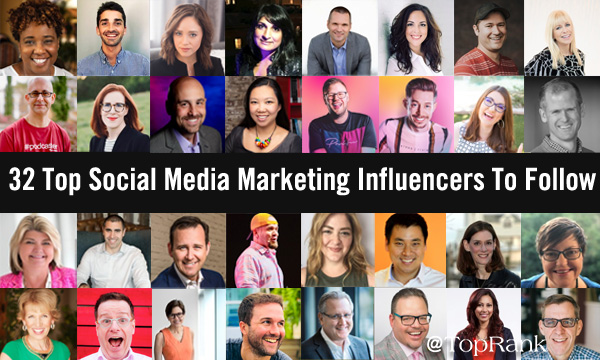
32 Top Social Media Marketing Influencers To Follow

32 Top Social Media Marketing Influencers To Follow

32 Top Social Media Marketing Influencers To Follow The social media marketing industry is bursting with innovative professionals — people who push the boundaries of existing social platforms, embrace new ones, and ditch low-performers. With so many fine social media marketers, how do you find new innovators to follow on Twitter and learn from? We've put together a list of 32 top social media marketers that includes a number of fantastic folks who may not already be on your Twitter "following" list, in addition to some industry stalwarts who those new to social media marketing would be wise to follow. We've added a quote, tip, or short lesson from each to help inspire your own social media marketing efforts. List Methodology: For this list we utilize the Traackr influencer marketing platform plus additional criteria including the relevance of the individuals to the topic, the degree to which their networks engage, the size of their networks, along with numerous other factors including online data pulled from blogs, Twitter, Facebook, YouTube, Instagram, SlideShare, other platforms. Many thanks to all the industry professionals who are actively sharing knowledge about social media marketing by engaging and helping others with helpful opinions, insights and expertise on the social web. This brief list is only a starting point to help expand your social media marketing universe.

32 Social Media Marketing Influencers to Follow on Twitter

Women's rowing team image. Beverly W. Jackson @BevJack Corporate VP of Social Marketing, MGM Resorts [bctt tweet="“The most important lesson I’ve learned about leadership is that no one leads alone.” @BevJack" username="toprank"] Brian G Peters @Brian_G_Peters Strategic Partnerships, Shopify [bctt tweet="“The wonderful thing about social media video is that if you do it right, the videos can produce results for your business long after they’ve been posted.” @Brian_G_Peters" username="toprank"] Amy (Schmittauer) Landino @Schmittastic Co-Founder & Owner, Aftermarq [bctt tweet="“True focus comes from believing in yourself. When you are unsure, you welcome distractions. Trust that you’re on the right path.” @Schmittastic" username="toprank"] Amisha Gandhi @AmishaGandhi VP, Marketing & Communications, SAP [bctt tweet="“If we want to connect with the people we want to influence, we need to dial back the business speak and communicate more simply and directly.” @AmishaGandhi" username="toprank"] Marcus Sheridan @TheSalesLion Owner & Partner, IMPACT [bctt tweet="“Whether it's views, shares, watch time, or more — it's the little things that make the biggest difference.” @TheSalesLion" username="toprank"] Caitlin Angeloff @caitlinangeloff Social Strategy Director, Providence St. Joseph Health [bctt tweet="“With unprecedented targeting via the social media platforms, it is essential brands and media companies not take a one size fits all approach with their social video strategy.” @caitlinangeloff" username="toprank"] Tim Schmoyer @timschmoyer Video Strategist, VideoCreators [bctt tweet="“When you find someone who understands your journey and your heart, get together, swap stories, and encourage each other.” @timschmoyer" username="toprank"] Konstanze Alex @Konstanze Global Digital Storytelling, Cisco [bctt tweet="“Co-creating content with influential industry experts is one way for brands to unlock powerful, authentic storytelling that results in valuable brand experiences for customers.” @Konstanze" username="toprank"] Rob Walch @podcast411 VP of Podcaster Relations, Libsyn [bctt tweet="“The biggest shows out there did nothing to promote their show, they let their audience do it.” @podcast411" username="toprank"] Alison J. Herzog @alisonjherzog Senior Director of Brand and Digital, Visa [bctt tweet="“Brands need to manage experience across the entire company. Each person and department owns a piece of the overall #CX.” @alisonjherzog" username="toprank"] Dan Gingiss @dgingiss Chief Experience Officer, The Experience Maker [bctt tweet="“Remember, when customers are reaching out with suggestions on how to improve your product or service, generally it means that they really care and that they're brand loyal.” @dgingiss" username="toprank"] Zontee Hou @ZonteeHo President & Chief Strategist, Media Volery [bctt tweet="“To build trust, you have to understand human motivations.” @ZonteeHo" username="toprank"] Andrew Pickering & Pete Gartland @AndrewAndPete Co-Founders, Andrew and Pete [bctt tweet="“Social media is a tool we use to keep connected with the people in our lives. It’s a way to strengthen relationships and to make new ones.” @AndrewAndPete" username="toprank"] Jenn Herman @jenns_trends Social Media Strategist, Jenn's Trends [bctt tweet="“I'm a BIG proponent of a clear strategy for content, posting frequency, messaging, and branding. Keeping it clearly focused on your target audience is the key.” @jenns_trends" username="toprank"] Jon Loomer @jonloomer Facebook Marketing Strategist, Jon Loomer Digital [bctt tweet="“Keep experimenting and trying different things. You never know what the perfect combination is for you — there really is no one formula that works for everyone.” @jonloomer" username="toprank"] Sandy Carter @sandy_carter VP, Amazon Web Services [bctt tweet="“Data is at the heart of EVERY major tech trend in the coming decade.” @sandy_carter" username="toprank"] Justin Levy @justinlevy Director of Social Marketing, ServiceNow [bctt tweet="“You have to move from looking at marketing tactically to looking at it strategically.” @justinlevy" username="toprank"] Scott Monty @ScottMonty CEO & Principal, Scott Monty Strategies [bctt tweet="“There's so much focus on the latest platform, trend or technology. But true storytellers know that the medium isn't the message.” @ScottMonty" username="toprank"] Brian Fanzo @iSocialFanz Digital Futurist & Founder, iSocialFanz [bctt tweet="“Stop talking with a logo, start talking with your employees.” @iSocialFanz" username="toprank"] Shannon Paul @ShannonPaul Vice President, Digital Line of Business Marketing Director, Fifth Third Bank [bctt tweet="“A key driver in any successful strategy is going to be organizational and operational alignments.” @ShannonPaul" username="toprank"] Larry Kim @larrykim CEO, MobileMonkey [bctt tweet="“The ability to be a team player is one of the most important employee skills of 2020.” @larrykim" username="toprank"] Heidi Cohen @heidicohen Chief Content Officer, Actionable Marketing Guide [bctt tweet="“As a key element of your marketing strategy your blog supports content marketing, social media, search and audience and customer acquisition.” @heidicohen" username="toprank"] Donna Moritz @SociallySorted Founder, Socially Sorted [bctt tweet="“More than ever, it's important to survey your audience to find out what they need and how you can help them.” @SociallySorted" username="toprank"] Mari Smith @MariSmith Facebook Marketing Expert, Mari Smith International [bctt tweet="“Those first few seconds of your video are gold. Make sure you're following a strategy that keeps people watching.” [bctt tweet="“Those first few seconds of your video are gold. Make sure you're following a strategy that keeps people watching.” @MariSmith" username="toprank"] Ian Anderson Gray @iagdotme Founder, Ian Anderson Gray [bctt tweet="“The Internet is a sea of helpful tools, and with so many options, it can feel like you’re drowning.” @iagdotme" username="toprank"] Ann Handley @MarketingProfs Chief Content Officer, MarketingProfs [bctt tweet="“It’s incumbent on all of us in B2B marketing, whether you are a writer, or a marketer, or whatever role you play to take some risks and just get out of the box and throw an ax at that target.” @MarketingProfs" username="toprank"] John Lee Dumas @johnleedumas Host, Entrepreneurs on Fire [bctt tweet="“It’s not always about doing as much as you possibly can - it’s about choosing the right things and going all-in on those.” @johnleedumas" username="toprank"] Mark Schaefer @markwschaefer Executive Director, Schaefer Marketing Solutions [bctt tweet="“Good enough today isn't good enough tomorrow if you want to keep growing.” @markwschaefer" username="toprank"] Jay Baer @jaybaer Founder, Convince & Convert [bctt tweet="“Customer experience is not only about removing friction and minimizing mistakes and calamities but also about delivering something the customer didn’t see coming.” @jaybaer" username="toprank"] LaSandra Brill @LaSandraBrill Head of Integrated Digital Planning, NVIDIA [bctt tweet="“Don’t say no. Instead tell me how you get to yes. Being able to identify and communicate the tradeoffs is 'strategic thinking.'” @LaSandraBrill" username="toprank"] John Hunt @Smead_JohnH Senior Manager of Digital Marketing, Corporate Brand Communications and eCommerce Content, Smead Manufacturing Inc. [bctt tweet="“Today there are no more secrets. You've got to prove you can help, and not just say it.'” @Smead_JohnH" username="toprank"]

Piece Together Your Social Media Marketing Knowledge & Execution

Mirrored floor reflections of giant puzzle piece image. Statistical analysis, no matter how well-researched and deep, can only go so far in surfacing people you’ll find the most helpful and influential in your daily professional marketing lives, which is why we’d be delighted if you would share the name of social media marketers that influence you most in out comments section below. We hope that you've found at least a few new-to-you social media marketing influencers on this list, and gained a smattering of inspiration from their quotes. To further your own social media marketing expertise, here is a bonus list of our best relevant recent articles: Finally, there's no better way to meet new B2B social media marketers than attending industry events, and you can catch our CEO Lee Odden at an array of upcoming in-person and streaming online conferences and webinars: March 9, 2020 Webinar Panel Are you ready to transform your B2B marketing? Featuring Joel Harrison for B2B Marketing, Doug Kessler from Velocity Partners, Lee Odden, and Mark Bornstein from ON24 Registration info here March 19, 2020 Convergence Summit Minneapolis Lunch Keynote: In Search of Trust: How Authentic Content Drives Customer Experience Agenda and registration info March 24, 2020 Pubcon Florida B2B Influencer Marketing Workshop Register here March 25, 2020 Webinar Top B2B Marketing Challenges, Trends and Best Practices for 2020 Register here April 22, 2020 - ContentTECH Summit How to Optimize Content Performance with Influence  Session info and register here April 23rd, 2020 - Content Marketing Conference How to Optimize Customer Experience with SEO and Influence Conference info and register here May 13 - 14, 2020 - Ceros Experience Matters How to Optimize for Customer Experience with Interactive Content Event and registration info here May 27-28, 2020 - B2B Ignite USA Keynote - In Marketing We Trust: How to build influence with the C-Suite and on the street Conference agenda and registration info here

The post 32 Top Social Media Marketing Influencers To Follow appeared first on Online Marketing Blog - TopRank®.


from Online Marketing Blog – TopRank® https://ift.tt/2TCJurx
via IFTTT

Top Six 2020 Marketing Trends to Improve the Customer Experience and Drive Commercial Value

What a week it was at Oracle Open World London #OOWLON February 12-13. I was honored to be on stage and sharing exclusively with our customers and partners the Top Six 2020 Marketing Trends that every marketer needs to be thinking about in 2020 if they want to be successful in the Experience Economy through improving customer experience and driving commercial value. 

The “Experience Economy” is an abstraction, a metaphor that is useful in describing the shift in power from the brand to the consumer, but some organizations have gone further, faster, and are aligning their investments, processes and human structures around the idea that they are trading not in products or services, but in the experiences of their customers.

The Experience Economy, as defined by Time, Me and Emotion: 
  • Time: Customer experience is a battle against time – to be not too early  but not too late (REAL-TIME) in the Experience Economy. Customers expect answers in milliseconds ( i.e. taxi’s in minutes and packages in hours). 

  • Me: It is about personalization and segment of one.

  • Emotions: People buy any product due to functional need or emotional desire (with emotional desire you can charge more and supports loyal customers).

The Experience Economy is hitting every industry too:

  • In sports football clubs, like Liverpool, Spurs and Manchester United are not competing against each other’s, or other teams in other leagues or sports like NBA or NFL, but they are competing with Netflix, Amazon Video, and Facebook.  To be successful in the Experience Economy, sports clubs need to be an entertainment brands. 

  • In Financial Services, traditional banks need to be an adaptive bank—one that is intelligent, agile, and integral to our lives and businesses

  • For Telecoms, they need to move away from being a commodity and become a household or business total connectivity provider 

What defines a Top Performer v. a Mainstream brand?

The six trends, below come from key findings from the research Oracle did with Econsultancy, interviewing 500 CMOs and marketing leaders.  The findings were split between Top Performers (18%) who exceeded their business goals and they represent 18%, and the Mainstream ( 82%)  who missed or met their objectives. 

Trend #1: Data Strategy Is Core to the Experience Economy

To be successful in Customer Experience, having a Data Strategy is a must – and it must play a key role across the customer lifecycle, balancing privacy with personalization. The common dominator of successful brands in the Experience Economy is data. Uber is not a taxi company. Deliveroo is not food delivery company. AirBnB is not a hotel chain. They are all data companies. They are all examples of businesses re-shaping traditional industries through mastering the opportunities created by their data and creating innovative approaches to product and services. Those who master their data will be able to deliver to their customers the experience they expect and deliver on their promise with every customer engagement. Every business needs a data strategy if they want to deliver innovation, personalization, targeting, scalability, orchestration, attribution and, most of all, on building a data-driven culture. 

47% of mainstream respondents report that their customer data management investment is paying off, well behind the mainstream at 62%.

Trend #2 Embracing AI & Innovation in Marketing

People, not brands, are driving transformation and innovation. 

Acquisition will focus on utilizing Artificial Intelligence to model next best action, next best channel, profitability, loyalty, and product affinity to increase relevance, engagement and conversion. Customer experience is already being redefined by introducing AI driven Chatbots, Conversational Search and Voice Assistants, so Acquisition is the next step. 

In the era of Digital Downturn, we expect to be seeing companies utilize AI to manage costs, drive efficiency and generate scalability through automation and data. AI will become an essential weapon in cost-reduction and effectiveness in modern marketing.

No wonder 90% of the business world is in transformation. 

Trend #3: The Digital Content Renaissance

Communicating brand-led stories and engaging new and existing customers has never been more challenging. 

The two drivers of cross-channel proliferation, reducing attention span and customer expectations around personalization, drive an ever more challenging situation for marketers. 

The focus should be on identifying and targeting those micro-moments with relevant content to help customers achieve specific needs based on their requirements. 

Data strategy will be required to drive strategic positioning and a testing program to shape micro-moment led content strategy. Content strategies also consider content amplification and the rise of influencers and the safety of your brand in terms of publishing.

Customer journey is a process that’s made up of critical moments of interaction and influence, yet only 36% of the mainstream is targeting micro-moments in the customer journey, in comparison with 52% of top performers. 

Trend # 4: B2Me

Traditionally marketing was categorized as either B2B or B2C, but things have changed; B2ME is here. B2Me is marketing to an individual based on the desires of that individual. 

It's not just about closing a sale, it's about delivering an engaging, relevant, and effortless customer experience. 

Today’s customer are more informed, socially connected, mobile, technologically empowered, personal data aware, and in control of the sales cycle. 

B2Me applies whether the individual is buying for personal use or on behalf of their employer. We are talking about hyper- personalization at scale across the customer lifecycle, the importance of blending online and offline channels and the need for critical foundational components such as data-driven personas, active experience personalization while respecting customers privacy and agile omni-channel orchestration. It is your ABM strategy where you target organizations. 

The biggest difference in the CMO research concerning personalization were in three areas; 

1) Personalize across online and offline 

2) Personalizing the mobile experience 

3) Real-time personalization 

Trend #5: Developing a Customer-Centric Martech Ecosystem

With the proliferation of marketing, sales, and service technology, it is important to put the customer at the heart of what you do. 

A Customer-Centric Martech ecosystem is a paradigm shift. You need to first design your end-to-end customer experience at visionary level and then build, and your MarTech ecosystem will help you deliver on this

And don’t forget with every new piece of technology you buy you need to think about the data and data normalization, segmentation and activation. 

Sometimes it very tempting to go buy niche solutions to solve specific area with the customer journey, but be careful as you may be creating a data silo if you are not able to integrate the data with the rest of your MarTech and AdTech landscape. 

76% of mainstream CMOs believe that organization does not have the skills required to make most of MarTech – compared to 46% of top performers.

Trend #6: Moving Toward a SMART Agile Organization

The modern marketing organization is changing. Rigid hierarchies and structures are old news, with business shaping teams based on goals, functions, and the customer. 

There is a need to cut across the silos of CRM, digital, performance marketing, and brand teams that we see too often and move towards a joined-up approach with cross-functional leaders that are accountable for integrated strategy execution. In the age of the customer, there is an imperative to improve speed, predictability, transparency, and adaptability of marketing.

Where skill gaps exist, the right mix of hiring, outsourcing, and training needs to be planned ahead to ensure that businesses keep pace with the evolving marketplace and deal with any potential skill gaps.

Further to negatively impacting the customer experience, the lack of organizational agility often leads to inefficiency, increased risk and consequently increased costs for the business. 

I remember my previous role as Head of Acquisition was focused on bringing in new customers but no necessarily on what happens after they sign up. In a newer and more modern organization, my role  has changed to that of a Head of Growth.The difference is the Head of Growth is a P&L owner and cares about the cost to serve the customer acquired. The Head of Growth in Marketing has responsibility in product development, services, sales, and marketing.

Perhaps it is no surprise that marketing has more alignment with Sales and eCommerce. The biggest misalignment in the research is between Marketing, products, and Service.

The most insightful questions from our CMO research was, “How would you describe the optimal customer experience?” 

In response, they didn’t say the most innovative or valuable. No they instead said that an optimal customer experience was ‘effortless, ’ which we at Oracle aim to help our customers deliver.

Download the full CMO research here

Special thanks to Econsultancy and my colleagues; Nick Fleetwood, Andy Fisher and Abdul Hamid Ebrahim Jassat for working together to define the trends. 


For insights into digital marketing trends and what is driving them, visit Oracle CX Marketing. 


from Oracle Blogs | Oracle Marketing Cloud https://ift.tt/32OV9HO
via IFTTT

Tuesday, 3 March 2020

Embracing Individuality to Grow Your Community

Embracing Individuality to Grow Your Community written by John Jantsch read more at Duct Tape Marketing

Marketing Podcast with Bryan Wish
Podcast Transcript

Bryan Wish headshotOn this episode of the Duct Tape Marketing Podcast, I sit down with entrepreneur Bryan Wish. He is the founder of BW Missions, an organization that helps clients develop their brands and communities globally.

Growing up, Wish never quite felt like he fit into any traditional boxes. Instead of getting discouraged by feeling different, he decided to embrace his individuality.

The more he started applying himself to different groups and starting initiatives on his own in partnership with organizations, the more confident he felt that he could do anything he put his mind to.

By discovering who he was and where he fit into the world, he found others who shared his worldview. It was this journey that encouraged him to help other entrepreneurs, leaders, and authors discover their purpose, voice, and mission so that they can build a strong community around them.

On this episode, he talks about how he helps others clarify their entrepreneurial journey and how you can apply some of his approaches as your build your own business.

Questions I ask Bryan Wish:

  • Why is the word “mission” part of the name of your company?
  • How do you work with people, and what’s unique about your approach?
  • What’s the best way for those with a personal brand to extend their work?

What you’ll learn if you give a listen:

  • How developing yourself as an individual is critical to your success as a mission-driven entrepreneur.
  • How to strike the right balance between authenticity and network-building.
  • The one thing anyone can do to be better at relationship building.

Key takeaways from the episode and more about Bryan Wish:

Like this show? Click on over and give us a review on iTunes, please!

Zephyr logo

This episode of the Duct Tape Marketing Podcast is brought to you by Zephyr.

Zephyr is a modern, cloud-based CMS that’s licensed only to agencies. The system is lightweight, easy to use, and incredibly fast. And with an array of beautiful themes to choose from, you can get your clients’ websites up-and-running quickly and with less effort. Or, if you’d rather build a custom site, Zephyr includes agency services to be your plug-and-play dev shop.

Zephyr is passionate about helping agencies create great websites for their clients. To learn more, go to Zephyrcms.com.


from Duct Tape Marketing https://ift.tt/38lCXXs
via IFTTT

Transcript of Embracing Individuality to Grow Your Community

Transcript of Embracing Individuality to Grow Your Community written by John Jantsch read more at Duct Tape Marketing

Back to Podcast

Transcript

Zephyr logo

John Jantsch: This episode of the Duct Tape Marketing Podcast is brought to you by Zephyr CMS. It’s a modern cloud based CMS system that’s licensed only to agencies. You can find them at zephyrcms.com, more about this later in the show.

John Jantsch: Hello and welcome to another episode of The Duct Tape Marketing podcast. This is John Jantsch. My guest today is Bryan Wish. He’s the founder of BW Missions, and organization that helps clients globally build communities and develop their voices. So Brian, thanks for joining us.

Bryan Wish: Well John, thanks for having me. It’s been a long time in the making and it’s been great following your work over the last couple of years.

John Jantsch: So I’m very intrigued by what you’re doing with BW Missions. But before we really get into that, I guess I’d love to hear, I think a lot of people like to hear entrepreneur’s journey story. How did you get to here? What led you to here? Why did you decide to do what you’re doing?

Bryan Wish: Yeah, John, that’s a good question. I think understanding the roots of how someone came to be is very smart, very important. So I’ll take you back to my earliest memories as a kid. For me, I think I was the person who, I don’t think I was born an entrepreneur or born actually going out on my own to do this life. I think what happened for me is the more I tried to fit into very specific boxes, sports teams, colleges, programs or groups, the more I didn’t fit in and the more I was forced to stand out, whether I wasn’t good enough to make the cut line, whether I was bullied by the group cool kids. It was always the things I tried to fit into that said, okay, you’re a little different and you’re not meant to be here.

Bryan Wish: So when I got to college, I took all that weight and chip on my shoulder mentality and I said, I’m just going to figure out who I am. I’m going to go balls to the wall and I’m going to just do a bunch of things. The more I started applying myself to different groups, picking initiatives, starting things on my own with organizations, the more I started to realize, you know what, I can do anything I set my mind to. And it was this completely new perspective. It was the most liberating perspective for me as an individual where I started building confidence for the first time in my life. And from there I look at that as this pathfinding journey of self discovery, of who am I, and where do I fit in in the world. And as soon as I started taking charge and ownership of my own life, I started finding the people who are more like me.

Bryan Wish: Then I started getting involved in some very incredible projects with different brands where I led sports programs for the Hawks and the Braves. And then I started a digital media platform after college where I spent my entire savings and went bankrupt on it. But it’s okay, it was the most fulfilling thing ever. And then I spent two years really learning the craft and digital media with Allen Gannett, I built a global communities of investment fund for a year and a half, and kind of took all this experience in the last four or five years, and I said, I know two things, I love building and sharing voices. I love building communities. How do I do that for a group of people who’s already standing out with their own voice, or has a message. I’ve really doubled down on the same things I’ve been passionate about my whole life and things that have led me find my own path.

John Jantsch: So the word mission is actually in the name of your business. So help me and listeners understand why that’s part of the name of your company.

Bryan Wish: Yeah, absolutely, John, it’s a good question. So I think to be a fulfilled entrepreneur or someone who is aligned with the money they’re making and the way they’re making money, I think they really need to connect to what they’re doing. And so I’ve always looked at how we take on clients. If we’re pushing their message forward, if we’re building a community around their message and what they want to be known for, what’s the impact on other people if we do that really well? And how does our work with them scale to help other people in a very mission driven way?

Bryan Wish: So working with various clients who are doing really good work and have strong messages, I look at us, the more we amplify their voice and touch lives of other people, the more we transcend our own impact as a company. So it’s very in line with doing positive work, not just taking a six figure contract from our brand. I think that’s why we’ve really identified working with individuals in building those brands out because it’s a much more fulfilling and connective experience.

John Jantsch: So when, especially with the folks you’re mentioning, I’ve often said that I think entrepreneurship is one of the greatest self development programs ever created. You either you either evolve or you get run over and you go back and get a job somewhere. So how do you relate that idea of constantly working on yourself as actually personal branding?

Bryan Wish: Yeah, I think, hmm. So, let me start a little outwards and I’ll come back into the question. So one of the points I reached out to you on, I think six months ago, was when a client and very close mentor, in a way, actually their coach now, Mark Green, said, “You should check out John’s stuff.” And I said, “Oh, I’m already familiar with John’s stuff, but he’s great and I’m glad you were able to connect in San Diego or in California for an event.” And Mark always says, which I really love, he says, “To scale your business professionally, you have to scale yourself personally faster.” And he says that much more eloquently and punchier as he always does. So I think we get to a point in the business as we grow, if we haven’t developed personally at the level that can support that growth professionally, and we don’t have the right foundation for our own lives, we’re going to fall on our feet professionally. And I learned that actually the hard way with the first company. And so with this company now, at BW Missions, I have had to put very hard and clear boundaries and pieces in place from a foundational level to support the growth of the company, which has happened fast. So it’s for soft development to happen on a personal level to sustain the growth of the business professionally.

John Jantsch: So give us a little bit of a roadmap of how you actually work with people. What’s unique about your approach, and not just the mission driven component, but how does that actually play out from a tactical standpoint?

Bryan Wish: Yeah, that’s a good question. So typically somebody approaches us who wants to be known for a particular topic, that might be focused on productivity, that might be leadership in business coaching, that might be mindset, that could be e-sports and gaming. But they have something they want to say so they reach out to us. If we start working together, what that looks like is we do self-discovery work as part of the onboarding session. We have an a very intricate and deep onboarding process where we really get to know everything about them, from their childhood roots to who they are now and where they’re trying to go in their future. And we do a full process where we get all that information, and that’s ongoing throughout the entire process. That never stops. Then we start figuring out, okay, who is this person trying to connect to?

Bryan Wish: What does that person look like? How do we get in front of them? And why would their work be valuable to the people that we want to build that around? And then we take the channels in front of us, we take some of their vision for their own brand and we kind of put all the pieces together, developing regular posting, building out different digital assets, whatever it might be. It’s almost like a dressed up idea inspired marketing agency. But I think what we’re selling is pathfinding. We’re going to build them the best strategy and plan forward for them and we’re going to do it in an extremely tailor made way.

John Jantsch: Today content is everything. So our websites are really content management systems, but they’ve got to work like one check out Zephyr. It is a modern cloud-based CMS system that’s licensed only to agencies. It’s really easy to use. It’s very fast, won’t mess with your SEO. It really reduces the time and effort to launch your client’s websites. Beautiful themes, just really fast profitable way to go. They include an agency services to really make them your plug and play dev shop. Check out Zephyr.com. That Z-E-P-H-Y-R CMS.com.

John Jantsch: So obviously with all of the things online, the Facebook advertising, webinars, all the stuff that people are doing to kind of get that message out. I think people are getting really tired of the fact that people are just blasting stuff out because they can, showing up everywhere. I think we’re all exhausted really from what just feels very spammy. It started I supposed with email, but now it’s everywhere, because marketers always ruin everything.

John Jantsch: So, how do you bring … Ultimately what you’re saying is the best marketing is relationship building. I think we’ve all … But people have sort of bastardized what relationship building is even today. So how do we stay authentic? How do we just say, “Hey, here’s me. Take it or leave it,” but at the same time, realize that if we don’t get ourselves in front of enough people, we’re not going to be able to have the impact we want.

Bryan Wish: Yeah, absolutely. So let me answer this, before I talk about relationships in a way of self discovery. I shared an article this morning and there’s a graph in the article and it said, the better we know who we are as individuals, the deeper that we can connect with the people around us. And I think it’s a really powerful way to look at relationship building, because we need to know first like who we are so when we talk to people who like us or understand us, we know how to connect back to them, and as they’ve done that work themselves too, the connectivity of the relationship is going to be even stronger. With that said, when of understand that, you can be a little more vulnerable in those conversations, and being able to be vulnerable in a way that is tactful and not in your face, like, here’s my sob story, you can really build a emotional connection with someone and that will drive a longterm relationship.

Bryan Wish: Now to go back to, okay, how do we show up online, John, there is a lot of spam out there. There’s a ton of noise and it seems like everyone is doing it. The approach that we take with clients, that I take with my own branding or try to take is I really focus on the pillars of the storytelling aspect of really sharing a message that, yes, I might be able to promote something, but how do I 90% of the time share a story that’s going to be insightful to my audience, that might be able to get across a couple of different messages, that really encapsulate who I am as a person. And if that speaks for my business too, I think that means you’re doing it right because you don’t have to hardcore promote what you’re doing for people that want to work with you. I think those are the best, just show up authentically online as you would in person. I think that’s a really hard skill to master, and I think so few people understand, but I think what people do need to understand is it starts with understanding who you are within first so you can connect with people deeply and you then you can show up online and stand out with things that you really care about.

John Jantsch: So with all the various forms and platforms, I think that’s the thing a lot of people struggle with, is that are there very specific forms of content, very specific places in which that context for that content can happen that is more effective. If you’re that professional who is trying to create a personal brand, is there a roadmap to say, well, here’s how I’m going to get my message and my story in front of the right people?

Bryan Wish: Yeah, that’s a good question, John. I think it really comes down to the person that you’re talking to or who wants to build a brand. If it’s a 14 year old who is an epic scooter rider, they’re probably … Not that they’re thinking about their personal brand, but okay, probably tik-tok is going to be great for them. Because it’s going to entertain a bunch of teenagers across the world and why not. I like to think about, okay, what is the person trying to do? What message are they trying to tell and what platform best supports that message? To go a little deeper, I was speaking of the email founder of a certain company a year ago and we had a really big conversation around email. It’s the only place you can own your own distribution. So yes, there’s certain platforms business, if you’re a business CEO, you’re probably going to be on LinkedIn, you probably should have Twitter. But at the end of the day, if you’re trying to stand out and have a personal brand or if you’re on an author, I think having email distribution lists that you own and can build upon is the best long term strategy using these platforms as vehicles to continue to build that audience and make sure you have a centralized tone to bring everyone back to, which I know you understand in your work.

John Jantsch: A lot of authors have over the years taken the extension of their books and turned them into courses and things of that nature. I’m seeing a tremendous amount of burnout on things like that, because the Udemy’s of the world that you can go find out any course for $19. So how do particularly authors or personal brands, what’s the best way that you’ve seen for them to extend their work? It used to be just one-on-one. You’d write a book and then you’d create a course and then you’d do consulting. It was like the ladder was very natural. I think that that ladder has gotten very disrupted. So how does that model work today?

Bryan Wish: Sure. So yes, I do think courses are still relevant. I think you can go to Udemy to get your course out there. I think it, what kind of brand that you’re trying to build? How are you architecting the brand? Are you building a quality brand from the start? Because if you are, do you really need to go to a platform like Udemy is just providing an audience for you?

John Jantsch: I guess what I was saying is that it’s gotten harder just to build the $900 course because the $19 course seem to offer the same thing.

Bryan Wish: Totally. So I think again though it comes down to if you’re architecting a brand that’s perceived in a very high way, if you’re an author, you might be able to get away not going on Udemy and also offering an $800 course. Is that the right thing to do? It depends. What’s the value being given? Is there a model though where they can go on Udemy and maybe create a shorter course that can take you to a bigger course? I’ve seen that be done multiple times and then just to build on this concept, the digital is a great way to do it, but the way I’m seeing a lot of … Where we’re even transitioning as a company and evolving is, okay, the digital is great. How do we create a whole speaking side to the business? Because it’s one thing to have an in person message. How do we build a product line around being able to get people voices in front of real audiences in real time.

Bryan Wish: And I think that creates even deeper connection. So creating vehicles that extend the message for authors or CEOs to share something, it doesn’t always have to be to make money through a course or from book sales or consulting. I think there’s a whole speaking model and then there’s a whole content partnership model as well that are [inaudible 00:16:23] that can be done very tastefully. So it just depends on what are the end goals of the person and what fits to them as a brand.

John Jantsch: So give us your, if somebody came to you who feels like, hey, I want to take it up a notch and I just want you to tell me what would it be one thing I could do to actually do a better job of relationship building? I know that’s hard question.

Bryan Wish: No, I think that’s great. I would say go deeper with the ones right in front of you that you really value already. Because I think that we’re very lucky in this world to have very close relationships and if we have three, four or five really good relationships instead of just trying to add to the stockpile, why don’t you just go even deeper on the ones that are right in front of you? Because if you do, and that works really well, I’m sure they know other people just like you, and their friends become your friends and your network multiplies over and over again with people who are just like you. So your trial evolves and compounds because you’ve actually taken the time to invest really hard and in ones that feel just right to you, or that feel more like 100% as opposed to 70%.

John Jantsch: Awesome. So Brian, tell people where they can find out more about you and the work you’re doing at BW Missions.

Bryan Wish: Yes, absolutely. You can find me, my email is Bryan, B-R-Y-A-N, @bryanwish.com. My website is BWMissions.com and you can reach out to me on LinkedIn. I’m on Twitter and Instagram, but I think email, LinkedIn would be the best.

John Jantsch: Awesome. Well, thanks for taking time today, Bryan, and hopefully we’ll run into you soon someday out there on the road.

Bryan Wish: Thanks, John. Thanks for having me. I’m excited to see what you do next.


from Duct Tape Marketing https://ift.tt/3cm97Wh
via IFTTT

How to Build Your Ideal Client

How to Build Your Ideal Client written by John Jantsch read more at Duct Tape Marketing

If someone asked you right now who your ideal client was, would you be able to tell them? Having a clear picture of your ideal client is a critical part of growing your business. It’s nice to want to do business with everybody, but realistically, there are going to be some who are a better fit for your business than others.

When you get really clear about who you work best with, you can begin to seek out prospects who fit that perfect mold. And when you’re targeting the right prospects, you’re spending less time on folks who will never convert. Instead, you’re building up a base of clients who will be thrilled with your work and enthusiastic about referring you to others.

So how do you build your ideal client? These five steps will help you develop a crystal-clear, refined vision of just who they are.

Before We Dive In…

There are a lot of small business experts out there who are pushing the idea of zeroing in on your niche from day one. While we are firm believers in serving your ideal clients, I’d also caution strongly against settling into a niche too quickly.

When you start a business, you think you know who you want to serve. But sometimes, through the course of running your business, you discover that your ideal client is actually someone very different from the person you envisioned.

When you niche too early in the process, you cut yourself off from the possibility of discovering your ideal client organically. No, you can’t leave things open-ended forever, but it doesn’t serve you to come in with a rigid and narrow set of expectations from the start.

1. Begin With Profitability

Once you’ve been in business for a while, it’s time to develop a sketch of your ideal client. The first step is to consider profitability. No matter how awesome a client is personally if they’re not paying your bills, they should not be your main focus.

Take your full list of clients and rank them from most to least profitable. Are there any commonalities among those at the top?

These similarities might be demographic, behavioral, psychographic, or geographic. Perhaps clients in a certain age bracket are the most profitable. If yours is a B2B, there might be one industry that stands out.

When it comes to behavioral traits, are there certain purchasing habits or ways of interacting with your brand that these profitable clients have in common? Maybe you find that your best clients are very active on social media.

Psychographics are about people’s values, attitudes, interests, and motivations. Do your clients have similar beliefs or lifestyles?

Lastly, consider geography. Is there a certain geographic area where your best clients reside or work?

2. Who’s Referring You?

Your best customers aren’t just those who are giving you a lot of business themselves. Your top-tier clients are also referring you to others. Up next, take a look at which of your clients are referring you, how often they’re doing it, and how frequently those referrals result in new business. As with the profitability ranking, it’s helpful to chart this all out so that you can fully visualize where each client stands.

Paying attention to referrals isn’t just about making yourself feel good. Sure, it’s flattering to know that someone liked your product or service so much that they told their friends about it, but it’s bigger than that.

People who refer you to others are having a best-in-class experience with your business. And they’re having that experience not just because you strive to give everyone great service, but because what you offer aligns perfectly with their needs.

When you see them referring you to others—and those referrals also signing on as clients—you know you’ve honed in on a very narrow, specific segment who needs the solution you provide and loves the way you solve their problem. And that’s what an ideal client really is.


3. Go Straight to the Source

Analyzing profitability and referrals is a great place to start, but you can’t stop there. If you want to fully understand how your business’s solution relates to your ideal client’s needs, you’ve got to ask them. Now that you know who your top clients are, reach out and inquire if you might have a bit of their time.

Depending on your business, there are a number of ways to gather feedback. An email survey is often the quickest and easiest way to reach your ideal clients. But if possible, a call or in-person meeting can help you gain even more insight into their needs, wants, and behaviors.

These are the types of questions you should ask your customers:

  • What’s most important to you?
  • How do you define success?
  • What are your biggest challenges?
  • What’s a typical day for you?
  • What holds you back from making a purchase?
  • How do you research prior to buying?
  • How do you come to a final purchase decision?
  • What influences you? (i.e. publications you read, social media personalities you follow, etc.)

These questions help you to reinforce or reevaluate your earlier assessment of common traits. Sometimes these interviews unearth another shared trait to consider. Other times they help you understand the connection between two seemingly unrelated traits that kept appearing in your clients’ profiles.

4. Get Clear on the Must-Haves versus the Nice-to-Haves

By this point, you’ve developed a clear picture of the type of client you’d like to attract and have clearly defined their problem and how you solve it. Now it’s time for you to get clear on your dealbreakers. When it comes to your clients, what are the must-haves, what’s nice to have, and what’s an ideal quality?

By grouping the traits you’re looking for into these three buckets, you can quickly and easily evaluate each prospect that comes your way. If they’re missing a must-have trait, you shouldn’t do business with them. Nice-t0-haves, on the other hand, are negotiable.

It’s always a good idea to start with your must-haves. Be realistic—it doesn’t pay to have a mile-long list of must-haves—but on the flip side, don’t omit qualities that really are your must-haves for the sake of being nice or easy-going. You’re not sharing this list with clients, so it’s okay to be honest about the traits you need your clients to possess.

From there, move onto your nice-to-haves. These are the traits or characteristics you’d really like to see, but you can still work with a client even if they don’t tick all these boxes. For example, as a marketing consultant, we find it’s nice to work with clients who have an internal marketing person. It makes it easier to execute on the strategic vision we outline for their business. However, we can still do great work with a business that doesn’t yet have an in-house marketing team, so we’re happy to talk with businesses that don’t have that capability yet.

Finally, you move onto your ideal traits. This is more about those psychographic and behavioral traits we talked about earlier. Do they share your core beliefs? For example, if you run a B2B and want to work with businesses that give back to their community, that goes on your ideal traits list. Sure, you’ll consider clients who don’t incorporate giving into their business model, but the business who shares a percentage of their profits with local environmental groups and helps plant trees in your community every spring is a business you aggressively target and pursue.

5. Create Buyer Personas

The last step in all of this hard work is making sure that you stay true to your convictions. You’re armed with all of this information about your ideal clients and the type of people you’re most excited to work with. Now it’s time to spell that out so it always guides your sales and marketing strategies.

Most businesses won’t have just one ideal client, and that’s why it’s helpful to create personas to represent the handful of clients you’d like to target. Personas are essentially sketches of each of your ideal clients.

These personas should include answers to the following questions:

  • What does this persona look like (demographics, psychographics)?
  • What problems are they trying to solve?
  • What behaviors help you identify them?
  • What objections must you overcome?
  • Where do they get their information—books, websites, social platforms, magazines, etc.?

Some businesses go so far as to create actual profiles for these personas, complete with a name, picture, and bio for each. Whether you take this more creative route or prefer to keep this information in a word document or spreadsheet, what matters is that you make it easily accessible for your reference.

Each new prospect that you encounter should be evaluated against your personas. Do they fit one of your profiles? If not, they’re likely not worth pursuing.

Business owners are sometimes afraid to get this specific in building their ideal client. They fear they’ll shut out prospects and miss a great opportunity. But the reality is, the more specific you can be in defining your ideal customer, the more likely you are to attract the right type of prospect. And in the end, it’s about quality, not quantity.


from Duct Tape Marketing https://ift.tt/2wpopca
via IFTTT