Tuesday, 2 June 2020

Break Free B2B Marketing: Julie Brown of Johnson Controls on Proving the EBIT of Your Marketing

Break Free B2B - Julie Brown Image

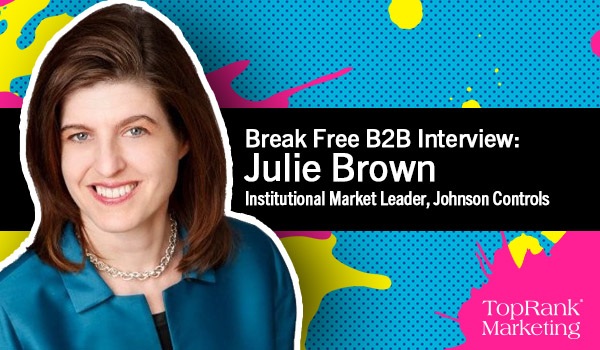
Break Free B2B - Julie Brown Image For decades, marketers have measured success differently than the rest of the organization. We raise awareness, increase share of voice, generate impressions, deliver MQLs to sales.  Meanwhile, the success of the business itself is measured in....well, money. Revenue. Earnings before interest and taxes (EBIT).  But this disparity is changing as marketers are becoming more data-driven and being increasingly accountable for their direct contribution to revenue. It’s not enough to show a return on investment; it’s not enough for marketing to not be a cost center. The marketing department needs to be a powerful engine for generating revenue. Our latest episode of Break Free features a marketer who is exceptional at generating value for her company, and proving that value to the bottom line. Julie Brown, Institutional Market Leader at Johnson Controls, is using data to flip marketing upside down. Instead of creating demand for the company’s products, she’s measuring the existing demand in her target audiences. Then she uses that data to advise the company on how to develop products that best suit their audiences’ needs. With the right reporting in place, Julie’s team is able to show exactly how much its efforts are contributing to Johnson Controls’ EBIT.  This was a fascinating interview about a side of marketing you don’t hear much about, and I’m grateful that Julie shared her expertise with me. And with all of you, of course. You can watch the video and check out the podcast version below, or scroll down for some highlights.

B2B Marketing Interview with Julie Brown

:58 Institutional marketing defined 1:57 Upstream marketing where to play and how to win 5:08 Three big challenges in institutional marketing 7:18 Marketing as a revenue center 8:39 How do we get to the ‘why?’ 10:40 Staying centered on the customer 13:12 The next evolution of marketing 17:21 Can marketers predict revenue with certainty? 20:03 How leaders can reorganize teams around revenue 20:45 The revenue-focused marketing tech stack 22:04 Forming a “Voltron of Meeting Customer Needs” 24:00 Meeting the needs of the new B2B buying committee Josh:  So we were talking about upstream marketing. Can you explain that term for our listeners and what exactly that entails for your day-to-day? Julie: When we think of marketing at Johnson Controls, there's the old I believe it goes back to Procter & Gamble the concept of where to play and how to win. So upstream marketing is the “where to play.” Understanding customer needs, segmentation, targeting, product innovation. Once you've defined a new offering, then the “how to win” is how you connect with sales, whether you do account-based marketing, or you do content, lead generation. All of that is: Now I've got something, how do I get so the market is aware and purchases it or goes through their buying process? Josh:  So this is research to drive the right audience for our product or the right product for an audience, or a little bit of both? Julie: A little bit of both. It really starts with understanding what customer needs are, where are their pain points, and looking at what we do. And are there new and creative ways that we can help address those needs and pain points? Josh: It feels like in those verticals, you're in education and health care. You're going to have some pretty unique challenges to doing that research and to even executing on the marketing. What are you encountering? Julie: I'd say there's three big challenges that we're facing. One, the markets themselves are really in a state of flux. Healthcare continues to evolve and adjust, based on the outcomes for the Affordable Care Act, ObamaCare. We're watching demographic changes, so the youngest millennials might be a senior in college. So that's changing the demographics of who's in college, they're establishing families and so that's creating growth in K through 12. And you've got really persistent hard problems around security and active shooter that everyone's trying to figure out around a very, very hard problem. So that would be the first one. Probably not surprising to a lot of companies is how we use data and what the data is and how you align that around customer needs. There are lots of great opportunities, but some days, you work hard on what you've got and see how you can get it to come farther. And then the last one is this evolution of marketing from being something that participates as a function in a business to actually being a measured driver of growth that the business can count on. Julie: So, we look at our programs very much from a financial standpoint. So it's not good enough to just have ROI. I've got a couple of programs where we're looking for the EBIT, the actual earnings before interest and taxes that the program is going to contribute. It's not just how much revenue we track within marketing, things like clicks and opens and stuff like that, but the respect that comes to marketing comes when you can present the work you're doing in terms the CFO recognizes and understands. And those are the terms of business, not the terms of marketing. Josh: There's that whole idea historically that marketing is a cost center that you put money in and you get marketing out the other side. And that we're looking at trying to change that model to where you put marketing in and you get money out of the other side. Does that make sense? Julie: Absolutely, that's what we're driving towards and evolving towards every day. Julie: I think there's an evolution happening in marketing more broadly around, as you said, the validating what marketing's bringing to the table. And if you think about it, it creates a powerful opportunity for companies that are early movers, but we're not the first ones to go through this. If you think back to the late 1980s and early '90s and you looked at, manufacturing companies are like, you know what? We can probably do better. And brought in things like Six Sigma and Lean. And so now, companies if you look at manufacturing in a company they know pretty well, if they're going to expand a plant or if they're going to invest to build a new plant, the CEO of the company knows, how much it's going to cost, what the payoff is going to be and how long they have to wait for it. They know how much waste they can predict will come out of the system through continuous improvement every single year. You get to the late '90s and the early aughts they did the same thing with IT. The CFO sitting here going, it seems like I'm spending a whole lot of money with IT, not sure what I'm getting for it. Companies have gone through things with SAP and other IT transformation so that today they really have often a seat at the table as an engine for driving any B2B business. And again, the CEO and the CFO know, if we're going to invest in data centers, or roll out this new version of office, or new equipment. They know what productivity they're going to get. They know what risks they're avoiding by making that investment. What we see is that's coming to marketing. And what's encouraging about that is both from a manufacturing or an operational excellence standpoint, and IT they adapted. They figured out how to start talking about what they did in financial terms that the CFO understands. And on the flip side, every company is looking to grow. A lot of companies don't look to marketing because they don't trust and respect marketing enough to deliver that. It's financial terms, it's EBIT, it's operational ROI, it's revenue, it's earnings per share. Those are the things that they understand and when marketing can say, listen, if you give me this much within this period of time, I'll deliver this much back. [bctt tweet="“It's EBIT, operational ROI, revenue, & earnings per share. When marketing can say, if you give me this much within this period of time, I'll deliver this much back.” — Julie Brown of @johnsoncontrols" username="toprank"] When you're president of a business, if you hire 200 more sales reps, you know what you're going to get. You know, whatever your cycle is. In 18 months they will be productive 200 sales reps are going to drive this much revenue and this much profit. If for whatever reason you've got to take 50 out, you know it's going to be painful, but you understand what that pain is and you know about how big it's going to be. They don't know how to do that with marketing, and that's the opportunity. And doing that is what we're working really hard on. The flip side of it is, it's kind of the last function where you can get a big strategic competitive advantage. I mean, think about the companies who were early adopters of Six Sigma and manufacturing, they had huge systemic growth in the market and in their industry. Companies who are early adopters around that IT transformation got huge market share and transforming their business. The companies that can leverage marketing for growth have first-mover advantage available to them. It's just going to take marketing to explain in business terms financial terms how to be that player. Stay tuned to the TopRank Marketing Blog and subscribe to our YouTube channel for more Break Free B2B interviews. Here are a few interviews to whet your appetite:    


from Online Marketing Blog – TopRank® https://ift.tt/301HKwS
via IFTTT

Monday, 1 June 2020

How to Build a Web Optimization Dream Team: Who Are Your Key Players?

Where to start

Are you thinking about building out a team to foster continuous optimization in your organization? If so, you might know the basics to testing and optimization, but you might need help in knowing where to start and what the right resources are to drive your optimization program. As you know, optimization is vital in providing unique, tailored personalized experiences to users across all digital touchpoints. But behind every successful testing and personalization program is a dream team of resources innovating, collaborating, and spearheading the optimization journey for their businesses. Once you understand the importance of optimization and are ready to start on your optimization journey, you can begin to think about how to build out the team that will make continuous optimization a reality.

When starting to build out your optimization team, it’s important to understand the lifecycle of a campaign from infancy to completion. By utilizing your campaign lifecycle as a preliminary guideline, you’re able to outline all phases of a test and identify the resources needed to successfully complete each phase.

Identifying a digital optimization lead

To start, identify a resource who will lead and coordinate all optimization initiatives (and down the line you may find yourself needing more than one!). This person will be the lead for all things optimization – a project manager of sorts – to be the internal testing expert and go-to for optimization related tasks. This person is responsible for hypothesis creation after collaborating with other team members to ensure that the hypothesis is well-written. Once you have your internal testing expert, who I’ll for now call the digital optimization lead, he/she can start to collaborate with other required optimization team members, such as the product owner, the designer, the developer, the quality controller, and the analyst.

The role of the product owner

When it comes to optimization, the product owner plays a vital role. As someone who’s a product expert, knows all the ins and outs of the user experience, and owns the roadmap, the product owner brings a great deal of value to a testing and optimization program. Often, the product owner is already in place, and it’s simply a matter of being brought into the optimization team by the digital optimization lead. The product owner is responsible for being the ultimate go-to resource for the page(s) and journeys being tested. This person can provide insight into test strategy for:

  • The product

  • Key performance metrics (KPIs)

  • Page traffic

  • Potential experiences and user journeys

  • Current pain points and areas of opportunity

This person, along with the digital optimization lead, should come together to outline valid hypotheses, as well as prioritize tests based on impact and likelihood to implement. Once the digital optimization lead and product owner have fleshed out the details of a campaign, it’s time to start looping in the remainder of the team.

The role of the designer

The role of the designer involves maintaining brand consistency and creates pages from a user experience perspective are:

  • Responsive

  • Seamless

  • Appealing to the eye

The designer, along with the digital optimization lead and product owner, can put together different versions of experiences based on the information already available regarding personas, user behavior, and engagement on the page(s) of interest.

The role of the developer

The role of the developer, is of course, to develop the tests! In other words, this person handles all the coding and configuration necessary within the campaign. The developer should familiarize himself/herself with the pages or products being tested, as well as be familiar with the Oracle Maxymiser platform. The developer is responsible for coding not only the campaign-specific experiences, but also the metrics tied to the campaign so that in-depth analytics can be performed accurately and efficiently. Ideally, the developer in this position will feel comfortable providing feedback around test concepts and metric tracking.

The role of the quality controller

While the developer is responsible for coding the experiences and metrics, the quality controller is responsible for verifying that everything is working as expected. This person is briefed on the test requirements and metrics, and dedicates their time to walking through each experience to ensure everything renders properly on the device types included in the campaign, and that all metrics are being tracked properly for analytics. This person works hand in hand with the developer throughout the testing phase, raising issues as needed for the developer to implement fixes for. Once all testing has been completed, the quality controller can sign off the campaign as ready for go-live!

The role of the analyst

The analyst holds one of the most important roles on the optimization team. Without proper analysis, it’s impossible to determine which experiences can be considered successful. Analysts help tell the story behind campaigns – they help identify behavior and engagement and inform whether or not specific KPIs have been met or exceeded. Dedicating a resource to analyze test performance allows for consistent monitoring and benchmarking to be done to help make analytics clean and actionable. In the early stages of testing, however, the digital optimization lead often takes on this responsibility until the program grows large enough to warrant a dedicated analyst. You can also use Oracle Maxymiser to help you with test analysis as you begin to ramp up your program.

In conclusion

Building out an optimization team takes time, training, and a lot of resources. By beginning to identify all your key players, you can begin to determine how many resources you need and any gaps you may need to fill. Before you know it, you’ll be a self-operating optimization team ready to crush your goals!


Want to learn more about how the Oracle Maxymiser Consulting team can take your optimization program to new heights?  The Oracle Maxymiser Consulting team is made up of passionate strategists, designers, developers, quality assurance professionals, trainers, analysts, and platform experts. We’re excited to understand your business needs and work with you to drive ROI.

Contact us here or find out more information about Oracle Maxymiser here.


from Oracle Blogs | Oracle Marketing Cloud https://ift.tt/2XnaSwQ
via IFTTT

How Social Should the CMO Be? 3 Guidelines for Success

Social Media CMOs

Social Media CMOs Senior executive social media participation is often associated with better leadership, brand transparency and helps build better connections with customers, employees, and investors. For most companies, the CMO is one of the most visible executives and as a public facing marketing role, there is an expectation that the chief marketing officer will be active on social networks. But how many tweets, likes, shares and stories is enough? It is tempting for senior marketing executives to hold themselves up in comparison to professional marketing influencers who spend virtually all of their time keynoting conferences, writing books and being interviewed by the media – aka “brandividuals”. A review of the latest list of the most influential CMOs will reveal a number of executives that have been able to achieve a unicorn-like duality of maintaining their organizational responsibilities as well as an active social media presence, but that is certainly not the norm. Many senior marketing executives and CMOs are still working out what an appropriate level of social engagement looks like. A commitment to being active on social networks is imperative, if not a practical function of marketing leadership. If faced with some uncertainty about how to find the right balance, CMOs and senior marketing executives can follow these three guidelines for meaningful and manageable social media success.

Set a goal: Be specific

There are myriad possibilities with social media but even the thought of that can paralyze one’s effort to start. Begin with a singular goal. What is one thing you hope to accomplish by being visible and connected on the social web? Focus on that one thing and even go so far as to make a goal statement articulating what you hope to accomplish and how you plan to achieve it. The goal might simply be to reinforce your thought leadership on a specific topic or it might be to make yourself available to customers, prospects and the media. Just decide and commit.

Curate: Be useful

Leverage a social monitoring tool like BuzzSumo, the search feature on Twitter or your normal digital news sources to find interesting articles, posts, videos and other kinds of content to share with your social network. Add some of your perspective to curated information that consistently follows the theme that supports your goal. Share your own content as well. Become the “best answer” for what it is you want to be known for by building thought leadership with useful curation plus insight.

Interact and instigate

Be engaging. Much of social media’s value is in engagement and exchanges of ideas with your community. Use a social media listening tool to surface mentions of your name, brand and social content. Interact, show appreciation for the behaviors and messages that align with your goal. Ask your community questions that would lead to discussion and conversation around topics that can lead to your messaging and social media goals. Listen for questions being asked where your helpful answer can help lead that person to a positive experience. Being specific in your goal, sharing useful content from other sources as well as from your brand and engaging with your community are three of the fundamental things a senior executive can do on social networks. Make these core activities part of a process and a daily habit. Identify the tools you’ll need and set up alerts so you can spend a small, consistent amount of time building your social presence on a regular basis. With a little planning and tools, you can accomplish important visibility, thought leadership and customer engagement goals in just a few minutes a day. A version of this post originally published here.


from Online Marketing Blog – TopRank® https://ift.tt/3cnhPSS
via IFTTT

Sunday, 31 May 2020

Give Better Answers By Rethinking Your Customers’ Questions

We are very excited to bring you season 2 of On the Fly. On the Fly is our video series with small bites (two mins or less) of marketing and customer experience advice from experts, given to you during the current disruption. 

Jay Baer kicks off season 2 from his home office with a very important reminder to rethink your customers’ questions. All customers have questions about your company and its offerings and a large percentage of them are researching online. But how has this changed in the post COVID-19 world? Well, they are still researching online, but the questions they are looking answers for might have dramatically changed, says Jay Baer. His advice for marketers is to reach out to your customer success team, your service team, your sales team, your ops team, and rethink your top 50 customer questions.

Visit OnTheFly.Experts to see all episodes. 


Customers always have questions, but great content can help shed light on their concerns. Find out by viewing “Great Content Answers Questions.”


from Oracle Blogs | Oracle Marketing Cloud https://ift.tt/36Khkky
via IFTTT

Saturday, 30 May 2020

Weekend Favs May 30

Weekend Favs May 30 written by John Jantsch read more at Duct Tape Marketing

My weekend blog post routine includes posting links to a handful of tools or great content I ran across during the week.

I don’t go into depth about the finds, but encourage you to check them out if they sound interesting. The photo in the post is a favorite for the week from an online source or one that I took out there on the road.

  • Zoom Backgrounds: Hundreds of virtual zoom backgrounds available, change your zoom background for your next meeting.
  • GIPHY: Your top source for the best & newest GIFs & Animated Stickers online.
  • Blush: An easy way to add illustrations to your projects. With collections made by artists across the globe, there’s something for everyone—and every project.

These are my weekend favs, I would love to hear about some of yours – Tweet me @ducttape


from Duct Tape Marketing https://ift.tt/2zNrtB1
via IFTTT

Friday, 29 May 2020

4 Ways Marketing Teams Are Adjusting to These Times

Just before COVID-19 hit the US, my team at Oracle CX Marketing welcomed a new SVP of CX Marketing and added a few new members. In a pre-COVID world, we would have all met in person. Instead we met virtually to get to know each other. While a virtual meeting can’t completely replace face-to-face interactions, doing our planning sessions virtually did add one big benefit—we were able to invite many more people, from a variety of teams, and get more perspectives.

Working virtually is just one example of how marketing teams are adjusting how they work right now. Here are four insights I’ve gleaned from my team and I trying to adapt to this very fluid situation:

1. Understand this is not standard working from home

Allow for more flexibility.

Many of us are in a unique work situation right now, one way or another. I have always led a virtual team, so stay-at-home orders did not change things that much for me. However, working from home is different now, since my team needs the flexibility to homeschool their children or deal with other responsibilities at home.  

Make room to chitchat.

People are feeling more isolated and craving some type of normalcy right now—especially the longer our social distancing mandates continue—so I hold a virtual Monday Morning Coffee Chat for my team to join together, have some facetime, get to know each other, and share our quirks and hobbies. The only rule is not to discuss business.

Stop wasting time with too many meetings

Meetings are essential, but you shouldn’t schedule too many of them. I don’t know about anyone else, but during the second hour of consecutive meetings, my productivity drops. Every hour of unnecessary meetings on your team’s calendars steals time away they could have used to be more productive.

2. Get back to basics

Don’t veer from one extreme to the other.

Yes, events will not happen at the same scale as before COVID-19, at least not in the near future, but we don’t have to bombard our audiences with webinars to make up for it. Before creating a virtual event, we need to know our audience and remember why people came to our events in the first place.  Everyone consumes content differently. Before creating a webinar, ask yourself if a webinar is the best way to convey information right now? Is our audience ready to receive it? Or can it wait?

Put the why before the how

I challenge my team to think of “why” before the “how.” This helps us “stay on course” and keeps us from creating (what I like to call) random acts of marketing. Each piece of content we create right now goes through multiple rounds of review, and we are constantly rethinking when to send it or when to publish it and how frequently. These series of questions help us develop a holistic overview of where our content is going and why, and it just makes us more thoughtful marketers overall. Marketers might feel an ever-present need to be seen and heard, but you can dial it down—at least a little—right now. You don’t want to add to the noise. We don’t have to send multiple emails a day or publish too many blogs a week. It might be too much, and quality always trumps quantity. 

3. Maintain the business you have

Focus on being helpful.

Everyone agrees that marketers shouldn’t try to exploit the crisis (which Business 2 Community has as number three on its list here). Instead, we should concentrate on maintaining the business we already have. So, right now, focus on being helpful. Keep your website in order, be cognizant about the volume of emails you send out, and offer helpful information to your audience.

Self-improvement

This might be also be a great opportunity to do all the things you never have the time to do before, such as scrubbing your database and templates, training, or conducting research. It will make you a better marketer and better able to help your audience.

4. Prepare for an altered future

Lessons learned

Businesses will eventually open back up, but when that happens, the lessons we learn right now will continue. We’ll still maintain the same standards for creating and reviewing content, and we will try to put more thought into the “why” rather than the “how.” If you can do any training, you’ll put it to good use. If you cleaned up your database and templates, you’ll thank yourself for having done so.

Contingency plans

In the future, our planning meetings will likely be a hybrid of live events, in-person meetings, and virtual meetings. We’ll also move to a hybrid model for our events strategy. It’s a good idea to have a contingency plan that you can do a webinar or virtual conference if an in-person meeting or event falls through. Gartner actually recommends that CMOs put contingency plans into place.

What are some of the lessons you will carry on with after this crisis is over?


For more leadership insights, read “3 Leadership Takeaways from My First 30 Days at Oracle during the COVID-19 Crisis.”


from Oracle Blogs | Oracle Marketing Cloud https://ift.tt/3cmGffr
via IFTTT

B2B Marketing News: Top Enterprise Firm Challenges, What B2B Buyers Want, Mobile Ad-Buy Shift, & LinkedIn’s Content Trends

2020 May 29 MarketingCharts Chart

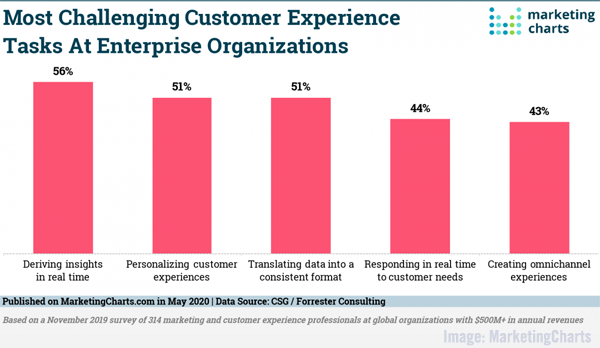
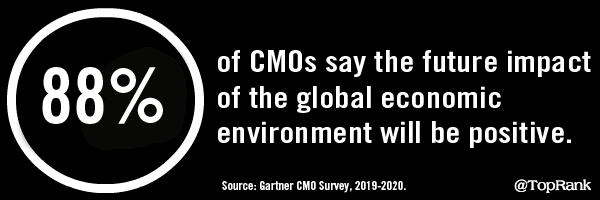
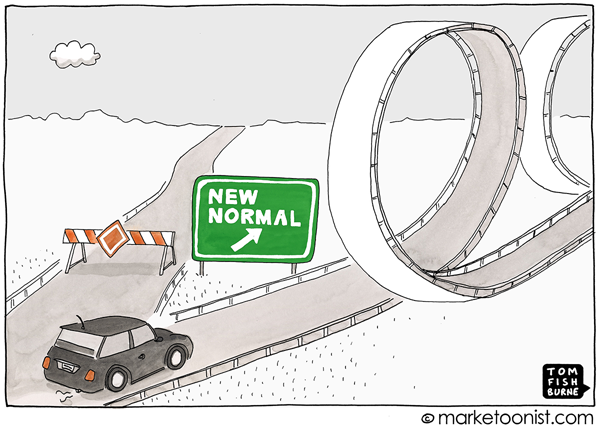
2020 May 29 MarketingCharts Chart What B2B Buyers Want From Tech Vendors Right Now 55 percent of B2B buyers say it's appropriate for marketing efforts to continue during these challenging times, and 53 percent are presently in the market for B2B products and services, with most of those having recent new purchasing interests, according to newly-released survey data. MarketingProfs Programmatic Ad Spend Down 9% Since Beginning of 2020, Driven by Travel and Auto Amidst an overall fall of 9 percent in April, ad spending for the technology vertical and the education and training segment were up 70 percent and 63 percent for the year, with streaming ad spend also up by some 18 percent, according to recently-released report data. Adweek Exclusive: New York Times phasing out all 3rd-party advertising data The New York Times has begun eliminating all third-party advertising targeting information, and by July the firm will instead use a fully-proprietary platform, the company recently announced. Axios Google’s digital-ad dominance is harming marketers and publishers, says new study Digital marketers and publishers have been hurt as a result of Google's online advertising dominance, according to a new study, with display ads the primary focus of the Omidyar Network and Public Knowledge report. AdAge Reddit Launches New, 12-Week Online Advertising School Program Social news and discussion platform Reddit has launched a three-month online community-driven advertising school program, led by director-level-or-above instructors covering 12 marketing topics, the firm recently announced. Social Media Today Polls Return to Messenger From Facebook. After a year’s absence Facebook Messenger polls have been brought back Digital marketers lamenting the elimination of Facebook's Messenger polls a year ago got good news recently, as the social media giant announced that it has brought the polling option back for group chats. Adweek 2020 May 29 Statistics Image Pandemic hastens shift in ad buying to mobile, study says During an overall drop in ad spending, mobile ad spend has fared the best, as its 15 percent decrease was less than the 25 percent seen for desktop ad buying, according to recently-released study data. Mobile Marketer Facebook Launches New App Called 'CatchUp' to Facilitate Group Phone Chats Facebook recently released a tool to help bring online conversations to real-time phone communications, with the lanch of CatchUp, becomming Facebook’s sixth new app release in the past half year, the firm announced. Social Media Today Enterprise Companies Struggle with Customer Experience Tasks Real-time insights, personalization, and consistent data formatting are the top three customer experience (CX) challenges for enterprise firms, according to recently-released study data. MarketingCharts LinkedIn Publishes New Guide to Key Content Trends Amid COVID-19 LinkedIn (client) has released new information about trending content on the Microsoft-owned platform, with top trending hashtags and other information of interest to digital marketers, the firm announced. Social Media Today ON THE LIGHTER SIDE: 2020 May 29 Marketoonist Comic A lighthearted look at “the new normal” by Marketoonist Tom Fishburne — Marketoonist Whoooaaa Duuuuude: Why We Stretch Words in Tweets and Texts — Wired TOPRANK MARKETING & CLIENTS IN THE NEWS:
  • Lee Odden — 20 Marketing Experts on Content that Helps Sales Reps Sell - Part 3 — Modus
  • Nick Nelson — 10 Ways to Improve Your Business While Working Remotely — Small Business Trends
  • Lee Odden — Klear interviews Lee Odden — John Gaylor
  • Lee Odden — Stop the Sales Drop: Marketing Shifts For Stronger Growth — Marketing Insider Group
  • Lee Odden — PIMtalk with Lee Odden: PIM, SEO, Content Marketing and B2B influencers [Video] — PIMTalk Podcast
  • Lee Odden — 5 Smart Tips for Managing the WFH Transition in Marketing — monday.com (client)
  • Ashley Zeckman — Ashley Zeckman: 5 Essential Questions to Guide Your B2B Influencer Marketing Strategy — Content Marketing World
  • Lee Odden — “Stop the Sales Drop” Launches Sales and Marketing Peer Group — Business Wire
  • Lee Odden — How to boost SEO flow like a pro during COVID-19 — PR Daily
  • Lee Odden — Interview with Lee Odden – Breaking Free of Status Quo Marketing Tactics — Stop the Sales Drop
  • Lee Odden — Marketing Through Uncertain Times – 15 Experts Share Insights — Insight Brief
  • Lee Odden — Empathetic content marketing falls flat without authenticity [Video] — Search Engine Land
  • Lee Odden — How to measure content KPIs during COVID [Video] — Search Engine Land
  • Lee Odden — How to evaluate content marketing opportunities during COVID [Video] — Search Engine Land
  • Lee Odden — What’s Trending: Fortify the Fundamentals — LinkedIn (client)
Have you come across your own top B2B content marketing or digital advertising stories from the past week of news? Please let us know in the comments below. Thank you for joining us this week, and we hope that you will return again next Friday for more of the most relevant B2B and digital marketing industry news. In the meantime, you can follow us at @toprank on Twitter for even more timely daily news. Also, don't miss the full video summary on our TopRank Marketing TV YouTube Channel.


from Online Marketing Blog – TopRank® https://ift.tt/3cfNTrC
via IFTTT