Thursday, 7 December 2023

Building A People-Centric Culture: From Employees To Contributors

Building A People-Centric Culture: From Employees To Contributors written by John Jantsch read more at Duct Tape Marketing

The Duct Tape Marketing Podcast with John Janstch
In this episode of the Duct Tape Marketing Podcast, I interviewed Kai Anderson, a seasoned strategist and the leader of workforce transformation at Mercer. Kai has spent years guiding organizations throughout Europe. His book Digital Human (2017) championed the concept of prioritizing humans in the digital transformation. Amid the pandemic’s upheaval, Kai continued his mission, helping clients reimagine their work and navigate decisions in a time of immense pressure and uncertainty.

Kai brings a wealth of experience, guiding organizations throughout Europe. Today, our discussion centers around his latest book, “Work, different: 10 Truths for Winning in The People Age.”

This podcast episode with Kai Anderson offers a deep dive into the transformative journey from employees to contributors, defining the people age, navigating the new rhythm of work, evolving leadership styles, and understanding the dynamics of the great resignation. Tune in for valuable insights on building a people-centric culture in the ever-evolving landscape of work.

Key Takeaways

Gain valuable insights into navigating the transformative shift from employees to contributors in the dynamic landscape of the people age. Kai illuminates the essence of this era, emphasizing the paradigm shift from command and control to a more balanced relationship between employers and contributors. Addressing the challenges of remote work, he introduces the concept of “The New Rhythm of Work” and advocates for finding synchronization in virtual environments. The discussion extends to the evolving role of leadership, with a focus on empathy as a crucial competency. Additionally, Kai delves into the great resignation phenomenon, shedding light on the quest for purpose and the changing preferences of individuals in the workforce. This episode offers a comprehensive exploration of building a people-centric culture in the context of the ever-evolving dynamics of work.

Questions I ask Kai Anderson:

[00:48] How do you describe “the people age”?

[01:32] What aspects make today the people age?

[02:37] According to your book, what are the most significant truths about the people age?

[04:21] How does the popularity of remote-work relate to the people age?

[05:58] What advice do you have for people trying to develop leaders in this new age?

[08:04] How does desire for individual wellbeing manifest itself in the workplace these days?

[10:58] Explain the value individuals have towards diversity and inclusion in the workplace?

[12:04] How do the 10 truths outlined in your book, help create a more inclusive environment?

[13:49] How do you leverage AI while keeping the human touch?

[15:12] How do you create a culture of learning that feels natural?

[16:58] How do you help people realize the return on investment in their people?

[19:25] Where can people connect with you and find a copy of your latest book?


More About Kai Anderson:

Get Your Free AI Prompts To Build A Marketing Strategy:


Like this show? Click on over and give us a review on iTunes, please!

Connect with John Jantsch on LinkedIn


This episode of The Duct Tape Marketing Podcast is brought to you by ActiveCampaign
Try ActiveCampaign free for 14 days with our special offer. Sign up for a 15% discount on annual plans until Dec 31, 2023. Exclusive to new customers—upgrade and grow your business with ActiveCampaign today!


John (00:08): Hello, and welcome to another episode of the Duct Tape Marketing Podcast. This is John Jantsch. My guest today is Kai Anderson. He's a seasoned strategist who started with his own company and now leading workforce transformation for Mercer has spent years guiding organizations throughout Europe. His book, digital Human, championed the concept of Prioritizing Humans in the Digital Transformation. And today we're going to talk about his new book Work, different 10 Truths for Winning in The People Age. So Kai, welcome to the show.

Kai (00:41): Thanks much, John. Great to be here with you.

John (00:43): So I always like to pick apart titles and subtitles particularly, and so let's start with people age. How do you describe this thing you're calling the People age?

Kai (00:52): I'm glad you're picking that, John, because in fact, the idea was that the initial title was the People Age, but we turned it around. So why is it the people age? We had some major trends evolving in the past like 50 years, which brought us from the industrial age into another age. Some people argue it's the digital age, we say it's the people age, right? And of course we have some short-term events like the Pandemic that also accelerated some of these trends.

John (01:26): So what are some aspects that make this, I mean, what you referenced the industrial age, what are the aspects that make this the people age?

Kai (01:36): John the industrial age was very much the core paradigm of the industrial age was command and control. And that worked pretty well. And we have to see that employers and employees were not on eye level. So this was, as we see still in some organizations like military, that was a different kind of organizing work and it was a different relationship. And that has changed significantly through of course, demographics. Now that labor, we all face labor shortage, things have turned around, values have shifted. So that is something which is very different to what we've seen in the industrial age where we are now coming towards, well, the balance of power, if you would like to say. So where we're coming to a new kind of relationship between employers and employees or contributors as we say.

John (02:36): Yeah. So the book also unveils 10 truths. I'm not going to ask you to name your favorite truth or name all 10 truths, but I wonder if there's one or maybe two that you would say, Hey, these are the most significant things, or these are the things people get wrong the most in this age.

Kai (02:54): It really starts with John, what I just mentioned, the contributors. So the first chapter is Goodbye employee, hello contributor. And I think we need to get rid of the idea of an employee. People want to contribute, they want to bring their very best to work, and they want acknowledgement for that. And that is something that has changed a lot. I guess when we started working, it was all about getting a good paycheck and that was it. And that has changed dramatically. So the contributor, and we see that in our global talent trends, you might know that we do annual of course, surveys on what is trending and what people expect. And more than 40 of people say that they want appreciation for what they bring to work for their contribution. So that is a very important chapter. One of my favorites. It's the first one. Of course, I have others.

John (03:46): And I also like the use of new language too, because I think a lot of times old language employee is kind of loaded with how people think about that. And I think it probably in some cases almost takes an entire, you mentioned paradigm, almost a paradigm shift of what an employee or the term employee even is.

Kai (04:03): Absolutely.

John (04:04): So you also mentioned the pandemic, and it's hard to talk about any kind of thing around team and staffing without bringing it up. Hopefully we'll grow out of that at some point. But remote work certainly has been around for a period of time, but talk about accelerating that. It's certainly changed a lot of organizations dramatically. How does the people age, how do the 10 truths really relate to the idea that so many people now are not physically in a building with their place of employment?

Kai (04:31): I'm glad you're asking. Of course. We have a dedicated chapter on that. It's called The New Rhythm of Work. And that is, by the way, we have a lot of musical references. So if you're not into music, you might not like the book, but if you're into music, we have a lot of references here. And the new rhythm of work is the good thing. There was one good thing about the Pandemic then it was that it showed us what is possible with regard to working virtually. And in the beginning it worked out pretty well. But then we kind of struggled in organizations started to struggle because we were getting out of sync. So some people were starting early, others were starting late, some were commuting, others were working from home. So we are not in sync anymore. And that is why some companies are calling people back into their offices, which is of course not the answer because the ghost is out of the bottle. You cannot turn it back. But we need to find that new rhythm. We need to get back in sync with each other to make that entire thing work.

John (05:42): If the workplace is changing, if organizations are realizing this is the people age, what leadership, how does leadership have to change? Does training need to change? Do who we think of as a leader need to change? Certainly the hierarchical structure of leadership has to change. What do you tell people now when they're trying to think, how do we develop leaders in our organization in this kind of new age?

Kai (06:04): First of all, leaders should read our book, John, obviously, of course,

John (06:09): Yes. Well, that of course,

Kai (06:14): Because, no, I think the book is not targeted at HR people, not primarily it's targeted at leaders, at executives. It's targeted at people that want to understand how this new world of working is working and what it takes. And I think we have some really great advice also for leaders in here. Let me take one or two things. The basics of good leadership have not changed, not really being on eye level, these kinds of things. But of course there things that are new. And let me take empathy for example. Empathy is something that has really emerged strongly with the pandemic because we had to get into the other's shoes, really understand what is bothering you, how do you feel? And that kind of notion, think back 30 years ago, that would've been impossible, but now it's a leadership competency we're talking about. And empathy is the beginning of inclusion. And what we all want is a diverse and inclusive workforce. So the basis for that is empathy. So we are drawing the line here to make sure that people understand what is good leadership about what has changed and what do you need to know as a leader in the people age.

John (07:40): So there were a couple of terms that were certainly used throughout the us. I'm not sure if they were used as much in Europe, quite quitting, and the great resignation where people were up and leaving, choosing other jobs. And I think a lot of people initially kind of pegged that as, oh, people just don't want to work anymore. But I think what really came out of that was people just don't want to work for you anymore or at this place. So how does this real sort of desire for engagement, for wellbeing in the place that they work manifests itself?

Kai (08:12): It's also something that has very much been accelerated by the pandemic. We were sitting in our homes, we were considering and thinking about what's life about and what do I expect from life and what do I expect from work? What do I expect from my employer? And so it wasn't really surprising that people in the pandemic and after the pandemic thought, is that it or is there more to it? And what am I going to do? And of course, we have to be fair, John, this was fueled to some extent by the labor market situation. Of course, when I can change like this, that's not that much of an issue. I think it's now a bit harder and the great resignation has stopped as a movement. But also here, I think we see a genuine shift of preferences with people. And we see people asking for purpose, for purpose of their companies, for purpose in their lives. And I think that's a good movement.

John (09:20): It's my pleasure to welcome a new sponsor to the podcast. Our friends at ActiveCampaign. ActiveCampaign helps small teams power big businesses with a must have platform for intelligent marketing automation. We've been using ActiveCampaign for years here at Duct Tape Marketing to power our subscription forms, email newsletters and sales funnel drip campaigns. ActiveCampaign is that rare platform that's affordable, easy to use, and capable of handling even the most complex marketing automation needs. And they make it easy to switch. They provide every new customer with one-on-one personal training and free migrations from your current marketing automation or email marketing provider. You can try ActiveCampaign for free for 14 days and there's no credit card required. Just visit active campaign.com/duct tape. That's right. Duct Tape Marketing podcast. Listeners who sign up via that link will also receive 15% off an annual plan if purchased by December 31st, 2023. That's active campaign.com/duct tape.

(10:25): Now, this offer is limited to new active campaign customers only. So what are you waiting for? Fuel your growth. Boost revenue and save precious time by upgrading to active campaign today. So you already mentioned diversity and inclusion. I think that workplaces have become more diverse generationally, I think, which is probably driving some of this. You think of some of what we've talked about has really been attributed to millennials. The I want to work at a place that matters necessarily that's higher than what I'm paid. Maybe talk a little bit about, I know you have a whole chapter on diversity and inclusion and not as a regulatory process and more of a people want to work in companies that value that.

Kai (11:11): That is also some of the shift in preferences that we are seeing that is very much tied to, I want to bring myself to work. I want to be looked at as an individual. That entire idea of the workforce, the human resource is a very abstract thing. And that is not John. We are living in a world of hyper individualization. People want to be seen as an individual. I have been working with the former CHO from Betina Fox, and she's a great woman. I did my last book with her and she said, everybody wants to be seen. That was her mantra. Everybody wants to be seen with an airline. Imagine. That is so true, isn't it? And that is the genuine idea of inclusion and diversity.

John (12:04): So how do the truths that you share in this book or the insights you share in this book help people create a more inclusive environment, help people be more seen?

Kai (12:15): I think it's the combination, and I think it starts with a general idea of this people age that has come and we have a dedicated chapter on AI and technology, but the idea is it starts with the people. And if you consider that when you ask executives what's your most valuable resource? What will they answer to the people? It's the people. But that has been a lip service, John, for years and years now. It's becoming true. Now people start realizing it is the most valuable resource and that is the first thing I think that needs to not necessarily change, but that needs to be top of people's mind to say, yeah, it's the people that will make us successful or not. And it's the diversity of people that will make us more successful. And we have studies on that. We know that diverse teams are better performing than non-diverse teams. So we know that. And I think you don't have to argue about that anymore. The question is in fact, how do you do it?

John (13:29): Right? So you mentioned ai. That was my very next question. Certainly a lot of hand wringing in some circles just about the idea that AI is going to replace people, that robots are going to replace people. So how do you leverage technology? Because we also know that this technology sometimes affords us some great things. So how do you leverage technology with also then keeping some sort of human touch?

Kai (13:55): John, I'm a big tech fan, frankly, and I'm a big believer of technology being an amplifier for our capabilities, which is why the chapter on AI we call intelligence is amplified. So we see it as an amplifier for our intelligence. And then you mentioned the gains. We're talking 10 to 30% productivity increase. So this is incredible, especially if we consider that the past years have been stagnating with regard to productivity increase. So here's the kind of boost that we all want, and I see it as a means, or we see it in the book as something that is highly beneficial for the organization, of course, but also for the contributor for people within the organization. If we manage to of what we call have a fair distribution of the digital dividend.

John (14:56): I know in my organization, most of the members of our team are fit into the millennial generation, age wise. And one of the things that I find is very valuable to them, they always want to continue to learn what we talk about it every week. You learn this week, what's a new thing you can share this week? How do you cultivate that kind of culture without also cramming stuff down people's throats? It's like you have to keep learning, you have to keep training, you have to keep reading. How do you create that in a way that feels very natural?

Kai (15:28): That's a cultural thing first. And look at Microsoft. They did an entire campaign on learn it all versus know it all and look at where they are. So to me, that is first of all, really cultural development. And you need to get to a culture that first of all is about curiosity, being curious, trying new things, exploring things. I think we have cultural differences when we look at the US versus Europe versus Asia. Europeans are much more hesitating when it comes to new technology that's different in different parts of the world. But start with the chances first, have that kind of curiosity. And then it's about of course, embedding learning into everyday work, giving people the tools, giving people also some time, and most importantly, having the freedom to fail. So what we call psychological safety, create that psychological safety. You say you try it goes wrong, doesn't matter. You're not supposed to do it wrong twice, but once is.

John (16:41): Yeah. Right, right, right. So I'm sure you get this question, especially in a consulting role. If you're talking to a CEO, you're talking about change in some instances. This is not how every business is run, right? Today. So you're talking about some significant change sometimes equates to significant investment. So how do you help people realize the return on an investment in their people? Like we're talking about, is there a way to measure this has been successful?

Kai (17:07): Good question, John. When we are embarking on these exo, the first thing that we make sure is we are not really convincing people like the return of investment, but rather is it the right thing to do? So you want to get more profitable? Where does it start? What are you going to do without the kind of performance mindset? You want to be more innovative, you want to be more customer centered. Is that a structural thing or is that a mindset kind of thing? So this is first of all, you believe it or not, and there are people that don't believe it, that rather want to get into structures, into processes and say, this is not about people. More and more people buy into the idea of at least people have something to do with it. So I'm not saying that we are not, of course we are setting objectives like net promoter scores where there's a whole bunch of objectives and we are doing extensive employee listening to see what arrives with employees, with contributors. So this is something, and in the end, of course you want to see the business results of all of that, but it's caused an effect. I know, and we know we have great examples also in the book from organization that managed to kind of become a digital champion, for example, by at least investing heavily into their people, into their cultures and their people practices. There's the hardwired stuff as well. There's objective setting, incentive systems, performance management, you name it. Of course, that plays a role.

John (18:54): I suspect if you want to default or what I would default maybe as a simple metric is retention too. I mean that's so many people left companies they didn't like working for and it was very expensive to replace them.

Kai (19:09): Retention. Meanwhile, retention is a business objective. Exactly. Just diversity is just as diverse, just as engagement. Of course. You're absolutely right.

John (19:22): Well, Kai, I appreciate you taking a moment to stop by the Duct Tape Marketing Podcast. You want to invite people where they might connect with you. Obviously find a copy of your latest book work different.

Kai (19:33): John, thank you so much. Yeah, please reach out LinkedIn, great channel. Make sure that we follow you, John. Great talking to you. Good fun.

John (19:41): Yep. Awesome. Again, thanks for stopping. Bye. Hopefully we'll run into you one of these days out there in Europe.


from Duct Tape Marketing https://ift.tt/PKm7cr3
via IFTTT

Wednesday, 6 December 2023

Mastering Growth Momentum: Unveiling Your Agency’s True North

Mastering Growth Momentum: Unveiling Your Agency’s True North written by Tosin Jerugba read more at Duct Tape Marketing

The Duct Tape Marketing Podcast with John Janstch


In this episode of the Duct Tape Marketing Podcast, I interviewed Frank Cowell, the Chief Revenue Boss at Revenue Ranch. Frank Cowell is a speaker, best-selling author, and entrepreneur in the San Diego, California area. With over 20 years of sales, marketing, and leadership experience, Frank serves as Chief Revenue Boss at his latest venture, Revenue Ranch. He works regularly with business owners and executives who are looking to grow faster and smarter.

Frank is author of Building Your Digital Utopia, which details a concept he pioneered to help brands create digital experiences that systematically accelerate growth. An energetic and entertaining speaker, Frank presents regularly to regional and national organizations on topics related to revenue operations, business strategy, and digital marketing.

Renowned for his expertise in accelerating agency growth. Frank’s insights into mastering growth momentum and unveiling your agency’s True North are invaluable for those seeking to elevate their agency success.

Key Takeaways

Emphasizing the importance of a clear True North, Frank guides listeners in defining a razor-sharp strategic direction that informs every decision. He introduces the concept of identifying the number one blocker to growth, encouraging a systematic approach to chip away at obstacles in quarterly cycles. Frank underscores the power of intimate knowledge about your audience, advocating for the ownership of a specific niche to navigate technological shifts successfully. The journey to agency success is framed as a continuous process, with a focus on success stacking and the creation of a culture of momentum. Tactical adaptability is key, with Frank advising agencies to leverage their relationships to initiate collaborative discussions within their niche, navigating evolving landscapes with confidence and purpose.

Questions I ask Frank Cowell:

[00:54] Why do you believe the title ‘Chief Revenue Boss’ is well suited to you at this stage of your career?

[03:44] What key moments in your career best prepared you that title?

[06:51] In your book “Digital Utopia,” what’s the meaning of systematically accelerating growth through creating experiences?

[11:55] How do you apply ‘Momentum Management’ in the world of business ?

[18:05] What advice do you have for scaling in a world where technology seems to affect everything ?

[21:16] Where can people connect with you and learn more about your work ?


More About Frank Cowell:

Get Your Free AI Prompts To Build A Marketing Strategy:


Like this show? Click on over and give us a review on iTunes, please!

Connect with John Jantsch on LinkedIn


This episode of The Duct Tape Marketing Podcast is brought to you by ActiveCampaign

Try ActiveCampaign free for 14 days with our special offer. Sign up for a 15% discount on annual plans until Dec 31, 2023. Exclusive to new customers—upgrade and grow your business with ActiveCampaign today!


John (00:08): Hello and welcome to another episode of the Duct Tape Marketing Podcast. This is Jon Jantsch. My guest today is Frank Cowell. He is a speaker, bestselling author and entrepreneur, currently serves as the chief revenue boss at Revenue Ranch. He works regularly with business owners and executives who are looking to grow faster, and he's also the author of Building Your Digital Utopia, which details the concept he pioneered to help brands create digital experiences that systematically accelerate growth. So Frank, welcome to the show.

Frank (00:40): Hey, Jon, thanks for having me. I'm excited to be here.

John (00:42): So a couple things I want to get in a little bit into your, I love always to hear people's entrepreneur during like, how'd you get here? Right? But I want to focus on one thing. Revenue Ranch is your company. You've given yourself the title Chief Revenue Boss. Does that imply automatically what you think is the most important role for you currently in that business, or is that just what needed to be filled?

Frank (01:06): I think for me, the play on the Revenue Ranch aspects, so Boss is a common term on a ranch, and then revenue tying into the company name. Ultimately it's my job to create direction for the company, but in this chapter of my life, after having exited an agency, this business is less about growing a massive team of people and more so about working with agency owners as they try to navigate this journey of being an agency owner. So I help guide them on that journey and we put a program together to make that happen. So Chief Revenue Boss is more so just a tie into the company name and that kind of ranch theming.

John (01:49): I guess what I was getting at a little bit is I see a lot of business owners, let's call them rather than CEOs, who really think revenue and vision and maybe culture are my only real jobs because they're so down in the weeds doing everything else, and I think it almost feels like a luxury if you get to a point in your business where you can say, look, these are the only three things that I need to focus on because they're the only three things that matter necessarily to scaling.

Frank (02:18): What's interesting about the CEO role is the CEO is responsible for what I call true North, and it sounds simple, but it's a massive decision to make regarding what goes into creating true North. And then, oh, by the way, making sure that the decisions within the company and how you align the team so that they all are inspired by, they're clear on true North, and they also make decisions about True North. That's a very big deal, even though it sounds simple on paper. And then ultimately, if we look at the KPIs, if you will, of the other functions in the business, the major functions, those aren't directly the responsibility of the CEO, but indirectly they are. If you were to go to the shareholders or the board, they don't really care that there's a head of marketing responsible for active lead generation that ultimately is going to fall on the CEO's shoulders as to why the company isn't growing at a respectable rate. So it's kind of a yin and yang thing there.

John (03:19): Yeah, no, I actually agree with you. I think that a lot of people, it's easy to explain the concept and a lot of books do of True North, it's probably the hardest thing to actually get around to getting right, and I think that's where people are really struggling. Give us a little bit of a snippet of your journey to how you got here. You talked about owning an agency already, and obviously we know what you're doing today, but it's always kind of fun, I think, to go through what molded you to this place.

Frank (03:47): Yeah, so I've always been a salesperson at heart ever since I was a kid. I was in love with this idea of product and creating a business and selling things and moving something into a market and satisfying the market. Even as a kid, I would order these products that I was responsible for selling and my parents would be like, what did you just commit to this? Hundreds of dollars of stuff that's in our house now that you have to go and sell. I was like 12 years old, and so I've just always been that way, and if we fast forward, along comes the information superhighway. That's what we called it back then, the internet, the worldwide web, we called it the Information superhighway, and there was a big theme back then of the information Superhighway is coming. That was the big message out there, and none of us really knew what that was.

(04:38): Well, me being very curious, I started dabbling and trying to figure out what is this thing? And it wasn't long before I said I could probably sell stuff on this thing, and that's when I launched my first web page through my America online web space, and I paid some guy 50 bucks to do it. I found him on America online, and at the time, 50 bucks, I had to ask my wife for $50. I said, Hey, is it okay if I spend $50? That was a big deal to me back then. And so she said, sure, I believe in all your crazy wacky ideas. So I got this thing uploaded and I was selling some information products, and then I decided I wanted to change it, and I was like, oh, this guy's going to want 50 bucks again. And then I thought to myself, Frank Computers and back in junior high, you did a certain amount of programming that you learned, I could probably figure this out.

(05:31): So I cracked open a text editor, and lo and behold, I saw the words on the screen that I wanted to change. I changed it, saved it, uploaded it, and my mind was forever blown. I was like, oh my gosh, the power I now possess. So that led me on a journey to teaching myself how to program. I started programming in flat file databases using a language called Perl. Back then we're talking, this was the late nineties, by the way, and so when it comes to the internet, I'm an old guy, and so that led me into creating my own content management system, and then I launched a web design shop, and then that eventually morphed into a branding agency and creative agency, and I went through that whole journey, did M&A type stuff, and then last year I exited my agency. So yeah, it kind of was a roundabout way of this sales marketing career that was underpinned by my desire to build things and deliver things to a market.

John (06:29): Yeah, it's funny, I started my agency over 30 years ago, so yeah, pre-internet as well. But I always tell people the only thing I was sure of is I could hustle work, and I think a lot of entrepreneurs kind of have that bug, and sometimes it could be a weakness, right? We don't stay focused because we're able to do that. Talk a little bit about,

Frank (06:48): That's such a point, John, such a

John (06:49): Great point, and we can come back to that. I want to talk about the book Building Your Digital Utopia. You talked about this idea of creating an experience that systematically accelerate growth. So kind of unpack that idea for us.

Frank (07:01): Well, I'm a systems guy. I'm a frameworks guy. Everything I do, I want to put a system around. I want to put a framework around, I want to put an ABC 1, 2, 3, so much so to where my wife sometimes is like, oh my gosh, there's a right way to do everything, isn't there, Frank? Because that's just how I view everything. There's a ABC 1 23 when it came to my agency experience and what we were doing for clients, which was essentially inbound marketing, content marketing. I wanted to create a way for our clients to understand the complexity of content marketing. Now to marketers that might be listening, we might think, oh, it's easy to understand, but we also have to remember the people that buy what we have to offer, let's say content marketing, it's not so easy for them to understand and they don't understand the strategic aspects of it.

(07:46): So I wrote a book that intended to teach the strategic aspects to get a business owner, a business executive, to understand what good inbound slash content marketing looked like. And oh, by the way, the underpinning, the big theme of that was relationships, that we can actually build relationships in a digital format. We have to just take that relationship psychology and apply it to the content. And so once you do that and you overlay that idea of relationship psychology, you now have specific types of content you need at various stages. And it's not just so, it's not enough to say, oh, awareness, decision, consideration, that's not enough to say that we actually have to understand the psychology of meeting the psychological need at that place. And so that's what we attempted to do was apply that psychology to that process and it works really well because now we can teach people, business executives a strategic understanding of content and digital marketing.

John (08:48): Yeah, 15, 20 years ago we were talking about content is king. You remember everybody was saying that and then it became air, frankly, and I think today we've risen it to the strategic level. You don't talk about content as a blog post or as a content management system. It's actually how are we going to use it to be the voice of strategy is how we talk about it, because I think it's become that important, but it's also, it's complex. It's changing, it's getting harder. There's so much garbage out there that I think I understand the confusion, right, and I'm sure you see it too. Yeah.

Frank (09:23): I think when, and this is Go ahead,

John (09:25): Finish that point.

Frank (09:27): I was going to say, I think when businesses don't, I'm going to bring back something I mentioned at the top of the conversation, and we'll get into it too. When we talk about the number one thing that I think CEOs are responsible for, especially in agencies, but what a lot of businesses lack what's called a true north. And when you don't have a true north, it affects everything. So specifically we're talking about content marketing. Well, guess what? That's why you're going to produce a bunch of stuff for SEO and you're going to produce a bunch of stuff for social and it's all over the place. And then people wonder why it's not getting traction. Well, because to get traction with marketing, this was true yesterday, and it's so true today. To get traction, you need longevity. The problem is if you don't have a true north, you will constantly be changing directions and you will never have the longevity required to get momentum going. And that's actually the key word that drives everything I do right now with my clients and my methodology. It's this idea of momentum. It's the only magic elixir that ever truly exists in business and in life, and you could actually harness it.

John (10:38): It's my pleasure to welcome a new sponsor to the podcast. Our friends at Active Campaign Active Campaign helps small teams power big businesses with the must have platform for marketing automation. We've been using Active Campaign for years here at Duct Tape Marketing to power our subscription forms, email newsletters and sales funnel drip campaigns. Active Campaign is that rare platform that's affordable, easy to use, and capable of handling even the most complex marketing automation needs, and they make it easy to switch. They provide every new customer with one-on-one personal training and free migrations from your current marketing automation or email marketing provider. You can try Active Campaign for free for 14 days and there's no credit card required. Just visit activecampaign.com slash duct tape. That's right. Duct Tape Marketing podcast listeners who sign up via that link will also receive 15% off an annual plan if purchased by December 31st, 2023. That's active campaign.com/ducttape. Now, this offer is limited to new active campaign customers only. So what are you waiting for? Fuel your growth, boost revenue and save precious time by upgrading to active campaign today.

Frank (11:54): Yeah,

John (11:54): Let's talk a little bit, I think you call it momentum management even. So let's talk a little bit about that concept. Again, unpack that a little bit so that, I mean, I think people conceptually can get that, but how do you apply that in a real world, in a business?

Frank (12:10): Yeah, simply put, momentum again is the only magic elixir that really exists. It's this magical thing that's infectious that when you start harnessing momentum, everyone gets caught up in it, everyone gets excited, and you have people working together towards a common cause. Without momentum, things start to feel stale and stagnant. And as agencies, we know that is awful in the agency space because our people, which is essentially the product, when they start feeling stale and stagnant and the business isn't going somewhere, they're easily distracted by other opportunities. There are many other organizations willing to woo our talent. So we have to create momentum. So how do we do that? The way we do that simply put is by making sure that we obsessively work on the right things in the right order, and disproportionately deploy time, money, and resources against those things. So there's a few things to define that and get there.

(13:10): I've already mentioned true north quite a bit, and I'll go back to that. It's really critical that you as the agency leader or any business owner that you e established a true north for the business. Well, the true north, what is it? The true north basically says this is who we're for. This is what we do in the world. This is the transformation we bring and this is the mission we're on to get there. It needs to be so sharp, it could metaphorically cut. Meaning when you come across opportunities, it's either going to cut yes or cut no, and it's going to be very black and white. The problem with most businesses, they're not willing to make that sharp of a business strategy decision. So they end up taking some things over here, some things over there, some things right there, and then before you know it, you don't have the focus.

(13:58): So the true north needs to be something that is razor sharp. Again, I like to tell my clients it should metaphorically cut. If you touch, it cuts you. It's that sharp. And then your job as the owner is to make sure that all plans align to true North. All people that you hire align to true North, and all the day-to-Day behaviors and decisions align to true North. So that's number one. We must have a true north, right? So we're talking about things like vision, mission, values, how you articulate the brand, and then how you define what I call the boulder in the business. And the boulder in the business is the number one strategic imperative that you have to accomplish in the next one to three years. So that's your true north. So if we start there, if we don't have that, then gaining momentum is going to be really difficult.

(14:43): And then I can go on to a couple of more points if you want, but yeah, let's do it. Are we good? Okay, so we've got true north. The next thing we need to do is is that we need to uncover the number one blocker towards True North, and we need to analyze that number one blocker on a consistent basis. I like to say in nighty day cycles or quarterly cycles. So what is our number one blocker towards True North? Now, I talk about there being seven core capabilities in every business. One is True. North two is exceptional execution. We've got world-class offering systematic sales process, actively generation, empowered work experience, and cash and profit optimization. Those, by the way, align with job titles, but I don't use the job titles. Those are the seven capabilities. So what you have to do as a business owner is you have to regularly understand of those seven capabilities, which one is our number one blocker to growth.

(15:41): And you as a business owner must know that at any given point in time, and once you define your number one blocker to growth, then what you're going to do is the third thing is you're going to chip away at that blocker in nighty day or quarterly cycles. So the plans you come up with aren't to boil the ocean, aren't to get rid of that blocker to growth in one plan, your objective is what can we accomplish in this quarter to chip away at it and understand that growth getting to a place of big success is a journey, and it's about success stacking those little wins quarter after quarter. So what happens when you do that? Well, you gain momentum because not only are you chipping away at the blocker, which frees up and makes your company spend faster, but you're creating a culture of winning with your team. And when your team feels like winners, they start to get caught up in the excitement and enthusiasm of it. So those are the three things that I would say as know your true north, know your number one blocker to growth, and then in quarterly cycles relentlessly execute, chipping away at it in small chunks, quarter after quarter.

John (16:54): As I listened to you described that one, how often the number one blocker for people is they don't have a true north, right?

Frank (17:02): It's interesting enough, John, it's actually if we put those in the right order, a lot of people might say, well, I don't need strategy at this point in time or company's small. It's like, well, could you spend just a handful of weeks getting together with the few people you have and agree on what the strategy is? We're not talking about spending months or years on this, but could you get together and just create some clarity around where you folks are going? Because if you can't do that, you're going to continue to spin your wheels.

John (17:32): So one of the things I'm seeing in the agency world is, and we're picking on the agencies it sounds like, because we both serve a lot of agencies, but this is business in general, is just that they see what everybody else is doing out there. It's like this is how it's always been done, and I see a whole lot of pressure right now on marketing tactics, price pressure on marketing tactics today, and a lot of agencies going, we are just throwing bodies at stuff, but we're making less and working more. So I'm curious if you see that same mentality out there, but also what do we need to be doing or how do we need to be looking at things differently if we are going to scale in a world where technology is constantly changing and creating a lot of pressure on price or on profit?

Frank (18:17): Yeah. Again, I'm going to be redundant here, but I go back to true North. I think about there's two agency relationships in particular that come to mind for me in one relationship. In this one agency I know of, they made the decision to get really sharp on their true north, and they stuck to it and they relentlessly executed against it. The other agency who by the way, was bigger than this other agency has stagnated because they did everything else, but they didn't have the courage to make the decisions about True North because they had this fear of missing out. So what ends up happening is they're not magnetic to anyone audience, but because they're kind of there for many audiences, now, why is this the answer to the thing that you just brought up? The reason it's the answer is because as tactics shift, and let's say we have these massive shifts like AI coming in with content, and how does that affect SEO and how does that affect content marketing?

(19:21): These massive shifts coming in. When you own an audience and you own a particular problem, then you are the one that has the voice within that community to start having conversation with them about how they're going to leverage this technology or if it's even applicable at all. When you have that kind of intimate knowledge about that audience, it's okay that you may not have the answer, but you have the audience and you have the conversations there, and you have the relationships to go back to that audience and say, why don't we do a roundtable? Why don't we do a forum where we talk about the disruption that's happening with this new technology? I'm not claiming to have the answers, but I do know your industry and I do know your problems, and I do know what we have to get you to where you're wanting to go from a strategic standpoint.

(20:11): When you have that kind of intimacy, the tactical problems come and go. As you know, there will be another massive shift in the future, and there will be another one that will always happen. When you have that intimate knowledge of a given market and you understand them better than anyone else, and you've put in the work to develop the relationships in that market, you can then go to them and not claim to have the answers. And that's really the big revelation. You don't have to have the answers of knowing what to do with the technology, but you do have to have the relationships with an audience that's greater than your competitors, so that way you can bring that question to that audience and have a round table discussion and start to create insights and ideas about what that industry can do with the new tech.

John (20:59): Such a great way to build such a great way to build trust too, with that audience doing exactly what you described. Well, Frank, we have run out of time somehow. I wanted to get to stepping away from your agency, which I know we could do a whole show on. So maybe we'll have you back to cover just that one topic, but I'd invite you to invite people to connect with you or where you'd like to connect or find out more about the work you're doing there at Revenue Range.

Frank (21:23): Yeah, I think the biggest thing I can do for listeners, because we talk so much about momentum and figuring out which area is your number one blocker and what you should do about it, that probably the best thing I could do is direct people to an online tool that I developed where people can go through and answer some questions about their business, and it will help uncover your exact blocker to growth. So if you just go to Growthmomentumroadmap.com Growthmomentumroadmap.com, you'll have access to a tool where we'll walk you through exactly what your number one blocker to growth is, and it'll give you a roadmap on what to do about that.

John (22:01): Yeah, and we'll have that link in the show notes as well. Well, frankly, again, I appreciate you taking a few moments to stop by the Duct Tape Marketing Podcast, and hopefully we'll run into you one of these days out there on the road.


from Duct Tape Marketing https://ift.tt/EeRIrsz
via IFTTT

Top 10 Trends for Content Marketing in 2024: For B2B Brands and Beyond

As we approach 2024, content marketing is rapidly evolving. Shaped by a blend of technological advancements, changing consumer behaviors, and a greater emphasis on authentic engagement. These shifts are particularly relevant for B2B marketers, who must stay ahead of the curve to remain competitive in a dynamic digital world. Incorporating the latest trends into your marketing strategy is not just about staying relevant; it’s about enhancing the effectiveness of your marketing efforts, connecting with your audience in more meaningful ways, and driving measurable business impact from marketing efforts.

With an eye on the future, let’s delve into the top 10 content marketing trends for 2024 that are reshaping the B2B sphere and beyond, offering a roadmap for innovative and effective marketing strategies for you to plan for your best year yet.

1 — Data-Driven Content Strategy

The integration of data analytics into content strategy is a top trend for marketers in 2024. Gartner’s insight that “Data-driven marketing strategies can help to target and re-target the ideal customer” is particularly relevant in crafting content that resonates with specific business audiences. By leveraging data, marketers can fine-tune their SEO strategies to align with search intent, ensuring brand content not only reaches but engages their target audience effectively.

This approach moves beyond traditional keyword optimization, focusing on creating content that meets the nuanced informational needs of B2B clients, thus enhancing engagement and conversion rates in a time where all of us are under more pressure to show results.

2 — Authenticity

Authenticity is a long-time commitment for TopRank Marketing, and now has been identified by SEMrush as the top trend in social media for 2024, especially crucial in the B2B domain. This trend goes beyond social content and underscores the growing importance of creating genuine, transparent content that aligns with a brand’s core values and mission. In an environment where trust and credibility are paramount, B2B clients gravitate towards businesses that demonstrate authenticity and ethical practices in their communication.

Authentic content, which includes honest narratives, real-life case studies, and customer testimonials, is key to building strong, trust-based relationships with clients. It allows brands to differentiate themselves in a competitive digital landscape and establishes a unique voice that resonates deeply with their target audience. For B2B marketers, prioritizing authenticity in their content strategy is essential for forging lasting, meaningful connections with their clients.

3 — Video and Audio Content

Video and audio content are rapidly converging as the dominant forces in content marketing, a trend that is especially impactful in the B2B sphere. Cisco’s Annual Internet Report’s prediction that “By 2022, 82% of all internet traffic will be video” has proven accurate, signaling a continued surge in video content into 2024. This growth encompasses a range of formats, from short-form videos on platforms like TikTok and Instagram to social videos on Facebook and YouTube Shorts, each offering unique ways to capture and engage audiences.

LinkedIn Live has also emerged as a powerful tool for B2B marketers, providing a platform for live discussions, product demonstrations, and thought leadership content. Meanwhile, the rise of podcasts and other audio content continues to offer intimate and engaging channels for discussing complex topics, catering to the preferences of business audiences who often seek depth and insight in content consumption. These trends underscore the need for a versatile, multimedia approach in modern content marketing strategies.

4 — AI-Powered Personalization and Efficiencies 

Artificial intelligence (AI) is revolutionizing content marketing by enabling hyper-personalized experiences and operational efficiencies. Forbes highlights the transformative power of AI, stating, “AI can help create a unique experience for each user.” This capability is invaluable for B2B marketers, as it allows for the creation of content that is highly tailored to the specific needs, preferences, and pain points of distinct business clients.

AI’s role extends beyond personalization; it also streamlines content creation and distribution processes, making marketing efforts more efficient and data-driven. By leveraging AI technologies, B2B marketers can not only deliver more relevant and engaging content but also optimize their workflows, saving time and resources while maximizing the impact of their content strategies. Check out the top 30+ AI tools for marketers now.

5 — Interactive and Ephemeral Content

Interactive content, including quizzes, polls, and social media live events, is redefining engagement in content marketing. This type of content, combined with media that’s only available for a limited time like Instagram Stories, is emerging as a powerful tool for capturing attention and fostering interaction. Social media live events, such as LinkedIn Live sessions, provide a platform for real-time engagement, offering opportunities for Q&A sessions, live product demonstrations, and in-depth discussions.

These formats are highly effective in creating a sense of urgency and immediacy, which is crucial in B2B environments where decision-making timelines and staying ahead of industry trends are key. By incorporating these interactive and ephemeral elements into their content strategies, B2B marketers can encourage immediate engagement, leading to stronger connections and accelerated decision-making processes with their business clients.

6 —Content Communities and Creator Collaborations

The rapid growth of influencer marketing, as highlighted in the 2023 B2B Influencer Marketing Report, is reshaping the landscape of content communities and creator collaborations across B2C and B2B. The report shows a dramatic increase from 34% in 2020 to 85% in the current year of B2B marketers incorporating influencer marketing into their strategies. This surge emphasizes the substantial impact of influencer collaborations in building content communities, enhancing brand awareness, and bolstering credibility.

By partnering with industry influencers and thought leaders, B2B marketers are not only extending their reach but are also fostering deeper connections with their audience. These collaborations, integral to successful content strategies, are proving pivotal in driving customer engagement, effective lead generation, and establishing a strong brand presence. The trend signifies the evolving nature of B2B marketing, where influencer partnerships are key in creating dynamic, engaging, and influential content communities. Check out the top influencer marketing predictions for 2024.

7 — Social-First Content 

The content marketing landscape is experiencing a pivotal shift, moving from a traditional site and blog-centric focus to a social-first strategy that integrates seamlessly across all content channels. This change reflects the evolving digital consumption habits, especially in the B2B sector, where social media platforms have become primary sources for industry insights, networking, and brand engagement. In this social-first approach, content is specifically designed to be engaging, shareable, and optimized for social media, yet it also maintains a cohesive presence across all channels, including traditional websites and blogs.

This strategy not only involves tailoring content to fit the unique format and audience of each social platform – from LinkedIn’s professional network to X’s real-time interaction landscape – but also ensures that this content aligns with and supports the broader brand narrative found on more conventional channels. By focusing on social media as a primary avenue for content delivery and interaction, brands can leverage real-time engagement, build a relatable and dynamic presence, and foster a strong community across their digital ecosystem.

This integrated, social-first approach marks a significant transition in content marketing, emphasizing the importance of meeting the audience where they are most active while maintaining a consistent and holistic brand story across all platforms.

8 — Sustainability and Social Responsibility

Sustainability and social responsibility are rapidly ascending as pivotal elements in content marketing, mirroring a broader societal shift towards environmental consciousness and ethical practices. This trend is significantly driven by consumer preferences, as underscored by a Nielsen study which found that “73% of global consumers would definitely change their consumption habits to reduce environmental impact.” In the realm of B2B marketing, this shift translates into a growing need to develop content that not only showcases a brand’s commitment to sustainable practices but also resonates with the corporate social responsibility (CSR) goals of its client base.

By integrating sustainability narratives and socially responsible themes into their content, B2B marketers can align more closely with the values and priorities of their clients, thereby fostering deeper connections and trust. This involves highlighting initiatives like eco-friendly operations, community involvement, ethical sourcing, and other CSR efforts. Such content not only appeals to the increasing number of environmentally and socially conscious clients but also positions the brand as a forward-thinking, responsible leader in its industry. As sustainability and social responsibility continue to gain prominence, they are becoming less of an optional marketing tactic and more of a crucial component in building a strong, respected brand identity.

9 — Voice Search Optimization and the Crucial Role of SEO 

The rise of voice search is significantly reshaping SEO strategies, necessitating a more conversational and intent-driven approach, especially crucial for B2B marketers. As voice-activated devices become ubiquitous, Search Engine Journal aptly notes that “Optimizing for voice search is optimizing for the way people speak naturally,” highlighting the shift from traditional keyword-focused SEO to a more natural, question-and-answer style. This evolution in search behavior and the rising use of ChatGPT for digital content creation requires marketers to adapt by focusing on long-tail, conversational keywords and creating content that directly addresses specific, often complex queries. Additionally, this trend underscores the importance of digital accessibility.

Voice search optimization aligns with making content more inclusive, as it caters to users who rely on voice navigation due to various impairments or preferences. This involves not only optimizing content for natural language queries but also ensuring websites and digital platforms are navigable and comprehensible via voice commands. Integrating voice search optimization thus serves a dual purpose: enhancing visibility in voice-driven search results and making B2B content more accessible to a broader audience, including those with disabilities. This dual focus on visibility and accessibility is becoming a pivotal aspect of modern SEO practices, marking a significant stride toward inclusive and effective digital marketing strategies.

10 — Localized and Niche Content

Localized and niche content is a critical strategy for enhancing relevance and engagement. This approach involves crafting content that specifically caters to the unique needs and characteristics of different industries, market segments, or regional audiences. Recognizing that each market has its distinct challenges, cultural nuances, and regulatory environments, localized content allows B2B marketers to demonstrate an in-depth understanding and address these specificities effectively. Niche content, on the other hand, delves deeper into particular sectors within an industry, offering specialized insights and establishing the brand as a thought leader in that area.

This targeted approach is not only pivotal for building stronger connections with a more relevant audience but also enhances SEO effectiveness, as it aligns with the specific search queries of users. Utilizing various content formats, from region-specific infographics and videos to in-depth sector-specific whitepapers and case studies, and leveraging social media for distribution, localized and niche content strategies are increasingly vital in the diverse and specialized landscape of B2B marketing. They improve engagement and position brands as authoritative voices in their respective fields or regions.

Conclusion

2024 is a year of opportunity to leverage these trends for more effective and engaging content marketing strategies. From the dual power of video and audio content to the strategic use of AI and data analytics, this list underscores the importance of being adaptive, innovative, and always focused on delivering value to the business audience. By embracing these trends, B2B businesses can not only enhance their content marketing efforts but also deepen their engagement with their clients and prospects in meaningful ways.

Ready to elevate your marketing in 2024? Connect with the TopRank Marketing team to see how our data-driven approach to content marketing strategy can help lift your brand (and your results) higher!

The post Top 10 Trends for Content Marketing in 2024: For B2B Brands and Beyond appeared first on B2B Marketing Blog - TopRank®.


from B2B Marketing Blog – TopRank® https://ift.tt/EL9Pbc8
via IFTTT

Tuesday, 5 December 2023

Fractional CMO: Reinventing Marketing Strategies

Fractional CMO: Reinventing Marketing Strategies written by John Jantsch read more at Duct Tape Marketing

Marketing Podcast with John Jantsch

In this episode of the Duct Tape Marketing Podcast, I’m doing a solo show, and I’m gonna talk about how Fractional CMOs are becoming increasingly popular among business owners and marketing agencies.

Key Takeaway:

Strategy is one of the most essential elements to running a successful business today. Whether you are a business owner or a consultant, who doesn’t understand why your marketing is not working the way it should, the Fractional CMO model could change your business. 

Fractional CMOs help companies and business owners develop strategic marketing plans in a more cost-effective solution as they are not full-time employees, but they have the expertise of a seasoned marketing executive. They will develop the marketing activities through strategic planning that could improve the relationship companies have with their clients, as they are able to understand better how to guide the perfect customer journey.

Topics I Cover:

  • [01:15] Introduction to the trend of Fractional CMOs
  • [04:34] Why hiring Fractional CMOs is an appealing idea?
  • [05:28] The role of a CMO in an organization
  • [05:50] Comparing the cost of hiring a full-time CMO and a fractional CMO
  • [08:55] How fractional CMOs focus on developing strategy
  • [10:41] The importance of the Customer Journey


This episode of The Duct Tape Marketing Podcast is brought to you by ActiveCampaign

Try ActiveCampaign free for 14 days with our special offer. Sign up for a 15% discount on annual plans until Dec 31, 2023. Exclusive to new customers—upgrade and grow your business with ActiveCampaign today!


from Duct Tape Marketing https://ift.tt/yGNBUf8
via IFTTT

Monday, 4 December 2023

Elevate B2B Marketing News Weekly Roundup: Top Multichannel B2B Challenges, Google Completes Search Update, & How Jargon Harms B2B

B2B Multichannel Marketing: Top Channels, Trends, and Challenges
57 percent of B2B marketers have said that creating an effective strategy is their top obstacle when it comes to multi-channel marketing, while 46 percent pointed to inadequate budgets and resources, with 44 percent noting data quality as a leading challenge — three of numerous findings of interest to B2B marketers contained in newly-published multi-channel marketing report data. MarketingProfs

Google November 2023 Core Update Finished Rolling Out
Search giant Google’s most recent core search algorithm update launch has concluded its implementation phase, some 25 days after the firm’s November 2023 core update first rolled out, making it one of the lengthiest update releases, Google recently announced. Search Engine Roundtable

How Are CMOs Chasing Consumers’ Attention?
31 percent of chief marketing officers have indicated that they plan to increase investment in influencer marketing over the next 12 months in order to boost customer attention, with 35 percent pointing to sponsoring or organizing live events, and the same amount looking to spend more in social commerce — some of the findings included in newly-published consumer attention tactical data. MarketingCharts

LinkedIn Announces New Ad Performance Measurement Updates
Microsoft-owned LinekdIn has announced a variety of new advertising tool additions, including a new Conversions application programming interface (API) that forgoes traditional tracking cookies, along with new measurement platform features including a Website Actions function for streamlining conversion tracking and re-targeting campaigns, LinkedIn recently announced. Social Media Today

Industry Jargon Is the Silent Killer of B2B Marketing
88 percent of B2B decision-makers have said that jargon, marketing clichĂ©s, and tired buzzwords such as “disruptive” harm the credibility of brands, and Adweek recently took a look at how using the wrong words can have negative consequences in B2B marketing. Adweek


“Language can be complex or incredibly simple. Whatever language we choose, it wields immense power, shaping not only our brand’s perception but also its relationships and customer engagement.” — Jessica Marie @jessicamariemba
Click To Tweet


New Report Highlights Key Social Media Marketing Trends for 2024 [Hootsuite Report]
LinkedIn was the social platform that brands were the most confident in, at 70 percent, with only 30 percent having reported confidence in Twitter/X, 50 percent having confidence in TikTok, and just 16 percent expressing confidence in Meta’s Threads social platform — four of numerous findings of interest to B2B marketers contained in newly-published Hootsuite survey data. Social Media Today

2023 December 1 statistics image

Ad Market Expands For Fourth Consecutive, October Climbs 3.2%
October marked the fourth consecutive month that the U.S. advertising market recorded a rise in year-over-year ad spending, with a 3.2 percent rise, continuing a rebound that began in June after a lengthy period of declining ad revenue, with the digital ad sector faring better than traditional formats, according to newly-released report data.. MediaPost

The Top Goals of Marketing Leaders in 2023 [New Data + Expert Insights from Uber, Dropbox, and ClickUp]
When it came to the most important goals among marketing leaders, 2023 saw boosting revenue and sales at the top spot, followed by better alignment between marketing and sales, and raising brand loyalty through customer relationships — three of numerous statistics of interest to B2B marketers contained in recently-published HubSpot survey data. HubSpot

YouTube Adds New Analytics Cards, Simplifies Its ‘Product Drops’ Feature
Google’s YouTube has made its live-stream product promotion feature available to more creators and influencers using its Product Drops feature, along with an array of new analytics measurement features surrounding brand YouTube channel subscription data, the video platform recently announced. Social Media Today

The Data-Related Activities Marketers Spend the Most Time On [Report]
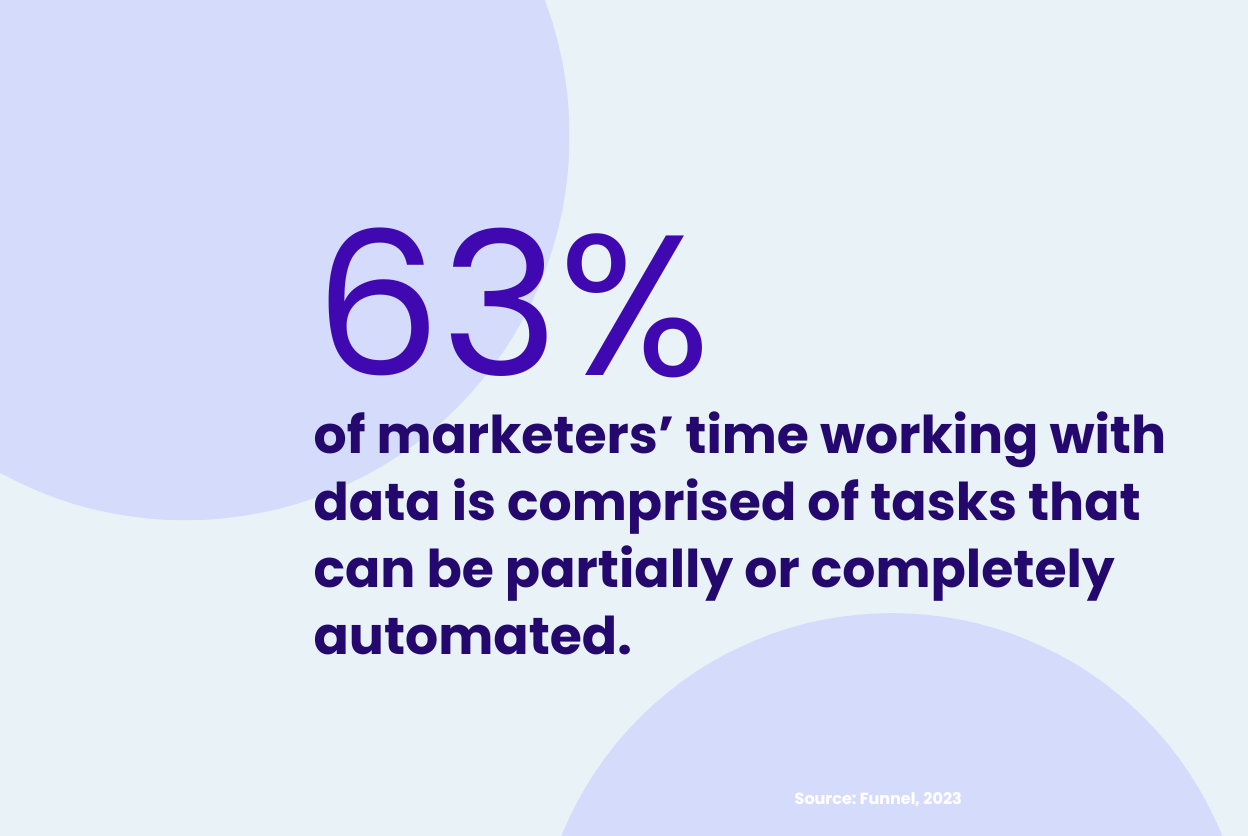
51 percent of marketers have said that investment in technology and software was their top data priority, with 47 percent having pointed to achieving quality data sources, 45 percent who noted data availability, while 44 percent said the creation of a data-driven culture was their most important data goal, according to newly-published survey data. MarketingProfs

ON THE LIGHTER SIDE:

2023 December 1 Marketoonist Comic Image

A lighthearted look at “Word-of-Mouth Marketing” by Marketoonist Tom Fishburne — Marketoonist

Why Are We Still Doing What Simon Says? — IEEE Spectrum

TOPRANK MARKETING & CLIENTS IN THE NEWS:

  • Joshua Nite / TopRank Marketing — This Week in Marketing: Get Ready to Grow Again — LinkedIn (client)
  • Lee Odden / NetLine / TopRank Marketing — 3 Key Takeaways From Content Marketing World 2023 — Convince and Convert
  • Lee Odden — Numbers and Niches: 10 Ways Data Can Help Optimize Consumer Outreach — iTechPost

FRIDAY FIVE B2B MARKETING FAVORITES TO FOLLOW:

Dennis Shiao @dshiao
Joanne Sweeney @JSTweetsDigital
Christopher S. Penn @cspenn
Alli Berry @AlliBerry3
Dusty DiMercurio @dustycd

Learn more about TopRank Marketing‘s mission to help elevate the B2B marketing industry.

Have you seen an important B2B marketing news item we haven’t yet covered? If so, please don’t hesitate to drop us a line in the comments below.

Thanks for being with us for this week’s Elevate B2B Marketing News, and we hope that you’ll return again next Friday for another selection of the most up-to-date and relevant B2B and digital marketing industry news. In the meantime, you can follow us on our LinkedIn page, or at @TopRank on Twitter/X for even more timely daily news.

The post Elevate B2B Marketing News Weekly Roundup: Top Multichannel B2B Challenges, Google Completes Search Update, & How Jargon Harms B2B appeared first on B2B Marketing Blog - TopRank®.


from B2B Marketing Blog – TopRank® https://ift.tt/BGtO0m7
via IFTTT

Saturday, 2 December 2023

Weekend Favs December 2

Weekend Favs December 2 written by John Jantsch read more at Duct Tape Marketing

My weekend blog post routine includes posting links to a handful of tools or great content I ran across during the week.

I don’t go into depth about the finds, but I encourage you to check them out if they sound interesting. The photo in the post is a favorite for the week from an online source or one I took on the road.

  • GetTerms – GetTerms simplifies the process of creating essential legal documents for your website or apps. With its user-friendly interface, you can quickly generate privacy policies, terms of service, and more, ensuring your online business complies with legal standards without the need for a legal background.
  • Content at Scale – Content at Scale is a groundbreaking tool that redefines AI-generated content. Its advanced algorithms capture your unique voice, creating content so authentic and human-like that it effortlessly passes both audience scrutiny and AI detectors. It’s hailed as “The world’s most human-like AI writer,” setting a new standard in content creation.
  • Dibz – Dibz revolutionizes the way SEO consultants and marketing agencies approach link building. It automates and simplifies the task of finding quality link opportunities, saving valuable time and effort. With Dibz, you can focus on building relationships and creating content, while the tool takes care of the tedious prospecting process.

These are my weekend favs; I would love to hear about some of yours – Tweet me @ducttape

If you want to check out more Weekend Favs you can find them here.


from Duct Tape Marketing https://ift.tt/DB6gOLP
via IFTTT

Friday, 1 December 2023

Top B2B Expert SEO Trends & Predictions for 2024

What will search marketing and search engine optimization (SEO) look like in 2024 — as generative AI and other factors continue changing the landscape of one of the primary technologies B2B brands use to be found and to help answer key questions?

We’ve gathered B2B search marketing insights from both industry experts and our own team, and are happy to present our annual look at SEO predictions and search trends for 2024.

When I first went online nearly 40 years ago in 1984 operating a 300-baud bulletin board system, it would be six years before Archie’s FTP site search arrived in 1990, followed three years later by Excite and the other early web search engine innovators, and if there’s one aspect of search that has remained constant throughout the ensuing four decades, it’s been never-ending change.

The search marketing landscape has always been one of rapid changes, and keeping up-to-date with ever-shifting SEO machinations and technical search intricacies can be more than a full-time job for top B2B SEO professionals. Luckily, for 2024 we’ve got a wealth of SEO insight from some of the world’s leading search subject matter experts that you can use to hit the ground running as a new year of search unfolds.

Let’s jump right in and see how top search marketing practitioners expect 2024 to change the way brands do business, and why it’s shaping up to be a year unlike any other for search.

1 — Clear Signals of Real Human Authorship

Aleyda Solis
Aleyda SolĂ­s
Founder& International SEO Consultant, Orainti

In 2024 I expect that:

  • Showing clear signals of real human authorship, experience and authority becomes a must for content to rank well across any vertical
  • With the release of search generative experience (SGE), most sites that actually offer products or services directly —rather than being just informational middlemen — retain their traffic, although this will shift from mid-of-the-funnel pages (PLPs) to bottom-of-the-funnel ones (PDPs).
  • Google will continue to release more features in two lines:
  1.  A more visible e-commerce layer to become a stronger and more complete contender to Amazon, offering many more functionalities and insights within their results to become the destination and avoid referring traffic to other marketplace platforms, and:
  2. Community and socialization features to compete with the popularity of TikTok as a search platform by Gen-Z. This has already started with “human first” perspectives, seeing other people’s notes (comments) now in test, and the ability to follow topics.

“In 2024 I expect that showing clear signals of real human authorship, experience and authority becomes a must for content to rank well across any vertical.” — Aleyda SolĂ­s @aleyda
Click To Tweet


2 — Google Search & How AI Changes Content Generation

Barry Schwartz
Barry Schwartz
CEO, RustyBrick
Founder, Search Engine Roundtable

AI is all the craze and it will continue to evolve and big a very big deal in 2024, as it was in 2023.  It will be interesting to see how content generation using AI will adapt in 2024 and if Google Search will deal with it next year.  No real big shocking prediction from me, I think everyone will agree, it is all about AI.


“It will be interesting to see how content generation using AI will adapt in 2024 and if Google Search will deal with it next year.” — Barry Schwartz @rustybrick
Click To Tweet


3 — User Experience Creates Sustainable, Long-Term Success

Krista Neher

Krista Neher
CEO, Boot Camp Digital

It is called search engine optimization, not search engine creation. Too many SEOs focus on search engines while every other aspect of user experience or strategy takes a back seat. The idea should be to create content, website experiences, etc., for users and optimize them for search engines. We don’t create for search engines and optimize for humans. SEOs tend to be very technical and tactical based on the guidance from Google.

As search engines get smarter and look at more robust signals, user experience is playing a greater role. Updates and guidance from Google for years have shown a strong focus on user experience and signals. Focus more on optimizing for users and their experiences while optimizing for search engines, and you’ll have a long-term strategy.


“As search engines get smarter and look at more robust signals, user experience is playing a greater role.” — Krista Neher of @BootCampDigita
Click To Tweet


4 — Finer (and More) Work on the Vertical Channels

Ralf Schwoebel

Ralf Schwoebel
Founder, metadist.de

Traffic generation as the headline of the industry (to which SEO is also assigned) is getting more finely divided by the years. Additional devices — from smartphones to smart-TVs and maybe voice-activated AI gadgets — change our way of content consumption. The coming year will add more channels and more potential traffic in various corners of the web and our industry will follow these traffic sources.

We will see more emphasis on vertical channels like TikTok, YouTube or Snapchat, which run their own algorithm that can be worked — just like many do on Amazon. More clients will come with applications to us — the SEOs — to make those accessible to “search” or to be better presented in those channels. From AI-plugins to 3D VR apps for various headsets, the coming year will only broaden the potential touchpoint to the searcher, and “user engagement” will one of the most-used buzzwords.


“2024 will add more channels and more potential traffic in various corners of the web and our industry will follow these traffic sources.” — Ralf Schwoebel @orgaralf
Click To Tweet


5 — More Personalized & Useful Search Experiences

Seth Epstein
Seth Epstein
Analytics Director, TopRank Marketing

Search engines will continue to take steps towards providing a more personalized and useful search experience with search generative experience (SGE), while navigating the pressure to balance user experience (UX) with monetization and properly giving credit to the content contributing to search results. New specialties in paid search and SEO will develop as SGE results gain a larger share of search results. Analytics teams will be tasked with providing more context to paid and organic search channel performance, as it’s yet to be seen how SGE will impact the steady traffic that many sites currently rely on. Agencies should be prepared for flexibility in their scope of work, ensuring clients have clarity and confidence about the possibility of a strategic shift if necessary.


“Agencies should be prepared for flexibility in their scope of work, ensuring clients have clarity and confidence about the possibility of a strategic shift if necessary.” — Seth Epstein @SrirachaForAll
Click To Tweet


Putting 2024 B2B Search Marketing & SEO Trends to the Test

2024 will see B2B marketers taking SEO and search marketing into a new year filled with more AI challenges and opportunities than ever — especially for B2B brands — and although the insightful predictions we’ve examined here from Aleyda, Barry, Krista, Ralf, and Seth are sure to play out in altogether new and sometimes unpredictable ways, they can also help shape your organization’s own SEO efforts in 2024 and beyond.

Thanks to all of the top search industry professionals who contributed trends and predictions to our annual look at the year ahead in SEO.

To learn more about B2B search marketing, check out these addition recent resources we have published:

Search is only one facet of a well-rounded B2B marketing strategy, yet one that plays an important role in campaigns that attract, engage, and convert. Find out why firms including Adobe, LinkedIn, SAP, Dell, 3M and others have chosen to work with TopRank Marketing — drop us a line.

The post Top B2B Expert SEO Trends & Predictions for 2024 appeared first on B2B Marketing Blog - TopRank®.


from B2B Marketing Blog – TopRank® https://ift.tt/PxzLOcY
via IFTTT