Tuesday, 30 July 2019

Content Marketing Planning: How to Build Your Editorial Calendar

Building an Editorial Calendar

Building an Editorial Calendar I can’t believe I got fired from the calendar factory. All I did was take a day off! Opening today’s post up with a bit of levity felt fitting, because calendars can cause much anxiety. They bring to mind deadlines, meticulous organization, and time crunches, which are often oppressive realities for marketers with a million things on their plates. But the truth is that you’re likely to encounter much more dread if you don’t house your content planning within a documented and strategic editorial calendar for blogging. Building out a set schedule (with a bit of flexibility) ultimately makes your life easier because it provides a guiding light, and ensures your content strategy remains cohesive and oriented around your objectives. In other words, editorial calendars are no joke. Here’s how you can construct one that seriously drives your company’s blog (or any other content initiative) forward. 

Fortify Your Editorial Calendar in Five Steps

Whether you’ve already got a content calendar, which you hope to refine and improve, or you’re starting from scratch, these five steps will put you on track.

Step 1: Crystallize Your Objectives

The biggest issue with many content plans is that they’re aimless and wayward. When you’re figuring things out on the fly, it can be difficult to tie everything back to the same goals and desired outcomes. So the first step is to zoom out and nail down what you’re trying to achieve with the content in question. For instance, if your blog is designed to generate leads with specific audiences, are you tethering each piece on your calendar back to this outcome in some way?  Placing objectives front-and-center is a key benefit of documenting your content strategy, and making them the underpinning of your planning will help ensure everything you publish has a purpose.  via GIPHY

Step 2: Chart Your Pillars and Timely Focuses

With objectives clearly defined, you can formulate content pillars that will serve as the cornerstones of your editorial calendar. Also known as topic clusters, these are the general categories that all of your content will nest under. Pillars are determined by the intersection of what you want to be known for, and where demand exists. They should be informed by SEO research around keywords and queries, hitting the sweet spot between search volume, expertise, and buying intent. Here on the TopRank Marketing Blog, our pillars are aligned with our agency’s core services — content marketing, SEO, influencer marketing — and so pretty much everything we create for the blog approaches these topics from various angles for people who are interested in learning about them and looking for insight. Don’t view content pillars as restricting; there are a wide range of ways you can address almost any topic, either directly or tangentially. Organizing your calendar around them will help ensure you stay focused, and relevant to your target audience. In addition to identifying a topical mix, you can start to define your content types — how-tos, thought leadership, influencer collaborations, conversion-driven pieces, etc. These can be aligned with various stages of the buying cycle, and mapped back to the key objectives established in Step 1. At this point, it’s also smart to map out industry events or seasonal milestones that you’ll want to create content around.  [bctt tweet="Don’t view content pillars as restricting; there are a wide range of ways you can address almost any topic, either directly or tangentially. @NickNelsonMN #ContentMarketing #ContentPlanning" username="toprank"]

Step 3: Coordinate with Your Broader Strategy

This is a vital consideration that is all too frequently overlooked. Whatever channel you’re scheduling content for — be it a blog, email, social, etc. — think about ways you can coordinate with other departments or disciplines in the organization. For example, does your sales team experience higher volumes of inquiries at certain times of year? Or are they attending a trade show next month that you could support with content? Maybe one of your executives will be speaking at a conference, and you want to queue up some thought leadership around the subject of their talk in the days leading up. A strong editorial calendar should reflect the company holistically. In this sense, it can be helpful to make your calendar visible to everyone and not just the folks on your team.  [bctt tweet="A strong editorial calendar should reflect the company holistically. @NickNelsonMN #ContentMarketing #ContentPlanning " username="toprank"]

Step 4: Plot Your Cadence and Schedule Out Your Content

How often will you create content? And why? We all know it’s valuable to publish regularly, because this is how you build an invested and trusting audience, but “regularly” can mean different things under different circumstances. Is it daily? Three times a week? Multiple times per day? This decision shouldn’t driven by guesswork, but by data.  Although it’s a little older now, HubSpot has a helpful post on determining how often companies should blog based on variables like company size and B2B vs. B2C. But you’ll also want to dig into your own visitor behavior analytics and draw conclusions on what your audience wants. Test different cadences and compare the impacts. As a general rule, more publishing equals more traffic, but that doesn’t necessarily mean it’ll be worth your while to create new content each day.  As Alfred Lua of Buffer writes: “I would recommend experimenting and finding a suitable editorial cadence based on your content goals and the amount of time you have. There is no one right editorial cadence. HubSpot publishes several articles a day while Backlinko publishes less than once a month.” (As a side note, we highlighted Backlinko’s quality-over-quantity approach here earlier this year.) Having made this decision, you can start filling out the calendar appropriately, using your content pillars and organizational directives as guides. Plan as far out as you’re comfortable (at least one month, but forecasting three or more months is even better). Make sure you’re building in enough topical variety to keep things fresh and diverse. Once you get your schedule documented, it becomes easy to spot gaps or overloads. 

Step 5: Leave Room for Change

Note that you don’t want to completely fill out your editorial calendar. As we mentioned earlier, it’s important to leave some flexibility so you can nimbly address timely matters as they arise and account for the (expected) unexpected. Contently editor-in-chief Jordan Teicher proposes a 75/25 rule, wherein one out of every four slots in your calendar is left blank.  “In my years managing the site, I’m certain of one thing: s*** happens,” Teicher writes. “People miss deadlines. Sources don’t respond in time. The design team can’t find the right image. My day gets stuffed with meetings, which prevents me from editing a draft. A flexible content calendar is about more than just coming up with ideas for the current news cycle. It’s also about realistic expectations.”

Smart Practices for Getting the Most Out of Your Editorial Calendar

The five steps above will help you solidify your calendar. Here are a few additional tips to help make the process smoother and more effective.
  • Hold group brainstorming sessions. Usually, the toughest thing about building out a content calendar is coming up with enough concepts to fill it in. I recommend setting up a time where a bunch of your creatives come together to load up the pipeline with ideas (run these ideas past your content pillars and SEO research to assess strategic viability). Make sure to incorporate voices from various departments. 
  • Slice up and repurpose. It’s always valuable to get the most mileage possible out of your content. If you’ve got a big, meaty blog post planned on a certain subject, why not divvy it up into three parts and run it as a series? If you’re looking for a reliable performer next month, why not take your most successful piece from last month and flip it into an infographic, or conceive a follow-up post that expands on it? Repurposing is a great way to get the most out of your content leftovers.
  • Lean on the right tools. For some content teams, a spreadsheet or even a Word doc can be sufficient for organizing your editorial calendar. In other cases, this initiative can be run through your project management software. But for high-volume teams with many elements to track and account for, it might be helpful to go with a dedicated content-centric solution. There are plenty of them out there, including Contently, DivvyHQ, Kapost, CoSchedule, and more.
  • Create comprehensive coverage. What this looks like can vary in different scenarios. It might mean approaching your topical pillars with best-answer content that addresses every subtopic your customers are interested in learning about (especially those queries carrying any level of purchase intent). If you’re in a crowded niche, it might mean gobbling up every bit of white space your competitors are missing. If your content is oriented toward B2B buyers, it might mean creating content for every role on distributed buying committees, and speaking to each stage of a lengthy purchase cycle

Right on Schedule

If you feel apprehensive about building an editorial calendar from scratch, you’re not alone. It can feel intimidating to schedule out so far in advance, and to consistently manage and maintain this resource. But I assure you, once you get into the groove, your life will be much easier and your results will improve.  Following the steps and recommendations above will help you stay on target and derive maximum value from your efforts. Want to add further efficiency and foresight to your strategy? Learn more about getting ahead with your content planning

The post Content Marketing Planning: How to Build Your Editorial Calendar appeared first on Online Marketing Blog - TopRank®.


from Online Marketing Blog – TopRank® https://ift.tt/2YbjSal
via IFTTT

11 Red Flashing Warning Signs of Email Deliverability Problems Ahead

Nothing can destroy your email marketing performance quite like email deliverability problems. Whether it’s the slow slip of inbox placement due to diminishing engagement or the sudden collapse due to a block or blacklisting, it’s always devastating and usually a shock.

But, honestly, email deliverability problems are rarely a surprise if you know what to look out for. During my nearly 10 years focused on deliverability, I’ve noticed a number of events that often precede email deliverability problems:

1. Changing Email Service Providers

This is perhaps the biggest change you can make to your email program. Changing providers is essentially starting from scratch—you have new IP addresses and a new sending subdomain, neither of which have a reputation associated with them. You also need to worry about things like importing the suppression list from your old provider, so that you don’t start off on the wrong foot by mailing to a bunch of bad addresses.

It’s wise to have a deliverability consultant monitoring your inbox placement closely during the ramp up phase, which generally takes 4-6 weeks. Speaking of the warming up process...

2. Warming Up a New IP Address

If you change the IP address that you send emails from or add a new one, you can’t just start sending tons of emails from the new IP address on day 1. That’s what spammers do, as they jump around from one IP address to another to try to avoid detection. This behavior will get your emails blocked.

Instead, you need to gradually ramp up email volume from a new IP address in a methodical way to give mailbox providers a chance to see that their users are responding positively to it. There’s an ever-changing formula for warming up an IP address properly, and it takes a watchful eye to know when to dial volume back to give the process more time.

3. Warming Up a New Sending Subdomain

Your sending subdomain (i.e., email.brand.com) is just as important as your IP address. Mailbox providers watch both of these closely, which is why you can’t simply change your IP address to run away from a poor sender reputation. Even if you change your sending subdomain, that poor reputation can be tied back to your main domain, which no legitimate business can abandon.

Brands should be even more careful when warming up a new sending subdomain, because the sender reputation associated with it is even stickier than the one associated with your IP address.

4. When Doing High-Volume Ad-Hoc Sends

Privacy policy update, anyone? Once-a-year or one-time emails like this that are sent to your full list—often even disengaged and chronically inactive subscribers, and sometimes even those who unsubscribed or complained—can sometimes lead to deliverability issues. Brands should plan for such a large send by considering the regular daily volume for their domain and IPs, and the incremental increase beyond that average send volume. If that volume jump will more than double your daily send volume, it can cause a red flag for mailbox providers who will, in turn, block your mail. It’s also important to watch deliverability closely after sending an email like this, in order to quickly address any delivery issues that crop up as a result. 

5. During Peak Season Sending

With so much business riding on your performance during your peak seasons, it’s the worst time to have email deliverability problems. But your peak seasons are also the peak seasons for your competitors and peers, which often means a spike in emails at mailbox providers, putting them on their guard.

If you’ve experienced deliverability issues in the past during your highest volume seasons, then your risk of problems in the future is even higher. It’s important for senders to prepare in advance for an increase in volume during peak season. We help our clients employ strategies like ramping up in advance and running a reactivation program to bring more people back into their active file long before the pressure is on to send more. 

6. When Bounce Rates Start to Exceed 3%-5%

There are two types of bounces to be concerned about: 

  1. Hard bounces, which are invalid addresses, either because the address has never been active or because the address was abandoned and then retired by the mailbox provider

  2. Soft bounces, which are temporary blocks by mailbox providers that can be related to things like reputation or volume

The most common reason that emails hard bounce is that the email address you’re trying to send email to doesn’t exist. Spammers often have high bounce rates, because their lists generally have lots of expired and guessed email addresses, since they try to reach the largest audience possible. So, when you send to a lot of bad addresses and your hard bounce rate is high, mailbox providers take this as a sign that you might be a spammer—or at least that you’re being reckless with your subscriber acquisition processes. If your hard bounce rates ever rise above 5% in any given month, it’s a good idea to seek professional help to find the source of the problem that’s causing so many invalid email addresses to get onto your list.

For any large sender, some amount of soft bouncing is normal due to deferrals from smaller mailbox providers that can only accept so much mail at a certain time. However, if you see a soft bounce rate upwards of 3%, especially at the top providers like Gmail and Outlook.com, then you may be getting blocked due to reputation issues. A deliverability consultant can help you identify the root cause, make a plan for improvement, and (in some cases) get the block removed on your behalf. 

7. When Opening Up a New Subscriber Acquisition Source

Each of your subscriber acquisition sources has a different value-risk mix because they attract subscribers who have different goals, different levels of familiarity with your brand, different expectations, and so on.

For instance, people who opt in during checkout are familiar with your brand and have made at least one purchase. The chances of their email address bouncing are lower, because they want their email receipt, and the likelihood of them being disappointed with your email content is low because they’ve already shown an affinity for your brand by making a purchase and raising their hand to receive your emails.

At the other end of the spectrum are people who are getting onto your email list through, for instance, a sweepstakes or co-registration. People who opt in via a sweepstakes may only be interested in winning a prize and not interested in receiving your emails. And people who opt in via a co-registration form may not be familiar with your brand or may be confusing it with another brand. In either case, these subscribers are a high risk of spam complaints and unsubscribes.

Because of the different value-risk mix of every subscriber acquisition source, you should watch your deliverability closely when adding a new one.

8. During Periods of Faster-than-Usual List Growth

Track your list size and understand what your baseline list growth is so you can identify any unexpected jumps in list size. This is important because a spike may be a sign of bot signups that could harm your sender reputation and deliverability.

To make seeing aberrant behavior easier to spot, consider tracking individual subscriber acquisition sources. For instance, track the new subscribers you get from your checkout opt-in separately from those you get from the signup form on your homepage. This will help you see potential problems sooner and investigate them more easily.

9. When Email Complaint Rates Start to Exceed 0.2%

Most brands are able to keep their complaint rates well below 0.2%, so exceeding this level is a serious sign of trouble. It’s important to remember that overall complaint rates can be misleading, since Gmail and many smaller mailbox providers do not offer a feedback loop that redirects complaints back to you, skewing this metric to the low side. Complaints should be monitored by recipient domain and by campaign. This metric can also be leveraged to monitor the performance for new signup sources.

10. When Your Open Rates Drop Dramatically at a Particular Mailbox Provider

Just like tracking new subscribers by acquisition source allows you to see trends more clearly, the same is true of tracking email performance by mailbox provider. This can let you see issues that you might have with a particular provider like Gmail, for example. 

If your engagement metrics seriously dip at one mailbox provider, then that’s likely a sign of being blocked there or having been added to a blacklist that the provider uses to inform their blocking decisions. Very low open rates (in the 1-2% range) can also be a sign of spam folder placement. Deliverability experts know how to read engagement rates to determine if you are trending in the wrong direction or already in trouble. 

11. When Your Open Rates Average 5% or Less at a Particular Mailbox Provider

In addition to big dips in engagement, you want to be on alert for your open rates becoming too low. That’s because mailbox providers use user engagement as a major factor in their filter algorithms. If very few of their users are engaging with your emails, that is a signal to the mailbox provider that you are not targeting intelligently and are mailing to a lot of inactive subscribers. This can result in your mail being flagged as undesirable and sent to spam. 

When to Call in Expert Help

Experiencing any of those events could and probably should prompt you to reach out for some help from a deliverability expert. Better safe than sorry is the name of the game when it comes to deliverability, given the costs associated with email deliverability problems. 

For example, before becoming a client of ours, a national retailer was having problems at just Yahoo and AOL and it was costing them $100,000 a week in lost email sales. If your brand has suffered deliverability issues in the past that have led to this level of lost revenue, or if your brand generates millions of dollars from email marketing every year, then my answer for when to seek expert deliverability help is different for you: 

You should have deliverability help all the time.

Brands with smaller financial risks can manage their deliverability reactively, calling in help when problems arise. But for you, the potential losses associated with deliverability problems are simply so high that they must be managed proactively. 

At a minimum, someone in your organization should be reviewing the key deliverability performance metrics and they should understand when to take action. However, we often find that even if a brand has a resident deliverability expert, it’s not a full solution. Because these employees often serve other roles and have other responsibilities in addition to deliverability, they likely need external support. 

So whether you have a deliverability expert on your email team or not, you should ideally have an ongoing partnership with a deliverability consultant to help you build a sustainable strategy that allows you to reach the optimal number of subscribers, while protecting your email reputation and performance.

The last thing you need is for all of your hard work to be thwarted by spam folder placement or an all-out block at a mailbox provider. Unfortunately, if you’re not watching it all the time for trouble, it doesn’t take long to ruin your deliverability. And once your reputation is damaged, it can take a long time to rehabilitate it. 

It boils down to the simple fact that without good deliverability, nothing else matters, because your subscribers aren’t seeing your emails.

The on-going review and assessment of your email program from a deliverability perspective is smart insurance for all the money you’re investing in email marketing. It gives you the peace of mind that your key performance indicators are in the green, and that you are trending in the right direction month-over-month, and year-over-year. If an issue crops up because of one of the 11 issues listed above, you will know there is someone to help you minimize the damage as quickly as possible. 


Need help with your email deliverability? Oracle Marketing Cloud Consulting has more than 500 of the leading marketing minds ready to help you to achieve more with the leading marketing cloud, including a dedicated email deliverability practice within our Strategic Services Group.

Learn more →


from Oracle Blogs | Oracle Marketing Cloud https://ift.tt/2KpTGzh
via IFTTT

Monday, 29 July 2019

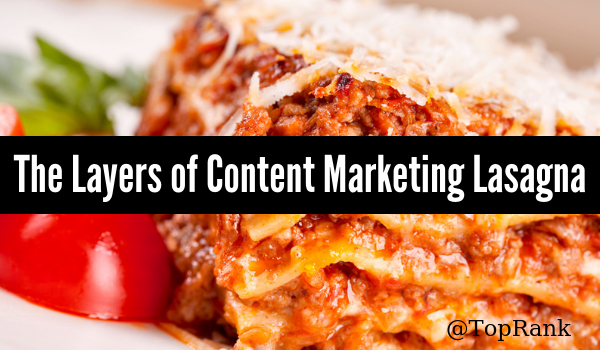
Cooked to Strategic Perfection: The Layers of a Deliciously Integrated Content Marketing Lasagna

Few things in this world are as delicious as a corner piece of lasagna. For starters, the top layer of cheese is both gooey and crispy. The tomato sauce is sweet yet peppery. The meat? It’s flavorful and hearty. And don’t get me started on the ricotta and mozzarella layers—my favorite by far. via GIPHY Lasagna is the perfect dish. And its perfection is not just defined by quality ingredients, but how each ingredient is artfully layered together to bring satisfaction with each and every bite. That’s where the magic happens. Cooking a delectable lasagna to perfection is not unlike crafting an integrated approach to content marketing. On their own, your tactics may whet your audience’s appetite, but don’t pack the tasty punch of working together to make a lasting impact or drive savory results. Paid, SEO, content, social, influencer, design—all need to work in tandem to ensure your marketing objectives are met. What are the essential layers for a scrumptiously integrated content marketing lasagna? Here’s a little cooking demonstration.

The Layers of a Deliciously Integrated Content Marketing Lasagna

Layer No. 1: Structural SEO Noodles

Noodles are to lasagna as SEO is to content marketing. These are the support layers, helping bind the rest of tactical ingredients together while baking. They provide the structural integrity of the marketing dish—and add some much-loved, comforting carbohydrates.  From providing insights about the competitive landscape or revealing content or optimization opportunities based on your current search positioning, SEO tactics help provide context and actionable next steps for developing (and optimizing) your best-answer content marketing strategy. And without multiple layers of topical focus or the right contextual firmness, it all falls apart. [bctt tweet="Noodles are to lasagna as SEO is to content marketing. These are the support layers, helping bind the rest of tactical ingredients together while baking." username="toprank"]

Layer No. 2: Meaty and Savory Content

Most of the nutritional value of lasagna is rooted in the meat—or vegetables if that’s your thing. (Yes, I choose to believe lasagna is very nutritious and essential for a healthy body.) When it comes to content marketing, the content you create is what brings value to your audience. It’s what gives them delectable insights, solutions, and answers to their burning questions as they make their journey. However, to really succeed here, your content layer needs to be flavorful, well-seasoned, and fresh. It needs to be the best answer with a great user experience, impressive visuals, incredible storytelling, and valuable information. This means the flavor profile of your content needs to be multidimensional, including different content types (e.g. text, video, and/or audio, or interactive) and fit with your audience’s unique tastes.

Layer No. 3: Saucy and Seasoned Influencers

While well-seasoned meat and perfectly cooked pasta noodles can satisfy hunger in some cases, it does not yet make for a flavorful lasagna dish. This is where the tomato sauce comes in.  via GIPHY Tomatoes, basil, oregano, salt, pepper, and garlic come together to make a delectable tomato sauce to mix with the meat and coat the noodles. But there’s one key ingredient content marketers can add to make an especially spicy sauce: Influencers. Influencers add authority, credibility, flavorful insight, and even more meat to your content. Their seasoned advice also helps bring new, untapped audiences to the dinner table. But the key here is to season with care. It’s important to select, qualify, and recruit the right influencers depending on your goals, target audience, topic, and so on. Take their reach and follower size out of the equation—focus on the unique and relevant flavor they can bring to your content and audience. [bctt tweet="Identify the topics that are most important to your audience and how they align with the topics you want to be known for. Then identify the right types of relevant influencers. @azeckman" username="toprank"]

Lay No. 4: Cheesy Brand Goodness

As I mentioned, the ricotta cheese mixture is my absolute favorite lasagna layer. This creamy goodness envelops the meat sauce, adding a subtle flavors and elevating the dish as a whole. Your brand voice and personality is this cheesy, creamy goodness. Your audience needs to get a taste of who you are and how you can help, without having their senses overpowered with product messaging and misplaced calls to action. While under most circumstances I’d argue the more the merrier when it comes to cheese helpings, when it comes to crafting an integrated content marketing strategy that helps your brand shine, balance is the name of the game. [bctt tweet="Your audience needs to get a taste of who you are and how you can help, without having their senses overpowered with product messaging and misplaced calls to action. @annieleuman" username="toprank"]

Layer No. 5: The Promotional Parmesan

You know when you’re eating at your favorite Italian restaurant and you’re asked if you’d like some fresh parmesan to top off your meal? Of course, you reply in the affirmative and wait until there’s a lovely dusting (or a solid coating if you’re like me) of freshly grated cheese for you to enjoy.  That final, top layer of cheese is key for any good lasagna or any integrated digital marketing strategy. But just because it’s the last layer added, doesn’t mean it’s an afterthought. Your promotional parm has been planned all along.  Organic social media. Email marketing. Paid social, search, or display ads. Third-party editorial. Influencer activation. Cross-site promotion. As you pull your freshly baked content marketing lasagna out of the oven, the tantalizing top layer is the first thing your audience will see. How will you attract your audience? How will you entice them to take a bite? How will you ensure they’re satisfied and asking for more? [bctt tweet="Content promotion can’t be effective if it’s an afterthought. Your best practice would be to make promotion part of content planning. @leeodden" username="toprank"] Read: 50 Content Promotion Tactics to Help Your Content Get Amazing Exposure

Cook Your Integrated Marketing Lasagna to Perfection

A well-crafted and delicious lasagna has expert layers, with each layer’s flavors and textures coming together to deliver perfection in every bite. A great content marketing strategy does, too.  Leverage SEO tactics to provide foundational insights that can be built upon with meaty content. In addition, perfect your secret influencer sauce to coat your content and SEO noodles in flavor and insight. Finally, ensure your top layer of ooey gooey cheese is part of your cooking strategy from the beginning. Looking for more tasty content marketing recipes? Learn how to whip up a strategic and mouthwatering Repurposed Content Cobbler.

The post Cooked to Strategic Perfection: The Layers of a Deliciously Integrated Content Marketing Lasagna appeared first on Online Marketing Blog - TopRank®.


from Online Marketing Blog – TopRank® https://ift.tt/2ynEtch
via IFTTT

Email Deliverability and Data Privacy: How to Resist the Allure of the Dark Side

Not a long, long time ago and not in a galaxy far, far away but in your actual digital marketing universe…

Email marketers feel as if they are at WAR!

The competition to grab prospects’ attention is fiercer than ever before, and email marketers need to stand out more than ever and know the key to that is personalization and drawing upon a prospect’s interests and preferences to craft an engaging email. This requires the proper use of data and knowing the right way and time in which to send to a prospect.

In other words, it’s about making your emails more deliverable.

You have your data and have sifted through it to find the most salient points and derived the most significant insights. Using this information, you have written a beautiful email with catching, concise copy and an eye-striking design. You have a strong call to action and an intriguing subject line.

You, my friend, are an email marketing Jedi knight.

However, before you hit send and hang up your light saber for the nonce, you have to consider a few things.

Is your email something your recipient would even want or be interested in? And, are you sending it at an appropriate time, one in which makes it more likely to be opened?

In other words, you have to think about your emails’ deliverability.

Who Wants Your Emails?

The surest way to develop a bad reputation as an email marketer is to send unwanted emails. Such a bad reputation can harm your brand, as more people might get wind of what you are doing and not want any of your emails, even if they are pertinent to their interests. Having a bad email marketing reputation can even create a negative impression of the rest of your marketing as well as your brand’s products and services.

How do you avoid this then? How do you make sure that the people you are sending to might be interested?

Consider how they have interacted with your brand.

Have they:

  • Signed up for your newsletters?

  • Given you their contact information to access some gated content?

  • Filled out a survey for you?

  • Signed up for a webinar, trade show, or other event you are involved in?

  • Downloaded one of your whitepapers or ebooks?

  • Followed you on social media? Liked or shared your posts?

  • Have done business with you before?

These are all good signs. They indicate interest in your brand. If someone has taken one of the actions above or indicated some type of interest in your brand, then they have likely given you their email address and perhaps some other contact information or information about them, their position, business, and the industry they are in.

Since they have shown interest and given you their email, you can send to them. If you’re looking to get them to open your emails and click through on them, then you want to personalize the email content as much as you can so that it’s tailored to their preferences. If it speaks more directly to them, you’ll have a better chance of catching their attention, holding it, and spurring them to some type of action (such as downloading an asset, signing up for an event, visiting a webpage, and so on).

Who Doesn’t Want Your Emails?

Even if someone indicates interest in your brand, you don’t want to barrage them with too many emails. You definitely do not want to send them an email that isn’t personalized and features nothing of interest for them. Those are good ways to make someone want to unsubscribe.

If someone unsubscribes or indicates that they are longer interested in your emails, honor that request. Take them off your list. In fact, it’s a good idea to update your list every so often to check to see if the recipients on it still want to be on it. One day, they may be interested in your brand again, but maybe they won’t be if you leave a bad taste in their mouths by sending them unwanted emails.

Send Times and Other Considerations

How many emails do you want to send in a month? You don’t want to send too many as to annoy your recipients, but you also want to keep in touch. Some businesses like to send an email every week and others less frequently.

At what times do you want your emails to go out? Someone might not want an email too early in the morning, especially if the notification wakes them up. They might not like it coming later on at night when they are off work and at the gym or with their family and friends.

So, when is the best time to send?

And what is the best copy to use? What is the best design, subject line, headline, and call to action?

There is no right answer. In fact, it will be different for everyone, as different businesses will have different audiences and needs.

How can you find out what works for you and your business?

Again, you should turn to your data. Consider A/B and multivariate testing. The results will tell what your recipients are responding to, even which send times and email frequency are working with them.

The Allure of the Dark Side

However, the temptation is great to just send out a bunch of emails at a lot of different times. You might think that sending out that many will at least get some results and not care if it irritates anyone, as they aren’t opening the emails or clicking through, anyway.

You might not care to prune your list and keep sending emails to everyone on it, whether they want the emails or not, as you think they’ll just delete the emails if they don’t want them. In fact, you may even have come across someone’s email through means other than them offering it to you and still using it to email them, even when they’ve shown no sign at all of wanting any marketing messages from you at all. But, you never know, right?

This approach is basically taking a hammer to things when a scalpel (or light saber) would be better. Digital marketing is all about getting even the smallest details correct in personalizing content and making sure it goes to where it’s wanted. Sending emails to whomever without a care won’t gain you anything but a bad reputation. It is a lazier approach and won’t lead to better results and will do long-term damage to your reputation and brand. It might even eventually affect your ROI.

Similarly, your recipients are entrusting you with their emails and personal information. They care counting on you not to abuse or misuse it. Some marketers and people they have done business with before may have, and that makes people wary of doing business with anyone. Therefore, many businesses have taken the step of telling people upfront what they will be using their information for, as to assuage their fears and keep in them in the loop.

This is why you should properly manage your email lists, honor unsubscribes, and only send emails to those who have showed continued interest. If you come across someone’s information in any other way than them giving it to you, do not use it. In the end, it will only make things more difficult and negatively impact your brand and business.


Email marketers have to consider mobile. Everyone checks their email on their phones, tablets, and other devices. Your competition has taken it into account. Have you? See what you can do to take better advantage of the mobile channel with this “Mobile Email Guide.”


from Oracle Blogs | Oracle Marketing Cloud https://ift.tt/2GyPegr
via IFTTT

Saturday, 27 July 2019

Weekend Favs July 27

Weekend Favs July 27 written by John Jantsch read more at Duct Tape Marketing

My weekend blog post routine includes posting links to a handful of tools or great content I ran across during the week.

I don’t go into depth about the finds, but encourage you to check them out if they sound interesting. The photo in the post is a favorite for the week from an online source or one that I took out there on the road.

  • MorphL – Quickly predict search intent for any user queries using AI.
  • Lead Generator – See who’s visiting your website to generate leads.
  • Noto – Email yourself reminders with one click.

These are my weekend favs, I would love to hear about some of yours – Tweet me @ducttape


from Duct Tape Marketing https://ift.tt/2GKqD8z
via IFTTT

Friday, 26 July 2019

Digital Marketing News: Influencer Marketing Grows, Personalization In B2B, Facebook’s Shrinking Ad Size, LinkedIn’s Record Engagement & More

The post Digital Marketing News: Influencer Marketing Grows, Personalization In B2B, Facebook’s Shrinking Ad Size, LinkedIn’s Record Engagement & More appeared first on Online Marketing Blog - TopRank®.


from Online Marketing Blog – TopRank® https://ift.tt/2ybpIsL
via IFTTT

How Machine Learning Personalization Drives Meaningful Connections with Millennial Audiences

Millennials represent a major demographic in today's' marketplace, 35 percent of the American labor force, with a combined annual spending power of $600 billion. Yet many well-established brands have encountered difficulties engaging younger cohorts. Some brands, in fact,  attribute recent declines in market shares to millennial pushback over what the generation perceives as corporate inauthenticity.

Connecting with this massive, social-savvy demographic requires a revolutionary approach to email strategy. “One-size-fits-all” emails are no longer enough, nor is traditional list segmentation. To understand the inevitable future, we need to look closer at why so many millennial-targeted campaigns fall flat.

Why Are Millennials So Discriminating?

Millennials grew up on the internet and are engaged with their mobile and wearable devices 24/7. They expect a seamless omnichannel experience that flows across every screen in their lives, and they’re jaded from long-term exposure to digital marketing. A discouraging 84 percent of millennials reported outright disliking advertising. Only one percent said that advertisements strengthen their trust in a brand.

How do we account for this resistance? Finances form one piece of the puzzle. Millennials make $10,000 less per year on average than their Boomer predecessors did — and a tighter budget necessitates cautious spending habits. But a deeper factor is also at play here: authenticity.

Millennials resent being marketed to by brands that haven’t invested the time to understand their aesthetics and aspirations. They expect to be recognized as unique individuals, not reduced to anonymous points on a sales chart.

The world of social media has accustomed millennials to a highly personalized, “always-on” experience — and when a brand’s outreach fails to hit the right notes at the right moments, a hard-won customer relationship can instantly evaporate.

Conversely, millennials respond strongly to “authentic,” personalized brand interactions. This expectation of authenticity isn’t just a defining characteristic of the millennial mindset — it’s the beating heart that lies at the core of their every purchase decision.

A More Discriminating Generation Demands a More Discriminating Approach

A full 63 percent of millennials prefer email updates to other online advertising methods. Yet email open rates have declined in recent years, leading some to argue that email marketing is obsolete. How do we reconcile these data points?

While millennials respond well to some email marketing, the crux is that they’re also very discriminating about which emails they actually open.

That means retailers must evolve beyond “one-size-fits-all” email campaigns, whose cadences and content are the same for all subscribers. This approach results in irrelevant, impersonal emails arriving at the wrong times — falling flat on the engagement meter, and often never getting opened.

The reason traditional email marketing approaches often fail to engage millennials is that they can come across as impersonal and inauthentic. Millennials value meaningful personal connections — and the only way to deliver those connections at scale is with an automated personalization solution.

Machine Learning Personalization Allows for Next Level Campaign Automation

An individually personalized email for every customer is the holy grail, but as your subscriber list climbs into the millions, manual personalization quickly becomes impossible. Even when lists are segmented, marketers still face the challenge of sending out “best guess” emails to large swaths of customers whose tastes seem to be related — and that’s always a gamble.

Machine learning personalization solves the problem behind these problems.

With the right combination of multi-party data and customized guardrail rules, an automated personalization solution does far more than just segment your list — it pulls from a pre-approved library of creative assets aligned with your brand’s voice to generate a unique email for every individual subscriber.

Well-trained models learn from every interaction, too, allowing them to evolve along with the customer’s changing tastes, and delivering increasingly smarter, more relevant, better-targeted emails that guide customers toward your highest-value product categories.

Instead of bombarding subscribers with generic advertisements, automated machine-learning personalization actively helps each member of your audience discover the products they’re looking for — plus the ones they haven’t even realized they want yet. This adaptive marketing approach creates magical moments of meaningful connection at every stage of the customer journey. And those moments are crucial, because customer acquisition costs significantly more than selling to customers whose loyalty you’ve already won.

To win back millennials’ trust, companies need to engage their subscribers in ways that don’t feel generic or insincere. And to do that, they need to leverage machine learning to build personalized, automated email campaigns. The next generation of intelligent automation solutions assemble and deliver content tailored for every individual subscriber — at just the moment when it’s most likely to connect and convert.


Authenticity helps you form a stronger bond with your audience. Forging a human connection makes all the difference. Find out more by reading “Being Human: How H2H Marketing Forges Strong Customer Relationships.”

Go to the blog.


from Oracle Blogs | Oracle Marketing Cloud https://ift.tt/2LHITmK
via IFTTT