Tuesday, 26 November 2019

Transcript of How to Attract and Hire the Best Talent

Transcript of How to Attract and Hire the Best Talent written by John Jantsch read more at Duct Tape Marketing

Back to Podcast

Transcript

Klaviyo logo

John Jantsch: This episode of The Duct Tape Marketing Podcast is brought to you by Klaviyo. Klaviyo is a platform that helps growth-focused eCommerce brands drive more sales with super-targeted, highly relevant email, Facebook and Instagram marketing.

John Jantsch: Hello, and welcome to another episode of the Duct Tape Marketing podcast. This is John Jantsch, and my guest today is Dr. Sabrina Starling. She’s the author of How to Hire the Best, and the CEO of Tap the Potential. She also goes by the moniker of the business psychologist, so that’s probably my first psychologist on the Duct Tape Marketing podcast. Sabrina, welcome.

SSabrina Starling: Thank you, John. I’m honored to be the first psychologist on the Duct Tape Marketing podcast. There’s so much commonality with marketing and psychology.

John Jantsch: There’s no question there. But we have to answer the burning question that I am sure you’ve been asked many times: what is the difference between a psychologist and a psychiatrist?

Sabrina Starling: Well, the simple answer to that used to be that psychologists don’t prescribe. The basic difference is that psychiatrists go through medical school, years and years of medical training, and then they specialize in psychiatry at the end of medical school. Psychologists go through graduate school and don’t go to medical school. The majority of our training is focused on understanding people, and how people function in the world.

John Jantsch: Well, certainly small business owners could probably use a dose of that. I know over the years working with thousands of business owners, I’ve have at times felt like I was providing … certainly wouldn’t call it psychology, but I would provide some sort of talking them off the ledge, or …

Sabrina Starling: Yes. Yeah. I always say that people are so complex that I decided I needed to get a PhD in psychology just so I could understand people. As small business owners, we need to understand people because that’s how we grow our businesses. People are the heart of these businesses.

John Jantsch: Well, I have talked to many, many entrepreneurs and I will say that … I’ll bet universally, I know a lot of people say, “Well, gosh. Marketing’s hard.” But I bet you universally there would be agreement on hiring and managing people is probably the hardest part of growing a business. Because most entrepreneurs, it’s just not their strength.

Sabrina Starling: No, it’s not. I think what’s interesting is once we’ve cracked marketing and we figured that out, then we need to know people. Because we have to add team to scale with all the new business that we’re bringing in because we’ve learned marketing.

John Jantsch: I sometimes find that people learn from the negative side before they’re ready to embrace the positive side. I think a lot of the hiring that people do, and where they’ve had it not out, is because they were hired a certain way and they’ve seen other people do it. They’re just kind of copying what they’ve seen done and what they think is supposed to be done. How are business owners getting it wrong in the hiring process in general?

Sabrina Starling: Yeah. Well, I mean, that’s just exactly it. We don’t really know what we’re supposed to be doing. We just kind of copy what has been done to us in the past and what we’ve experienced. The typical hiring practice, if we follow that, that sets us up to mis-hire about 75% of the time. What I mean by the typical hiring practice is we get really busy and we decide, “You know what? We could use some help around here. Let me write up a really quick job ad, and put it out there everywhere, and see which applicants come in. I’ll pick from the best of that group, and then I’ll invite some of those in for an interview. Then out of those that I interview, I’ll pick the best person.”

Sabrina Starling: Well, the reason that causes us to mis-hire is because that is out of alignment with A-player behavior. A-players are not on job boards reading job ads. They’re not sitting at home in their jammies doing that. They’re employed elsewhere right now, they’re probably very busy in their other job that they have elsewhere, and they move from one opportunity to the next. We have to use all of our good marketing skills to figure out how do we get in front of the right A-players for our business, and then attract them to want to work with us.

John Jantsch: Okay. Obviously now I need to say, “Okay. What should we be doing?” You kind of set up the … I think you’re absolutely right. I mean, the people that we really are after are not looking for us. How do we kind of turn the tables then and attract that person?

Sabrina Starling: Yes. It’s about being very, very intentional and setting ourselves up to really differentiate ourselves as employers in the marketplace. Again, using everything we know from good marketing, we have to be different and we have to stand out. We need to know what it is that the A-players we want to attract would value about us, and what are we … and rather trying to create that and just … “I’m not doing this now, so I should go out there and do that.”

Sabrina Starling: Start with what are we doing well. We can ask our current team members, who are our better team members, what is it that you appreciate most about working here? What’s different and unique about this role versus any other jobs you’ve done in the past? That is going to start cluing us in to how we as employers stand out.

Sabrina Starling: What’s, I think, really surprising for a lot of small business owners is we don’t have to do grand things like have pool tables, and let our kids … our team members. I’ve just been talking about kids recently. We don’t want to have to our members playing pool for them to feel like, “Wow, this is a great place to work. I get to play pool on my lunch breaks.” It’s the simple things, like just being respectful, and having a respectful work environment, treating team members like family, giving them flexibility to take care of work life balance and family needs that they may have.

Sabrina Starling: We as small business owners kind of take that for granted. It’s just kind of how we do things and how we roll, and we don’t realize that that’s very different than corporate America. If we’re talking to somebody who’s had a corporate job, it could be a breath of fresh air for them to come to work in a small business.

John Jantsch: I think you’re absolutely right. A lot of the small businesses just do that because they think that’s the right way to do that … do things. That’s who they are. How do you actually communicate that in a way that then starts attracting? I mean, you can’t go out there and necessarily say, “Oh, we’re like family here.” I mean, to me that doesn’t play very well.

Sabrina Starling: Yeah. And it kind of can sound kind of empty. The best thing that we can do is getting our current team members to talk out there about us, and get the word on the street about the business going. With social media now, we have really simple tools at our disposal. First, we need to understand A-players hang together. If you have an A-player on your team … and by A-player, I mean someone who is highly motivated, who’s a get go-getter, who solves problems, and doesn’t just stop, and give up, and wait for you to tell them what to do.

Sabrina Starling: Those kinds of people know other A-players. John, look how you and I connected. You commented on Mike [inaudible 00:07:57]’s post, I commented back. I like to think I’m an A-player. I like to think you’re an A-player. I think Mike [inaudible] is an A-player. That’s how A-players work.

Sabrina Starling: Our team members are like that too. If we have some sort of … something they do that we’re really proud of, and we feature them in our social media and we say, “Joe really went out of his way for this customer this week, and look at what he did. I’m so proud of Joe,” and you tag Joe in that post. Well, Joe is going to want to share that post with all of his friends and family because he’s feeling really proud. Now all of a sudden, your business is getting in front of all of Joe’s A-players in his network.

Sabrina Starling: When you have an opening later on and you start sharing your job ad, and you ask Joe, “Would you mind sharing this with your network?” Well, now Joe’s network is like, “Oh, yeah. Joe has that boss who brags about him all the time. That’s very different than my boss who gripes at me all the time.”

John Jantsch: Yeah. And the beauty of that too is that’s … yes, that’s attractive to maybe a potential hire. But that’s also a really pretty attractive message to the market in general about what kind of company you are.

Sabrina Starling: Absolutely. That’s the beautiful thing is the things that we do to really position ourselves as a brand that our ideal clients and customers would gravitate towards. We just need to be a little bit more mindful of incorporating our best team members in that, and pulling them in whenever possible, and letting them take center stage in our marketing.

John Jantsch: I want to remind you that this episode is brought to you by Klaviyo. Klaviyo helps you build meaningful customer relationships by listening and understanding cues from your customers. This allows you to easily turn that information into valuable marketing messages. There’s powerful segmentation email auto responders that are ready to go. Great reporting.

John Jantsch: You want to learn a little bit about the secret to building customer relationships, they’ve got a really fun series called Klaviyo’s Beyond Black Friday. It’s a docu-series, a lot of fun, quick lessons. Just head on over to klaviyo.com/Beyond BF, Beyond Black Friday.

John Jantsch: So, your most recent edition of How to Hire is the contractors edition. I know for one that right now in that particular industry … and I’m sure there are others like that, but it seems to me like there’s such a shortage of people that want to do that kind of work. That are going to school to get into those trades. What’s a company … I mean, I guess on one hand what we’re saying is that it’s makes us even hyper important in that industry. But what do you do when it’s not simply a matter of hiring A-players? It’s: how do I get anybody that’s interested at all?

Sabrina Starling: Absolutely. We have to understand that in any population, about 10% of the population is going to be A-players. When you have a shrinking labor pool like the construction industry is dealing with … because for years, kids were encouraged to go to college instead of go into the trades if that was their inclination. Not only have we had a lot of people leave the construction industry when the recession happened, they never came back. Now we also are missing an entire generation of workers in that industry.

Sabrina Starling: It’s a very small labor pool, and we have to really get resourceful when it comes to filling open roles in our businesses. It is not about hiring skillset. It is much more important to hire for fit with our core values or our immutable laws. The A-player personality, that resourcefulness, as well as to excel day in and day out. Skillsets can be trained, and there may be entry level positions that we’re going to have to look at in our businesses and create apprentice programs.

Sabrina Starling: I know for a contractor looking at doing that, you’re working 90 hours a week to keep up with the demand as it is. You’re like, “What? This lady’s telling me to start an apprentice program? Who has time for this?” What I would really encourage you to consider doing is niching down. Get a very specific niche that you focus on, that you have the opportunity to be the best in the world at in that niche. Because the projects that you do will be very similar over time, it makes it much easier for you to train somebody … because they’re doing a lot of repetitive work, and that makes an apprentice program much more doable.

John Jantsch: Well, I actually have a client in Kansas City, Missouri that did just that. They were a pretty good size remodeling contractor. They actually partnered with a couple local schools, and are running six or eight apprentices through a semester, and a couple have turned into really great hires.

Sabrina Starling: Absolutely. I really think that’s going to be what a lot of contractors are looking at doing. In my book How to Hire the Best, I include sample job ads. One that I included this time around that I didn’t include in the previous edition of How to Hire the Best is a job ad that is positioned for hiring for growth. That would specifically target someone who has come out of a trade school program … even at, like, a six to eight week program, and now you’re bringing them in the business. Here’s what you expect them to be able to do right away, and here’s what you expect them to be able to grow into doing.

John Jantsch: I mean, one of the ways you get A-players is you take them from somebody else. I mean, let’s face it. That happens, right? How do you kind of skirt that potential sort of community scar?

Sabrina Starling: Oh, yeah. Here’s the thing. Poach is a bad word, so we don’t say poach, we say ‘attract.’ If we are going to become employers of choice and really be that leader that is respectful of our team members, that creates a good work environment, that’s going to be attractive. When you’re out on job sites, and you’re dealing with the other trades, and they see how you conduct business and how your team feels … and really thinking about what is the word on the street about your business?

Sabrina Starling: Like, when your team members are at a barbecue on Friday evening, are they the ones saying, “You won’t believe what my boss had me do this week. He had me work all this overtime, and then this happened, and then he yelled at me.” Is that going to be the word on the street? Or is it going to be that your team member says, “Oh my gosh, my boss is so nice. He told me thank you for doing this simple thing the other day. It was really no big deal, but he actually stopped told me thank you.” Is that going to be the word on the street? Because if that’s the positive interaction with team members is the word on the street, you are going to be in a much better position to attract great team members to your business.

Sabrina Starling: In the book, one of the resources that I share is a very simple method of having a business card, and it says on there, “I see you doing a good job. I want to acknowledge you for that.” On the other side of that business card is: if you’re ever looking for an opportunity, come talk to me. You can just hand that whenever you’re out in public, or you’re on a job site, and you see someone doing a good job. You’re just simply acknowledging them for doing good work. They’ll hang on to that.

John Jantsch: One of the things that happens amongst businesses when things get competitive is they start lowering prices. The flip side of that, I suppose, in hiring is at what point is sort of offering the highest salary play a role, or is that just like lowering your prices? Is that a bad practice?

Sabrina Starling: It’s a bad practice. I advise against it, and I think all small business owners everywhere are breathing a sigh of relief on that one. When we think about it, money only goes so far as a motivator. Once our base level needs are met … and depending on where you are in the country, it’s about $75,000 is the annual income that someone needs to just feel covered and taken care of. Once our base level needs are met, money quits being a motivator. What is motivating is how we are treated, how we feel a part of something, and having a larger purpose that we’re taking part in.

Sabrina Starling: That’s really what we want to be building in our businesses is the story of the business, and what is it that we do that has an impact, and the work we’re doing as a team member with us. How were you the hero in that story? And the piece about what to pay to attract great employees is you want to be above the 50th percentile. The Bureau of Labor statistics has this data on their website for pretty much any role that you can think of in a small business.

Sabrina Starling: You can see what the 50th percentile is, the 75th percentile, and the 90th percentile. I suggest … I like starting at the 65th percentile. And saying, “You start out here, and if you do really well and you hit these results with us, then at three months time we’re going to bump you up here, and that’s going to put you in about the 75th percentile of pay.” And then gradually bumping them up over about two years time, and showing them how if they deliver the results you’re looking for, you’ll have them at the 90th percentile.

Sabrina Starling: That in and of itself … if you put that on paper, that really differentiates you. Because most large organizations and small businesses will say, “We offer opportunities for advancement.” And it’s lip service. They don’t do anything to back it up. But if you document it, now you’re different. And if on the other side of that piece of paper you put team member comments about why they appreciate working for you, and their pictures, now you’re standing out again. If you really want to stand out, I recommend bright orange paper and scratch and sniff. When they leave the interview with you, they have this big, bright orange piece of paper. It shows their opportunities for advancement, how they’re going to get to the 90th percentile. Translate that into dollars for them so they really … don’t just say 90th percentile, because that means nothing to a candidate.

Sabrina Starling: Then on the back of that, they see team members who currently work for you. They look like they’re having fun, which that’s kind of different too. Maybe this maybe this is really an opportunity I want to pursue. That’s what it’s going to take to get an A-player who’s employed elsewhere, who may be is having a few bad days at work. Maybe I’ll stay because it’s always easier to stay where we are than make a move. We have to show them that making the move is really going to be something good for them. That is going to be enough to convince them. This is a real opportunity.

John Jantsch: Just like all things today, there’s so much information out there and transparency. You know who’s good and who’s bad. But what do you think about sites like Glassdoor? I know a lot of small businesses … they don’t have a lot of employees and like a lot of things in life, the employee that that was disgruntled for some reason leaves a terrible thing on glass door. Now I’ve got to deal with that. What do you think about … not necessarily what you think about the sites, because you know they are reality. It doesn’t matter what you think of it. But how should a small business address sites like that can maybe damage the story that’s real?

Sabrina Starling: It is really about doing the work on the front end, and showing up, and being authentic. By that, I mean if you’re having regular one-to-one conversations with your team members, then you’re going to ward off a lot of what would be put on Glassdoor as a negative review about you. If you are doing good things, team building activities, and dinners with your team, and pizza parties, and fun things … that is going to ward off a bad review. If you get a bad review and you have plenty of positive PR going on about the company, it actually can be … kind of like what they say to us, John, about book reviews. If somebody leaves that one bad review, it’s more authentic. Because now it doesn’t look like all your friends went on and left you a good review. It gives some context, and I think most team members that we would want in our have an understanding that not everybody is going to be a great fit for our businesses.

John Jantsch: I know you do a lot of coaching on businesses, so that they can get free of having to be there all the time. You talk about the four week vacation, things like that. What are the hardest roles to fill and the ones that … if you’re going to get that four weeks vacation you must?

Sabrina Starling: Yeah. Yeah. It is that it … the construction business project manager really seems to be a hard role to fill, or the person who will do the sales in the owner’s absence. Actually, the sales in the owner’s absence is not as hard to fill. It’s getting the owner to let go of doing the sales. That makes it harder. But project manager overall is a harder one to fill.

Sabrina Starling: The critical roles in the business that pertain to serving the top clients around the most profitable product or offering need to be filled. It’s not just a business owner themselves who needs to be able to take a four week vacation for that business to be healthy. But every single team member deserves the opportunity to be able to leave, and go on vacation, and not have their work pile up while we’re gone. If the work is piling up for a team member and they feel like, “I can’t leave. I have too much of a critical role here.” That is a sign that work needs to be spread out and there needs to be additional training for other team members, so that things can be handled in that team member’s absence.

John Jantsch: Great point. Sabrina, where can people find out more about you, and your work in How to Hire the Best?

Sabrina Starling: Thank you, John. My business is tapthepotential.com. If you want to get How to Hire the Best, you can go to tapthepotential.com/book. If you want to know how you’re doing with getting your business lined up to be a highly profitable, great place to work that lets you take a four week vacation, you can take our assessment at tapthepotential.com/assessment.

John Jantsch: Awesome. We’ll have a as always a those links in the show notes. Sabrina, it was great having a chat. Hopefully we’ll catch up with you soon out there on the road.

Sabrina Starling: Thank you, John.


from Duct Tape Marketing https://ift.tt/2KTAVVI
via IFTTT

An Inside Look at Google’s Future Plans

Everyone talks about algorithm updates, but Google does a whole lot more than adjust algorithms.

Some of the moves they are making are really going to impact your marketing efforts.

So, what are these non-algorithm changes?

Well before I get into them, keep in mind that you aren’t going to like some of them, and that’s ok. Instead, I want you to focus your energy on how you can leverage these changes before your competition.

Let’s get started…

Change #1: Google executives are big on “ambient computing”

If you aren’t familiar with the concept of ambient computing, here’s a quick definition:

Ambient computing is a term that encompasses many different concepts. At its core, it is the combination of hardware, software, user experience, and machine/human interaction and learning, all of these things becoming the idea of using a computer or internet-enabled device, without necessarily consciously using it.

In other words, Google wants you to use them 24/7 no matter where you are or what you are doing. They are doing this by integrating products everywhere.

Whether it is Nest, Android devices, Chromebooks, smartwatches, Google Home, or anything else they can drum up.

Because their mission is to spread the usage of all Google related products, it will eventually open up new ways for you to drive traffic and monetize.

An obvious example is to create apps on mobile devices that work on Android phones. Uber, Netflix, and Candy Crush are all examples of apps that work on Android devices.

You already know about apps, but I bet you don’t have one.

To give you an idea of how well you can do with a mobile app, there are roughly 2 million mobile apps, and there are over 13 billion mobile devices.

Of course, a lot of those devices are old or in landfills. But still, there aren’t that many apps for how many mobile devices that exist. Especially when you consider that there are over 1,518,207,414 websites.

In other words, there are 759 times more websites than apps, so consider creating one. 😉

If you don’t know how you can always use services like Build Fire.

And in addition to apps, you’ll need to start looking at generating traffic through all voice devices. Phones, watches, and even the smart home assistants that Google is creating leverage voice search.

Using tools like Jetson.ai will help you create a voice version of your website so you can collect sales and leads.

If you don’t think voice search is that important, 50% of searches are now voice-based.

Again, just like an app, I bet you don’t a voice search version of your website.

Question is, are you going to create one first or is your competition?

Change #2: Future generations are more likely to be hooked on Google devices

Do you have a Chromebook? Chances are you don’t.

But if you have kids, or nieces or nephews, ask them if they have ever used a Chromebook.

Chromebooks are not only affordable, but they are taking over the world, at least when it comes to millennials and generation z.

Just look at the percentages of schools that use Chromebooks.

In some countries like the United States, 60% of the schools use Chromebooks.

That’s a ridiculously high percentage.

Apple has also been trying to penetrate classrooms, but they haven’t been having the same success as Google.

All this means is that kids are going to grow up using Google devices and fall into their ecosystem.

Sure, social sites like Instagram, Tiktok, or whatever else is new will always be popular, but the chances are these young kids will get to those sites using a Google device.

Even though Google isn’t as sexy as it once was, you shouldn’t take it for granted. It’s not going anywhere, and future generations will continue to leverage them. Just don’t drop your eye on Google and you’ll be fine.

Change #3: Expect Google to buy someone big in the ecommerce space

When you think of ecommerce, what name comes to mind?

I bet you are thinking of Amazon.

We all use Amazon and, of course, every major tech company wants a slice of the ecommerce market.

Even when I’m using a search engine to find something to buy, I usually click on an Amazon listing because we all love their Prime shipping feature.

Google’s been trying to take a piece of that market for years. From shopping actions to Google Shopping nothing has really been too effective.

As consumers, we are just trained to go to Amazon to buy stuff.

And if you aren’t going to Amazon, you are probably going to Walmart or one of their online stores that they own all around the world.

To make matters worse, Walmart has removed all of its products from Google Shopping.

Google hasn’t made any big ecommerce or commerce purchases in general but you can expect that to change.

They may decide to buy a grocery delivery company like Instacart, but knowing them, I believe they will stick with the software, just like most things that they are doing.

Expect them to go after Amazon by helping people create their own ecommerce site. Whether it is through a Shopify acquisition or Bigcommerce or any other platform out there, they want to own the ecommerce market.

It’s going to be too tough to go head-on with Amazon, and that’s I think they will take a different route and go after a platform like Shopify.

If you are selling products online you should, of course, be on Amazon, but don’t rely on them. Make sure you have your own website and look to see what platform play Google makes as you may eventually want to consider moving over to whatever they buy.

Change #4: Google will dominate the hardware industry

And no, I don’t mean they are going to create something better than an iPad or an iPhone.

Apple, at its core, is a hardware company and they are clearly the winner when it comes to producing amazing devices that we use. But there is a big issue with Apple devices and even Samsung devices.

They are expensive.

If you want to buy a brand new iPhone, expect to drop $699 for the lowest model.

Google, on the other hand, does have high-end devices, but they also try and produce affordable devices. They also let other manufacturers use their operating system for their phones.

Their goal isn’t to make the most money per phone. Their goal is to get everyone in the world using their hardware.

Why?

Because that means they are collecting more data and that allows them to generate the most amount of money from advertising because all of these devices drive people to their search engine that is filled with ads.

It’s a pretty smart move.

I highly recommend that you watch this…

They aren’t just using this strategy with their phones, they are trying to make all of their products affordable. That way people all over the world can afford them.

Because if you live in places like Brazil or India, Apple devices are too expensive, which leads people to choose a Google device.

Less than 5% of the world lives in the United States… the money is in the global markets.

If you are debating which platform to build on, consider Google, even if it isn’t the sexist due to sheer volume. Android’s market share is roughly 87% because of its affordable hardware and partnerships.

Change #5: Expect Google Ads to go offline

Right now you mainly see ads on their search engine.

Yes, you will also find ads on some of their other properties like Maps, but expect them to be everywhere.

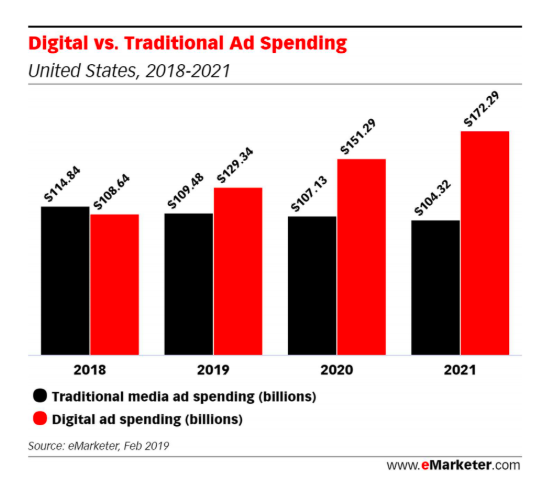
For the first time, the 2019 digital ad spend overtook traditional ad dollars in the United States.

But still, ad dollars offline is more than a hundred billion-dollar industry, and that’s just in the United States.

Over the next few years, I bet you’ll see Google dip into offline advertising.

Just think of it this way. Google owns Waymo, a self-driving Uber type of service that is growing fast in popularity.

They have data from the Google devices in your home and the watch on your wrist and they know where you going through Waymo… essentially, they have more data on you than anyone else.

Heck, they are even starting to offer checking accounts.

With all of that data, who better to serve you offline ads? They’ll be able to target people better and make them more relevant.

This will also increase the value (cost) of offline ads as well as online ads in the long run.

Change #6: Search results won’t look the same in the future

You are probably going to hate this change the most, but it will also make their search engine more usable.

They are testing a lot of different ad types.

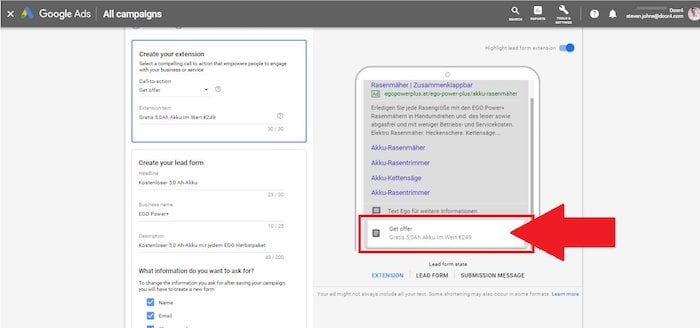
For example, as a business, you can collect leads through Google.

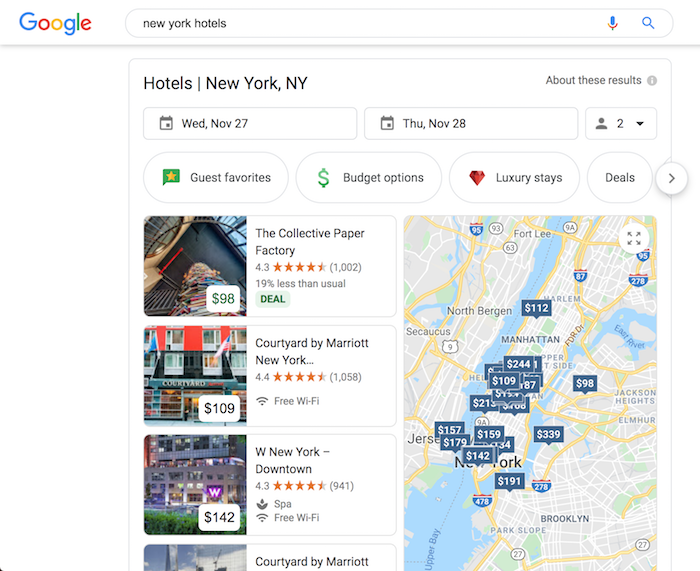
And eventually, you’ll just be able to book a hotel room right on their search engine without going to the hotel’s website.

The same will happen with mortgages, auto insurance, and many more industries.

This doesn’t mean that SEO will be dead or no one will go to your site from search engines, it just means you will have to adapt.

For example, you can create educational-based content, rank highly, and when people land on your website, you can convert them through sales funnels.

You can also use tools like Hello Bar to create sliders and popups to drive visitors to your money pages.

Conclusion

The future isn’t going to look the same. Companies like Tesla aren’t the only ones who are innovating, most big companies are.

Don’t expect Google to just stay the same and not adapt just like every other tech company is trying to do.

It’s the only way to stay ahead and win.

As marketers and entrepreneurs, Google won’t be the only one disrupting how you are growing your sales and traffic. But instead of getting upset or complaining, accept it.

Be productive with your time and focus on adapting. Because when you are adapting while your competition is complaining, you’ll win.

What other changes do you see Google making in the future?

The post An Inside Look at Google’s Future Plans appeared first on Neil Patel.


from Blog – Neil Patel https://ift.tt/2Df8QUN
via IFTTT

A Small Business Guide to Instagram Stories

A Small Business Guide to Instagram Stories written by John Jantsch read more at Duct Tape Marketing

Instagram has quickly become one of the best social media platforms for small business owners. With more than 1 billion active users each month, Instagram provides a tremendous opportunity for businesses looking to reach a new, relevant audience.

While you do have the option to create static posts on Instagram, one of the fun features that started on the platform (and has since expanded into Facebook) is stories. While a post is displayed in your followers’ feeds and remains on your profile forever, a story is ephemeral—it only lasts for 24 hours.

Some business owners are at a loss for how best to use stories. What type of content should you share there? When do you choose a story over a regular post? And how do you get the greatest reach for the content you do share in stories?

Here, I’ll walk you through best practices when it comes to using Instagram stories for your small business.

Supplement Your Posts

The biggest question for a lot of small business owners is determining what belongs in a story versus a traditional post. It’s best to remember that posts are forever. So, the type of content that you share in a post should be totally in-line with your brand. Plus, it should provide long-term value for anyone who views it, whether that’s today or two years from now.

Let’s say you own a bakery. Among other things (like culture posts, which give viewers a real look at the behind-the-scenes of your business), it makes sense to share edited photos of the finished baked goods in your posts. Sharing that content in posts gets prospects’ mouths watering and lets them know the kind of baked goods to expect if they stop by your shop.

In the story, though, you can be a little more irreverent. Show the work that went into getting the picture-perfect post, where your apron is covered in flour and your kids are running around the shop in the background. Or take pictures throughout the baking process, showing the step-by-step creation in stories and revealing the final product in a post.

Stories are also a great way to advertise short-term offers. Let’s say you own a retail store and have big sales coming up for Black Friday. Rather than clogging up your posts with advertisements for the sale, consider creating one post announcing the sale, to serve as anchor content for your stories, and then get into the details about what will be on sale when in stories.

Use a Mix of Photos and Video

You can post either photos or videos in stories. While it’s often easier to capture a still image, it’s a good idea to share a mix of both types of content.

Sharing content regularly on stories is a great way to stay top-of-mind with your followers. The way that stories are displayed on Instagram means that people will often scroll through the stories of everyone they follow all at once. And because the queue of stories is at the top of the Instagram app, if you’re regularly producing stories, your business is often greeting viewers every time they log in. So if sharing still images in stories makes it possible for you to share a steadier stream of content there, then that’s a good way to go.

But video does have the ability to create an even deeper, more personal connection with your audience. It really brings what’s happening in your business to life, and it boosts those know, like, and trust factors, that make up the early stages of the marketing hourglass. So consider incorporating video into your stories as many times per week as you can.

Utilize Stickers Wisely

Once you create your content—be it video or photo—to share on stories, you can dress things up with stickers. Some of the stickers are gifs and images that are fun ways to add visual interest to your posts.

Other stickers, though, can serve a greater purpose in spreading the word about your business. You can include hashtag stickers on posts, which can open your content up to a broader audience. By including hashtags, your content becomes discoverable by any Instagram users who have searched for or follow that hashtag. If you’re strategic about the hashtags you use, you can gain new followers in the process.

You can also create your own hashtag to promote a specific event or product within your business. For example, if you’re throwing a conference, featuring industry experts and great speakers, consider creating a hashtag for the event. You can use the hashtag in the lead-up to the event to spread the word about tickets. You can use it during the event to share live content from the stage and behind-the-scenes interviews with speakers. And you can use it after the event to share meaningful recaps and continue to get even more life out of the content you captured on the event day.

Location stickers are critical for businesses that have brick and mortar locations. These stickers allow you to tag your business by name. Then when someone clicks on the location sticker, all other posts where your business was tagged with a location sticker will appear. This means that anyone clicking the sticker will not only see your content, but also user-generated content from others who have visited your business.

Finally, there are mention stickers, which allow you to tag another business or person in your story. Mentioning influencers on relevant content might catch their eye and get them to re-share your story.

Get People Talking

Instagram stories shouldn’t be a one-way conversation. Instead, they’re an opportunity to engage your followers in a real dialogue.

That’s where some other stories features come in. It’s possible for you to create polls through Instagram stories. You can ask viewers to select which product they like best out a handful of options. Maybe you start a contest to name your newest product, which you’re about to announce. Or perhaps you create a poll asking viewers what their biggest questions are about your area of expertise.

People love taking quick, fun polls online, and this is often a great first step in engaging your audience. From there, you want to take the results and broaden the conversation. For example, if you asked about favorite products, create a video post where you share which product won out and demonstrate some of the best features of the winning item.

If you created a naming contest, announce the winner in a video. Then, share some photos of them stopping by your store to pick up their prize. Or, if you asked viewers to submit questions, use them to create a live Instagram video where you answer these questions and any that come in in real-time.

Take Advantage of the Highlights Feature

Instagram stories only last for 24 hours, but there is a way to preserve them forever on your profile. While this won’t be appropriate for all stories, for those with meatier content or information that is relevant long-term, it makes sense to save them as highlights.

The highlights feature appears below your profile picture and above your regular Instagram posts. You can create categories for your highlights, which allows viewers to easily find the type of content they’re looking for (see this example of stories highlights on SEMrush’s Instagram page below).

As you can see, they created highlights for a number of industry awards events that they host. Plus, the saved information about topics that are relevant to their audience, like voice search. Saving these stories in highlights allows them to continue to share the content with new visitors after the 24 hour window has passed.

Create Ads Alongside Organic Content

Running Instagram story ads is a great way to supplement the organic content you create on the platform. The rules of the game here are much the same as they are with advertising on other social media platforms.

Begin by setting one clear, measurable goal for each ad. From there, you can hone in on the best audience for that ad. Then, create content that will resonate with those people and drive that one conversion goal. And once your campaign is up and running, track results. That allows you to understand what’s working, what didn’t go as planned, and how you can improve next time.

Instagram stories are a unique way to stay top-of-mind with your audience and generate content that gets people talking. When you follow these best practices for creating stories, you set your business up for success on Instagram.


from Duct Tape Marketing https://ift.tt/2OJuhTf
via IFTTT

Break Free B2B Series: Janine Wegner on Building Brand Thought Leadership With the Help of Influencers

Break Free B2B Marketing Interview with Janine Wenger of Dell Technologies

Break Free B2B Marketing Interview with Janine Wenger of Dell Technologies Influencer marketing is in a state of flux. In the past 10 days alone, I’ve seen suggestions that paid influencers are out, and that “influencer marketing — in the traditional sense — is in the midst of an irreversible fail from grace.” Neither of these arguments is off the mark, per se, but they both frame the concept in outdated B2C-centric terms (the authors more or less acknowledge this with their qualifiers). No one can deny that the impact of hired celebrity influencers, transparently shilling products or services, is waning. It’s not an approach that builds trust or credibility.  However, strategic B2B influencer marketing is still very much on the rise, and nowhere near its peak yet. When done right, this practice isn’t about celebrity status, nor solely about paying for influence (although that can be part of the equation). It’s about building mutually beneficial relationships with established thought leaders in your space, founded on the focus of delivering value to your audience first and foremost.  In this growing field, Janine Wegner and her team at Dell Technologies* are blazing trails. Few other B2B organizations have developed a level of influencer sophistication that matches Dell, and we’ve been fortunate to partner with them on several projects. [bctt tweet="Influencer marketing comes back those voices telling the story, helping our customers understand what the future looks like, and how they can get there. @JanineWegner #InfluencerMarketing #BreakFreeB2B" username="toprank"] TopRank Marketing President Susan Misukanis recently sat down with Janine, who is in charge of global thought leadership at Dell, for a lengthy interview on the path forward for influencer marketing in the B2B space, as propelled by her area of specialization.  Join us for a fun conversation that touches on the serious side of B2B influencer marketing while also incorporating lighter themes of “dating and fun games.”

Break Free B2B Marketing Interview with Janine Wegner

If you’re interested in checking out a particular portion of the discussion, you can find a quick general outline below, as well as a few excerpts that stood out to us.
  • 0:30 — Definition of thought leadership
  • 2:15 — Activating internal subject matter experts 
  • 4:00 — Identifying B2B influencers
  • 6:45 — Democratization of influence
  • 8:30 — Building relationships with macro vs. nano influencers
  • 10:30 — Influencers at different stages of the funnel
  • 11:45 — Challenges of getting started with influencer programs
  • 16:30 — The future of thought leadership and influencer marketing
  • 18:30 — How can marketers break free?
Susan: What do you think are the big gains or advancements in thought leadership and influencer marketing? Janine: What I'm really excited about and what I've been seeing over the past years is that there's this kind of democratization of influence, right? Social media provided us the tools to share our opinions, but now we advance to a stage where people are very passionate and have an incredible reach to — maybe a small subset of community — but their authenticity and their integrity are so valued that people listen to them. And I find this fascinating for society overall, let alone for us from a marketing perspective. So it's all coming back to: what do you want to achieve as a marketer and what type of influencer is the right one? [bctt tweet="There’s been a democratization of influence... Now we’re at a stage where passionate people’s authenticity and integrity are so valued that people listen to them. @JanineWegner #InfluencerMarketing #BreakFreeB2B" username="toprank"] Susan: How are the activations and partnerships different at the nano vs. macro influencer levels? Janine: Again, it goes back to your business objectives and what you want to achieve. What we're trying to do is map out throughout our campaign, what's the customer journey? And what are the content pieces we want to develop? And what are the voices we want to have in each of them, and how to then activate and amplify those? So it might be that you take into account people that don't have as much reach, but that have incredible subject matter expertise and credibility on a certain topic, that you engage in something like an eBook, or a report, or getting some quotes from them very early on a key pillar asset. But then you want people to talk about it and actually know that this exists, right? So you might want to leverage social amplifiers that are talking about this topic and are using this eBook as a resource that they recommend to their community, and really getting that reach and spreading it far and wide. And then there might be tactics when you then invite them to a webinar, or maybe a face-to-face event, to participate as part of a panel, and so forth. So there are all of those different tactics. And we usually are, what I would recommend is like, look at your business objectives.  Susan: For someone thinking about digging deeper into influencer marketing, what might a pilot program look like for example? Janine: So right now, for instance, although we are already a little bit advanced, we're still testing and piloting, because we want to be smarter. We want to get better, we want to spend our resources a little bit more wisely. Right? So one area that we're testing is really leveraging the power of those social amplifiers. When we launch a certain research study, product news, or so forth, how can we then brief those influencers, give them everything that they need, you know, for the day X, the day that it launches? And then ask them to amplify and what does this look like what does a good kind of social media amplification kit and like cadence look like for these influencers? Because we need to think about the fact that most of them also serve other companies, so you don’t want to overdo it, but you also want a certain share of words. Stay tuned to the TopRank Marketing Blog and subscribe to our YouTube channel for more Break Free B2B interviews. Here are a few interviews to whet your appetite:

The post Break Free B2B Series: Janine Wegner on Building Brand Thought Leadership With the Help of Influencers appeared first on Online Marketing Blog - TopRank®.


from Online Marketing Blog – TopRank® https://ift.tt/37Fxufh
via IFTTT

Maximizing Your Email Audience Potential: Turning Email Addresses on File into Opt-Ins

Everyone wants more subscribers who are regularly converting. While going out and attracting new, high-value subscribers is one path that every brand should explore, it’s also the most expensive. That’s because these subscribers are at the very top of the Email Audience Potential Pyramid. Thankfully, there are many other paths open to marketers to achieve their goals when they take a step-by-step approach to maximizing their email audience potential.

One of those approaches is to leverage the email addresses you have on file and try to get more of those folks to opt in for marketing emails. That moves them from the first step on the pyramid to the second step—and some will take another step or two upward, generating even more value for your email program.

With an email address serving as a means of customer identification across much of the digital landscape, when you already know a person’s email address, it’s much easier to reach them than someone who hasn’t shared their email address with you yet. Mining your “un-reachable” email subscriber list can reveal several opportunities to engage these people and grow your business, both via the email channel and other channels.

Deciding How to Approach Non-Opted-In Contacts

Prospects and customers who have given you their email address, but are not currently opted into promotional email marketing fall into one of two groups:

  1. People who retracted their email permission. These are former subscribers. They received your marketing emails for a while, but ultimately decided that your emails weren’t relevant enough or that email was no longer their preferred way of receiving your marketing messages. 

  2. People who have never granted you email permission. These folks shared their email address with you as part of a registration or purchase, for example, but never opted in for marketing emails. They didn’t sign up because either they aren’t aware that you offer these emails, or they weren’t convinced of the value of signing up for them. 

The first step in developing a strategy for how to approach the people in each of those groups is to better understand them and why they aren’t subscribed. Leverage first-party and possibly third-party data to find for the following data points:

For former subscribers:

  • Acquired date: How long ago was each former subscriber acquired?

  • Opt-out date: Did they opt out right away or after a period of time?

  • Email engagement data: Were they ever engaged with your promotional email? If so, what was their engagement level?

For all non-opted-in contacts:

  • Other digital engagement: Are these contacts active on your website, apps, and social media properties?

  • Customer value or purchase data: How valuable are these contacts to the business overall? What have they each purchased in the past? What is the value of their past purchases?

  • Attribute data: Who are they? Besides purchases, what other forms of engagement have they exhibited? What are their interests or hobbies? Where are they geographically located? What age are they? Are they currently in market? Those are just a few of the questions that might be applicable to your audience.

These types of data points can begin to reveal your opportunity size and targeting strategy within your non-opted-in audience. Here are some of the persona groups that you’re likely to find and what, if anything, you should do to address them:

Low-Priority Groups

The following two groups are of relatively low value. Let’s look at each of them and the action that we recommend you take:

Customers and prospects who no longer fit your demographic. Consumers change. They move away from your stores and change jobs. Their incomes and their interests change. Leverage available attribute data to determine if the non-opted-in contact is still a fit for your product or service. 

Recommended action: If they no longer fit your demographic target, consider removing them from your list-building efforts

High-value customers who have opted out. These customers are already top performers for you. Your relationship with them is already strong, so don’t try to fix or spend money on what’s clearly not broken.

Recommended action: Use their email address as an identifier for digital targeting in other channels. Just because they aren’t engaged with email, doesn’t mean their email address isn’t valuable. Consider leveraging their email address to identify them across the digital landscape, targeting them with ads or promotions in custom audiences, display targeting, lightbox targeting, etc. Use attribute data to personalize those ads and messages.

High-Priority Groups

The following two groups are of relatively high value. This is where you should focus your attention. Let’s look at each of them and the actions that we recommend you take:

Customers who have never opted in to receive promotional emails

These are customers who know and like your brand and purchase at least occasionally. They haven’t signed up for your email program because they either don’t prefer to communicate with brands with email or you haven’t done a good job of selling them on the benefits of subscribing. 

Recommended actions:

  • Use all of your owned media to help drive customers to become subscribers. 

  • Clearly define and communicate a value proposition for your email program.

  • Ensure your email capture user experience follows best practices.

We explore each of those action items—and more—in the first post in our “Maximizing Your Email Audience Potential” series, which is about how to optimize your email signup forms.

Former subscribers who were engaged purchasers

Because they experienced at least some value from your email program previously, this group is more likely to respond to a re-opt-in prompt than those who never engaged in any manner. This group should be toward the top of your priority list.

Recommended action:

  • Leverage their email address and cookies to identify these contacts and deliver a personalized prompt to resubscribe. For example, if through a cookied ID or login you know your opted-out subscriber is on your site, consider personalizing the prompt to them with first-name personalization, imagery that fits their known profile, and really sell them on the benefits of signing up. For former subscribers who opted out long ago, stress what’s new about your email program, such as personalized recommendations or improved email preferences, for example.

The Bottom Line

Just like retaining a customer is far cheaper than getting a new one, turning a person that you have an email address for into an email subscriber is far cheaper than attracting a new subscriber from nothing. If you know someone’s email address, then they’re already standing on the first step of your email program’s pyramid. Encourage them to take the next step and some will surprise you and climb all the way to the top and become high value, regularly converting subscribers. And who couldn’t use more of those?

Want more ways to maximize your email audience potential? Check out:

—————

Need help growing your email audience? Oracle Marketing Cloud Consulting has more than 500 of the leading marketing minds ready to help you to achieve more with the leading marketing cloud, including audience experts on our List Growth & Demand Generation Services team.

Learn more or reach out to us at OMCconsulting@oracle.com.

For more information about email marketing and the tools needed to make it successful, check out Oracle Marketing Cloud.


from Oracle Blogs | Oracle Marketing Cloud https://ift.tt/2rqIY5w
via IFTTT

Monday, 25 November 2019

5 Lead Management Best Practices That Build Account-Based Marketing Success

Originally published at: https://blogs.oracle.com/cx/5-lead-management-best-practices-that-build-account-based-marketing-success

Lead generation and lead management both play an equally important role in fueling the revenue engine for your business. Where lead generation creates interest among your target audiences, lead management tracks, manages, and engages these leads to qualify them for sales.

However, the rules of B2B engagement are quickly changing. Brands are embracing account-based marketing (ABM) strategies, which revolve around engaging the right buyers, not just generating thousands of unqualified leads. It brings together the right people in your organization to develop coordinated strategies for engaging, converting, and expanding target accounts. As B2B organizations prioritize lead quality over quantity, marketing and sales must take a sophisticated, data-driven approach to lead management. According to SiriusDecisions, there are three ways organizations can think about this:

  1. Large accounts: “A very small number of large existing or targeted accounts.” Some call this “one-to-one,” as this is when they employ highly targeted marketing and engagement tactics, such as including the company name in a piece of content, landing page, etc.

  2. Named accounts: “A moderate or larger number of defined existing or targeted accounts.” This is also known as “one-to-few” ABM.

  3. Industries/segments: “A moderate or larger number of new or existing accounts in the same vertical or other specific segment,” also known as “one-to-many” ABM.

Effective lead management improves alignment between marketing and sales to better identify and prioritize high-quality leads for sales outreach. This means focusing on key accounts with a high intent to buy. However, few organizations have a solid process to successfully prioritize and identify those accounts, impacting the organization’s ability to reach and exceed revenue targets.

5 Core Best Practices for ABM Success

1. Align sales and marketing around the buyer’s common goal. This has been a popular narrative in the B2B world as organizations work to create more seamless customer experiences across all channels. Every buyer journey is unique. Some may never interact with sales while others expect a high-touch, consultative experience. It’s up to sales and marketing to have unified goals and follow a cohesive brand story and approach to buyer engagement. Therefore, any combination of sales and marketing can be ready to assist buyers wherever they are in the decision-making process.

“The job of defining shared goals may at first glance seem like a marketing job, but there’s a key role for sales operations to play.” says Steve Silver, Service Director of Sales Operations Strategies at SiriusDecisions. “Sales ops is in a unique position to reach across organizational boundaries and help synthesize revenue generation targets handed down by sales leaders, provide practical suggestions for mapping go-to-market strategy to account and territory assignments, plus translate these decisions into reliable sales forecasting data so that even finance is working from the same clear picture as sales and marketing.”

2. Prioritize accounts. In order to identify and prioritize the right accounts, you need robust, connected data. Company data including location, industry, and revenue, plus online signals such as new acquisitions, hires and funding rounds can help you select accounts that are most likely to buy—even when it may not seem obvious to your sales operations or demand generation team. This data should integrate into your CRM environment, so both sales and marketing have a comprehensive view of the accounts. Marketing can leverage these insights to fuel marketing campaigns while sales can use data to guide account and territory planning. Your ABM approach (one-to-one, one-to-few, and one-to-many) will dictate how many accounts you need to select.

3. Enrich account insights. Typically, sales and marketing have an established lead scoring method, aligning certain behaviors and actions to a numerical value. When leads and accounts reach a specific threshold, they’re officially qualified and handed off to sales. Both marketing and sales should contribute to the lead scoring methodology, accounting for the number of contacts within an account that engage with your brand. These metrics can help marketing and sales understand which accounts may have a higher propensity to buy. For marketing, this helps guide lead assignment. For sales, this helps reps prioritize the leads in their queue and determine where to focus their time and energy. When it’s time to engage, sales can pull from a wealth of account information and smart talking points to guide their conversations with these target accounts.  

4. Tailor account engagement accordingly. In their conversations with prospects, sales reps can have deeper conversations focused on the specific contact’s unique situation within the organization. These can be more emotional insights that often funnel up to larger, account-wide issues such as the strategic direction of the broader business. Plus, marketing can relay important engagement metrics, such as an account’s behavioral interactions with campaigns and messaging, so sales knows what resonates. All of these insights transform the selling process from transactional to consultative, helping forge stronger customer relationships. Using innovative technology like artificial intelligence (AI), sales can receive automated actions on how to further engage a contact.

5. Measure and optimize. ABM isn’t just a one-off tactic. It’s an ongoing strategy that should influence the way your entire organization engages with accounts and buyers. That is why having access to real-time insights is critical to ongoing success. Data around campaign reach and impact, sales engagement, and results will help you gauge the impact of your ABM efforts and help you identify opportunities to cross-sell and up-sell within certain accounts.

Reinventing Lead Management for the Experience Economy

In the Experience Economy, marketing and sales should collaborate more closely to ensure they’re delivering on their brand’s promise and exceeding buyer expectations at every touchpoint. It’s the responsibility of marketing and sales to stop thinking simply in terms of lead handoff. Instead, they should think of new ways to collaborate to meet each and every buyer at their point of need. Oracle is dedicated to helping sales and marketing professionals thrive in this era and that’s why the company has once again been named a “Leader” in Gartner’s Magic Quadrant for CRM Lead Management 2019.

Most notably, Oracle has been recognized for native tools and solutions that support ABM strategies. The reason is because Oracle’s deep legacy in data drives product innovation. In the age of ABM, those insights are critical to driving client relationships and generating long-term value for the organization.

Learn More!
Download Gartner’s Magic Quadrant for CRM Lead Management 2019. You can also contact us to learn more about how the Oracle CX Suite of products can help you reach your sales and revenue goals with engaging, connected customer experiences.

Gartner, Magic Quadrant for CRM Lead Management, Ilona Hansen, Julian Poulter, Noah Elkin, Christy Ferguson, 23 September 2019

Gartner does not endorse any vendor, product or service depicted in its research publications, and does not advise technology users to select only those vendors with the highest ratings or other designation. Gartner research publications consist of the opinions of Gartner’s research organization and should not be construed as statements of fact. Gartner disclaims all warranties, expressed or implied, with respect to this research, including any warranties of merchantability or fitness for a particular purpose.


from Oracle Blogs | Oracle Marketing Cloud https://ift.tt/2DhRuGS
via IFTTT

For a More Effective B2B Content Strategy, T.H.I.N.K.

T.H.I.N.K. B2B Content Marketing Strategy

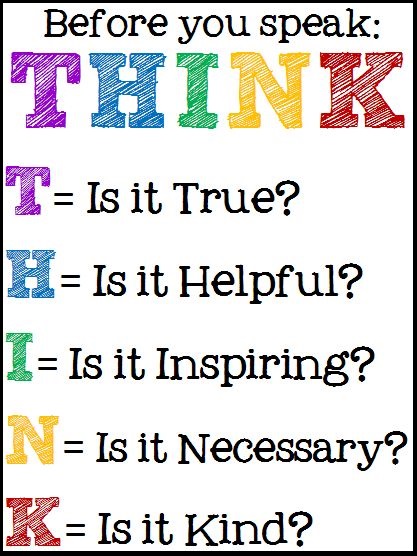
What would you do with an unlimited content marketing budget? Oh, the eBooks and infographics and blog posts you could make! Video and audio, whitepapers, research papers, guides galore… endless money means endless possibilities. Okay. Deep breath. Snap back to reality. James Franco Startled We’re all working with limited resources to create a finite amount of content to fit into a crowded editorial calendar.  So how can you make sure you’re making the most of what you have? How can you know for sure that a proposed content project is worth your while — worth time spent researching, creating, amplifying and optimizing? It’s simple: T.H.I.N.K.! Let me explain. My wife is a middle school teacher (a moment of silence for her service). She has this poster on prominent display in her classroom: Poster Reading Before You Speak: Think: Is It True? Is It Helpful? Is It Inspiring? Is It Necessary? Is It Kind? In the classroom, it’s an attempt to get middle-schoolers to stop cyberbullying each other. But these same five criteria can make sure your content is essential, valuable, and worthy of the time it takes to create it. Let’s break it down.

T.H.I.N.K. for More Effective B2B Content Strategy

#1: Is It True?

I don’t know many marketers who set out to lie to people. Not many who keep a job long, anyway. I don’t think we have to say, “Make sure your content is factually correct and not lies.”  That said, there are a few ways marketers can mislead audiences, and even mislead themselves about their content’s truthfulness.  Does your content intend to keep its promise? Sometimes a “guide to solutions in X industry” is really “list of reasons our brand is best.” Sometimes “how to do X” is more, “vague instructions about X that aren’t super actionable.” Or perhaps “X statistics for 2019” is more, “collection of statistics I found on other statistics posts that are 10 years old.”  If the content you’re planning can’t or won’t fulfill the promise it makes to the audience, you’re better off without it.  [bctt tweet="If the content you’re planning can’t or won’t fulfill the promise it makes to the audience, you’re better off without it. @NiteWrites #B2BContentMarketing" username="toprank"]

#2: Is It Helpful?

As marketers, we’re trained to ask the question, “What is this content going to do for our brand?” And that’s a good question to ask! We’re not a publishing company; we have business objectives. But we should also be asking, “What is this content going to do for our audience?”  After they consume your content, is your audience going to be:
  • Better at their job
  • Prepared for a coming change
  • Smarter about a crucial topic for their industry
  • Able to do something they couldn’t before
The list could go on, but you get the picture. Will this content be helpful in ways unrelated to your CTA at the bottom? If not… take another pass with the focus on your audience.

#3: Is It Inspirational?

The old “mad men” era of marketing frequently ran on “Do this… or else!” kinds of messaging. Pick the wrong brand of coffee, and your husband will be ashamed of you! Smoke our brand of cigarettes or you’ll get headaches (doctors recommend ours)! Drive this kind of car or your boss will think you’re a sissy! It turns out, though, that people would rather be encouraged than scolded. The central message behind all great content is “You can do this.” It might be hard, and you might not know how to do it yet, but you can do this, and our brand is here to make sure of it.  If your planned content isn’t reassuring and inspiring your audience, it’s time to switch to the light side of the force. [bctt tweet="If your planned content isn’t reassuring and inspiring your audience, it’s time to switch to the light side of the force. @NiteWrites #B2BContentMarketing" username="toprank"]

#4: Is It Necessary?

If you loaded up every “Definitive Guide” to any given subject, and copy-pasted them into one document… would you ever stop scrolling? You’d get a document so long it would make a CVS receipt look like a Post-It Note.  There’s a lot of content out there, I’m saying. And most new content is adding to the noise, not the signal.  To make sure your content is necessary, start with making sure it meets a search demand. But let’s go deeper: 
  • Does it meet an unmet demand?
  • What are you giving the audience that they can’t get anywhere else?
  • What makes your brand uniquely qualified to weigh in?
  • What negative consequences would there be if this content didn’t exist?
If your proposed content can’t answer at least three of the above questions to your satisfaction, you need more introspection about what your brand stands for, is knowledgeable about, and wants to be known for.

 #5: Is It Kind?

If your content is true, helpful, inspirational, and necessary, odds are it’s kind to your audience as well. So what’s left? I translate “Is it kind?” to “How does this content contribute to society?”  I get it. That’s a huge question and it’s a big ask. Does that mean your content has to cure diseases and adopt rescue dogs to earn a place in your editorial calendar? Well, no, of course not. But content can meaningfully make the world a better place, while still being marketing content written for business purposes. Carlos Abler made a compelling case for it in his Content Marketing World presentation this year. He shared examples of how content marketing could, for example, lead smoking cessation initiatives, or lower infant mortality rates in the third world. But you don’t have to start that big. Just think about your content outside of your intended audience, as part of the ebb and flow of discourse. Is it adding positivity, hope, promoting diversity? Or is it stoking negativity, fear, and division? Essentially, the last part of the process here is to give your content a ‘vibe check.’ If your content isn’t going to radiate a little positive energy into the universe at large, it’s worth retooling until you get there. Try again after a cup of coffee, if you need to.

T.H.I.N.K. Outside the Box

There are plenty of practical and technical considerations to make when you create a B2B content marketing strategy. But before you put your content plan in action, make sure you’re focusing resources on content that passes the T.H.I.N.K. test.  Content that is true, helpful, inspirational, necessary and kind is going to be the most effective for your goals. T.H.I.N.K. makes content more worthy of your audience’s time, more likely to be shared, more likely to spark enthusiasm, and more likely to help build relationships with your brand. We all know that the days of creating content for content’s sake are long gone. So, how can you create content that has a meaningful impact? Find out.

The post For a More Effective B2B Content Strategy, T.H.I.N.K. appeared first on Online Marketing Blog - TopRank®.


from Online Marketing Blog – TopRank® https://ift.tt/2KQ3zHt
via IFTTT