Friday, 10 June 2022

B2B Marketing News: 28th CMO Survey, Growing B2B Creative Confidence, Google Core Update Completed, New Linked Platform

CMO Survey Deloitte

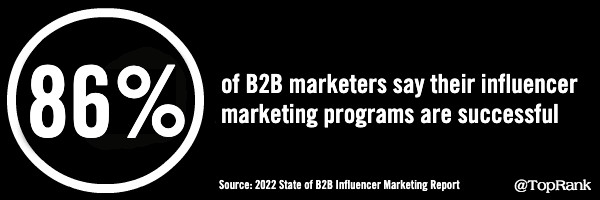
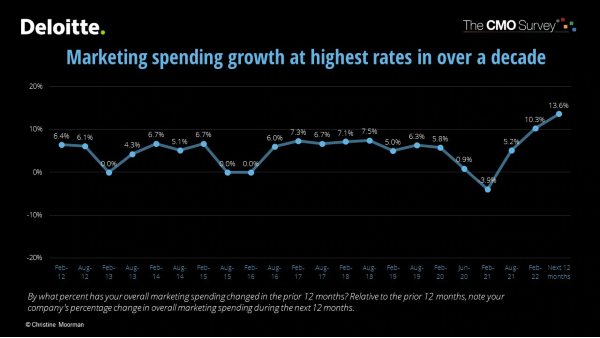
CMO Survey Deloitte The CMO Survey: The latest results. The 28th edition of The CMO Survey examines the issues top of mind for marketers including the latest focus for marketing activities, spending, jobs, and performance. Deloitte Majority of B2B leaders globally say “creative confidence” is growing: LinkedIn research from B2B Institute. 81% of senior B2B marketers believe B2B brands are increasingly producing creative campaigns that rival consumer brands. What's New in Publishing Google is combining Meet and Duo into a single app for voice and video calls. The new unified calling app offering rolls Duo’s functionality into Google Meet - The Verge Chasing TikTok, Meta rolls out new Reels features and expands Instagram Reels to 90 seconds. A new Sound Sync feature will be available on Facebook Reels along with support for longer Instagram Reels of up to 90 seconds, instead of 60 seconds, previously TechCrunch B2B Influencer marketing statistic 86% The B2B Marketing-Sales Divide: More Leads vs. Better Leads. B2B marketers say their biggest marketing concern is how to generate more leads, whereas B2B salespeople say their biggest marketing concern is how to improve lead quality, according to recent research from SharpSpring and Ascend2. MarketingProfs Digital revenues skyrocket for B2B businesses - B2B firms saw their revenue from digital channels skyrocket in the past two years. These companies say 40% of their revenue now comes from digital channels compared to 28% two years ago, according to Salesforce’s State of Commerce report. MarTech  2022 Demand Generation Benchmark Survey: Marketers Prioritizing Quality Over Quantity; Increasing Aggression Around Growth Initiatives. Demand Get Report

"In B2B, people don't buy for pleasure. They buy to alleviate pain. Alleviating pain brings them pleasure." Tamara McLeary, CEO at Thulium

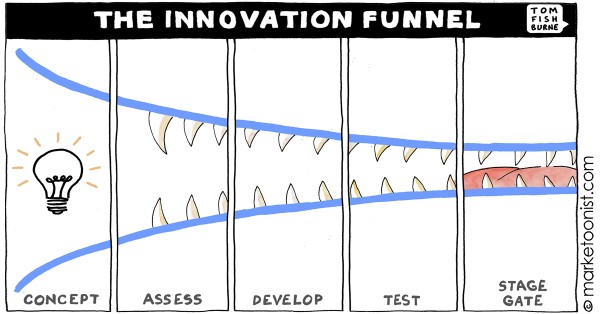
LinkedIn Launches New ‘Business Manager’ Platform and a New B2B-Aligned Marketing Consultancy. B2B Edge will provide dedicated marketing and brand building advice based on academic research and first-party data. Social Media Today Google May 2022 core update is finished rolling out - This update took 15 days to roll out and is now done, you should now dig in and see how your site was impacted and what actions to take next. Search Engine Land Fortune 500 Marketers Say Shift Against Cookies to Lead to Increased Spend on Social, Search. Organic search and social media marketing are the most commonly used channels by Fortune 500 marketers, according to a study [pdf] from the Loyalty Research Center. MarketingCharts ON THE LIGHTER SIDE: Innovation Funnel - Marketoonist the innovation funnel - "If we’re not careful, the innovation funnel leads to survival of the safest ideas."— Marketoonist TOPRANK MARKETING & CLIENTS IN THE NEWS: If you've come across B2B marketing news stories we should know about, please don't hesitate to share in the comments below. Thank you for taking the time to join us for this week's TopRank Marketing B2B marketing news. We hope you'll return again next Friday for another collection of the most relevant research and newsworthy information about the B2B and digital marketing industry. In the meantime, you can follow us on our LinkedIn page, or at @toprank on Twitter for even more timely daily B2B marketing updates.

The post B2B Marketing News: 28th CMO Survey, Growing B2B Creative Confidence, Google Core Update Completed, New Linked Platform appeared first on B2B Marketing Blog - TopRank®.


from B2B Marketing Blog – TopRank® https://ift.tt/pzRaemj
via IFTTT

Wednesday, 8 June 2022

How Leveraging A Virtual Assistant Will Change Your Life

Top Trends For Marketing Agencies To Pay Attention To

Top Trends For Marketing Agencies To Pay Attention To written by Sara Nay read more at Duct Tape Marketing


About the show:

The Agency Spark Podcast, hosted by Sara Nay, is a collection of short-form interviews from thought leaders in the marketing consultancy and agency space. Each episode focuses on a single topic with actionable insights you can apply today. Check out the new Spark Lab Consulting website here!

About this episode:

In this crossover episode of the Agency Spark Podcast, Sara Nay, Lyn Wineman, and Brad Yale talk on the top trends for marketing agencies to pay attention to.

Sara Nay is the COO at Duct Tape Marketing, Founder of Spark Lab Consulting, and host of the Agency Spark Podcast. With 11+ years working in the small business space, it is her passion to install marketing and operating systems for small business owners so they can get more clarity and freedom in their lives. Outside of work, Sara tries to spend as much time as possible outdoors with her daughters and husband – from skiing to hiking to biking to camping. 

Lyn Wineman is the host of Agency For Change podcast and a marketing veteran with over 30 years of experience. Lyn is one of the most passionate and accomplished marketing leaders of her generation. Her award-winning work has helped a multitude of national, regional and local organizations achieve their goals. A visionary with heart, Lyn is focused on creating the ultimate work culture while serving clients who make a positive difference in the world. KidGlov has been recognized multiple times as one of Lincoln, Nebraska’s Best Places to Work and is currently in review for B Corp certification. Lyn and husband, Neil, live on a historic farm where they raise a small flock of peacocks. 

Brad Yale is VP, Director of digital content planning & data at Medical Knowledge Group and the host, producer and editor of Agency pod. Agency is a podcast that speaks with professionals all across the advertising agency world – agencies, brands, vendors – within all sectors – pharma, healthcare, consumer, technology, mass product – in the hope of understanding how we work together to improve the advertising agency business model. His goal is to constantly produce the highest level of searchable, shareable, branded content to move potential consumers into the sales channel by linking front end user behaviors with back end data base best practices.

More from the hosts:


This episode of the Agency Spark Podcast is brought to you by Termageddon, a Privacy Policy Generator. Any website collecting as little as an email address on a contact form should not only have a Privacy Policy but also have a strategy to keep it up to date when the laws change. Click here to learn more about how Termageddon can help protect your business and get 30% off your first year payment by using code DUCTTAPE at checkout.


from Duct Tape Marketing https://ift.tt/hXtwYAP
via IFTTT

Creative Tips For Better Virtual Brainstorming in B2B Marketing

Better virtual brainstorming in B2B marketing image

Better virtual brainstorming in B2B marketing image For the most part, we’ve all adapted to remote work pretty well. As we got used to working separately, we tended to find ways to transition, transform, or replace most of our old work routines to make sure everything keeps getting done. But most — as every remote work naysayer is quick to point out — is not all. If there’s one big element of the in-person work process still missing from your new reality, it’s the big, impromptu “throw-it-all-at-the-wall” brainstorming session. Sessions like those probably led to some of your team’s biggest and brightest ideas… and they’re also the kind of thing you may think simply can’t happen remotely. Well, as you’ve probably surmised from the title of this blog post, that’s what we’re here to prove wrong. The truth is, not only can you still conduct the kind of brainstorming sessions you threw together in person remotely, but there’s evidence they could be even more effective. That is, if you do it right. Here’s why remote brainstorming is still well worth making the time for, along with how (and how NOT) to do it right:

1 — Remote brainstorming helps prevent “The Dominators”

You know the ones we’re talking about. They’re the kids in class whose hands always shot up first when the teacher asked a question… but all grown up. During traditional, in-person brainstorming sessions, you’ve probably noticed that a few people tend to dominate the conversation. They present their idea, and then before you know it, the rest of the session is spent discussing this idea… rather than necessarily hearing anyone else’s. This is not just a function of a couple of outspoken people on your team. In fact, it happens in almost all in-person brainstorming thanks to a phenomenon called production blocking. The more extroverted, forward members (our “Dominators”) tend to lead, and everyone else follows. The larger the group the worse this issue tends to get, which makes it a particular problem for in-person office brainstorming. This is one area where virtual brainstorming actually has a serious advantage over in-person. Production blocking doesn’t happen nearly as frequently in virtual meetings. In fact, there’s even a positive relationship between group size and performance that continues to scale, even to large sizes. Taking it further: Use muting etiquette and the “raised hand” feature provided by most teleconferencing applications to further moderate and democratize the brainstorming process, ensuring everyone can speak in turn and whenever they have something to add. Avoid: Designating “leaders” of the brainstorming session or devoting the entirety of a session to discussing the particularities of a single idea. Instead, find ways to encourage everyone to speak up, such as assigning each individual or small groups particular topics to focus on. [bctt tweet="“Find ways to encourage everyone to speak up, such as assigning each individual or small groups particular topics to focus on.” — Harry Mackin @Shiitakeharry" username="toprank"]

2 — It helps everybody else speak up

Virtual brainstorming doesn’t just help dampen the blocking effect of the dominators, either; it also actually helps everybody else speak up, too. According to the research, virtual brainstorming helps impart a sense of anonymity in participants — even if they can see each other. As the Harvard Business Review notes, when brainstorming participants feel more anonymous, they suffer from less “evaluation apprehension,” which is the anxiety that they or their ideas will be judged because of who they are rather than for their idea (we are all, no doubt, aware of this phenomenon). The less evaluation apprehension your participants feel, the more likely they are to speak up when they have an idea, even if they might not in an in-person brainstorming environment. Taking it further: During brainstorming, encourage all of your participants to turn off their webcams. This will increase the feeling of anonymity and give participants a chance to voice ideas without feeling like they’re caught in the spotlight. Avoid: Disengagement by a few or even most of the participants. Try to keep brainstorming sessions relatively short, and focus on a particular objective. Then, encourage everyone to speak up and facilitate back-and-forth conversation whenever possible.

3 — It creates a wider variety of ideas

You’ve probably already derived this benefit out of the first two, but it’s worth focusing on anyway. When you: A: Get more people talking and sharing new ideas equally B: Encourage people who may not normally speak up to join the conversation You end up with a much greater variety of ideas. Even more importantly, the ideas your team puts together will be fresher and, in all likelihood, quite a bit different from the type of ideas you would find yourself normally generating in person. This happens precisely because they are coming from people who often go unheard. Taking it further: Studies have shown that individual brainstorming often encourages participants to offer a wider variety of ideas when those ideas are shared with a group. Virtual brainstorming provides a natural way to facilitate this. Schedule breaks into your virtual brainstorming sessions for having each member individually focus on a topic that comes up during the session. Have them write out their own notes on that topic for a pre-set period of time, and then when you come back together, have everyone share their thoughts. You could also break the brainstorming session into a few small groups of people during these pre-set breaks. These people could collaborate on their note-writing, and then present their ideas together when they return to the main session. We do this kind of collaborative brainstorming at TopRank Marketing all the time, and it always proves more heads are better than one. Avoid: Letting your brainstorming sessions become a series of presentations. It may sound counterintuitive, but you should avoid getting your participants too much “homework” to bring into the brainstorming session. You want the ideas to be generated during the session itself, not prepared beforehand and then recited to a tuned-out audience. It’s OK to let the participants know what you want to brainstorm about beforehand, of course, but try to encourage positive collaboration instead of over-preparation. TopRank Marketing’s team have been working remotely for quite a while now, but we’ve never stopped believing in the power of brainstorming — and our virtual brainstorming sessions have really paid off. If your team has been hitting a wall or feeling uninspired lately, try virtual brainstorming. You might be surprised what you think up. And, of course, if you’d ever like to brainstorm about how you can make your B2B marketing more relevant, authentic, and impactful than ever, we’d be thrilled to join you. Get in touch with the team at TopRank today to brainstorm about how we can help take your brand to the next level.

The post Creative Tips For Better Virtual Brainstorming in B2B Marketing appeared first on B2B Marketing Blog - TopRank®.


from B2B Marketing Blog – TopRank® https://ift.tt/kYFsVxu
via IFTTT
Monday, 6 June 2022

Rethinking the Recruiting Journey

Rethinking the Recruiting Journey written by Shawna Salinger read more at Duct Tape Marketing

Small businesses need to rethink the way they are recruiting employees today. In good times, companies thrive by being in the right place at the right time. But in tough times, organizations grow by being important in the lives of their customers. The same is true for recruitment, retention, and the hiring journey. 

Recruiting as a Marketing Function 

Marketing is not a one-time event. It's an ongoing process that requires commitment and patience. Ad buyers often think of marketing as a vending machine—you put some money in, and out pops customers—but that's not how it works.

Recruiters do the same thing when they go to job boards like Monster or Indeed and just buy and run ads. You can’t just throw money at the problem; you have to build a repeatable system that lasts. That is how you build a full-proof recruiting system.

  • Fewer than 15% of all jobs advertised on popular job boards are filled by candidates who apply through those boards. (Empire Resume)
  • 50% of candidates say they wouldn't work for a company with a bad reputation, even for a pay increase. (Randstad)
  • 79% of candidates use social media in their job search (Glassdoor)
  •  92% of consumers will visit a brand's website for reasons other than making a purchase. (Episerver)
  • 71% of employees would accept a pay cut for a better work experience. (Hays Recruiting)
  •  80% of employers think employees leave for more money, but 12% actually do. (Gallup)

These statistics show that people in the market for a job have very similar experiences to consumers looking for a product. Their search for a job is more than one event or one moment. It is composed of a complete end-to-end journey. 

Example:

Someone might first see your ad on a job board, but they will also verify your online reviews, look through your social media accounts, and visit your website. 

People aren't candidates or consumers; they are both. People are just people and they can be marketed in the same way. So you need to take the systems you use to attract consumers to your brand and start using them to help you attract employees to work for you. 


The MOST important thing to figure out if you want to GROW your business...

Rethinking the Customer & Employee Journey Workbook

 In this post, you will not read about “quick hacks you can do find people” or “easy fixes.” Instead, I will focus on the strategies behind your hiring process. These are the strategies you need to know, and this is what will help with your recruitment strategies in the long run.

Three Steps to the Perfect Recruiting Strategy 


Narrow your recruitment focus to your top ideal 20%  

I preach this to our clients to help them attract customers. It is vital that you fully understand who makes a completely ideal customer for your business. The same is true about who makes an ideal employee for your organization.  

Consider the top 20% of your employees, and ask yourself: Who drives the most profit? Who is the most productive? Who is the most committed or satisfied in their work? Who has the most comments, reviews, or shoutouts? Then make a list of common traits that you see among these people.  

Create Three Lists

After identifying the common characteristics of your top 20% of employees, you'll want to create three lists. The first two are: "nice to have" and "ideal to have." What are some things you've found that are nice to have in an employee? And what are some ideal things? This information will help you create a culture fit.

Then take note of any experience or technical requirements needed. Try to only let this part sway your opinion if it is absolutely necessary.

This exercise will certainly help you determine who is an ideal fit for your organization. In addition, going through these motions will teach you how to market to your ideal candidate and give clarity on what to look for during the recruiting process.

Tip
When recruiting you should focus on creating diversity but aligning culture. Somebody who believes in your company's mission has ideal behaviors that will better serve your organization. Which, in turn, will better serve your customers compared to all the experience, background, and technical training.  

Promise to solve a problem 

Nobody wants what you sell, they want their problem solved, period. The best candidates for employment usually have a job already, but they want to find a better one. They want to get out of an environment that is not right for them. So you need to market that your business solves the problems they have in their current role.

What is the problem that your organization solves for employees?

How can you find out what your company's unique hiring proposition is? Or what problem can you solve? First, survey your current employees. Then build an employee branding strategy based on their answers.

Here is a list of sample questions to ask employees when recruiting;

  • Why did you come to work with us?
  • Why are you still working with us?
  • What factors were involved in your decision to work for us? 
  • What do you like about working at this organization? 
  • Is there anything you don’t like about working at this organization? If so, how can we fix it?

The information received from this type of interview will offer valuable insights and better prepare you for your hiring journey. Therefore, it is crucial to keep the employee survey anonymous in order to collect the most accurate and authentic answers.

Focus on your employee branding strategy 

Take a look at your main marketing message. Does it focus on your product or the service your people provide? Customers experience brands through direct contact with employees. So, unless you are just flat out selling a product, your main marketing message should highlight the people in your organization and how they help your target audience solve a problem.  

Then you will want to see what your customers are saying online about your employees. Mine online reviews or feedback surveys. Are there any employees that customers mention by name? What are those employees like, and what are they doing that customers love? Promote those people and promote what they do for your customers and your brand through social media, newsletters, and your site.

These actions will help you figure out the problem you solve for your employees and double down on it during your recruiting and hiring process. It will also show that you value and act on your employees' feedback and appreciate their work through public and personal recognition. 

All these things working together help you build a customer base that wants to do business with you, a dedicated staff that wants to work for your company, and new hires that want to join you.

Create an end-to-end journey  

The cold, hard truth is that customers and employees don’t change companies; they change experiences. Your recruitment strategy should not be a one-time hiring event. You have to build a pipeline and create an end-to-end journey or a complete experience.  

I use a model that depicts the end-to-end customer journey called the Marketing Hourglass. Customers first have to know about you, and then they need to decide if they like and trust you. Next, they actually buy from you. Then, if they have a good experience, they hopefully come back and buy again and maybe even refer you to others. 

You can apply the overall customer journey strategy to the recruiting or hiring journey. Today, people learn about businesses through several different avenues, and it is not always a straight line. Many times, it is just the opposite. How people come to know, like, trust, and ultimately work for your company is inherently out of your direct control. As a result, you must be intentional about how your business shows up at each stage. Actively guiding the experience candidates have with your organization.

The stages of the recruiting journey hourglass are; know, like, trust, try, hire, retain, and refer.  

The first three stages create employee relationships through awareness and relatability; know, like, and trust.  
Know

This is where employer branding comes in. Is your organization referred to as a great place to work? And if so, are you talking about it?  

Do you share that you are hiring on places other than job boards? Do you mention it on your social channels or during interviews? 

Advertising and posting on job sites is an obvious way to attract candidates, but there is no reason to be on these sites if you do not have a clear path to conversion.  

Like

When potential employees come to your site or social profiles to check you out, what story do they find? Do they see that you value your employees through your content? Who is the first point of contact in the hiring process? How fast is the follow-up? How easy do you make it for them to find out more? 

Trust 

At this stage, candidates want to know what other people say about your organization. Take stock of your social media mentions and online reviews. This is also a good opportunity to take control of the narrative and have your employees share their experiences with your target audience.  

You must intentionally implement these steps as part of your brand's marketing and recruiting strategy.  

The following two stages are the bridge to long-term employee success: Try and Hire 

It can be extremely costly to have a lot of employee turnover, especially short-lived employee turnover, not to mention bad for your business's image and culture. So that is why it’s essential to get these stages right.  

Try

Take a look at your application process. Does it attract the best candidates or just eliminate the ones applying? Are there long surveys, or is it a rigorous phone screen? Is follow-up more than a week after applying? Do you set clear expectations at every stage of the hiring process? 

Hire

Don’t let your organization be a victim of hires-remorse. Have you evaluated your onboarding process? What does the training process look like? Don’t just put systems in place that check off boxes; put the effort in and make these experiences exceptional.   

The main takeaway is to hire people with the same care that you put into customer acquisition. For example, you would not have an extensive pre-qualifying questionnaire for your customers or not follow up with them after they purchased, so you shouldn’t do that to your potential hires.  

The last two stages are the keys to growing with your team: Retain and Refer. 
Retain

Year after year, the number one reason employees leave companies is a lack of respect or investment in their personal development. Growing with and investing in your team is how you build a stable business.  

Refer

If your employees trust the hiring process they went through, they are more likely to refer others for open positions. They are also more likely to refer people they know if there is an excellent incentive. The incentives for referral hiring should be creative and benefit both the referrer and the new hire to be effective.  

People don’t change jobs they change bosses. 

Solve for the issue of respect. What if we came to view our customers and employees more like members. Guide people from where they are to where they want to go. 

What else can be impacted in your business by doing this?  

Investing in your recruiting journey will bolster your mission, solidify the messages you share with your audience, help in sales and training, increase services and help grow your business. It will also help with your hiring process.  

What can start doing today today?

Go through each Recruiting Journey Stage of the and ask yourself, “What am I currently doing to build a pipeline of people interested in my organization? How am I nurturing that process?” 

I use this workbook every day with clients. It has all of the tools described in this post. It is also a great planning document that you can use to create your customer and your employee journey.


from Duct Tape Marketing https://ift.tt/Lj6Plhn
via IFTTT

6 Ways Livestreaming Video Can Boost B2B Marketing Results

The post 6 Ways Livestreaming Video Can Boost B2B Marketing Results appeared first on B2B Marketing Blog - TopRank®.


from B2B Marketing Blog – TopRank® https://ift.tt/RbT43pE
via IFTTT