Monday, 23 October 2023

Leveraging a Fractional Marketing Officer for Growth

Leveraging a Fractional Marketing Officer for Growth written by John Jantsch read more at Duct Tape Marketing

Ever felt like you’re racing against the clock, juggling multiple marketing tasks without a moment’s respite? Imagine if there was an extra set of hands on deck, someone with experience and strategic vision who could step in just when you need them. This isn’t wishful thinking – it’s the reality of having a fractional marketing officer.

This experienced pro is not your everyday marketer. They bring to the table seasoned expertise typically reserved for full-fledged CMOs at large corporations, but available part-time and tailored to fit your specific needs.

Interested? Let’s dive in! We’re about to explore how fractional CMOs or fractional marketing officer can be a game-changer. They’re cost-effective, flexible and have a huge impact on your marketing team by filling gaps effectively. As we delve more into this evolving role that’s shaking up businesses across different sectors, you’ll see why many are proclaiming: “Fractional is the future.”

Table Of Contents:

Understanding the Role of a Fractional Marketing Officer

If you’re curious to learn about the duties and obligations of a fractional CMO, we can provide some insight. A fractional Chief Marketing Officer (CMO), as opposed to their full-time counterpart, has more flexibility in defining their workload.

Average earnings for CMOs can exceed $170k annually, with certain industries shelling out up to $300k. But these figures typically apply to those working traditional hours in an office setting. On the other hand, our versatile friend—the fractional marketing officer—can choose how many hours they want to work and when.

Distinguishing Between Full-Time and Fractional Chief Marketing Officers

Both roles are pivotal in formulating marketing strategies but differ greatly concerning commitments. Full-time CMOs usually dedicate themselves exclusively to one organization, leading all its marketing initiatives from inception through execution.

In contrast, fractional CMOs bring an element of adaptability into play—they offer similar expertise without being tied down by regular office schedules or conventional employment contracts.

The main draw for companies towards hiring a fractional chief marketing officer lies within this inherent flexibility—a godsend especially for startups or smaller firms that might not have ample resources yet require top-notch talent steering their go-to-market strategy.

Benefits of Hiring a Fractional CMO

If you’re on the fence about hiring a fractional chief marketing officer, let’s delve into some advantages that might sway your decision. For starters, they offer a cost-effective solution to companies in need of senior-level marketing leadership.

A full-time CMO can command an annual salary north of $170k with top earners making as much as $300k. That’s not even considering additional costs like benefits and bonuses. On the other hand, fractional CMO services usually start at just a few thousand dollars per month.

By taking advantage of fractional CMO services, you can access experienced marketing leaders at a fraction of the cost associated with hiring them full-time – much like flying first-class without having to buy the entire plane. It’s akin to flying first-class without having to buy the entire plane.

The Flexibility Advantage

Besides being more pocket-friendly, fractional CMOs also provide flexible work arrangements. This flexibility allows businesses – especially small ones or startups – to scale up or down based on needs and budget constraints.

This is particularly beneficial when compared against employing someone full-time who may not always have enough strategic work within smaller organizations leading possibly towards inefficiency due to downtime.

Gaining Expertise Without Breaking The Bank

Another benefit? Accessing expert skills without breaking the bank. An experienced fractional chief often comes equipped with years under his belt across multiple industries and business types which means he brings valuable insights into your team sans hefty price tag associated with such expertise typically.

Tailored Services To Fit Your Needs

  • An effective marketer knows the ins and outs of your business, aligning marketing strategies with overall company goals.
  • A Fractional CMO can provide tailored services to fit specific needs, be it content marketing or social media strategy.
  • They bring in fresh perspectives which could potentially propel a brand towards new growth trajectories previously unimagined.

Basically, when you hire a fractional CMO, it’s like you’re snagging an all-in-one package. It brings together marketing expertise and leadership in one neat bundle.

Key Takeaway: 


Consider the benefits of a fractional CMO. They’re cost-effective, giving you access to top marketing expertise without the full-time salary burden. Their flexible work arrangements let businesses scale up or down as needed. Plus, they offer tailored services that align with your company goals and bring fresh perspectives for potential growth.

How to Become a Fractional Marketing Officer

If you are an in-house marketer or a marketing consultant searching for greater flexibility, then transforming into a fractional CMO could be the next step of your career. How can one make the transition to becoming a fractional CMO?

Necessary Skills and Qualifications for a Fractional CMO

To become successful as a fractional chief marketing officer, certain skills are essential. Unlike full-time CMOs who work solely with one company, fractionals offer their services to multiple companies at once.

Firstly, deep knowledge of all aspects of the marketing field is key. You need expertise in areas like content creation, social media strategy, branding initiatives and data analysis – essentially wearing many hats within the realm of digital marketing leadership.

Besides these hard skills, soft skills such as communication abilities can’t be underestimated either because they help foster team synergy among various teams across different organizations.

  • A background in senior-level strategic planning positions will provide insights into corporate dynamics.
  • You’ll also need experience working with diverse industries since each business has unique needs depending on its marketplace competition level.
  • Last but not least: negotiation acumen helps ensure profitable contracts while maintaining fair terms between both parties involved.

Remember this: A typical full-time Chief Marketing Officer (CMO) usually works 40 hours per week minimum; however, a fractional role offers more flexibility when it comes to dedicated time. It’s important to consider this shift if transitioning from an hourly rate position or even other high-stakes roles such as CEO or COO.

In addition to these qualifications, consider your location. For example, San Diego has a booming startup scene and could offer unique opportunities for fractional CMOs.

Finally, becoming a successful Fractional Chief Marketing Officer involves continually honing one’s marketing skills through ongoing training and professional development. This ensures that you stay abreast of the changing landscape in the perpetually shifting digital marketing realm.

Key Takeaway: 


Being a fractional CMO is more than just being an expert in marketing. It’s about strong communication, strategic planning, and diverse industry experience. You’ll need to be a skilled negotiator for landing profitable contracts. And remember – while this role gives you flexibility that full-time roles might not offer, it also means you have to keep updating your skills regularly.

Fractional CMOs in Different Industries

From tech startups to established manufacturing companies, businesses across a range of sectors are finding value in fractional chief marketing officers (CMOs). Unlike their full-time counterparts, fractional CMOs provide expert leadership and direction without the need for a hefty salary.

In industries where marketing trends shift rapidly, such as e-commerce or digital services, having an experienced marketer at the helm can make all the difference. They bring fresh perspectives and strategies tailored to specific market dynamics. Fractional CMOs offer these benefits while saving costs – they’re well-paid but often charge on a retainer basis instead of demanding high annual salaries.

Diverse Industry Experience with Fractional Chief Marketing Officers

The versatility of fractional CMOs allows them to work seamlessly within different industries. For instance, consider healthcare – an industry that requires deep knowledge about complex regulations and customer behaviors. A seasoned marketing leader who has already navigated similar challenges will be able to lead marketing efforts more effectively than someone new to this field.

Another example is the nonprofit sector which often struggles with tight budgets and unique fundraising objectives. Here too, a skilled marketer can make substantial improvements by implementing cost-effective campaigns targeting donors’ sentiments strategically.

Sector-Specific Insights from Fractional Chief Marketing Officers

A significant benefit provided by fractional chief marketing officers lies in their ability to transfer best practices between different sectors—a rare quality not typically found among traditional full-time executives bound within one particular industry sphere throughout their careers.

This flexibility allows businesses from diverse backgrounds—be it small businesses operating locally or startup companies making global strides—to gain insights beyond their own markets through engaging these multifaceted professionals on either dedicated time blocks or a retainer basis.

For instance, a fractional CMO experienced in the hospitality industry can bring valuable customer experience insights to an e-commerce startup. The knowledge of building memorable experiences and maintaining high standards of service can be translated into strategies that set the online store apart from its competitors.

Fractional Chief Marketing Officers Fill Gaps

To remain competitive, it is essential to stay ahead of the curve. Adaptability and innovation are key.

Key Takeaway: 


With their expert leadership, versatility across industries, and cost-saving structure, fractional CMOs are transforming businesses from tech startups to manufacturing giants. Their ability to bring fresh perspectives tailored for specific market dynamics makes them invaluable assets. Plus, they fill gaps in knowledge with sector-specific insights – driving adaptability and innovation without breaking the bank.

Fractional Marketing Officer Services and Responsibilities

So, you’re curious about the world of fractional marketing officers. What exactly do they offer? Let’s peel back the layers on this unique role.

How Fractional Marketing Officers Support Small Businesses

A fractional CMO brings an arsenal of services to small businesses that are often overlooked or simply out of reach due to budget constraints. This includes developing and implementing strategic marketing plans, leading a team with expert guidance, managing social media channels effectively, crafting content strategies for your audience and more.

By hiring a fractional CMO, companies can tap into top-notch marketing expertise without bearing the full cost. In fact, companies leverage the skills and insights of these executive marketers at just a fraction (pun intended) of what it would cost them to hire a full-time chief marketing officer.

In addition to this financial benefit is their flexibility – from working on an hourly rate basis or being paid as per project requirements – which allows smaller businesses room for adjustment based on their specific needs. Talk about getting value.

The Many Hats Worn by Fractional Chief Marketing Officers

A common misconception might be thinking that because they’re ‘fractional,’ these professionals only perform partial roles compared to their full-time counterparts. But nothing could be further from reality. The duties performed by fractional CMOs typically mirror those executed by in-house ones; they simply operate within flexible structures tailored around individual business needs.

To get down brass tacks: From overseeing complete marketing efforts right through steering brand direction towards success in today’s competitive marketplace; shaping innovative campaigns across different platforms such as SEO or PPC while monitoring KPIs closely – all fall under the purview of a fractional CMO.

Don’t be misled by the term ‘fractional’ – they may not physically occupy your workspace daily, but their influence is certainly felt. They might not be in your office every day, but their impact is definitely felt.

The Value of a Fractional Marketing Officer

Fractional marketing officers can bring invaluable experience to startups and small businesses that need top-level marketing leadership without breaking the bank.

Key Takeaway: 


A Fractional Marketing Officer (CMO) gives small businesses access to top-tier marketing expertise without the hefty price tag of a full-time hire. They offer flexibility, handling everything from strategic planning to social media management and more, all tailored around specific business needs. So don’t let ‘fractional’ fool you – their impact is anything but partial.

The Future of Fractional Marketing Officers

As more businesses pivot towards flexible models, the future for fractional marketing officers looks bright. The increasing demand in the business world for this role signifies a paradigm shift from traditional full-time CMOs to their more adaptable counterparts.

The Growing Demand for Fractional Marketing Officers

In today’s competitive marketplace, having a seasoned chief marketing officer can make all the difference. A full-time CMO, with an average salary of over $170k per year, is not a viable option for every organization due to resource constraints.

This is where fractional CMOs step in. These experienced professionals provide strategic leadership and dedicated time without being on payroll around-the-clock. It’s like hiring an elite player only when you need them most during game time.

Fractionally-based roles are becoming increasingly popular across various industries – from startups that want high-level guidance but cannot afford it on retainer basis to larger organizations needing specialized help on specific projects or during peak seasons.

A notable benefit here lies within cost-efficiency: while compensation for full-time CMOs ranges between $150k to $570k, fractional ones usually collect fee or retainers based upon block of committed hours making them an economical choice even among startup companies who are tight-budgeted yet require strong marketing leadership.

How Does This Impact Businesses?

Fractional chief marketing officers bring decades worth of expertise into play – whether it’s about forming robust marketing strategies, leading teams effectively, optimizing social media presence, content creation, or improving the overall marketing efforts.

Moreover, with a fractional CMO onboard, companies can enjoy all the benefits of having a seasoned marketer without shouldering hefty costs. This not only aids in better financial management but also ensures that your marketing department stays on top of trends and continues to deliver results.

The Way Forward

As we navigate through the sea of change brought about by technology and business evolution, it’s important to embrace these shifts. They’re not just trends – they’re shaping our future.

Key Takeaway: 


The rise of fractional marketing officers marks a bright future in the business world. Their value lies not just in cost-efficiency but also their adaptability and expertise, bringing robust strategies to companies without the full-time commitment. It’s about hiring top talent when it matters most, allowing businesses to stay ahead in today’s fast-paced market.

FAQs in Relation to Fractional Marketing Officer

How much should you pay a fractional CMO?

Pricing for a fractional CMO usually starts at a few grand per month, and can exceed ten thousand depending on your needs.

What is the difference between a CMO and a fractional CMO?

A full-time CMO works solely for one company. A fractional CMO, however, splits their time among several businesses.

What is the role of a fractional chief marketing officer?

A Fractional Chief Marketing Officer leads strategic marketing initiatives while providing flexibility and cost-effectiveness to companies.

Conclusion

So, you’ve learned that a fractional marketing officer can be the key to unlocking growth in your business. This seasoned pro brings strategic vision and experience without breaking the bank.

You now know they offer flexibility, stepping in just when needed. Their part-time nature doesn’t diminish their full-scale impact on your team or marketing strategy.

We’ve explored how they serve different industries, offering tailored solutions while filling gaps effectively. Small businesses particularly stand to gain from this cost-effective approach.

The future looks bright for fractional CMOs as more companies realize their potential. Remember – with such an asset at hand, you’re not just keeping pace but getting ahead of the curve!

Need a Part-time CMO? Want to become a Fractional CMO?


from Duct Tape Marketing https://ift.tt/GAS5phu
via IFTTT

Saturday, 21 October 2023

Weekend Fav – October 21

Weekend Fav – October 21 written by John Jantsch read more at Duct Tape Marketing

My weekend blog post routine includes posting links to a handful of tools or great content I ran across during the week.

I don’t go into depth about the finds, but I encourage you to check them out if they sound interesting. The photo in the post is a favorite for the week from an online source or one I took on the road.

  • Omnisearch – Omnisearch makes it easy to ingest and search your files regardless of their type. From PDFs and Word docs to audio, video, images, presentations, and more, Omnisearch supports them all, making it the most complete and versatile search software today.
  • RegieAI – Is a website created to take your sales teams to the next level. This webiste was built for the sales teams and to improve the sales workflow. ​​You can use your Regie.ai inside your favorite sales engagement platform, email service provider, or on social to leverage the power of Generative AI where you work.
  • Minicourse generator – You can now complete your mini-course ideas without getting overwhelmed thanks to the AI course creator. This website will help you create interactive mini-courses to  use them as educational lead magnets, workshop enrichment assets, micro-learning materials to educate community or onboard new-comers.

These are my weekend favs; I would love to hear about some of yours – Tweet me @ducttape

If you want to check out more Weekend Favs you can find them here.


from Duct Tape Marketing https://ift.tt/LYC4ldx
via IFTTT

Friday, 20 October 2023

Elevate B2B Marketing News Weekly Roundup: B2B Content Marketing Study, Top Enterprise Ad Priorities & Creativity’s Rising Brand Role

B2B Content Marketing Benchmarks, Budgets, and Trends: Outlook for 2024 [Research]
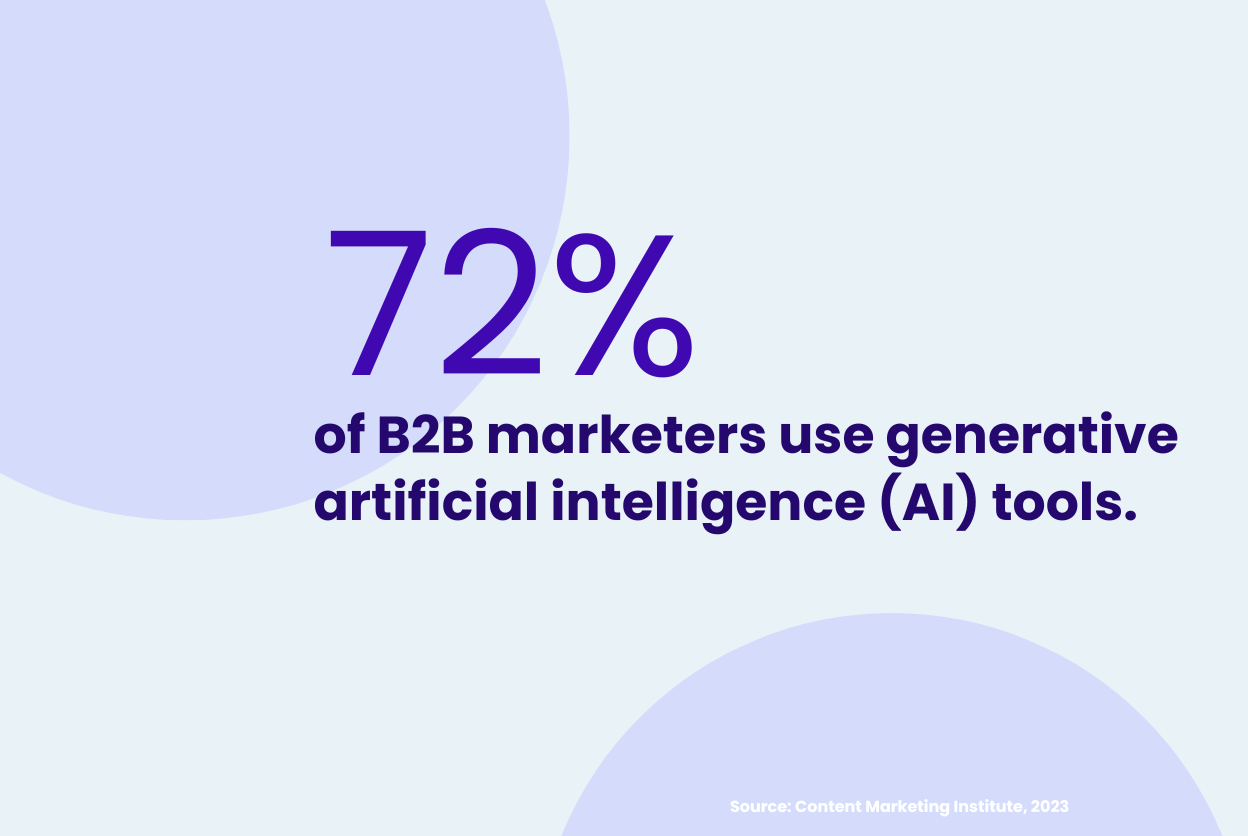
72 percent of B2B marketers have said that they use generative AI tools, with 51 percent using the technology to help brainstorm new ideas, while some 61 percent have indicated that their organization currently lacks AI usage guidelines — three of numerous findings contained in newly-published annual B2B content marketing report data from Content Marketing Institute. Content Marketing Institute

These Are Enterprise Organizations’ Top Digital Advertising Priorities
55 percent of enterprise digital marketing executives have said that improved return-on-investment (ROI) and effectiveness combine as their top priority in the coming year, with 52 percent pointing to the unification of creative and paid media teams within their organization, according to recently-published survey data of interest to B2B marketers. MarketingCharts

Topic Talk: Study Shows What Marketers Are Researching
When it comes to what marketers are researching, during the second quarter of 2023, marketing research on content personalization increased by 522 percent, with research surrounding real-time personalization up some 185 percent, according to newly-published study data. MediaPost


“We can use the data from the ecommerce site to personalize the rest of the journey. Instead of seeing the site as a self-contained silo, it can be part of a multichannel buying journey.” — Ed Kennedy of @Adobe
Click To Tweet


X, formerly Twitter, tests charging new users $1 to tweet, retweet
The X social media platform formerly known as Twitter has begun testing an annual fee for a segment of new users in the Philippines and New Zealand, who won’t be able to post using free accounts, X recently announced, in a push expected to eventually roll out globally on the platform. CNBC

Marketers more optimistic even as budgets fall
49 percent of marketing leaders have said that they were feeling more optimism when it came to the U.S. economy — a rise from the 30.1 percent seen since spring 2023, with B2B firms having seen 9.7 percent of their budgets dedicated to sales revenues and 7.9 percent to marketing, according to newly-published survey data. MarTech

New WPP Index Purports To Show Creativity Drives Brand Growth
Brands possessing greater creative capital provide 1.2 times the consumer advocacy and 1.4 times the amount of brand affection, with such brands also achieving 1.1 times the pricing power when compared to brands with lower creative capital scores, according to recently-released Creative Capital Index findings of interest to B2B marketers. MediaPost

2023 October 20 statistics image

YouTube Adds New Audio Description Options, Preferred Pronouns for Creator Profiles
Google’s YouTube has giving marketers the ability to add new audio description tracks aimed at helping visually impaired users on the video platform and to augment traditional captioning audio tracks, as part of its latest feature rollout, YouTube recently announced. Social Media Today

Google Introduces Ad-Measurement Tool, Privacy Sandbox Forces Change
Search giant Google has announced plans to launch a new Google Ads Data Manager ad-measurement tool in 2024, when it will become available as part of the firm’s popular Google Ads service, aimed at providing a non-cookie-based data measurement system that is able to utilize first-party data. MediaPost

Threads Rolls Out Post Editing and Voice Notes
Meta’s Threads social media platform has begun rolling out the ability to edit posts during a five minute window after publishing, along with an array of additional updates including audio-based messages under the Voice Threads name, Meta recently announced. Social Media Today

One year post-acquisition, X traffic and monthly active users are in decline, report claims
Global traffic to the platform formerly known as Twitter dropped by 14 percent year-over-year during September 2023, with X’s mobile U.S. traffic having fallen by some 17.8 percent during the same period, as U.S. users accounted for roughly 25 percent of the platform’s overall traffic, according to newly-published report data. TechCrunch

ON THE LIGHTER SIDE:

2023 October 20 Marketoonist Comic

A lighthearted look at “Change for the Sake of Change” by Marketoonist Tom Fishburne — Marketoonist

The Future of Moore’s Law Is Inside This Willy Wonka Machine — IEEE Spectrum

TOPRANK MARKETING & CLIENTS IN THE NEWS:

  • Lee Odden / TopRank Marketing — This Week in Marketing: B2B Forum Inspiration — LinkedIn (client)
  • TopRank Marketing — The Top Generative AI Tools for B2B Marketers [Infographic] — MarketingProfs
  • Lee Odden — 5 Writing Tips from Successful Bloggers To Motivate You — EverydayPower
  • TopRank Marketing — 40+ Top Influencer Marketing Agencies in 2023 — Shane Barker
  • TopRank Marketing — Are Paid Influencers Right for Your Social Strategy? — National Institute for Social Media

FRIDAY FIVE B2B MARKETING FAVORITES TO FOLLOW:

Rani Mani @ranimani0707
Joanna Lord @JoannaLord
Jay Acunzo @jayacunzo
Dr. Ai Addyson-Zhang @aiaddysonzhang
Paul Roetzer @paulroetzer

Learn more about TopRank Marketing‘s mission to help elevate the B2B marketing industry.

Have you located a top B2B marketing news item we haven’t yet covered? If so, please don’t hesitate to drop us a line in the comments below.

Thanks for joining us for this week’s Elevate B2B Marketing News, and please return next Friday for another selection of the most up-to-date and relevant B2B and digital marketing industry news. In the meantime, you can follow us on our LinkedIn page, or at @TopRank on Twitter/X for even more timely daily news.

The post Elevate B2B Marketing News Weekly Roundup: B2B Content Marketing Study, Top Enterprise Ad Priorities & Creativity’s Rising Brand Role appeared first on B2B Marketing Blog - TopRank®.


from B2B Marketing Blog – TopRank® https://ift.tt/xpgN94W
via IFTTT

RedHat on Connecting B2B Content for ROI – Across Sites and Teams

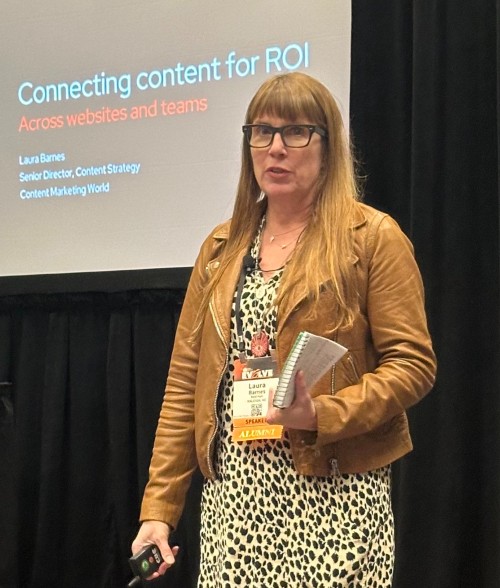
For those of us in the world of B2B content marketing, we know that the customer journey isn’t always linear and the value of that content isn’t always easy to attribute. Laura Barnes, Senior Director of the Global Content Team at Red Hat, shed light on the importance of connecting content measurement across multiple customer touch-points during her recent presentation at Content Marketing World.

Here are a few of my main takeaways.

Content’s Non-linear Value:

Content doesn’t always follow a straightforward path. “Digital governance nirvana” might be a dream for some, but the goal for content marketing should be clear: connect content across the user’s journey. While reducing URLs may not be feasible for everyone, the ability to connect content cohesively is vital. By bridging the gaps, content teams can showcase their worth, irrespective of the volume of URLs they manage.

Laura Barnes

Laura Barnes, Senior Director, Global Content Team at Red Hat

Navigating the Web of URLs:

Red Hat itself operates 12 approved websites, emphasizing that every website is essentially something with a URL. However, URLs are often political. While content too can be, it’s typically to a lesser degree. Laura underscored the significance of accountability when it comes to content. In an environment where different sites might report to various teams or even have divergent budgets, establishing governance can be a challenge. Yet, defining clear objectives can encourage collaboration among disparate groups — which is essential.

The Open Source Way to Content Collaboration:

Drawing parallels with open-source principles, Laura shared some guidelines on how RedHat brings together teams with differing responsibilities:

Transparency: Everyone should have access to information, ensuring collaborative problem-solving. Barnes highlighted Red Hat’s “word nerds” group, which worked on creating a style guide.

Collaboration: Encourage spontaneous partnerships and collaborative problem-solving. By inviting teams to share common challenges, Red Hat created an alliance, further splitting into guilds to tackle specific areas.

Release Early and Often: Prioritize swift prototype releases, and share work in its early stages. Red Hat, for example, begins every meeting discussing four key performance indicators (KPIs).

Inclusive Meritocracy: All ideas have merit, ensuring a non-hierarchical approach. At Red Hat, teams collaborate on agreeing to metadata and taxonomy changes.

Frameworks for Valuable Content:

Content frameworks are essential because they provide a structured approach to content creation, ensuring consistency, clarity, and purpose. By defining guidelines and parameters, they streamline the content process, maintain brand voice, and ensure that content aligns with overarching business objectives. While the content universe is wide and diverse, Laura shared that certain frameworks can help streamline creation and dissemination including:

Metadata + Taxonomy: A consistent element, enabling flexibility elsewhere.

Messaging Guides: Collate vital information to ensure teams are well-informed and can act swiftly.

Templates: Establish guidelines on what remains consistent and what can be altered.

Translation Strategy: With many businesses being U.S.-centric, the content should cater to a global audience.

Global SEO: User-focused SEO frameworks can guide content creation across different sites.

Demonstrating Business Value:

To ensure continued support, funding, and growth, content teams must exhibit their tangible business value. Laura outlined several key metrics that Red Hat considers:

  • Conversion (40% weight): Calls-to-action (CTAs) completed by users.
  • SEO (15% weight): Organic traffic to pages.
  • Visibility (20% weight): Both internal and external, encompassing unique visitors, cross-links, and organic impressions.
  • Engagement (15% weight): Factors like form completions, next-page clicks, and page load time.

Today’s information experience for buyers of B2B products and services is proliferated with content. The challenge is not just creation but also effective connection and measurement. Drawing from Laura Barnes’ presentation, it’s clear that with the right strategies, teams can navigate the complexities of content measurement, ensuring that the content not only reaches its audience but also delivers tangible ROI.

To dig deeper into B2B content marketing and measurement, check out some of these posts:

Learn more about the content marketing solutions we provide to some of the biggest B2B brands in the world.

The post RedHat on Connecting B2B Content for ROI – Across Sites and Teams appeared first on B2B Marketing Blog - TopRank®.


from B2B Marketing Blog – TopRank® https://www.toprankblog.com/2023/10/b2b-content-roi/
via IFTTT

Thursday, 19 October 2023

The New Rules of B2B Marketing: Dina Otero on Embracing Customer Centricity with ABX

As B2B content marketing has evolved from simply telling buyers what brands want them to know to creating more useful content, there’s been a shift in perspective. Rather than egocentrically pushing out information, smart B2B brands are empathizing with buyers and focusing more on the experiences that marketing can create.

Let’s face it, B2B buyers expect more from the brands they buy from and to meet those expectations, business marketers must embrace a more customer-centric approach to all things B2B marketing.

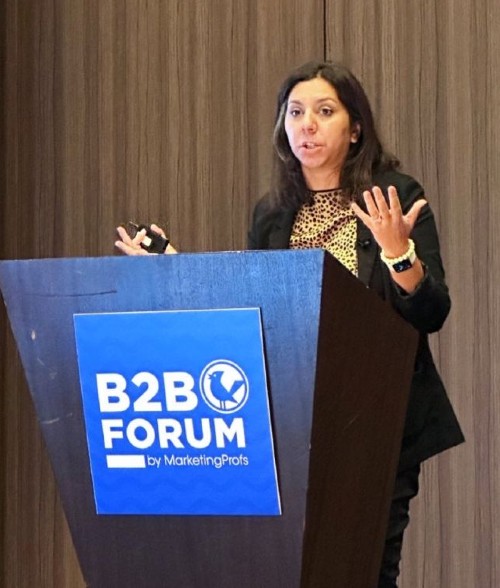
Dina Otero - Mission Cloud

Dina Otero, VP of Demand Generation at Mission Cloud

At the MarketingProfs B2B Forum, Dina Otero, VP of Demand Generation at Mission Cloud gave a presentation, Embracing Customer Centricity: The New Rules of Marketing that showcased the importance of a customer-centric approach and how ABX (Account Based Experience) plays a role in delivering the kinds of customer experiences that help build brand loyalty, foster positive word-of-mouth, and increase customer lifetime value. Happy customers = more revenue.

There’s a lot to be said on this topic and Dina did a great job of sharing her insights. For those readers who prefer to scan content, here’s a TLDR of this post:

  • Customer centricity is understanding customers’ situations, perceptions and expectations. It demands that the customer is the focal point of all decisions to create satisfaction and loyalty.
  • Customer-centric marketing helps build brand loyalty, fosters positive word-of-mouth and increases customer lifetime value.
  • To become customer-centric, listen to customers, understand their needs, personalize their experience and measure satisfaction.
  • Ensure every employee lives the customer experience. Build it into your mission and values.
  • Improve the quality of data and make it consistent and available. Use technology to connect with customers.
  • Track NPS (Net Promoter Score), capture feedback and make it easy.
  • Think long term with heartfelt thanks, relational vs transactional approach and increase customer lifetime value.
  • Account-Based Experience orchestrates relevant actions throughout the customer lifecycle. It results in higher close rates, post sale expansion and better customer experience.
  • To implement customer centricity: inspire the whole company, build the right team, think sustainable tactics, build content for every stage and implement ABX beyond new logos.

Dina gave her presentation in the context of her work at Mission Cloud, which is a company that provides cloud computing services focused on Amazon Web Services (AWS) and offers solutions including cloud strategy, migration, optimization, and managed services.

What is Customer Centricity?

“Customer centricity is the ability of people in an organization to understand customers’ situations, perceptions, and expectations. Customer centricity demands that the customer is the focal point of all decisions related to delivering products, services and experiences to create customer satisfaction, loyalty and advocacy.” – Gartner

Dina opened with a famous story about my pal Peter Shankman who once tweeted a request to Morton’s Steakhouse that he would like a porterhouse waiting when he landed at Newark airport. And they delivered the steak. Of course this story went viral and served as a great customer “delight” experience.

What can B2B brands learn from that example? Working towards being more customer-centric can create B2B customer delight opportunities as well.

“Customers will never love a company until the employees love it first.” Simon Sinek

Dina advised that for B2B brands to become more customer-centric, they should listen to customers, understand their needs, personalize their experience, and measure their satisfaction. She also shared several best practices:

Build a customer-centric culture – Ensure that every employee, from the CEO to the front-line worker, understands the importance of prioritizing customer needs. Incorporate customer-centric values and vision into the company’s mission.

Improve your data – Enhance the quality of your data to gain better insights into your customers. Make sure the data is consistent and easily accessible to everyone in the organization. Utilize technology to connect with customers and collect relevant data.

Capture customer feedback – Actively seek feedback from your customers through methods like Net Promoter Score (NPS), customer surveys, and customer advisory boards. Use this feedback to understand their preferences, pain points, and expectations.

Think long term – Adopt a long-term perspective when engaging with customers. Focus on building relationships rather than just completing transactions. Show gratitude for customer loyalty, provide sneak peeks of upcoming features or products, and engage customers through social media to gather feedback and thoughts.

The Value of ABX in Customer Centric Marketing

Account-Based Experience is a go-to-market strategy that uses data and insights to orchestrate relevant, trusted marketing and sales actions throughout the B2B customer lifecycle. According to research from the ITSMA, 58% of marketers said that ABM plays a major role in making their entire company more customer-centric.

The benefits of an account-based go-to-market approach are clear and well documented:

Zero waste: ABM eliminates the scattergun approach by focusing on high-value target accounts. It ensures that marketing and sales efforts are directed towards the most promising opportunities, reducing wasteful spending.

Bigger wins: By targeting specific accounts, ABM increases the chances of securing larger deals. It allows for a more personalized and tailored approach, addressing the unique needs and challenges of each account.

Better close rates: ABM strategies typically result in higher close rates. By nurturing relationships with key stakeholders throughout the account, ABM helps build trust, credibility, and alignment, increasing the likelihood of successful conversions.

Drive post-sale expansion: ABM doesn’t end with the initial sale. It continues to focus on nurturing and expanding existing customer accounts. By providing ongoing value and personalized experiences, ABM helps drive post-sale up-sells, cross-sells, and renewals.

Better customer experience: ABM puts the customer at the center of marketing and sales efforts. By delivering relevant and personalized interactions, ABM enhances the overall customer experience, leading to higher satisfaction, loyalty, and advocacy.

Align marketing and sales: ABM encourages closer collaboration between marketing and sales teams. By aligning their efforts around target accounts, ABM breaks down silos, improves communication, and ensures a coordinated approach to driving revenue.

Dina finished her presentation with these takeaways on B2B brands becoming more customer-centric through ABX:

  • Inspire the whole company to think about the customer first
  • Build the right team
  • Think personalized but sustainable tactics
  • Build content for every stage of the lifecycle
  • Implement ABX beyond new logos
  • Thank big, but start small

To drill down even deeper into the topic of a more customer centric approach to B2B marketing, check out these top posts:

To learn more about how B2B content, influencer, search and social media marketing can help your B2B brand deliver better customer experiences and impact revenue, check out our solutions page and case studies.

The post The New Rules of B2B Marketing: Dina Otero on Embracing Customer Centricity with ABX appeared first on B2B Marketing Blog - TopRank®.


from B2B Marketing Blog – TopRank® https://ift.tt/C9W5bge
via IFTTT

The Secret to Building Customer Loyalty Forever

The Secret to Building Customer Loyalty Forever written by John Jantsch read more at Duct Tape Marketing

The Duct Tape Marketing Podcast with John Janstch

In this episode of the Duct Tape Marketing Podcast, I interviewed Micah Solomon, an expert on customer service, hospitality, and the customer experience. He delves into the unique concept of anticipatory customer service and its powerful potential to enhance brand loyalty and drive business growth. He’s a bestselling author with a fresh perspective on how businesses can transform their customer service strategies to foster enduring loyalty.

In his latest book, “Can Your Customer Service Do This?: Create an Anticipatory Customer Experience that Builds Loyalty Forever,” Micah delves deep into the intricacies of customer service, making it an indispensable read for entrepreneurs eager to elevate their customer relations and propel business success.

Key Takeaway:

Anticipatory customer service is not just about reacting to a customer’s needs; it’s about predicting them. By serving even the unexpressed wishes of customers, businesses can create an unparalleled customer experience that fosters brand loyalty and catalyzes growth. In an era where customers crave personalization and a touch of anticipation, this approach proves to be a game-changer in the marketing and customer service sectors.

Questions I ask Micah Solomon:

  • [00:50] Define anticipatory customer experience.
  • [01:44] Some suggest that no matter how great your services, loyalty is dead. Can you comment on that?
  • [02:33] Is providing a great customer experience a type of referral tactic?
  • [02:48] What is the secret shopper role?
  • [04:38] How did you decide to specialize in this particular aspect of customer experience?
  • [08:35] How do you recommend handling both unhappy and unreasonable customers?
  • [12:11] How do you view customer service as a competitive advantage or even a profit center?
  • [14:13] How important is community feedback in enhancing the customer experience?
  • [17:22] What impact do you see AI having on customer service and experience?
  • [18:52] How can people reach out to you or get a copy of your book?

More About Micah Solomon:

Get Your Free AI Prompts To Build A Marketing Strategy:

Like this show? Click on over and give us a review on iTunes, please!

Connect with John Jantsch on LinkedIn


This episode of the Duct Tape Marketing Podcast is brought to you by the DeskTeam360

Desk team 360 is the #1, flat-rate, digital marketing integration team, that helps small businesses and marketing agencies with graphic, web design, and on-page marketing services.
John Jantsch (00:09): Hello and welcome to another episode of the Duct Tape Marketing Podcast. This is John Jantsch. My guest today is Micah Solomon. He's an expert on customer service, hospitality, and the customer experience. He's a bestselling author, consultant trainer, e-learning trainer, producer, training producer. It's a lot of training and a keynote speaker, and we're going to talk today about one of his newest books called Can Your Customer Service Do This?: Create an Anticipatory Customer Experience that Builds Loyalty Forever. So Micah, welcome back to the show.

Micah Solomon (00:46): It was so great to be with you last time and this is a pleasure to return.

John Jantsch (00:51): So let's get right down to it. Define anticipatory customer experience.

Micah Solomon (00:57): The basic, I guess, equation for customer service is you ask for something, I give it to you assuming you paid, but anticipatory customer service is another level. It's where I am serving even the unexpressed needs and wishes that you may have. And it's a great way to bind customers to you to make them feel like this is my place.

John Jantsch (01:23): Yeah, I mean, we've probably hopefully all been at a restaurant. That's an example I love to use, where the server brought something you didn't even ask for because they knew you were getting, I mean, simple as water, right? I mean, you didn't have to ask for it. They thought, well, you've drank your water, you're going to want more, and they bring it. I mean, that's a pretty simple example, right?

Micah Solomon (01:42): Absolutely.

John Jantsch (01:44): Go for it. I was going to pile on now using more words out of the subtitle itself. There would be some that would suggest that no matter how great your service is, loyalty is dead. I'll let you hit that one out of the park.

Micah Solomon (01:57): Well, if you believe that, then it is right. The thing to remember is in the olden days we would talk about customer lifetime value,

John Jantsch (02:08): And

Micah Solomon (02:08): I think it is hard to prove that figure now because John, as you pointed at it, is a lot easier to switch vendors. So I'll suggest you think about something called customer network value. So if you're delighting a customer, you number one, get their business and you number two, get all their recommendations. So it's a pretty big deal.

John Jantsch (02:35): It's almost like thinking of providing great customer experience, great customer service as a referral tactic almost. Right?

Micah Solomon (02:43): Absolutely. I like to say customer service is the new marketing.

John Jantsch (02:48): Yeah. And I remember from our last conversation, I know this is something you've done for years, but you start this book out with your secret shopper role. Talk little bit about how you've done that. I mean, maybe even just give a story about doing it like you do in the book. I'll be happy to. You need to put a disguise on though, right? First,

Micah Solomon (03:10): Do you want to show that picture? That'd be funny. I can grab it. Hang on. So this is one of the more extreme disguises I might or might not use. So I don't mystery shop anyone except my customers and they ask me to do it because they want to know an overall feeling I'm getting for the service. So I start out with this wonderful day that I'm having at a five star resort, one of the greatest places in America, and I wake up on the 33,000 thread count Egyptian pizzas, and I head down to the spa and all the while I'm making notes. Now the spa's a little tricky because to make notes on my iPhone or whatever it is while they're facially me is a little challenging, but it's nice work if you can get it. At the end of the day, I order room service and one of my tests is I ask them for cocoa not to hot, and only the best people will get that. Most hotels won't even notice the instructions. The ones who do either forget to do it or they give me this ridiculous, it seems like they cooled it down with ice. So the not too hot, I mean it's because it's my Goldilocks challenge. Then when I'm done, I send my confidential report to the c e o or whoever the boss of the division is and they can make use of it.

John Jantsch (04:38): So do you ever find, and again, I know you've done that for years, right? I mean that's something you've kind of made one of your sort of signature applications. How'd you get into this work? I mean, I think a lot of people you've sort of specialized in one aspect of it. I think a lot of people customer experience got some talk in marketing, but it's not seen as a whole area. How did you come to find this to be your life's calling?

Micah Solomon (05:05): So there are two stories, two explanations, and both of them are true. So the PR friendly one is, I created a manufacturing company. This is some years ago, and our widgets were no better than anyone. They were also no worse. So as time went on, I realized that what differentiated ourselves was the customer experience. So when I sold the manufacturing company, I thought, well, this is what I do. And I called a friend of mine, Leonardo, who did all of this stuff on the hospitality side, and I had done all of it on the business to business and so forth side, and I said, Hey, all this, I know all this. Let's write a book together. And he said, no, I think I'm going to write my own book sometime. So I was like, okay, good luck with that. So maybe a couple months later I call back and I say, Hey, Leonardo has that book coming.

(05:58): And he's like, oh, this is how optimistic, let's say he was. He says, I think I'm going to go off one day and write it all. So I was like, okay, good luck. One minute later he gets back on the phone and he sounds like he has his tail between his legs and he says, Micah Solange overheard my side of the conversation and she said, you absolutely have to write that book with Micah clearly not getting around to it yourself. So that was my first book, exceptional Service, exceptional Profit. It was co-authored by the two of us, and I kept learning more and more things, writing more and more books, working with more and more companies, and that's what I do. So that is the PR friendly official story. The other story is he was born, or at least from a very early age as an excessively particular person. So in the book, I have a reconstructed letter from my counselors at camp, which tells you a lot, and it's something like, dear Mr. And Mrs. Solomon, we have had the arduous pleasure of having your son Micah at summer camp. Usually the suggestions and complaints we get are along the lines of that old Hello Mata, hello father song where it's raining too much and there are alligators in the pot and everything.

John Jantsch (07:18): She silverstein, right?

Micah Solomon (07:20): Yeah. And so one of those guys, I think his one that's similar is I'm being eaten by a boa constrictor, which is a great one also. But Micas were much more specific in advance. They were like the two whistles at the waterfront aren't quite in tune with each other. The sloppy joes doesn't pair well with the orange juice and the mess hall and so forth. We have enjoyed having Micah for this summer, but we were also happy to return him to your care.

John Jantsch (07:48): So that's when you didn't realize it at the time, but that was your signal that you were meant for this. So I actually find that Google reviews are really helpful because not just as a consumer, certainly they're helpful for that. Somebody's got terrible reviews, you don't go there. But as a marketer, I really find them helpful because the words that people actually use voluntarily really say a lot about what's going on at that business. However, no matter how good a business is, you see everybody gets one and two star reviews for some reason, and maybe it's deserved every now and then it's deserved, but sometimes people are just odd. You're never going to make everybody happy. Nothing is truer than that. So what do you suggest people do? I guess I'm asking a two part question. Obviously with upset and unhappy customers, but then also just with unreasonable customers.

Micah Solomon (08:45): So I spend a lot of time in the book with the first category customers who are upset, unhappy, frustrated, and I have a service recovery framework which all great companies have, whether it's Nordstrom or whether it's Carleton or Zappos, mine, which I'm kind of famous for spells mama m a, and the reason it spells mama, actually going back to Leonardo, my co-author, he's Italian through and through. So we're talking about how companies tend to be too legalistic when they're trying to work with us. They're like just the facts and blah, blah, blah. And we said, well, why don't we make it sound like your mother or a quintessential Italian mother? And he said, well, my mom's really not the right model. She was kind of tough, but let's say this stereotype. And she's like, oh my bambino, you hurt, you're ouchie. Let me put a bandaid on it. Maybe here's a lollipop. Rather than just the facts ma approach where we're like, let me see, young man, were you wearing the crop

John Jantsch (09:46): Protective

Micah Solomon (09:46): Head gear before you had it out and so forth. So the first thing is to make time to listen. We are all such good troubleshooters that we kind of think we know the solution before our customer has even spoken. So let them vent and then it has some different aspects, but basically agree with your customer what you're going to do and by when, and then do it. Now I think if you look at the unreasonable Google reviews or TripAdvisor, a high percentage of them are from people who never or customers. That's

John Jantsch (10:18): So true.

Micah Solomon (10:20): If I get a one-star review for my book, which thank goodness I haven't yet, it can be like, I ordered this from Amazon and they said it was out of stock,

John Jantsch (10:30): Right? I've gotten some bad reviews. It's like the cover came in tattered. Well, you bought it from a third party, it was used. That's, it's really rough. So

Micah Solomon (10:40): If they're a semi reasonable person and if you are able to figure out how to reach them,

John Jantsch (10:45): Then

Micah Solomon (10:45): Work with them. And when it's all over, personally, I have no problem saying, Hey, do you think you could update that review? And some people will, and some people are just so lazy that they won't. Now, I will tell you, some of my clients, or even people just friends of mine operate, let's say a restaurant and they call me and they say, Hey Micah, I just, it's horrible review, and I'm sure it was my competitors down the street. So I'm like,

John Jantsch (11:07): Okay,

Micah Solomon (11:07): Lemme look at the review. But it's so specific. Clearly this is someone who's eaten at the restaurant. So I'm like, it's never the restaurant down the street, just like on the show a Sherlock, it's never twins. The solution is never that. There's two twins with the same

John Jantsch (11:23): Characters.

Micah Solomon (11:24): So by and large, it's not your competitor. Certainly there are famous examples where it is, there is this horrible thing. The Mark is a wonderful hotel in New York, and there was this kid who was very, very abusive to them and started this social media campaign against it. But those are really, except

John Jantsch (11:41): Yes, I actually over the years, had a business one star review and it was like, that's the competitor's wife. It was a construction company. It was very obvious that it was, and Google to their credit removed it. But yeah, it is goofy what people do. Oh my goodness. You talk a lot about, and I know a lot of people who talk about customer experience being a real competitive advantage, particularly in one of those where it's like, you sell this, they sell that you're about the same price. You're about to say price. I mean, talk a little bit about that idea of really viewing it as a profit center almost, or certainly as a true competitive advantage.

Micah Solomon (12:19): So it's getting very commoditized out there. So how do you distinguish yourself? Well, maybe you're lucky and you have an astonishing product nobody else has. Maybe you have, let's say suites that are literally over the water in Aura. So you can have a great location or the first frick location for gas station, but most of us don't have that.

John Jantsch (12:41): Most

Micah Solomon (12:41): Of us, the default is that we're pretty interchangeable with our competitors. So customers will leave because they found a better price because someone else has a better website or seriously for no discernible reason at all. So how do you get out of this? Well, you have to become memorable, and you could do that with amazing advertising and marketing. I don't want to dismiss that, but the thing is that great marketing only resonates if it's true, right? There have been campaigns that were really clever, but the reality of being that customer wasn't like that.

John Jantsch (13:19): So

Micah Solomon (13:19): You got to get the customer experience and then they will be become ideally loyal. A loyal customer is less price sensitive, and believe it or not, they're more forgiving of your minor foibles, believe it or not. And if something goes terribly wrong, they will give you the courtesy of reaching out to you. So they're also more open to any line extensions you have and they will become an ambassador for your brand. They'll do what I like to call word of thumb marketing on their phones. So loyalty is very valuable and the customer experience is one of the ways to get there.

John Jantsch (13:57): I know for a fact that you talked about less price sensitive. I mean, I know that in some cases I'm paying more, but I'm like, I don't care because the cost of the hassle or the cost of not having them know my name when I come into the store to me is high and I'm not alone. I've seen surveys as high as 90% of people surveyed saying they'll pay more for a better experience. What role does community feedback play? I mean, getting that feedback, just like you went in Secret Shop, you told the C e o, this and this, but what role to actively asking your customers, are they getting what? Could you do something better? Could you provide a better service? Do you advocate that?

Micah Solomon (14:41): Well, certainly you want to be surveying your customers, but you got to do it really quickly and you have to not hound them if they don't want to

John Jantsch (14:50): Reply. In

Micah Solomon (14:52): Fact, and this may not be true anymore, but a few years ago, Ritz Carlton was not only the highest on chip advisor in the luxury category, they were highest in any category. And so she told me, well, our secrets are two when we do a great job. Number two, I never hound customers to leave a review. I never solicit that. I don't have a thing on the counter saying, please leave a review. So the people that leave a reviews are really passionate about us.

(15:20): Now, if you are going to survey people, number one, 80% of surveys are written completely wrong. If you want to write a perfect survey, look in my book, it's there. If you are so impious or cheap that you don't want to buy my book, then I think the best thing to do, well, you probably don't own Apple products either, but if you own a couple products, look at their surveys, they're pretty good. So what makes a survey good? Well, number one, you want to ask the most important question first, how satisfied are you with that? Then you get to the itty bitty Diddy was a bathroom cleaner, so forth, because if you ask was the bathroom clean and oh my God, you have the most clean bathrooms ever, like McDonald's pride itself on, then that's going to tint the rest of the survey or especially the next question that you ask.

(16:09): Or if your toilets are horrible, that's going to have excessive weight. So first, ask their overall impression, then get into the smaller areas that you want them to talk about. When we have five, or I heard a clever argument for having four or six levels, the idea of using four or six is that there is no middle point. So you can't be lazy in your hands. Don't give them 10 and don't ask them on a scale of one to 100 because customers shouldn't have to do math for you. And so there are a few, but one thing I would say is if you are surveying your customers leave at least one blank space where they can vent or they can give very specific feedback. So that's tip number one. Tip number two is you've got to scan them right away because if you've got an really upset customer and they write all about that, you need to get back to them right away. You can't wait until the end of the month when you're batching these and reading them. And that's a mistake that a lot of companies make.

John Jantsch (17:10): Yeah, it's funny. I think most people can forgive a mistake taking care of what they can't forgive is doing a really bad job of taking care of it or ignoring it. It just makes it even worse. We've gotten, I can't believe, 19 minutes into the show and I haven't said ai. That's awesome. I haven't said AI yet. Let's talk a little bit about how you see AI impacting this kind of arm of the marketing world of experience and service.

Micah Solomon (17:37): Well, it's both early days and boy, things are changing quickly. I have a triangular model of AI in customer service. So at one Vertex, I'm going to use up my geometry training in a moment. One vertex is the customer or the prospect, and the next is the agent, and the third one is the ai. So a customer can come in using the ai. In fact, the best search engines on websites are AI powered. That may take care of them. If it doesn't, then they'll reach out to an agent. But when they get there, the mistake is to think no more AI should be involved. The customer's going to keep using ai. I mean, they're going to go on the thing that my mom calls the Google and look around. I know it's really funny if she's not your mom and they're going to keep looking at Google and the agent is going to keep using the ai. AI is great at turning a generalist agent into temporarily a specialist when they're answering a call.

John Jantsch (18:33): Yeah, yeah, I think, I mean I've even heard reports of people saying that they're able to really get less experienced agents, less trained agents necessarily who have the right sort of spirit, who now have all the answers at their disposal as though they've been there for years. So I think it's a win for everybody. I appreciate you coming to by and spending a few minutes with us. How can people contact you, find out about your work? Obviously get a copy of the book, Micah.

Micah Solomon (18:57): So to reach me, you can come to my website or just Google my name, but it is the challenging extremely biblical name. So it's Micah, m i c a h at Micah Solomon, m i c a h s o l o m o n.com. If you want to email me, there are no a's in Solomon or my website is a little easier, it's micahsolomon.com, but you can just use Google and misspell my name. They'll get you to me. I'll get you to just

John Jantsch (19:27): Customer service expert. There you go.

Micah Solomon (19:30): To buy my book. There'll be a link on my site, which will give you a free sample right away, but if you go to Voldemort's site, oh, I'm sorry, Amazon site. It's there, it's available. They are shipping it now, and you can read a pretty long and pretty fabulous sample there before you decide to buy it.

John Jantsch (19:46): Yeah, awesome. Well, Mike, it was great catching up with you, just having you spend a few minutes on the Duct Tape Marketing Podcast, and hopefully we'll run into you one of these days out there on the road soon.


from Duct Tape Marketing https://ift.tt/gMinGwy
via IFTTT

SAP on the New AR for B2B Content Marketing: Authentic Reality

In an age where the allure of artificial intelligence (AI) has captured the attention of so many of us in the B2B marketing industry, the essence of authentic human connection in storytelling is more important than ever. As the dust settles on the GenAI hype cycle, we’ll see that successful B2B marketers are those who recognize the value of integrating emotion and empathy into their narratives and ensuring their messages resonate with audiences. As I like to say, “less mechanical and more meaningful.”

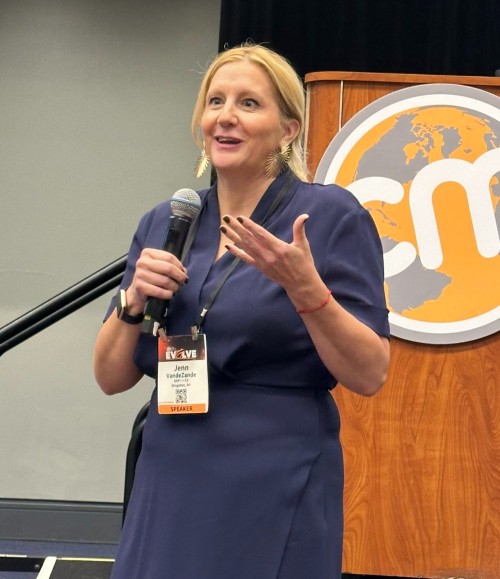
This was at the center of a presentation at Content Marketing World given by my good friend Jenn VandeZande, Editor in Chief, Head of Digital Engagement, I + CX at SAP with an assist from Robert Rose of Content Marketing Institute.

The Human Touch in a Tech-Driven B2B Marketing World:

With each successive generation becoming increasingly dependent on technology, one might wonder where this leaves the human aspect of storytelling and communication. Jenn from SAP emphasized a surprising stat: a whopping 81% of marketers believe that the roles of content writers are at risk due to AI.

“81% of marketers think content writers jobs are at risk because of AI. That said, those that have skills at strategy, creativity and storytelling will come out on top.” Jenn VandeZande, Editor in Chief, Head of Digital Engagement, I + CX at SAP

However, a quick dive into SAP funded, “The Future of Commerce,” site managed by Jenn and her team reveals a different story. This platform prioritizes content that’s intriguing to SAP’s target audience rather than merely reflecting what’s trendy for SAP. Impressively, this content-centric approach has thrived without the boost of paid advertisements.

Jenn VandeZande

Jenn VandeZande, Editor in Chief, Head of Digital Engagement, I + CX at SAP

The Magic of B2B Authenticity:

The authenticity of the content on “The Future of Commerce” has attracted significant organic traction. Jenn shared that 70% of the traffic is organic, with 30% being return visitors. Authentic content that resonates on a human level not only establishes trust but also facilitates genuine affinity with the brand. In Jenn’s words, business professionals are humans first, and connecting with them on a personal level is essential for brand success.

It’s evident that while robots might churn out content, they cannot replicate the nuanced, genuine, and relatable narratives that humans craft. The paradigm shift occurs when brands view content marketing not just as a touch-point in the buyer journey but as an ongoing dialogue even outside that journey.

Nurturing B2B Audiences the Right Way:

Interestingly, subscribers to “The Future of Commerce” aren’t bombarded with marketing messages. SAP recognizes the importance of gauging commercial intent. Only when a user demonstrates this intent, say by downloading a whitepaper, are they moved into a nurture track.

One might wonder, on a website dominated by such authentic content, when’s the right time to transition readers to more commercial content for SAP? According to Jenn, every article should thoughtfully guide readers with CTAs, seamlessly intertwining with adjusted landing pages to enhance the user’s journey.

In Defense of Human Writers:

To ensure that the age-old art of writing isn’t overshadowed by AI, certain measures can be adopted:

  • Be Prepared: Understand the current utilization of AI in your content processes.
  • AI Roadmap: Establish clear governance, responsible, accountable, consulted, and informed (RACI), and use cases for AI integration.
  • Practice Quality: Ensure content quality is maintained, periodically checking for AI usage.
  • Leverage AI Wisely: While the focus should be on human intent and content, AI can still be employed to streamline processes and enhance user experience.

AI, no matter how advanced, is ultimately limited to what we teach it. With momentum towards substantially greater levels of automation when it comes to content development, the essence of meaningful storytelling lies in authenticity, emotion, and a genuine human touch. Brands that recognize and act upon this truth will thrive, creating genuine, long-lasting relationships with their audience.

For more B2B content marketing insights, check out some of our most popular posts:

Learn more about the content marketing solutions offered by TopRank Marketing.

The post SAP on the New AR for B2B Content Marketing: Authentic Reality appeared first on B2B Marketing Blog - TopRank®.


from B2B Marketing Blog – TopRank® https://ift.tt/QiWRX5F
via IFTTT