Wednesday, 20 December 2023

Service Revolution: The Art of Turning Expertise into Scalable Products

Service Revolution: The Art of Turning Expertise into Scalable Products written by John Jantsch read more at Duct Tape Marketing

Marketing Podcast with John Jantsch

In this episode of the Duct Tape Marketing Podcast, I  unravel the intricacies of service marketing and dive into a groundbreaking approach that transforms expertise into scalable products. The discussion revolves around the revolutionary concept of productizing services and its profound impact on agency growth.

Key Takeaways:

Discover the game-changing strategy of productizing services, revolutionizing scalability, and enhancing profitability. From simplifying communication and shortening sales cycles to delivering a superior customer experience, learn how to navigate challenges and unlock unparalleled success in your service business.

In this episode, you’ll learn:

  • The evolution of service marketing
  • How to scale with clarity
  • How to achieve profitability beyond expectations
  • The customer-centric approach
  • How to overcome diverse challenges

Join me in this episode as we embark on a journey to revolutionize service marketing, unlocking the potential to turn expertise into scalable products. Listen now to gain a competitive edge and elevate your service business to new heights.


Get Your Free AI Prompts To Build A Marketing Strategy:

Like this show? Click on over and give us a review on iTunes, please!

Connect with John Jantsch on LinkedIn


John (00:03): That's right. It's just me. I got a topic I want to talk about. This is a topic that maybe I haven't talked so directly about, but in a lot of ways it's been a big part of my work. It's something that I've talked about for years, but I want to hit it head on today. And that's if you are a service provider. I want to talk about the idea of productizing your service. So what do I mean by that? What I mean is creating service offerings that you can describe, explain price deliver almost as though they were a product I have for years delivered something we call Strategy First, and it is essentially our approach to developing strategy. So it is a service that we offer to business owners and we have dialed that in so thoroughly. Frankly, it was actually the genesis of Duct Tape Marketing of me creating the approach to Duct Tape Marketing was that I was a little frustrated going out and essentially delivering my marketing services in not a one-off fashion, but in a custom fashion almost whatever somebody needed.

(01:15): That's what we designed a proposal around. That's what we delivered. That's how I priced it. And a lot of agencies do that. You can build a nice business doing that. But I was frustrated because I just felt like I was working more and making less as I grew that. So I created this productized approach. I called a marketing system, and we all the way down to exactly what happens when a client signs on to all the way through the way they're onboarded. Everything we deliver in the final is really packaged up in a way that I can call it a product. That's why we gave it a brand name. So that's the idea behind a productized service. Now, I used an example of marketing, frankly. Accounting can have productized services, legal services can be productized, any kind of consulting can and in my view should be productized.

(02:07): There are some, I think some glaring benefits to why you might want to do this. The first one I started talking about is scalability. It is very difficult to scale an offering that is made up every time that is new for every customer. That is, and here's my favorite word, bespoke. It's very difficult to scale that because in a lot of ways it takes the enormous experience and let's call it brainpower of the person who can be that nimble and deliver every single time. Now, there's probably a place out there in the world for completely customized versions of service delivery, and in fact, we do it in the right circumstances. But for the most part, if you want to scale a service business, you have to create something that is very easy to message, that is very easy to explain. And frankly, when it comes to scale is easy to actually delegate and hire people and to train people how to deliver that package.

(03:13): And that's much harder to do if essentially everybody's making it up every single time they go out and work with a new client. So to me, that scalability is probably the leading benefit of doing this. I already mentioned this a little bit, but the sales process gets so much simpler Instead of, okay, what do you need? Okay, we'll put together a proposal. Okay, we'll refine their proposal. We'll make it fit to the budget that you have. When you're able to walk in and say, here's what I'm going to do, here's what you're going to do. Here are the results we hope to get from this approach. And by the way, here's what it costs. Shortens the sales cycle, which to me is a great thing. You get a yes or a no, but it also makes it very easy for you to explain exactly what somebody's getting.

(04:01): I mean, that's one of the most valuable things you can have in a sailing situation is something that's very simple to explain. Somebody can get it. They can see on one sheet of paper, here's what we're going to do. It also will lead to much higher profit margins. And one of the reasons for that is that when you're constantly having to figure out how to serve a client, have to write proposals, how to create whatever the deliverable calls for based on the scope of their proposal, there's a lot of learning that goes into that. And if you can create a repeatable process, you will get better at delivering value because you've done it before. You will get faster at delivering value because you've done it many times now. And consequently, those two things alone will lead to much higher profitability. But the final piece that I think a lot of people underestimate is when you've got something that you can actually show somebody, here's a proven process to get you results, it is very simple to explain to them exactly what they're going to get.

(05:15): You can also charge a premium. So you've got really that profitability working two ways for you. You can generally charge more for a name branded service offering that you can now deliver very affordably or much quicker, or you can delegate to work to people that are at a much less experienced than you. It just leads to a much more profitable, and here's the final reason to do it. And frankly, if all those other reasons weren't enough, the final benefit or reason for doing this is that it's a better customer experience. I know that everybody, I mean, everybody we talk to, it's like, no, I want want something that's tailored just to my needs. Well, on the surface, that sounds really great, but you rather have something that I've actually worked on for years and refined and evolved and seeing what works and seeing what doesn't work.

(06:12): I can deliver. You can deliver much greater value by having a proven process. Now it takes time to prove that, to refine it. I mean, we've been doing this for 25 years and it's evolved every single year for us as well. So to me, the product itself, because we have focused on here's what you get, here's what it costs, has gotten much, much better. Now, are there challenges in productizing? Some of what you'll run up against is just what I mentioned. People want a custom approach. They don't want cookie cutter. They feel like if it's not created just for them that there's something less. And so it really becomes important for you to not only create that productized approach, but be able to communicate very effectively the value, what's in it for them. I think when people start to realize that by creating a repeatable system, you give people not only the option of getting a better end service, but you also get far better at delivering it.

(07:18): There's just so much more value in it for them. So I think that the messaging really has to be about that is a lot of times people focus on, well, we can deliver this better, or we just get, we've got this down so that we have a very fulfillment engine that is very productized. It's very systemized. But the key of course, is helping that buyer, that customer, that client understand why that is so much more valuable to them. So how do you get started doing something like this? Because one of the challenges I think a lot of people have in productizing, if you will, is that they're serving such a diverse market. It's very hard to actually create one or two or three things, packages, products, if you will, for all of the services that they might be able to offer. So it does help if you can narrow your focus first off.

(08:10): So I'm not necessarily saying a niche, maybe it is for you, but at the very least, who are the top 20% of your customers? What do they need today? What are the problems that you're solving for them? Could you actually create or think in terms of creating a package just for them? You've got to standardize the offering. It's not enough to just say, oh, this is this and it costs this. You've got to work on even the promotional materials need to standardize. Here's what you get. Here are the benefits of this. Here's why this approach works. So just even creating marketing materials for it, you have to standardize, but then you have to start writing SOPs. You have to actually map out, whether you call it a fulfillment engine or whatever you call it, you have to map out when this happens, then this happens.

(09:00): So at the global level, you have to at least have the little boxes and arrows that point to that. But then each one of those boxes, particularly critical steps, you need to maybe create an entire training process or SOP around. And I know that this can sound like, well, it is time consuming and it sounds like it because it's, but ultimately, if you spend several weeks even creating this repeatable system that then can serve you for years and that you can delegate and you can scale your business and you can be more profitable, probably the best couple of weeks that you've ever spent in terms of working on your business after you productize it, then it's field testing. I mean, you could sit in a lab all day long and create what you think is the most brilliant approach to delivering your services in a productized manner.

(09:51): Just go out there and start doing it. Start telling people, maybe give 'em option A, B, and C, but this is what I'm going to do. This is what you're going to do. Here are the results we hope to get, and here's what it costs. Do you want it or not? And start fulfilling it. You're not going to refine this thing until you've done it dozens of times. And that just takes practice. It takes experimenting, it takes trial and error. It takes listening to the feedback that you get from your customers. It takes really evaluating, are you getting them the result? Are you getting them a better result than they could have gotten somewhere else? So how do you market this productized service? Well, if you think about it, it is the same as marketing a product. In a lot of ways. People have to understand what it is.

(10:35): They have to understand what's in it for them. It has to address a problem that they're trying to solve. I mean, those are all things that really any good marketing does. But I think it's probably important for you if you're going to productize. It's very important for you to, I think it's very helpful if you give things a name, give it a brand, create collateral around it that shows somebody exactly what they are going to get, and then focus a great deal of your marketing. It's the same for any professional services on trust building, on explaining not just the components, not just selling the components. In fact, in some ways, the productized approach doesn't really even become an issue until somebody starts saying, how will this work for me? And then you're able to give them the very specific way it could work for them.

(11:21): But all of your marketing education, even though you have a productized approach, is going to be around educating on the problems that this productized approach solves. I always make the joke that I sell a marketing strategy. Nobody ever wakes up and says, I'm going to go buy some marketing strategy today. But they do wake up and wonder why they're competing on price. They do wake up and wonder why they can't fill their pipeline. They do wake up and wonder why their competitors are always ranking ahead of them in search engines. And to a large degree, those are all problems that an effective marketing strategy can solve. So even though we're productizing the service offerings as a way to scale, as a way to be more profitable, as a way to more easily help people understand the value they're getting, we still have to build trust.

(12:11): We still have to create a customer journey that turns us into the trusted advisor and the productized approach happens just to be a delivery mechanism for how we get them, the results and how we communicate the results, and frankly, how we differentiate. So many people are in the marketing world, I'm sure in your whatever service world that you are in, so many people are just selling the idea of the week, are selling, the tactic of the week are going to clients and saying, what do you need? Sure, we can do that. And so this proven process driven way to deliver value in a way that's very easy to understand is also a great different in a world of service offerings. Alright, that's it for today. Always love to hear your comments and feedback. And if you're on one of those services like iTunes or Spotify, make sure that you give us a review, a glowing review, of course. But we hope you like the show and hopefully we'll run into you one of these days out there on the road.


from Duct Tape Marketing https://ift.tt/9LrfctB
via IFTTT

The Rise of Global SEO: Expanding Your Scope

Global search engine optimization is the process of optimizing a website for search performance all over the world. As you might expect, this can be quite involved.

Paying attention to the global performance of keywords you’re trying to rank for is just the start. You’ll need to create different pages for different regions, account for the different languages you’ll need to communicate in and figure out which keywords to target per region and language… as a start. 

Complex as getting started can be, however, any international company that doesn’t invest in global SEO now faces an opportunity loss too significant to ignore.

Digital transformation, the proliferation of accessible e-commerce, and huge globalized shipping companies like Amazon have shattered traditional geographic barriers to business. Today, nearly every market imaginable has globalized in one capacity or another. The organizations that treat it like the major opportunity it is will be the ones to seize new sources of business as they continue to join the global digital community.

Any organization with interest in serving or selling to users outside of their home region should invest in global SEO to maximize growth. Here’s what you need to know to get started.


“Any organization with interest in serving or selling to users outside of their home region should invest in global SEO to maximize growth.” — Nick Nelson @NickNelsonMN
Click To Tweet


Structuring for region and language

The most important aspect of global SEO is making sure you structure your international websites to serve users optimally wherever they are and whichever language they speak. This can be handled in two steps:

  • Create different versions of your website for each language you want to support
  • Tell Google where to send users in different regions to ensure they’re getting the language they want to use

Here’s a closer look at geotargeting.

Different approaches to geotargeting

“Geotargeting” is the process of creating pages SEO-optimized for specific regions. It is the cornerstone of effective global SEO, because pages that are geotargeted for specific regions tend to perform far better in those regions.

There are several different approaches you can take to structuring a site you want to SEO optimize for geotargeting, and each has advantages and disadvantages

1. Country code top-level domains (example.us.com)

Country code top-level domains, or “ccTLDs” are the letters in a URL that go just after the final period in a domain name in international websites (http://exampleurl.us.com).

In most cases, ccTLDs follow ISO 3166-1 designation standards, though there are some exceptions. Countries that use non-Latin scripts may have their own internationalized country code top-level domains (IDN ccTLDs).

Pros of ccTLDs

ccTLDs are the strongest way to indicate that a page’s content is specifically relevant to a geographic area and should appear in that region’s SERPs.

Cons of ccTLDs

Sites with different ccTLDs are considered completely different sites by search engines. If you are the owner of example.us.com and example.uk.com, you’ll have to grow authority on both sites separately. You’ll also have to purchase each ccTLD domain separately, which can be costly.

2. Subdirectories (exampleurl.com/us)

Subdirectories are probably the most straightforward way of internationalizing content. You simply place content meant for a specific region on a subpage of the main website, the same way you might create pages for individual products and services.

Pros of subdirectories

Unlike ccTLDs, subdirectories consolidate ALL link equity within a single domain. Subdirectory pages can benefit from their root domain’s authority to appear in more generalized search engine result pages (SERPs). As all subdirectories are located on the same site, they are also cheaper and easier to maintain than ccTLDs.

Cons of subdirectories

Subdirectories only tell search engines they’re intended for a specific region on the strength of the keywords they rank for. This drastically limits the amount of information you can communicate to that region per page.

3. Subdomains (us.exampleurl.com)

Subdomains place internationalized content on the same website, but in a separate “third-level domain” that appears before the root domain of the website (us.exampleurl.com).

Subdomains differ from subdirectories in that they organize content at a higher level than individual pages. If you wanted to associate multiple pages of content with a region-specific subdomain, for example, you would use both subdomains and subdirectories to do so (“us.exampleurl.com/example-page-1”, “us.exampleurl.com/example-page-2).

Pros of subdomains

Though subdomains function as separate websites, they are considered part of the same root domain. No matter how many subdomains your website has, they are all housed under a single site. This makes subdomains considerably easier and cheaper to maintain than ccTLDs.

Cons of subdomains

Subdomains send a much weaker signal about their targeting to search engines. They also share domain authority with their root domain and each other, so the more subdomains you add to a site, the further you dilute your authority across multiple sources.

Signaling language to search engines with hreflang tags

Once you’ve decided how to structure your website, you have to tell search engines how to direct users to the versions they’ll be able to read. You can do this using “hreflang” tags.

Hreflang tags were created to show search engines the relationship between web pages in alternate languages. You can use them any time one of your webpages is available in multiple languages to ensure site visitors can easily find the version of the site in their language.

Href attributes can be placed on the HTTP header, on-page markup, or sitemap. They look like this: “<link rel=”alternate” href=”http://exampleurl.com” hreflang=”us”>, or, in a url, “exampleurl.com/?lang=us hreflang.”

This example would help Google direct any users believed to speak American English to the American English version of your site. Href language tags use the ISO 639-1 (note: not always the same as ISO 3166-1 used above) format for language codes.

You can also extend the hreflang attribute with extra annotations to indicate which region the content on the page is localized for by adding a hyphen to the hreflang section followed by the ISO 3166-1 Alpha abbreviation of the region in question.

For example, if you would like a page to signal it is localized for Spanish speakers in Spain as opposed to Spanish speakers in Mexico, you would use “hreflang=”es-es” (Spain) instead of hreflang=”es-mx”.

To associate multiple pages together and direct speakers to the right version, use multiple hreflang attributes on each page. These href attributes would direct Google to the alternate versions of your URLs for different languages and tell them where to send the searchers using each language.


“To associate multiple pages together and direct speakers to the right version, use multiple hreflang attributes on each page. These href attributes would direct Google to the alternate versions of your URLs.” — Nick Nelson @NickNelsonMN
Click To Tweet


For example, if you created alternate ccTLD domains for your American English homepage that contained the same content in French (for French audiences) and Spanish (for Mexican audiences), your homepage would contain hreflang attributes that look like this:

<link rel=”alternate” href=”https://ift.tt/NPLMBT5” hreflang=”fr-fr” /> <link rel=”alternate” href=”https://ift.tt/eYuXab9” hreflang=”es-mx” />.

If you made subdirectories or subdomains instead, replace the ccTLD domains in the href sections above with their subdirectory or subdomain HTTP equivalents. Remember to include these href attributes on the French and Spanish language pages as well, but instead of including the primary language, include:

<link rel=”alternate” href=”http://exampleurl.com” hreflang=”us-us” />

Hrefs can also be used to direct speakers to the page they want to see, even if they aren’t living in a region where their language is the most commonly spoken. For example, if you want to make sure that French-speaking people using US IP addresses are directed to the French version of your website, you would use the US ISO 639-1 tag FOLLOWED by the FR ISO 3166-1 Alpha tag:

<link rel=”alternate” href=”https://ift.tt/NPLMBT5” hreflang=”us-fr” />

Using href tags will NOT help you increase your SERP rankings, but it will swap the correct version into a SERP based on a user’s location and language preferences.

Global SEO best practices

Now that your site is structured correctly, it’s time to start optimizing your pages for regional users and intent. Follow these best practices when reviewing your global SEO pages to ensure you’re optimizing for the right audience, region, language, and intent across every page:

Review your information’s relevance

Review every page you duplicate or remake to ensure all the information on it is relevant for the region and/or language it’s targeting. Be sure to double-check:

  • URL
  • Meta titles
  • Meta descriptions
  • Time zone
  • Navigation labels
  • Headings
  • Internal and external links
  • Image text, meta information, alt text, and anchor text
  • Product/service names and descriptions
  • Body content on directions, deals, and special offers
  • Contact information

Pay attention to both global and regional keyword volume

Keywords perform differently in different regions of the world. When optimizing for global SEO, pay attention to both a keyword’s global and regional volume. You can compare a keyword’s volume across geographies to gain an understanding of demand across individual regions.


“Keywords perform differently in different regions of the world. When optimizing for global SEO, pay attention to both a keyword’s global and regional volume.” — Nick Nelson @NickNelsonMN
Click To Tweet


Conduct local competitor analysis

Look at the SERPs of the keywords you’re targeting to identify the local competitors currently ranking for the keywords you’re pursuing.

As you analyze your competition, evaluate the following:

  • How are their pages specifically targeting local users?
  • What kind of other content are they linking to?
  • How long or in-depth are their pages?
  • How are they using the keywords you’re pursuing?
  • What does the SERP landscape reveal about search intent?

Conducting international and regional competitor analysis can provide you with a great deal of information on how to pursue regional keywords more effectively.

Link to local content

Link building is one of the most important aspects of global SEO optimization. The more regional sources link to your site, the more search engines will recognize your associated value in your target region.

Start building your footprint by linking out to credible local content yourself. Whenever possible, replace cited sources or other supplemental information with local variations. This will show search engines that your page should be considered a part of that region’s internet ecosystem, making them more likely to include you in SERPs.

Measurement and reporting with geographic insights

Properly set up and optimized, the amount of actionable information you’ll receive from global SEO pages is staggering. Not only will you be able to glean global keyword performance, but you can drill down to examine how your pages, products, and services are doing across key SERPs in both different regions and languages.

Your measurement and reporting metrics should evolve to make the most of all of this insight. As you develop your SEO reporting, but sure to break out performance across all relevant regions you’ve optimized your global SEO to cover.

Start by taking special note of any pages or keywords that are over or under-performing in specific regions relative to others. This will help you understand what’s working and what’s not. You can then take steps to further optimize your regional pages in the future — and even break into new regional markets more successfully.

Global SEO is a significant upfront investment, but for ambitious companies interested in expanding, the opportunity is well worth it. Used properly, a bigger-picture view of SEO can not only raise your brand awareness, but it can also serve as a key source of critical information on how to expand and succeed in countless new markets all over the world.

TopRank Marketing currently conducts successful global SEO programs for multiple enterprise clients.

The post The Rise of Global SEO: Expanding Your Scope appeared first on B2B Marketing Blog - TopRank®.


from B2B Marketing Blog – TopRank® https://ift.tt/qlNXAkI
via IFTTT

Tuesday, 19 December 2023

Mastering Marketing Strategy: Simplify Your Success with These 5 Key Questions

Mastering Marketing Strategy: Simplify Your Success with These 5 Key Questions written by John Jantsch read more at Duct Tape Marketing

Marketing Podcast with John Jantsch

In this episode of the Duct Tape Marketing Podcast, I dive into the complexities of marketing strategy. I break down marketing strategy into five essential questions that you need to be able to answer if you want to be effective in your marketing efforts. This approach helps you focus on what’s important, saving time and improving effectiveness.

Key Takeaways:

From understanding the need for a clear objective in guiding your marketing, to choosing the right platforms that resonate with your ideal client, this episode emphasizes the importance of focused efforts.

An effective plan that aligns with your motivations and meets the needs of your ideal client is key. Developing the necessary capabilities is vital for successful execution, and measuring success with defined KPIs fosters continuous improvement.

In this episode, you’ll learn:

  • The real essence of a marketing strategy.
  • Five key questions to make your strategy more effective.
  • Tips to align your marketing with your business goals.
  • How to choose marketing actions that yield better results.

Join me in this episode as we clear the confusion in marketing by answering five critical questions, setting the stage for unmatched success in your marketing strategy.


Get Your Free AI Prompts To Build A Marketing Strategy:

Like this show? Click on over and give us a review on iTunes, please!

Connect with John Jantsch on LinkedIn


John (00:08): Hello and welcome to another episode of the Duct Tape Marketing Podcast. This is John Jantsch, no guest. Today. I'm going to do a solo show. So the whole basis of this show is the large confusion that I have seen around this idea of marketing strategy. What is a marketing strategy? This is, boy, I tell you, if I would ask 10 people, I would get 10 different definitions. If I were to ask Google, I'd get 10 different definitions. I think for a lot of people, this is a needlessly complex idea, but it's also a terribly misunderstood idea. So today what I want to do is simplify this idea by boiling the entire thing down to answering five questions. Now, I'm not saying each of the answers to these questions are just going to pop off your tongue that you're going to know exactly what these are, but these are the questions you need to be able to answer.

(01:12): And once you can, they become really the guiding light for your entire business activity or certainly your marketing activity. In fact, one of the benefits of having a solid marketing strategy around these five questions is that it really helps filter out what you shouldn't be doing. And I think for a lot of business owners that can actually be more stressful than trying to decide what to do. So this gives you the filter to say yes to this, no to this. Is this helping us answer one of our questions? No. Is this helping us answer one of our questions? Yes, than let's add that. And I think that that's for a lot of folks. I think a lot of the confusion around this idea of marketing strategy is that there's so many things that can be done that maybe you want to do, but what a good solid marketing strategy allows you to do is focus on what should be done in order for you to go where you're trying to go.

(02:13): So let's start with the questions. And this I think is a, you could make this, and there are plenty of folks out there pitching the idea of a one page this and a one page that you can make this a one page document if you like. So I suggest if you're not driving in your car or running on a treadmill or something while you're listening to this, I suggest that you make note of these five questions because I think that they can be a way for you to start maybe understanding what a marketing strategy is, but further how you would actually use it in your business. Because again, it's one thing to define something in academic terms and quite a different thing to create a tool that you can actually use and build upon. So here we go. First question, this is the biggie. What is our objective?

(03:04): I mean, what is our purpose? What's our motivating aspiration? What are we trying to do? What are we trying to win? I know that was more than one question, but some variation of that. The answer to that idea, here's how we intend to compete, here's how we intend to really grab market share. I mean, that motivating aspiration has to be a big part of where you start. And I will tell you from a down in the weeds detail standpoint, this comes across from messaging. We spend a significant amount of time with the folks that we work with working on what I call a core message. But a core message is not your nice to have thing you put on your business card thing that you put on the back of your invoices. A core message is your motivating aspiration. Here is how we intend to compete.

(03:54): Here is how we want to be seen in the market. We want to be seen as the high price leader. We want to be seen as the incredible experience. We want to be seen as the expensive but worth it. I mean, those are the motivating aspirations that come out of a core message that clearly communicates how you intend to compete. So that's number one. Number two, where do we need to be seen? This I think is really tough for a lot of folks because there's a lot of places you can be seen today. In fact, there's probably been a new one introduced since I've been recording this. And I think that that's, of course the problem is that we scatter ourselves everywhere because we don't want to be missed on TikTok or we don't want to be missed on this platform or whatever the new platform of the day is.

(04:44): And consequently, we spread ourselves so thin that we can't really make any impact on any single channel. So where do we need to be seen is largely maybe completely driven by who do we need to see us? Who is our ideal client? We understand clearly who makes an ideal client for our business, who does not. Some people call it personas, whatever you want to call it, understanding the exact person or business that you need to attract the exact problem that you solve for that very specific business. That goes largely into this. Where do we need to be seen? So I like to call this one platform. This is really driven by your channels that you say, look, our ideal client is here, and so we need to dominate. We need to have so much energy around these, maybe two or three, maybe it's content, maybe it's SEL, maybe it's LinkedIn, but we're going to focus a great deal of our efforts.

(05:49): Whatever those efforts are on those channels, on that platform, that's going to be our platform. So that again, does a lot weeding out where you don't need to be seen. And sometimes you might need to be seen there, but the reality is you, I mean, you can't make an impact. You don't have enough resources. You have time constraints, you have budget constraints. So you want to focus on where can we make the greatest impact based on what we have? That's our platform. Alright? Now that we have, I mean we've got message, we've got ideal client, we've got kind of the channels that we're going to go into. Now it's simply a matter of let's create the plan. What tactics, systems, campaigns do we need to put in place that we believe will allow us to be seen and to communicate the message of the problem that we solve for a very specific person in a very specific way.

(06:45): So that's number three. What tactic systems and campaigns must be in place. Some people call that a marketing plan, but so many people skip straight to that. What tactics do we need and miss this? What's our objective? Where do we need to be seen and by whom? And those are core elements that come into deciding then what tactics that you need. Once we have those, and again, this is we're trying to attract, maybe it's a new message for us, maybe it's new positioning that you've developed. Maybe you're narrowed your focus on an ideal client. And now we've come up with the tactics that we believe are the best case. Like our plan is we're going to dominate content. SEO, we're going to dominate on Facebook ads, maybe driving people to that content. I mean, that's what comes around the plan. But now we need to look back or step back and say, well, what new capabilities are needed for us to execute this plan at the highest level?

(07:47): Doesn't mean you have to do it today, but you have to realize what are we missing? It might be people, some people generate a whole bunch of leads and realize we don't have a great sales process, or we don't have a sales process at all, or we don't have a sales team at all. So if you are going to execute at the highest level on your plan, what people, what new offer, what new product perhaps, what constraints do we actually need to get rid of in many cases to execute on a marketing plan, the founder of the business needs to get out of certain aspects of what they're doing. So it might be, if we're going to do a new marketing plan, we're going to grow this business and scale this business. Maybe a constraint is that the founder or the CEO or whoever you have in charge of marketing is doing too many admin type of tasks.

(08:37): So those may not on surface feel like marketing tactics, but in many cases, if we're going to execute on this plan, the process for doing so, that's number four. The process needs to be set up and planned. It may not happen today, but you need to say, look, our next hire needs to be X if we're going to execute on this plan, or we need a better offer, or we need new services and products if we're going to execute on this plan. So there is a linear order to the answering these questions, but also then addressing them. And then number four, how will we win? How do we know we're winning? What does winning look like, right? So our objective, our motivating aspiration was to be X. How will we know if we're making progress in that? So simply code for metrics. So we have to measure, we have to first identify what if we're going to meet our objective, what are the milestones?

(09:40): What are the key performance indicators that are going to suggest we're actually making progress? And certainly, what does winning maybe in the one year, three year look like? It might be revenue, might be new, customers might be profit, might be, heck, it might be reviews, it might be referrals. I mean, there can be many, many things that become a part of that measurement of winning, but we have to actually identify them and then start tracking them and start watching them. You've all heard the cliches, what get measured gets improved or something along those lines. It's true. I've seen it over the years in my business when I didn't measure. Sometimes good things happen, sometimes bad things happen. When I did measure, we always, if something bad was happening, if something wasn't working, we always had the ability to jump in and say, why? Where's the constraint?

(10:33): What's broken? What's not working? Where are people getting stuck? And those are things that clearly then allow you to build some momentum. So lemme just recap, what is our objective? What's our motivating aspiration? That to me comes from message. Where do we need to be seen? What's our platform in a large degree that is driven by who are we trying to attract? Who is our ideal client? What tactics, systems, campaigns, once we put in place, that essentially is the plan. Again, so many people skip to that, but that's step number three. What new capabilities are needed? That's the process. So people offer product solving constraints. And then finally, how will we win? What does winning look like? That's the metrics. So there you go. Answer those five questions, message, platform, plan, process, metrics, and you've got a solid marketing strategy that you can then go ahead and execute on that plan at the highest level. Hopefully this was helpful. I'd love to hear any of your thoughts always on this idea of marketing strategy. Just remember strategy before tactics and you will win.


from Duct Tape Marketing https://ift.tt/5UH3kpS
via IFTTT

Monday, 18 December 2023

Elevate B2B Marketing News Weekly Roundup: New B2B GTM Data, Adobe’s Annual Visual Trends, & Rising Creator Spending

B2B CRM Users Are Highly Focused on Nurturing Leads and Customers
33 percent of B2B sales and marketing professionals have focused their customer relationship management (CRM) usage on the customer service, up-selling and cross-selling portion of the buyer journey over the past 5 years, closely followed by 32 percent who have targeted mid-funnel lead-generation and nurturing, with 21 percent focused on early-stage awareness, according to newly-published survey data. MarketingCharts

The Top Priority of B2B Go-to-Market Leaders in 2024
52 percent of go-to-market leaders have said that better alignment between marketing, sales, and customer success was their top priority for 2024, with 43 percent prioritizing customer experiences and engagement, while 39 percent pointed to boosting brand awareness and the same number noting the quest for increased internal process efficiency — some of the findings contained in recently-released survey results. MarketingProfs

New Study Reveals Clear Writing Tips for B2B Marketers [Report]
When is comes to B2B writing, 73 percent of B2B health care professionals said that they were more likely to consider a purchase when supporting content was in more of a plain language format, while just 44 percent said they would do so based on more complex traditional B2B content writing, according to newly-released B2B writing survey data. Content Marketing Institute


“B2B readers want marketing materials that are easy to understand & accessible, simple & straightforward, easy to scan, & conversational & relatable.” — Ahava Leibtag @ahaval
Click To Tweet


Adobe Highlights Rising Visual Trends in 2024 Creative Trends Report
New takes on vintage styles and an increasing focus on wonder and joy were among the forthcoming 2024 shifts included in Adobe’s latest annual visual trends guide, joining an increased emphasis on the seamless and dynamic merging of multiple content types, Adobe recently announced. Social Media Today

ChatGPT Ranked Fastest-Growing Brand In 2023: Report
Between January and October 2023 the AI technology organization ChatGPT was the fastest-growing among some 1,500 brands, as the AI tool maker has neared the $90 billion valuation mark, with traffic that has increased by 170 percent since February 2023, according to newly-published brand survey data. MediaPost

Advertisers will ramp up spend on creators in 2024, IAB forecasts
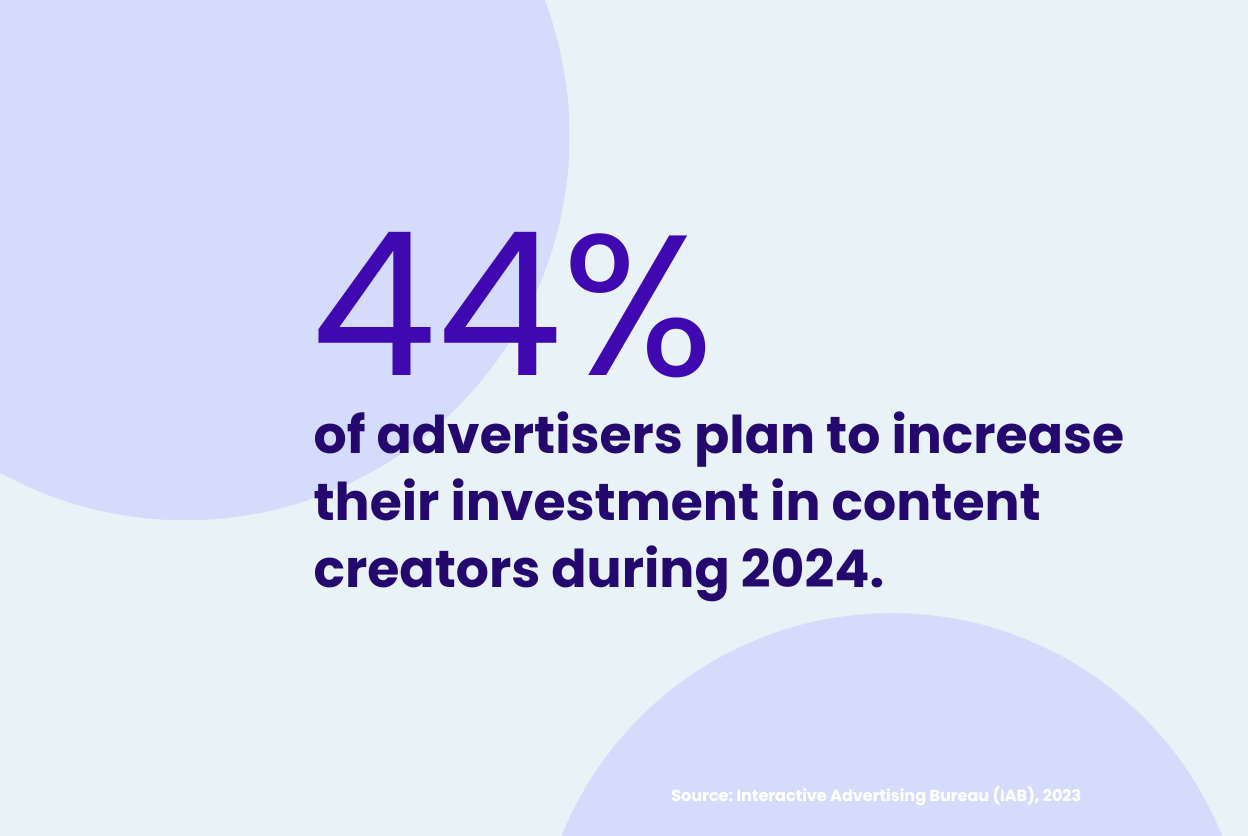
44 percent of advertisers have said that they plan to ramp up investment in content creators during 2024, with the average budget allocation forecast to rise by 25 percent, while 39 percent of consumers have said they were consuming more creator content during 2023 than in 2022 — two of numerous findings of interest to B2B marketers contained in recently-released report intelligence. Marketing Dive

2023 December 15 statistics image

Instagram Adds Options to Simplify Live-Streaming via Third Party Tools
Meta’s Instagram has launched an array of new features centered around video live-streaming, streamlining the process of using third-part tools such as the popular open-source open broadcaster software (OBS) and Streamlabs, the social media platform recently announced. Social Media Today

ANA Marketing Word Of The Year: AI
Members of the Association of National Advertisers (ANA) organization selected AI as the marketing word of the year, repeating a selection previously made in 2017, following on the heels of 2022’s word of the year “inclusion,” and 2021’s “diversity,” the ANA recently announced. MediaPost

Threads Rolls Out Topic Tags to All Users Globally
Meta’s Threads social media platform has continued its push to fill a void created by users leaving the X platform formerly known as Twitter, with the recent rollout of the ability to include one topic tag per post — a move that has allowed smoother content discovery on the platform, Instagram announced recently. Social Media Today

Brandwatch 2024 Digital Marketing Trends [Report]
Social media management and research firm Brandwatch has published its 2024 collection of digital marketing trends, with top areas of focus expected for the coming year including AI, authenticity, personalization, and social listening, among others, Brandwatch recently announced. Brandwatch

ON THE LIGHTER SIDE:

2023 December 15 Marketoonist Comic Image

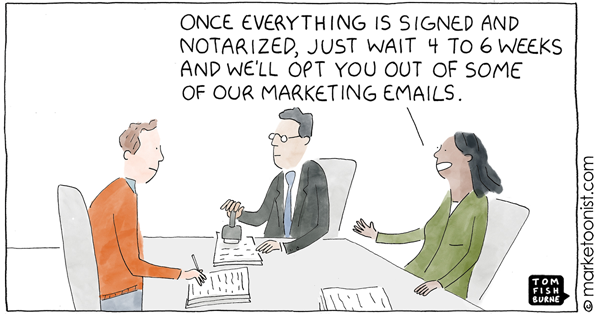
A lighthearted look at “Permission Marketing” by Marketoonist Tom Fishburne — Marketoonist

A mad genius recreated Tetris in Excel, and it looks surprisingly playable — XDA

TOPRANK MARKETING & CLIENTS IN THE NEWS:

  • Donna Robinson / TopRank Marketing — Social Media Trends & Tips: Dec. 4-8 — Arik Hanson
  • Donna Robinson / TopRank Marketing — Using LinkedIn to Elevate B2B Influencer Marketing — LinkedIn (client)
  • Lee Odden / TopRank Marketing — Harnessing the Power of Connection: Lee Odden Top Rank Marketing [Podcast] — Tonka Talk
  • Lee Odden — 15 Top SEO Quotes for Motivation to Boost Your Search Rankings in 2024 — BloggersPassion
  • TopRank Marketing — 30+ Artificial Intelligence Tools to Achieve Huge Growth in 2024 — Red Website Design

FRIDAY FIVE B2B MARKETING FAVORITES TO FOLLOW:

Tamara McCleary @TamaraMcCleary
Mike Allton @mike_allton
Shruti Deshpande @shruti12d
Debbie Friez @dfriez
Tom Pick @TomPick

Learn more about TopRank Marketing‘s mission to help elevate the B2B marketing industry.

Do you have an important B2B marketing news item that we haven’t covered? If so, please don’t hesitate to drop us a line in the comments below.

Thanks for joining us for this week’s Elevate B2B Marketing News, and we hope you’ll come back next Friday for another selection of the most up-to-date and relevant B2B and digital marketing industry news. In the meantime, you can follow us on our LinkedIn page, or at @TopRank on Twitter/X for even more timely daily news.

The post Elevate B2B Marketing News Weekly Roundup: New B2B GTM Data, Adobe’s Annual Visual Trends, & Rising Creator Spending appeared first on B2B Marketing Blog - TopRank®.


from B2B Marketing Blog – TopRank® https://ift.tt/HBFPpMG
via IFTTT

Saturday, 16 December 2023

Weekend Favs December 16

Weekend Favs December 16 written by John Jantsch read more at Duct Tape Marketing

My weekend blog post routine includes posting links to a handful of tools or great content I ran across during the week.

I don’t go into depth about the finds, but I encourage you to check them out if they sound interesting. The photo in the post is a favorite for the week from an online source or one I took on the road.

  • Murf – Murf is a versatile AI voice generator that transforms text into speech with stunning realism. Featuring a range of lifelike voices based on real people, it allows users to create studio-quality voiceovers in minutes. Ideal for podcasts, videos, and professional presentations, Murf’s AI technology offers an efficient and high-quality solution for anyone looking to add a professional auditory touch to their content without the need for extensive resources or voice acting talent. Whether for business or creative projects, Murf streamlines the process of bringing written content to life through voice.
  • Calendar – Calendar transforms the way you manage meetings with its simple yet powerful online scheduling feature. It gives you the ability to let anyone easily schedule a meeting directly into your calendar. This intuitive tool safeguards against double-bookings by automatically detecting and preventing conflicts with existing appointments. All it takes is sharing your customized personal scheduling link, and Calendar takes care of the rest, ensuring your schedule stays organized and efficient. This feature is a game-changer for professionals looking to streamline their appointment setting process seamlessly.
  • NeuralText – NeuralText is an all-in-one content marketing platform designed to automate and streamline your content operations. This sophisticated tool saves both time and money by generating high-quality content with just a title input. Whether you need a paragraph on “the best ways to invest money” or insights on “how to learn guitar on your own,” NeuralText crafts relevant, engaging content with ease.

These are my weekend favs; I would love to hear about some of yours – Tweet me @ducttape

If you want to check out more Weekend Favs you can find them here.


from Duct Tape Marketing https://ift.tt/RIQG0Sd
via IFTTT

Friday, 15 December 2023

Why Outsourcing B2B Influencer Marketing Leads to Success (New Data)

For B2B brands, it is no longer a question of whether or not influencer marketing works. In fact, a vast majority of respondents to our 2023 Influencer Marketing Report report that they have seen extensive benefits in the form of increased sales revenue and improved customer brand reputation.

But one thing that came through clearly in this research is that the most successful influencer marketers are not attempting to go it alone.

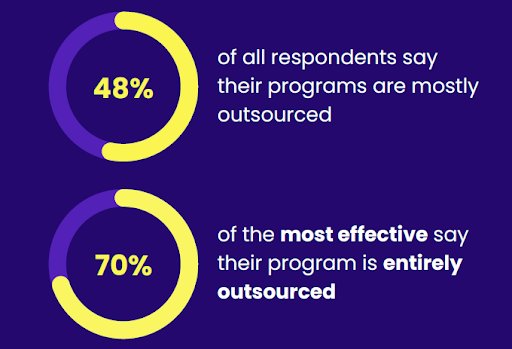
Our respondents also told us that, among the brands that had the most success with their B2B influencer marketing campaigns, 70% outsourced their entire program to a B2B influencer marketing agency. Eighty-three percent outsourced at least some activities.

2023 B2B Influencer Marketing Report chart 1 image

Want to learn more about what these marketers know? Let’s explore some of the advantages and efficiencies that B2B companies realize by outsourcing at least some of their influencer marketing program.

What happens when companies outsource B2B influencer marketing?

Greater influencer access and identification insights

B2B influencer marketing agencies have spent considerable time developing extensive networks of influence partners. These connections are not mere professional acquaintances, they are long-established relationships that are rooted in previous influencer marketing collaborations. When you partner with a B2B influencer marketing agency, you gain immediate access to this diverse network of influencers without having to forge any of the relationships from scratch.

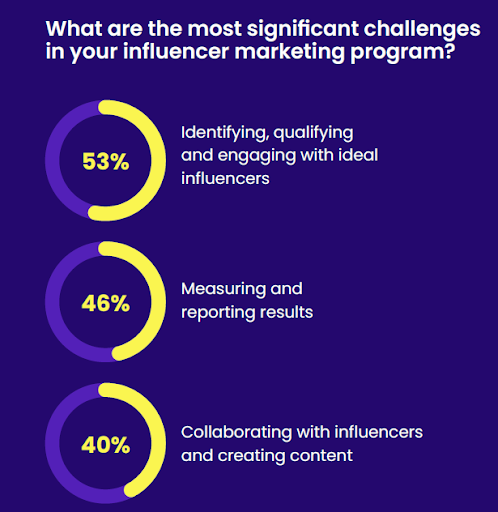
To complement this access to a diverse network of influencers, B2B influencer agencies are skilled at identifying and recruiting new influencers who perfectly align with your brand identity, campaign goals and target audience. This is key because, according to the Influencer Marketing Report, identifying and engaging with ideal influencers is the number one challenge faced by respondents.

2023 B2B Influencer Marketing Report chart 2 image

This dual track approach of accessing a well-developed network of partners along with identifying new influencers allows for greater flexibility and adaptability. When you’re presented with the exact right mix of influencers, you can tailor your campaigns to specific market segments or niche audiences.

Relationship-building and nurturing expertise

Once a slate of influencers has been identified, the work of rolling out your influencer marketing program has just begun. Experienced B2B influencer agencies will have a proven track record of working with B2B influencers and will be able to nurture each influencer relationship to deliver the best possible results for your campaign.

Nurturing influencers can be time-consuming. Handing this off to an agency makes the process more efficient, freeing you to focus on more strategic tasks. Agencies are also better equipped to scale their services to accommodate larger campaigns and more complex influencer networks.

But building and nurturing relationships with influencers requires more than time. It takes a specific skill set, and agencies that specialize in influencer relationship management understand the nuances of developing trust and fostering these long-term partnerships. A reputable influencer marketing agency will have the expertise to navigate the complexities of influencer relationship management, ensuring smooth and mutually beneficial partnership.

Build relationships, build relationships, build relationships. I think I have said this every year since influencer marketing was a mewling newborn tactic… but every year it’s worth repeating.”

Ann Handley in the 2023 B2B Influencer Marketing Report

Influencer selection objectivity and customization

Partnering with an agency brings an objective perspective to the influencer selection process that prevents personal biases from influencing influencer choices. These agencies understand that the most effective influencers may not be readily apparent to individual marketers.

By bringing in this outsider’s perspective, an agency can unlock a much wider array of potential influencers that will lead you to fruitful partnerships you may never have considered. With an agency, your campaign partners are chosen based on their genuine fit with your brand and target audience rather than any one person’s subjective preferences.

B2B influencer marketing agencies can also help you find influencers who fit the right criteria to connect with your brand and buyers. In our report, the most effective influencer marketers cited audience trust and relevance of network as more important influencer qualities than size of network or professional credentials.

Powering content co-creation

An agency acts as a bridge between brands and influencers, facilitating open communication and collaboration throughout the content creation process.

In this role, the agency collaborates directly with the influencer to ensure they understand the objectives of the campaign and the type of content they are expected to produce. This fast-tracks the delivery of high-quality content that resonates with your target audience and aligns with your brand and campaign objectives.

Full service agencies will also offer in-house influencer content creation services. This generally includes writing multiple content pieces on behalf of your brand, saving you time and effort. As part of this process, agency partners can integrate influencer contributions into the content that will be published by your brand, while also setting up a plan and process for optimized promotion.

Tap into a suite of specialized services and expertise

Some B2B influencer marketing agencies offer a comprehensive suite of services beyond influencer identification and outreach. From pre-planning to reporting, B2B influencer marketing agencies handle a wide range of tasks that would require coordination with multiple departments to handle internally.

This depth of support can be essential to executing an always-on influencer strategy, which also proves to be a key success factor: 51% of very effective influencer marketers use an always-on program, compared to 14% of all others.

Just a few of the administrative and creative functions an agency will manage include:

  • Strategic planning. Agencies work closely with you to develop a data-driven strategy aligned with your brand objectives and target audience.
  • Competitive audits. They analyze how your competitors are leveraging influencer marketing, enabling you to identify best practices and differentiate your own approach.
  • Contract negotiation and management. Agencies handle the legal aspects of influencer contracts, ensuring compliance with industry regulations and protecting your interests.
  • Payment pass-through. Partnering with an agency helps streamline influencer payments, eliminating administrative burdens and ensuring timely compensation.
  • Reporting and analysis. B2B influencer agencies provide comprehensive reports and analytics, allowing you to track campaign performance and make informed decisions.

When outsourcing programs to a B2B influencer marketing agency, brands gain access to a team of experts who can handle every aspect of the campaign, from strategy and planning to execution and analysis. This frees marketers up to focus on core business activities while ensuring their influencer marketing efforts deliver the desired results.

The post Why Outsourcing B2B Influencer Marketing Leads to Success (New Data) appeared first on B2B Marketing Blog - TopRank®.


from B2B Marketing Blog – TopRank® https://ift.tt/qz1FkI5
via IFTTT

Thursday, 14 December 2023

From Stress to Success: The Groundbreaking Strategies for Optimal Health and Performance

From Stress to Success: The Groundbreaking Strategies for Optimal Health and Performance written by John Jantsch read more at Duct Tape Marketing

The Duct Tape Marketing Podcast with John Jantsch

In this episode of the Duct Tape Marketing Podcast, I interviewed Jennifer Watson, a healer, high-performance coach, and breakthrough speaker. As the founder of Jennifer Watson Leadership, she is on a mission to help leaders heal and accelerate their deeper purpose of impact through vital wellness, leadership genius, and potent speaking.

Embark on a journey from stress to success as Jennifer shares groundbreaking strategies for optimal health and performance in leadership. Explore the transformative power of morning rituals, focusing on the vital connection between nature, breath, and movement.

Key Takeaways

In this illuminating episode, Jennifer Watson, a seasoned healer and high-performance coach, shares transformative insights to guide leaders from stress to success. Emphasizing the pivotal role of morning rituals, she unveils a 3-step formula for leadership mastery, emphasizing sunlight exposure and intentional breathwork. Watson explores the vital connection between nature, breath, and movement, advocating for the transformative power of outdoor exposure and mindful practices. Through a practical guide, listeners gain actionable strategies for morning transformation, delving into the science-backed rituals contributing to optimal health. Watson’s morning routine serves as an alchemical blueprint, merging stress reduction, mindset mastery, and physical well-being for holistic leadership excellence. From stress reduction strategies to fostering a people-centric culture, Jennifer Watson’s expertise provides a comprehensive roadmap for leaders seeking to navigate the complexities of work and creativity while achieving peak performance and optimal health.

Jennifer Watson’s expertise provides a comprehensive roadmap for leaders aspiring to thrive in both their personal and professional lives.

Questions I ask Jennifer Watson:

[00:41] What aspects of your background led to your entrepreneurial journey as a high-performance coach?

[04:11] Do you believe your experience as an athlete helped in your wellness approach to leadership?

[07:10] Would you agree that a lot of leaders are understanding the value of wellness in opposition to hustle culture?

[14:50] Would you agree that this approach could lead to a longer and more fulfilled life?

[15:06] When beginning with a new client is there a one-size-fits-all approach or is every step streamlined to each need?

[20:17] Where can people connect with you ?


More About Jennifer Watson:

Get Your Free AI Prompts To Build A Marketing Strategy:


Like this show? Click on over and give us a review on iTunes, please!

Connect with John Jantsch on LinkedIn


John (00:08): Hello and welcome to another episode of the Duct Tape Marketing Podcast. This is John Jantsch. My guest today is Jennifer Watson. She's a healer, high-performance coach and breakthrough speaker on a mission to help leaders heal and accelerate their deeper purpose of impact through their vital wellness, leadership genius and potent speaking. She does this through her company, Jennifer Watson, leadership. So Jennifer, welcome to the show.

Jennifer (00:34): Thank you so much for having me, John. It's an honor to be here going into the holiday season and just honored to serve your community.

John (00:41): So you have, let's see, not necessarily a typical background entrepreneurial background. So I always sometimes love to say, how'd you get here? What was your journey that led you to this being what you were meant to do today?

Jennifer (00:56): Absolutely. I started as a high level athlete. I was a two-time, All-American track and field athlete. Used to be pretty fast everyone, and go figure. I had my chair of injuries and I started getting interested in the wellness and physical therapy world because I had physical therapy. I went to doctors to help with injuries. And during that whole journey I was also struggling with depression and anxiety. And I started realizing as an athlete that wellness and fitness actually incorporated more than physical. It was mental, emotional, spiritual. And it started my journey toward not only healing myself and optimizing overall health, but understanding that health is mind, body, soul. And because of my thought process on how to engage health in a more powerful way, I started my own practice just a few years after I graduated from PT school because I felt that traditional way of health care, at least in the areas of true healing and optimizing even performance with Hilo athletes was missing some pieces.

(01:57): So my practice has always incorporated mind, body, soul optimization. And from there I just took it in the last four to five years into coaching and consulting and speaking because what I found is beyond my four brick walls of healing, people in leadership positions and executive and business leadership positions wanted this information. And I knew, listen, how can I accelerate this information more powerfully in the workforce? And that's when I became a coach consultant. And now I get to also speak across the country on aspects of mental emotional wellness as well as really staying into performance and team productivity, no matter the environment that you can truly be successful and keep your health no matter what life gives you. And that's just an honor for me to do throughout the years that I've had here.

John (02:47): So I'm envisioning you working on somebody's knee and then chatting them up about leadership skills and it just blossomed from there. Is there a little truth to that?

Jennifer (02:59): It's absolutely, it's really interesting because a lot of people that came to me, John, were high performers, business leaders, executives that had physical issues but also had some anxiety and depression or had some performance and productivity issues with their team. So of course after working with them for a while, that's when they started getting some of my expertise. I was leading teams and I was pretty good at it and giving them advice on that. So it was a natural bridge. Such a great question, John, because people ask me, how did you go into coaching, consulting, and speaking from your PT practice, brick and mortar, it was actually a very easy bridge to craft because what you just said, a lot of people were drawn to the type of work I did as high performing business leaders, and I got to just use my skills as a wellness provider and a leadership person because I was growing my own business. So the two got married together to really bring out the coaching, consulting and speaking, and no one's ever asked me that. So thank you for asking.

John (03:53): I also, I've always said for years, I think a lot of people underestimate the physical aspect and maybe the sort of parallels to being an athlete to running a business. I mean, it is very physically demanding. There's a lot of the, you need to have rest, you need to practice, you need to perform on game day. I just think there's a lot of parallels. Do you feel like your background as an athlete really helped you kind of understand what was missing maybe in leaders and in entrepreneurial journeys?

Jennifer (04:22): It's interesting. A lot of executives and leaders that are drawn to me are prior athletes. So it's funny you should ask that question. And I will say this, I learned about leadership performing in different environments, in environments that were not maybe optimal for race performance in a powerful way. So I would agree with you, there's a lot of things I learned in performance, mental edge mastery and leadership as an athlete. However, I want all of you to get this. What I also found is some things that were detrimental as an athlete that I had to learn to transition into different skill sets for myself and for the people that I work with to help leadership and performance in a different way. What I mean by that is this, John, and I think it needs to be very clear because a lot of high performers and athletes, former athletes see performing hard as pushing through, as getting through the hard stuff as at all costs of often health, just get it done and be successful.

(05:22): And what happened is a lot of business leaders were tanked, were exhaust and overwhelmed, and I questioned that. I'm like, there's got to be an easy way in the business leadership world to do things that you can actually be healthy and vital and actually still be a great business leader. So some of the things I took from being an athlete that you had to push through didn't work in business. So the things I did extrapolate that were good as an athlete were powerful in leadership and performance. But one thing I really feel downloaded just to share with your audience is actually how the transition for me was different, becoming a leader that I had to get a different relationship with resilience, I had to get a different relationship with performance because if I kept up the whole athletic press on, don't tell anyone, suck it up buttercup.

(06:08): That's when I started self imploding to be quite frank in my health, in my relationships, Albany in my bottom line when I started shifting what performance meant to me and the relationship with it and shifting how I could shift that for my team and be a better leader in a healthier state is actually where my bottom line took off, where the productivity and performance of my team took off. So I did take powerful things from being an athlete, but the biggest caveat I would give the leaders now is be careful about the push push scenario. I'm not saying that's not necessary once in a while, but I'll say on average you need to be in a calmer flow state for you and your team to actually provide value and get things done effective on a time while keeping your health

John (06:52): Well. But one of the points there though, I think athletes are especially at a very high level where there's millions of dollars on the line of their performance. I mean rest is as equally as important as practice nutrition is equally as important as weightlifting. And I think that a lot of leaders are starting to wake up to that whole, I got to take care of my body if I'm going to make it through this product launch or something. And I think that's a really healthy thing that I think is finally starting to land and push out sort of the hustle hustle approach.

Jennifer (07:29): It's interesting because people obviously probably like you, John, say, what are the top three things that you think leaders need, especially post to 2020, what do you think accelerates them? It makes them maybe above the rest, like go from good to great or even from average to good at a powerful rate. And I will say from a physical sense, sleep is hugely important. There's so much research on this and I'm talking about sleep by the way, prior to midnight. You optimize more REM sleep and deep sleep when you're getting more hours before midnight. And I would say it's an active activity everyone. So that's a number one. Number two, I'm going to go into a little bit later, but it has to do a little bit with nutrition. That's a good thing that will help with all leaders. But a second middleman that I really want people to get, because people ask me this all the time, if you could pick just one thing, and I don't think it's just one thing ever, I don't ever think, but if I had to pick one thing that would really help leaders be better leaders, help them accelerate their performance, their productivity, create good team culture and connectness in their team and make a lot of freaking money doing it, is this, everybody listen up.

(08:33): You have to learn to manage, refine and master your emotional state. It doesn't matter if something external has triggered you into bad emotional state or something internal. A belief has put you in an emotional state, big or small, it does not matter Everyone, when you have emotions that you cannot harness to work for you instead of against you, you will lose hours perseverating in the emotion, perseverating in the belief and lose connection to your team and productivity. So I teach a lot of frameworks in my business and on my team as well as a lot of leaders in workshops and presentations on ways to master and harness no matter if it's whatever it's coming from. And you guys, that covers a lot of things from bottom lines to communication to losing staff at last minute to everything to maybe some personal stuff happening at home.

(09:27): And these templates really help people understand how to do that. When you do that, it game changes everything. And I see that leaders are understanding the value of that, especially since 2020. So I would say sleep is number one from a physical sense. Even over exercise, everyone, I'm a high level say that number one is sleep. Number two is the emotional regulation and mastery that I really, really want to delve into in the third. I can talk about in a second, but I'd love to answer any questions you have on that. But that's a big one for a lot of leaders and teams.

John (10:00): Yeah, and I think a lot of it just becomes automatic response. I mean, there's a lot of things that push our buttons throughout the day. And I do see this, and I know you talk a lot about meditation and pausing and mindfulness, which are all kind of practices to sort of bring all that back in, I think is the longer I stay in this, the more I realize how valuable that is. And I probably wouldn't go as far as saying I control my emotions all the time, but I realize when I'm being acted on as opposed to me mindfully acting. And I think that becomes, that's a tremendous skill for sure.

Jennifer (10:34): And the thing is, everyone, by the way, I can just give you kind of a tool right now just help gain traction on this. But there are some people that just have some core triggers that they just can't get rid on their own. That's why we have coaches and consultants to help people navigate through that. I mean, we're human, everyone. And no matter how many tools we try on our own and download from our YouTube, there might be times that you need support and that's okay. One thing that will help words are powerful, John, and what you said about trying to manage your emotions. I always say you guys shifting the words. So if you're feeling depressed, angry, sad, frustrated, especially those I call 'em more the negative emotions or negative feelings, I always say change the words if you're feeling angry, like I'm curious.

(11:14): Okay, curious everyone, that's a powerful word. It has a higher frequency to, I'm curious why I am feeling anger right now. And when you allow yourself to choose a different word, it actually calms the nervous system everybody. It's really important to calm your nervous system, to get it on board to chill out so it's open to its pollution or an idea or a reason in this case why you are angry. So when you choose different words, it already starts chilling out a little bit. I'm not saying a lot all the time depending on where the trigger's coming from, if there's trauma behind that, but a lot of times it's at least going to chill you out. And then that's what the brain does when it starts calming down the calm, parasympathetic state, the calm state of your nervous system. It's in more optimal use of brain resources.

(11:59): It wants to create an opportunity and solution for you. It's going to start looking for answers when you ask a question. So when you ask questions, I'm curious, why am I having anger right now? You'll find how you start journaling, figure out from their why and then often the solution. So that can create some momentum, you guys, for you, there's sometimes more depth, there's more layers to that, especially there's other team members involved. But it's a great way to help you start mastering that and moving forward because you're going to gain productivity, performance and ultimately your bottom line. So those are big things for emotional regulation. So we talked about sleep, we talked about emotional regulation. And the third thing really even before exercise, you guys also didn't say exercise yet. That's the fourth. The third is really nutrition. And by the way, I'm a big believer that it's specific to each person.

(12:44): Metabolic rate, blood type, your past milk constraint. I've been a practitioner a long time. So specificity to your type of food plan is necessary to optimize your body and brain to feel vital that day. However, one thing I will say for every American across the board, and I'll say every American, okay, we genetically modify a lot of different foods in this country for a variety of reasons. And the thing is that's happening is we have a hard time digesting that colors, food colorings, all this. And one of the things we genetically modify the most are wheat flour, our carbohydrates. And the reason why that's important for Americans to understand is Americans, 90% of us eat too many carbs, too many wheat products. And most of us in research show that we have a mild to severe allergen to the genetically modified wheat products in everybody.

(13:35): So a mild to severe like celiacs where you have more of an anaphylactic response. And the reason why that's important, everybody, it puts inflammation in your entire body, your brain, your gut, your whole body. So you think if your brain's a little plane, do you think you're going to be able to be more clear on your message, articulate well during the day, write up an email effectively? No. Okay. So those three are going to be probably the biggest dominoes for you to start gaining traction as a powerful leader to stay in your vitality and create connectness and good productivity communication with your team, sleep anything before midnight, that's going to be the big chunk for you guys. Number two, learning how to manage and emotionally regulate your system. Sometimes you need coaching consulting here, but at least trying to shift your words will open up Pandora's box in the brain powerful way. And then third, looking at not necessarily eliminating, I don't eat gluten wheat flour, which is gluten itself, but at least in modifying its usage, which can help calm down inflammation in the brain. And then fourth, we could go into a whole nother podcast is movement and exercise. But those things I believe are really big things that can help people from a general level to create traction as powerful leaders and then delving in more powerful. We need more coaching consulting beyond that. She

John (14:51): Might actually live a little longer too. I mean, what you just gave was really a good recipe for having a more enjoyable life period, right? A hundred

Jennifer (15:01): Percent about the quality of life. Don't we all want that? The quality of life, longevity of life, right?

John (15:06): So if somebody came to you and said, look, I listened to this or I went to your website and I'm ready to turn things around, is there kind of a recipe for optimal health? Or you maybe said this already that everybody's different, but there's probably a few truths I guess that are going to show up on anybody's recipe, aren't they?

Jennifer (15:27): No, absolutely. This is number one, we're just optimizing health. And again, everyone, leaders, this probably goes without saying, this is your vehicle that God gave you. We don't treat it well hardly at all. It's really interesting. It's actually really brilliant just by the way we go on a whole nother podcast on this, the brilliance of the body to rise even with all the junk we inhale from pollution to the food, food to the less activity, to the toxic environment from social media, it's amazing. Our body actually rises as powerful. It does. So just be thankful and grateful for that everybody. But if you want to optimize this to actually work for you, because this is the tool, this is the vehicle we're using every day to show up, not just as John just said as leaders, but in our life as husbands, as fathers, as just wanting to enjoy life.

(16:10): First and foremost. I don't care if you're a person that's fit or a person that's athletic, you don't have to be get outside. The first thing I do in the morning all the time is get outside in the sun. Even if you don't have a lot of sun in your area and it's cloudy, it's still indirectly getting sun from just being outside in the light. There's so much that happens from vitamin D to actually grounding with the earth because we're positively negatively charged. Being so is the earth. It helps pull us into a powerful state of calm state, a parasympathetic state for us to get ready for a day and optimize this. So get outside five minutes, you guys. I'm even saying three hours exercise, five minutes every day, get outside, put your head up in the sun and this is where you're also going to second breathe.

(16:53): Okay? Breath is life. It's not only necessary for all the interactions, it's a catalyst for many things inside our body to happen autonomically, but it also is huge for stabilizing our nervous system, our brain to body to be in a calm state. Again, the reason why I keep saying this, everybody 90% of the day, our human beings are supposed to be in a calm, parasympathetic state is actually reversive that so many Americans and leaders are stressed out. But the reason why that's important, research shows we need that for optimal brain and body to function. So that's why they get outside. Now that you've been outside for five minutes, we start breathing you guys, there's so many different types of breath work out there. I use Wim H method with some of my clients, depends on what your needs are with more performance based, trying to help with anxiety.

(17:40): But no matter what, just getting outside, taking 10 to 20 deep breaths starts that cycle, going to get you into a calmer state. Again, there's more specifics. I teach to get more nichey. Depend what your needs are, but getting outside and breath is next. Third, the one thing that I always say you guys have to do is move. It doesn't have to be exercise move. It could be dance for five minutes. It could be jumping jacks. It could just be you doing some burpees for five minutes. It could be you just walking your dog. The reason why that's also important is it's a triple kind of opportunity for you to not only get the blood flowing, okay, movement to the brain, the body get blood flowing. But guess what else it does. If you're waking up with way, we talk about the beginning of all this emotions that don't feel good.

(18:28): Emotions are energy. Just like food is energy. When you start moving, you actually start moving some of those negative anger, depression, anxiety, outside of your body. I'm not saying it's going to be perfect, depends the layers of what's going on there, but it can move it through you guys. I do this every morning. If I'm feeling anxious about something, I literally will jump up and down outside and it does move me into that calmer state because I'm moving energy that's not good out of my body and I'm getting the circulation pump for the day. So get outside deep. And

John (19:03): It makes for some good Instagram posts too.

Jennifer (19:07): Yes, absolutely. Absolutely. Those are biggest, those are probably the biggest three things, John. But then I would say is this connection is key. We're relational beings and one thing that's going to help us from a vitality of physical standpoint and also an emotional standpoint is get connected to people that are your tribe. It's not just your team that's in your business that's on the same mission and mission that love it, but also the people outside. We always hear this that the five people that you're on the most also influence you the most, right? But get around people that you feel good around. Everyone that works on your physical, emotional, mental wellbeing. Let alone all the things that can help you and mastermind and get the things that you want done in your business. So connection with people is the right people. Moving, really making sure that you're doing some breath and getting outside. If I give any tools, will be the that I would give to people to start your day off. This is going to help you get to a higher frequency, calm the nervous system to be ready to go and perform no matter what is happening in your environment that day.

John (20:10): Well, I happen to be lucky enough to live in a national forest, so forest bathing is certainly something I do every single day. Well, Jennifer, I appreciate you taking a moment to stop by the Duct Tape Marketing Podcast anywhere you want to invite people to connect with you.

Jennifer (20:23): Absolutely. So I'm the most active on LinkedIn and Instagram. LinkedIn. I'm Jennifer Watson and then on Instagram it's the Jennifer Watson and I do answer my own dms. So if you have any questions about this podcast or connecting with me more and learning more about what I do and how I can support you, connect with me there. I'd be more than happy to support you.

John (20:43): Awesome. Again, thanks for taking a moment to stop by and hopefully we'll run into you one of these days in Colorado. Soon.


from Duct Tape Marketing https://ift.tt/xXU5qi6
via IFTTT